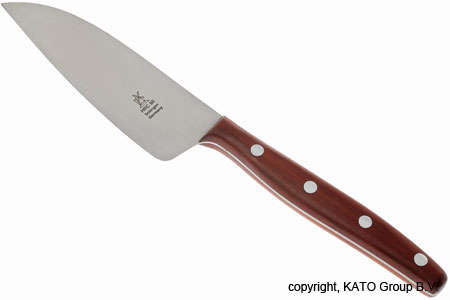
The Robert Herder K2 Kitchen Knife is the kind of tool that makes you look at your bulky chef’s knife and whisper, “Maybe we should see other people.” Small, sharp, lightweight, and quietly elegant, the K2 is a compact German kitchen knife from Robert Herder Windmühlenmesser, a Solingen maker known for thin-ground blades, traditional craftsmanship, and knives that feel more like precision instruments than countertop decorations.
At first glance, the K2 may not seem dramatic. It is not a giant 10-inch chef’s knife. It does not arrive wearing tactical armor. It does not need a movie trailer. Instead, it wins people over the old-fashioned way: by slicing onions cleanly, gliding through tomatoes, trimming herbs without bruising them, and making everyday prep feel smoother than expected. In other words, it is a practical knife with a little old-world magic hiding in the blade.
This in-depth guide looks at what makes the Robert Herder K2 special, how it compares with other kitchen knives, who should buy it, how to care for it, and what it feels like to use in a real home kitchen. If you are searching for a compact chef-style knife, a German utility knife, or a small kitchen knife that does more than peel apples, the K2 deserves a serious look.
What Is the Robert Herder K2 Kitchen Knife?
The Robert Herder K2 is a compact kitchen knife in the Windmühlenmesser K-series. Depending on the retailer and version, it is often described as a small chef’s knife, wide petty knife, compact utility knife, or mini santoku-style blade. That may sound like a knife identity crisis, but it is actually part of the charm. The K2 sits in a useful middle zone between a paring knife and a full-size chef’s knife.
Most versions of the K2 have a blade around 105 to 110 millimeters long, or roughly 4 inches. That short blade gives it excellent control, while the wider profile provides more board contact and better knuckle clearance than a typical narrow utility knife. In plain English: it is small enough for detailed work but tall enough to chop vegetables without feeling like you brought a toothpick to a salad fight.
The K2 is commonly available in carbon steel and stainless steel versions. Carbon steel models are loved for their keen edge, easy sharpening, and lively cutting feel. Stainless versions are easier to maintain and more resistant to rust, making them attractive for cooks who want the Robert Herder experience without the extra care routine. Handle materials may include plum wood, walnut, or black synthetic materials depending on the model and market.
The Solingen Story Behind Robert Herder
Robert Herder Windmühlenmesser comes from Solingen, Germany, one of the most famous knife-making cities in the world. Solingen has long been associated with blades, scissors, razors, and cutlery, and Robert Herder is one of the names that still carries the personality of traditional handcraft. The company dates back to 1872 and is known for preserving old production techniques rather than chasing every modern shortcut.
The brand’s Windmühlenmesser name means “windmill knife,” and the windmill logo is a recognizable mark among kitchen knife enthusiasts. What separates Robert Herder from many mass-market German knife brands is its focus on thin grinding, hand finishing, and a cutting feel that favors efficiency over brute force. Instead of building thick, heavy knives that survive everything except joy, Robert Herder often makes blades that are light, nimble, and extremely sharp.
Design and Specifications: Small Knife, Serious Personality
The K2’s design is refreshingly simple. The blade has a gentle curve that can handle short rocking cuts, push cuts, and draw cuts. The profile gives it more versatility than a basic paring knife. You can mince herbs, slice garlic, trim mushrooms, cut citrus, dice small onions, and prep small proteins without reaching for a large chef’s knife every five minutes.
Typical Robert Herder K2 Features
- Blade length: Usually around 105–110 mm, depending on version.
- Blade style: Compact chef, wide petty, or utility-style profile.
- Steel options: Carbon steel or stainless steel, depending on model.
- Blade geometry: Thin Solingen-style grind designed for easy cutting.
- Handle options: Plum, walnut, or synthetic handle materials.
- Weight: Very light compared with most Western chef knives.
- Best use: Fruit, vegetables, herbs, small proteins, and everyday prep.
The real secret is not one single measurement. It is the combination of short length, thin blade, low weight, and comfortable handle. The K2 does not bully food into pieces. It slips through ingredients with less resistance, which is exactly what many cooks want once they realize “heavy” and “high quality” are not always the same thing.
Blade Steel: Carbon Steel vs. Stainless Steel
One of the biggest decisions when choosing a Robert Herder K2 Kitchen Knife is whether to go with carbon steel or stainless steel. Both can be excellent, but they fit different personalities.
Carbon Steel K2
The carbon steel version is the enthusiast’s choice. It can take a very sharp edge, it is usually easy to sharpen, and it develops a patina over time. A patina is a natural darkening of the blade surface caused by contact with foods like onions, citrus, apples, and tomatoes. Think of it as the knife keeping a tasteful diary of your cooking life.
The trade-off is care. Carbon steel can rust if left wet, tossed in the dishwasher, or abandoned in a sink like a tragic kitchen shipwreck. It needs to be washed by hand, dried immediately, and occasionally treated with a tiny amount of food-safe oil if stored for a long period.
Stainless Steel K2
The stainless K2 is the lower-maintenance sibling. It resists corrosion better and is more forgiving for busy kitchens, shared households, or anyone who has ever said, “I’ll wash that later,” and meant “next fiscal quarter.” Stainless versions still benefit from hand washing and careful storage, but they are not as reactive as carbon steel.
For maximum sharpness and traditional feel, carbon steel has the edge. For convenience and peace of mind, stainless steel is easier to live with. Neither is “better” for everyone. The right choice depends on how much care you are willing to give your knife after the cooking is done.
What Makes the K2 Different from a Regular Utility Knife?
A standard utility knife is usually narrow and medium length. It is useful for slicing sandwiches, trimming fruit, and doing quick in-hand tasks. The K2, however, has more blade height and a more board-friendly shape. This makes it feel more like a mini chef’s knife than a typical utility knife.
That extra height matters. It allows better control when chopping on a cutting board, especially for small vegetables and herbs. It also makes the K2 more comfortable for cooks who dislike narrow blades because their knuckles hit the board. The knife still feels compact, but it is not limited to tiny jobs.
Compared with a full-size chef’s knife, the K2 is faster to grab, easier to maneuver, and less intimidating in tight prep spaces. If your cutting board is small or your kitchen counter has the square footage of a postage stamp, the K2 feels right at home.
Best Uses for the Robert Herder K2 Kitchen Knife
The K2 is a daily prep knife. It is not meant to replace every blade in your kitchen, but it may become the knife you reach for most often. Its sweet spot is small-to-medium prep work where precision and agility matter more than length.
Vegetables and Herbs
The K2 is excellent for shallots, garlic, scallions, mushrooms, radishes, herbs, celery sticks, small peppers, and cherry tomatoes. Its thin edge reduces crushing, which is especially noticeable with delicate ingredients. Parsley and cilantro look cleaner after chopping, and tomatoes do not collapse into watery sadness.
Fruit Prep
For apples, pears, citrus, strawberries, peaches, and kiwis, the K2 gives you more control than a large chef’s knife. It is also useful for trimming fruit for lunchboxes, desserts, or garnish work. A small blade is simply more pleasant when you are not trying to attack a watermelon.
Small Proteins
The K2 can trim chicken tenders, portion boneless fish, slice cooked sausage, and clean up small cuts of meat. However, it is not a boning knife, cleaver, or heavy-duty butcher tool. Avoid bones, frozen foods, hard squash stems, and anything that makes the blade twist sideways.
Everyday “One Onion, One Tomato” Cooking
Not every meal requires a giant chef’s knife. If you are making an omelet, sandwich, quick salad, snack plate, or weeknight stir-fry for one or two people, the K2 is wonderfully efficient. It is the knife equivalent of a well-made compact car: easy to park, quick to move, and surprisingly capable.
Cutting Feel: Why Thin Geometry Matters
Many people judge knives by steel type, brand name, or price, but blade geometry is where the magic happens. The Robert Herder K2 is known for being thin behind the edge, which helps it pass through food with less resistance. That means less wedging in carrots, cleaner slices in onions, and a more satisfying feel on the board.
A thick knife can still be sharp, but it may feel clumsy once the blade enters dense food. A thin knife feels sharper because it separates ingredients more efficiently. This is why the K2 often impresses cooks who are used to heavy Western knives. It feels quick, lively, and almost delicatebut not fragile when used properly.
The important phrase is “used properly.” Thin knives should not be used for prying, twisting, chopping bones, opening packages, or scraping food across the board with the cutting edge. Use the spine of the knife to move ingredients. Your edge will thank you silently, because knives are polite like that.
Handle Comfort and Balance
The K2 handle is slim, rounded, and designed for control. Wood-handled versions feel warm and traditional, while synthetic-handled versions offer extra durability and moisture resistance. The handle is usually riveted and smoothly finished, giving the knife a clean, refined appearance.
Because the blade is short and light, the balance feels agile rather than blade-heavy. This makes the K2 especially enjoyable for quick prep sessions. People with smaller hands may find it more comfortable than large chef’s knives, while cooks with larger hands may appreciate it as a nimble companion knife.
The best grip is usually a relaxed pinch grip near the blade. Do not strangle the handle. A good knife works better when your hand is calm. Besides, the onion already knows what is coming.
How to Care for a Robert Herder K2 Kitchen Knife
Care is simple, but it matters. The K2 is a precision kitchen tool, not a dishwasher survivor. Whether you choose carbon steel or stainless steel, hand washing is strongly recommended.
Daily Cleaning
- Wash the knife by hand with mild soap and warm water.
- Dry it immediately with a towel.
- Never leave it soaking in the sink.
- Do not put it in the dishwasher.
- Store it in a knife guard, drawer insert, magnetic strip, or knife block.
Carbon Steel Care
If you buy the carbon steel K2, expect patina. Blue, gray, brown, and dark tones may appear over time. This is normal. Patina can even help reduce reactivity once it forms. Rust, however, is not patina. Rust is orange, rough, and rude. Remove it gently with a rust eraser or mild abrasive, then dry and oil the blade.
Sharpening
The K2 responds well to whetstone sharpening. Because the blade is thin, you do not need to remove a lot of metal to bring back a crisp edge. A medium stone can handle regular sharpening, while a finer stone can polish the edge for smoother cutting. Honing can help maintain the edge between sharpenings, but avoid aggressive grooved steels that may be too rough for a thin blade.
Who Should Buy the Robert Herder K2?
The Robert Herder K2 Kitchen Knife is ideal for cooks who value sharpness, control, and craftsmanship. It is especially useful if you often prepare small meals, work on compact cutting boards, or want a knife that bridges the gap between a paring knife and a chef’s knife.
The K2 Is a Great Fit If You:
- Want a compact knife for everyday prep.
- Prefer lightweight knives over heavy Western chef knives.
- Enjoy thin, precise cutting performance.
- Cook a lot of vegetables, fruit, herbs, and small proteins.
- Appreciate traditional German craftsmanship.
- Are willing to hand wash and properly store your knife.
The K2 May Not Be Right If You:
- Need a large all-purpose chef’s knife for big ingredients.
- Want a dishwasher-safe knife.
- Frequently cut hard squash, bones, or frozen food.
- Prefer heavy knives with thick blades.
- Do not want to maintain carbon steel if choosing that version.
Robert Herder K2 vs. a Full-Size Chef’s Knife
A full-size chef’s knife is better for large onions, cabbage, melons, squash, big bunches of herbs, and large-scale meal prep. It gives you longer slicing strokes and more blade coverage. If you cook for a family every night or prep big batches, you still need a larger knife.
The K2 shines when the task is smaller and more controlled. It is less tiring, easier to steer, and quicker to clean. Many cooks use it as a companion knife rather than a replacement. The chef’s knife handles the big jobs; the K2 handles the quick jobs. That partnership makes more sense than expecting one knife to do everything from mincing garlic to dismantling a pumpkin.
Robert Herder K2 vs. Japanese Petty Knife
A Japanese petty knife is usually longer and narrower. It excels at trimming, slicing, and detail work. The K2, by contrast, has more height and more board presence. That makes it more comfortable for chopping small ingredients on a board.
If you want a slim slicer, choose a petty. If you want a compact knife that behaves more like a tiny chef’s knife, the K2 may be more satisfying. It borrows some inspiration from Japanese double-bevel utility designs while keeping a German handcraft identity.
Common Mistakes to Avoid
The first mistake is treating the K2 like a rugged camp knife. It is not built for abuse. Do not cut through bones, twist the edge in hard food, or use it as a scraper. The second mistake is leaving carbon steel wet. A beautiful carbon blade can rust quickly if neglected.
The third mistake is over-sharpening. Because the K2 is thin, it does not need dramatic grinding every week. Light maintenance is usually enough. Finally, do not store it loose in a crowded drawer. That is how edges get chipped, handles get scratched, and kitchen tools start filing workplace complaints.
Is the Robert Herder K2 Worth It?
For the right cook, yes. The Robert Herder K2 Kitchen Knife offers a rare combination of traditional craftsmanship, modern usability, and compact convenience. It is not cheap compared with basic utility knives, but it delivers a more refined cutting experience than most mass-market small knives.
Its value depends on whether you appreciate the details: the thin grind, the light balance, the comfortable handle, the Solingen heritage, and the way it makes small prep tasks feel cleaner and faster. If you only need a knife to occasionally slice a lemon, a budget utility knife will do. If you cook often and enjoy tools with character, the K2 feels like a small luxury that earns its space.
Real Kitchen Experience: Living With the Robert Herder K2
Using the Robert Herder K2 Kitchen Knife in a daily kitchen is a little like discovering that your smallest pan is secretly the one you use most. You may buy it thinking it will be a sidekick, but it quickly becomes the knife you reach for when dinner is not a grand production. Chopping one shallot? K2. Slicing a tomato for toast? K2. Cutting strawberries because you promised yourself you would eat fruit like a responsible adult? K2 again.
The first thing most people notice is the weight. The K2 feels almost featherlike compared with a thick Western chef’s knife. That can be surprising at first. Some cooks associate heft with quality, but the K2 teaches a different lesson. A knife does not need to be heavy to be effective. When the edge is thin and the geometry is right, the blade does not need to smash through food. It simply moves.
On onions, the K2 feels precise and quick. It is not long enough for huge prep piles, but for one or two onions it works beautifully. The blade height gives enough clearance for small dice, and the curved front allows short rocking motions. Garlic is even better. The knife is small enough to control closely, so thin slices and fine mincing feel natural.
With tomatoes, the K2’s edge quality becomes obvious. A properly sharpened K2 can break the skin without pressing down hard, which means the tomato stays round instead of becoming a crime scene. The same is true for mushrooms and herbs. Thin cutting helps preserve texture. Basil does not bruise as badly, mushrooms slice cleanly, and scallions do not turn into crushed green confetti.
The knife is also pleasant for lunch prep. It is perfect for cutting apples, trimming cheese, halving grapes, slicing cucumbers, and building sandwiches. A full-size chef’s knife can do all of that, of course, but it can feel like wearing hiking boots to walk to the mailbox. The K2 is quicker, lighter, and easier to rinse.
The carbon steel version adds personality. Over time, the blade changes color. At first, the patina may look uneven, especially after acidic foods. That is normal. After several weeks of use, the blade begins to look more settled, like a tool that belongs to someone who actually cooks. The stainless version lacks that evolving character, but it is easier for households where multiple people use the same knife and not everyone shares your spiritual commitment to towel-drying cutlery.
One experience worth mentioning is that the K2 rewards good technique. It likes controlled cuts, a clean board, and gentle handling. It does not like being slammed through hard food. If you are used to scraping chopped onions across the board with the sharp edge, the K2 will encourage better habits. Flip the knife and use the spine. Your edge will last longer, and you will feel slightly more professional, which is half the fun of cooking anyway.
After living with the K2, the biggest compliment is simple: it removes friction from everyday cooking. Not just cutting friction, but decision friction. You do not have to think hard about which knife to use for small prep. The K2 is usually the answer. It is compact enough for quick tasks, capable enough for real board work, and charming enough to make chopping vegetables feel less like a chore and more like a tiny culinary ritual.
Conclusion
The Robert Herder K2 Kitchen Knife is a small knife with a surprisingly wide skill set. It combines Solingen tradition, thin blade geometry, light handling, and everyday practicality in a compact design that works beautifully for fruit, vegetables, herbs, and small proteins. It is not a heavy-duty chef’s knife, and it should not be treated like one. But for precise daily prep, it is a standout tool.
Choose carbon steel if you want maximum sharpness, easy sharpening, and a blade that develops character over time. Choose stainless steel if you prefer easier maintenance and better corrosion resistance. Either way, the K2 is best for cooks who enjoy thoughtful tools and understand that a great kitchen knife does not need to be huge to be useful.
Note: Product specifications, handle materials, and steel options may vary by retailer and production batch. Always verify the exact Robert Herder K2 model before purchasing, and use this knife only for normal culinary preparation.