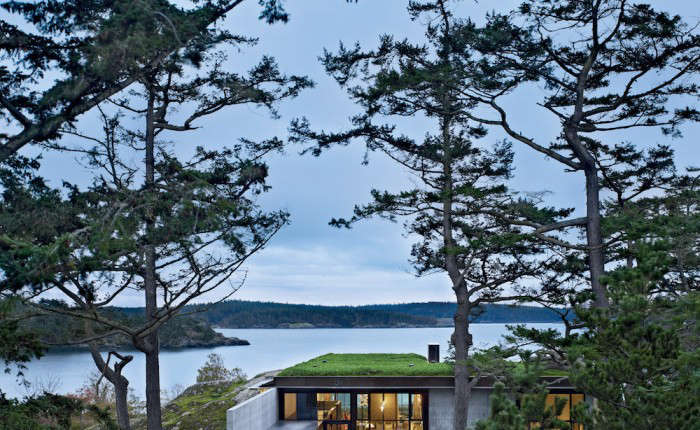
If your dream home mood board includes pine trees, dramatic windows, a suspiciously perfect reading chair, and a deck that practically begs for coffee at sunrise, then Retreat: The Modern House in Nature deserves a spot on your shelf. Ron Broadhurst’s book is not just a glossy parade of beautiful homes for people who apparently never misplace their keys. It is a thoughtful look at how contemporary architecture can respond to landscape, climate, solitude, and the basic human need to occasionally disappear from group chats.
That is what makes this book such satisfying required reading. It does not sell nature as a rustic costume party. Instead, it explores how modern houses can live in conversation with the land. Some projects are bold and sculptural. Others are quiet enough to seem borrowed from the site. Across forests, coasts, mountain edges, and remote clearings, the homes in this collection ask the same big question: how should a house behave when nature is not a backdrop, but the main character?
For readers interested in modern retreat homes, sustainable architecture, indoor-outdoor living, and biophilic design, this book lands in a sweet spot. It is aspirational, yes, but it is also analytical. The best houses here are not impressive because they are remote. They are impressive because they are disciplined. They know when to open up, when to shelter, and when to stop trying so hard and let the trees do some of the work.
What the Book Is Really About
At first glance, Retreat: The Modern House in Nature looks like a celebration of escape. And sure, there is plenty of that. The homes in the book are spread across extraordinary landscapes, and the fantasy of leaving the city behind is baked into every page. But the deeper subject is not escape. It is adaptation.
Broadhurst focuses on modern houses that respond to their environments with intelligence rather than ego. These homes use steel, concrete, glass, and timber, but they do not all look alike. Some are low and recessed, hugging the terrain. Some are elevated lightly on piers to reduce disturbance. Others divide their functions across multiple small buildings, allowing the site to breathe between them. The point is not to drop a generic luxury object into the woods and call it peaceful. The point is to create a house that feels specific to its place.
That is why the book still feels relevant. It captures a moment when residential architecture began pushing harder toward sustainability, flexibility, and a more refined relationship with the outdoors. Even now, those ideas remain central to what people want from a retreat house: more daylight, fewer barriers to the landscape, natural materials, healthier interiors, and lower environmental impact. In other words, people still want a home that says, “Welcome to nature,” not “Behold my aggressively expensive bunker.”
Why Modern Houses in Nature Feel So Compelling
The phrase “modern house in nature” sounds simple, but it carries a lot of architectural weight. Modernism has long been associated with clarity, restraint, and honest materials. Nature, meanwhile, is gloriously indifferent to clean lines and Pinterest boards. Put those two forces together and you get a productive tension: geometry meeting wildness, structure meeting weather, control meeting uncertainty.
That tension is exactly what gives these homes their appeal. A good retreat house does not compete with the landscape; it frames it. Large panes of glass are not there merely for bragging rights. They turn weather, light, and seasonal change into part of daily life. A carefully placed opening can make fog feel cinematic, rain feel intimate, and a stand of trees feel like living artwork that never repeats itself.
Designers featured in and around the book’s orbit often rely on a similar toolkit: floor-to-ceiling glazing, sheltered terraces, clerestory light, raw wood, stone, concrete, steel, and open plans that maintain visual flow. But what matters most is siting. A house perched carelessly in nature feels like an interruption. A house aligned to contours, breezes, solar orientation, and existing vegetation feels inevitable, as if the site had been waiting for it all along.
Lessons From the Houses Themselves
1. Siting Is More Important Than Showing Off
One of the most useful lessons in Retreat is that the best homes begin with respect for the land. In several featured examples, architects work around rocks, trees, slopes, and protected vegetation rather than bulldozing their way into a clean slate. That instinct changes everything. A house that responds to obstacles often ends up more memorable than one designed in total control.
Consider the type of retreat where the building is excavated into rocky ground instead of perched on top of it, or where the plan bends to preserve a grove of existing trees. These are not just aesthetic moves. They reduce visual impact, deepen the sense of shelter, and make the home feel rooted rather than imposed. The result is architecture with humility, which is rarer than it should be.
2. Indoor-Outdoor Living Works Best When It Feels Effortless
The most seductive retreat houses erase the stiff border between inside and outside. Retractable glass walls, continuous flooring, covered decks, breezeways, and detached pavilions create fluid movement between rooms and landscape. This is not simply about entertaining guests while pretending you casually own a mountain view. It is about using architecture to encourage slower, more attentive living.
When indoor-outdoor flow is done well, the house feels larger without becoming bloated. A modest structure can feel expansive if the eye moves naturally toward a terrace, courtyard, or horizon line. It also changes behavior. People step outside more often. Windows stay open longer. Meals drift onto porches. Children treat the edge of the house as a threshold to adventure instead of a hard stop.
3. Natural Materials Age Better Than Trendy Tricks
One reason these homes photograph so well is that their materials are not trying to audition for social media fame. Wood, stone, concrete, plaster, and weathering metals do a lot of the emotional work. They connect the building to the landscape and improve with time, especially when left honest and unoverdecorated.
This matters in a retreat house. If a home is supposed to calm you down, it should not feel like it was assembled from whatever the algorithm called “must-have luxury finishes” this month. Natural materials create texture without noise. They also support a layered, grounded atmosphere that suits houses designed for solitude, recovery, and reflection.
4. Sustainability Is Best When It Is Built In, Not Bolted On
Retreat is especially interesting because it captures modern houses that do more than look eco-conscious. Many of the featured projects and related contemporary examples use passive design, off-grid systems, strategic orientation, deep overhangs, green roofs, durable envelopes, and energy-conscious planning. The smartest houses are not “green” because they added a token solar panel like a gold star on a homework assignment. They are green because their core design decisions reduce energy demand from the start.
That approach feels even more urgent today. A truly modern retreat house should account for climate, resilience, and long-term operating costs. Passive solar strategies, thermal mass, strong insulation, careful glazing, and ventilation planning are not glamorous buzzwords, but they are what separate lasting architecture from expensive scenery.
The Book’s Real Achievement: It Makes Restraint Look Exciting
Plenty of design books can impress you with scale, money, and impossible views. What makes Retreat: The Modern House in Nature more valuable is that it highlights restraint as a form of sophistication. These homes are often luxurious, but their best qualities are spatial rather than flashy. They choreograph sequence, light, privacy, and exposure with real precision.
A house with a narrow approach and a dramatic reveal can feel more powerful than a mansion that shows all its cards at once. A small cabin lifted lightly above a slope can feel richer than a sprawling compound that flattens everything in its path. A dark, intimate bedroom opening toward a bright landscape can feel more restorative than an all-glass box that never gives the eye a place to rest.
That is the modern retreat at its best: not a trophy, but a calibrated experience. It understands that nature is not only something to look at. It is something to feel through shadow, temperature, sound, scent, and rhythm. The best houses in this category make you more aware of wind, rain, daylight, seasonal change, and silence. In an age of constant distraction, that is a serious design achievement.
Who Should Read This Book
This title is an easy recommendation for architects, interior designers, and students of residential design, but it is equally rewarding for homeowners and daydreamers. You do not need to own 40 wooded acres to get something from it. The lessons scale down surprisingly well.
Even if you live in a suburb, a small town, or an apartment with exactly one good window, the book encourages a different way of thinking about home. It asks you to consider orientation, material honesty, visual calm, and the emotional value of direct connection to the outdoors. It makes a strong case that a home should support restoration, not just storage for your increasingly complicated charging cables.
For anyone planning a renovation, a cabin, a vacation home, or even a landscape update, this book offers more than eye candy. It teaches priorities. Start with the site. Protect what is already there. Let light guide the plan. Use fewer, better materials. Build for seasons, not just photographs. And please, for the love of all things peaceful, do not install enough exterior lighting to be visible from low Earth orbit.
Extended Reflections: The Experience of Reading and Imagining a Modern Retreat in Nature
Reading Retreat: The Modern House in Nature is a surprisingly physical experience. You are sitting on a couch, sure, but mentally you are somewhere else entirely: standing barefoot on warm timber, sliding open a wall of glass, listening to wind move through tall grass, and wondering whether your life might improve if you owned fewer objects and more horizon. It is one of those books that quietly rearranges your standards. Suddenly, “nice house” no longer means a giant kitchen island and a chandelier the size of a small moon. It means proportion, stillness, orientation, and a sense that the home belongs exactly where it is.
What lingers most is not any single project, but the emotional pattern they create together. These houses suggest that retreat is not just about distance from the city. It is about distance from mental clutter. A well-designed modern house in nature gives your attention somewhere better to go. Instead of bouncing between screens, you start noticing sunlight moving across a wall, the way fog softens a tree line, or how a stone floor holds coolness in the afternoon. The architecture becomes a tool for perception.
That is why the book resonates beyond architecture fandom. It taps into a broader hunger for spaces that feel quieter, healthier, and more intentional. Many people are not necessarily looking for a wilderness compound. They are looking for a home that allows them to breathe a little deeper. A retreat house, in this sense, is less about luxury than about permission. Permission to slow down. Permission to notice weather. Permission to let silence be part of the décor.
The experience of imagining these homes is also oddly clarifying. You begin to realize that the most desirable features are often the least flashy: a protected courtyard instead of a giant lawn, a bench at the perfect window instead of a room full of furniture, a covered walkway between volumes, a bedroom that opens to trees, a kitchen that catches morning light. These are not random lifestyle details. They are architectural decisions that shape mood and habit. They influence how long you linger over breakfast, whether you go outside at dusk, and how often you feel restored rather than depleted.
There is also something comforting about the book’s balance between modern precision and natural irregularity. The houses are crisp, but the landscapes are not. Branches lean where they want. Rocks interrupt. Shadows shift. Seasons rewrite the composition every few months. That contrast keeps the architecture from becoming sterile. It reminds the reader that the most beautiful homes are not sealed off from change; they are enriched by it.
In that way, Retreat feels less like a catalog of dream houses and more like a meditation on how to live. It proposes that modern design does not have to feel cold, and that nature-focused architecture does not have to be rustic or nostalgic. A house can be contemporary, restrained, and deeply humane all at once. It can be technologically smart without losing warmth. It can be luxurious without turning obnoxious. It can feel composed while still allowing room for weather, imperfection, and surprise.
By the final pages, the reader comes away with more than admiration. There is a subtle shift in perspective. You start to think differently about what “home” should do. Not dominate the land. Not shout over the view. Not trap you indoors beneath layers of synthetic brightness and decorative chaos. Instead, a home should frame life, support well-being, and reconnect you with rhythms larger than your calendar. That is the lasting experience this book offers, and it is exactly why it remains such a rewarding piece of required reading.
Conclusion
Required Reading: Retreat: The Modern House in Nature is more than a stylish architecture title with excellent taste in scenery. It is a sharp, inspiring study of what happens when contemporary residential design takes nature seriously. The book shows that a retreat house is not defined by remoteness alone. It is defined by sensitivity: to site, light, material, climate, and the emotional needs of the people who live there.
That is what keeps the book fresh. Its homes remind us that good architecture is not about escaping the world in some fantasy vacuum. It is about building better relationships with the real world: the slope underfoot, the trees outside the glass, the changing weather, the night sky, the need for calm, and the simple pleasure of living in a place that feels deeply, unmistakably right.