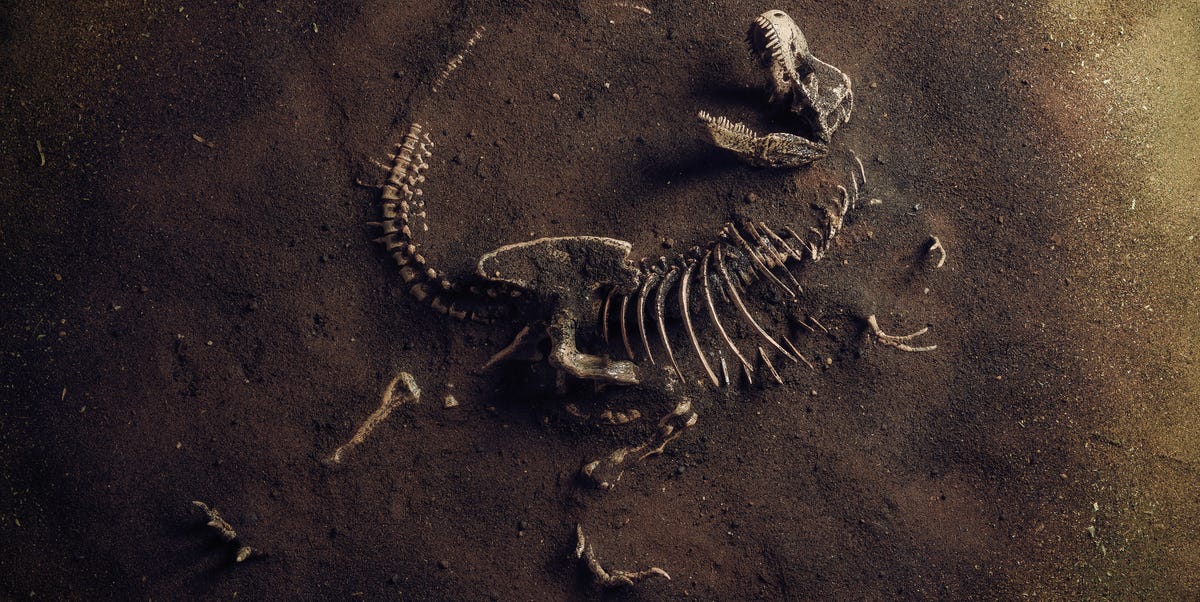
Sometimes the Earth keeps a secret for 233 million years, then casually lets a rainstorm spill the beans. That is essentially what happened in southern Brazil, where heavy rains and flooding in Rio Grande do Sul exposed the fossilized remains of a dinosaur that lived during the Triassic Period, long before Tyrannosaurus rex ever stomped into the spotlight like a celebrity with tiny arms.
The fossil, discovered near São João do Polêsine, is believed to be around 233 million years old. Researchers from the Federal University of Santa Maria identified the remains after rain accelerated natural erosion and revealed bones that had been sealed inside ancient rock. Early reports described the specimen as an almost complete skeleton of a carnivorous dinosaur, likely related to Herrerasauridae, one of the earliest groups of meat-eating dinosaurs known from South America.
That alone makes this discovery exciting. But the real thrill is bigger than one old skeleton. This Brazil dinosaur fossil could help scientists better understand what the first dinosaurs looked like, how they lived, and why some small Triassic predators eventually gave rise to one of the most successful animal groups in Earth’s history. In other words, a rainstorm may have opened a very muddy door into the dawn of dinosaurs.
A Storm, a Hillside, and a Triassic Surprise
The discovery happened after historic rains struck Rio Grande do Sul in 2024. These storms caused devastating floods across the state, affecting communities, roads, homes, farms, and public infrastructure. In the middle of that disaster, erosion did what erosion does best: it stripped away layers of soil and exposed what had been hidden underneath.
Near a reservoir in São João do Polêsine, paleontologists noticed partially exposed bones. At first, the find may have looked like a few scattered fossil fragments. But as researchers examined the site more closely, the situation became much more dramatic. The bones appeared to belong to a nearly complete dinosaur skeleton, a rare prize in paleontology. Most dinosaur fossils are incomplete, crushed, scattered, or missing the good parts. Paleontologists often work like detectives who have been handed three puzzle pieces, half a coffee stain, and a note saying, “Good luck.”
In this case, the skeleton seemed unusually well preserved. Early estimates suggested the dinosaur measured about 2.5 meters, or a little over eight feet, in length. That is not gigantic by later dinosaur standards, but for the early Triassic dinosaur world, it was a serious predator. Think less “movie monster” and more “fast, sharp-toothed neighborhood menace.”
Why 233 Million Years Is a Big Deal
The phrase “233 million years old” sounds impressive because it is. This fossil dates to the Late Triassic Period, a time when dinosaurs were not yet the rulers of Earth. They were evolutionary newcomers sharing the planet with crocodile-line reptiles, mammal relatives, amphibians, and many other strange creatures that looked as if nature was still testing the beta version of land animals.
During the Triassic, the continents were joined into the supercontinent Pangaea. That means what is now Brazil was not isolated in the same way it is today. Land connections allowed animals to spread across regions that later became South America, Africa, and beyond. The world was warmer, ecosystems were recovering from the largest mass extinction in Earth’s history, and reptiles were experimenting with every possible body plan short of wearing sunglasses.
Dinosaurs first appeared during this period, but they did not immediately dominate. For millions of years, they were only part of a crowded ecological cast. Their later rise was gradual, shaped by climate, competition, extinction events, body structure, and ecological opportunity. Fossils from 233-million-year-old rocks are therefore incredibly valuable because they capture dinosaurs near the beginning of their story.
Meet the Likely Predator: A Herrerasaurid-Type Dinosaur
Researchers have suggested that the Brazilian fossil may belong to Herrerasauridae, a group of early carnivorous dinosaurs known from South America. Herrerasaurids were bipedal predators, meaning they walked on two legs. They had sharp teeth, strong jaws, and bodies built for hunting. They were not the giant theropods of the Jurassic and Cretaceous, but they were important players in the early dinosaur drama.
Herrerasaurids are especially interesting because they sit close to the base of the dinosaur family tree. Their anatomy helps scientists study how early dinosaurs evolved key traits: upright posture, efficient movement, grasping hands, and predatory skull features. If later dinosaurs were the blockbuster franchise, herrerasaurids were the original pilot episode.
Not a T. rex, and That Is the Point
It is tempting to compare every carnivorous dinosaur to T. rex, because popular culture has trained us to treat T. rex as the official dinosaur measuring stick. But this Brazilian dinosaur lived more than 150 million years before T. rex. That time gap is enormous. T. rex is closer in time to humans than it is to this Triassic predator.
The newly exposed fossil matters precisely because it is not a familiar late dinosaur celebrity. It belongs to the early chapters, when dinosaurs were still small to medium-sized animals finding their place in ecosystems dominated by other reptiles. Studying fossils like this helps scientists understand how dinosaurs went from evolutionary underdogs to global headliners.
Why Southern Brazil Is a Fossil Hotspot
The fossil was found in a region that has become one of the world’s most important windows into early dinosaur evolution. São João do Polêsine lies within the Quarta Colônia UNESCO Global Geopark, an area known for Triassic rocks, deep valleys, river systems, and fossil-rich sedimentary layers. The region has produced major discoveries, including early dinosaurs and dinosaur relatives that help explain the transition from pre-dinosaur reptiles to true dinosaurs.
Quarta Colônia is not just another pretty landscape with good hiking potential. Its rocks preserve a deep record of ancient life from a crucial time in Earth history. Species such as Buriolestes schultzi, Bagualosaurus agudoensis, and Macrocollum itaquii have all helped researchers study how early dinosaurs diversified in southern Brazil.
The area’s geology is especially useful because sedimentary rocks can preserve bones in layers that scientists can compare, date, and analyze. Each fossil is not merely an isolated object; it is part of a larger geological page. When researchers know the age of the rock, the position of the fossil, and the other species found nearby, they can reconstruct ancient ecosystems with far more confidence.
How Rain Can Reveal Fossils
Rain does not “create” fossils, of course. Fossilization takes millions of years, the right chemistry, burial by sediment, mineral replacement, and a generous amount of geological patience. What rain can do is uncover fossils that are already there.
Heavy rainfall can wash away loose soil and softer sediment. On slopes, riverbanks, and exposed outcrops, water acts like a natural excavation tool. It cuts channels, loosens rock, and reveals bones that were previously buried. For paleontologists, this can be both exciting and terrifying. A newly exposed fossil is easier to find, but it is also in danger. Sun, water, plant roots, livestock, curious visitors, and additional erosion can damage fragile bones very quickly.
That is why the Brazilian team had to work fast. Once the fossil was identified, researchers excavated the surrounding rock and transported a large block containing the bones back to the laboratory. This approach protects the skeleton from breaking apart in the field. In the lab, specialists can remove rock slowly, stabilize fragile surfaces, photograph each stage, and study the anatomy in controlled conditions.
Why “Almost Complete” Matters So Much
A nearly complete dinosaur skeleton is a scientific jackpot. Individual bones are useful, but a connected or mostly complete skeleton tells a much richer story. It can reveal proportions, posture, muscle attachment points, skull shape, limb structure, and possible relationships to other species.
For early dinosaurs, completeness is even more valuable. Many Triassic dinosaur fossils are fragmentary. A tooth here, a femur there, a vertebra with just enough detail to start an argument at a conference. When researchers find a skeleton with many bones preserved, they can compare it more precisely with known species from Brazil, Argentina, and other parts of the ancient supercontinent.
This is why scientists are cautious. Early reports suggested the fossil could be one of the oldest and possibly one of the most complete examples of its kind. But paleontology moves carefully. Researchers still need to prepare the fossil, describe it, compare its anatomy, and publish results in a scientific journal. Until then, the most accurate way to describe it is as a highly significant, likely herrerasaurid-type dinosaur fossil from around 233 million years ago.
Could It Be a New Species?
That is one of the big questions. The fossil may belong to a known early dinosaur species, or it may represent something new. Determining that requires detailed anatomical study. Scientists will examine features such as the shape of the skull, pelvis, vertebrae, limbs, and teeth. Tiny differences can matter. A ridge on a bone, a socket angle, or the structure of a jaw can help separate one species from another.
If the fossil turns out to be a new species, it could add another branch to the early dinosaur family tree. If it belongs to a known species, it may still be extremely valuable because a more complete skeleton can reveal features missing from previous specimens. Either outcome is scientifically important. Paleontology is not only about naming new animals; it is also about improving the resolution of life’s ancient photograph.
The Bigger Picture: Floods, Climate, and Fossil Rescue
The story has a serious modern side. The same rains that exposed the fossil also caused suffering across Rio Grande do Sul. Flooding displaced communities, damaged infrastructure, and turned daily life upside down. Scientists studying the disaster have connected the extreme rainfall to a combination of El Niño, atmospheric conditions, infrastructure vulnerability, and a warming climate that can intensify heavy precipitation events.
For paleontology, extreme rainfall creates a difficult paradox. It can reveal rare fossils, but it can also destroy them. Bones exposed by floodwater may crumble, dissolve, or be washed away before anyone can document them. Small bones are especially vulnerable, yet they often contain important information about growth, hearing, brain structure, and evolutionary relationships.
This means fossil-rich regions need monitoring, conservation plans, trained local teams, and public awareness. A fossil exposed today may be gone next week. The Brazilian discovery shows why rapid scientific response matters. The moment a bone appears on the surface, the clock starts ticking.
What This Discovery Teaches Us About Early Dinosaurs
The rainstorm-revealed dinosaur in Brazil adds another clue to a larger mystery: why dinosaurs succeeded. Early dinosaurs were not instantly dominant giants. Many were small, agile, and specialized. They lived alongside other reptiles that were just as impressive, and sometimes more abundant.
Yet dinosaurs had anatomical advantages that may have helped them over time. Their upright limbs allowed efficient movement. Their growth patterns may have supported active lifestyles. Their bodies adapted into many forms: predators, long-necked herbivores, armored tanks, horned grazers, and eventually birds. The Triassic fossils of southern Brazil capture the beginning of that evolutionary flexibility.
A 233-million-year-old predator from Brazil therefore does more than decorate a museum display. It helps scientists test ideas about dinosaur origins, ancient food webs, and how ecosystems changed after mass extinction. It also reminds us that the dinosaur story did not begin with giants. It began with smaller animals moving quickly through a strange Triassic world, probably unaware that their descendants would one day dominate children’s pajamas, lunch boxes, and blockbuster movies.
Experiences Related to the Discovery: When Deep Time Feels Close
To understand why this discovery captures the imagination, picture the field experience behind it. A paleontologist does not usually walk into a fossil site and immediately find a perfect skeleton smiling from the rock. Fieldwork is hot, muddy, repetitive, and often deeply uncomfortable. Boots sink. Tools slip. Rain turns paths into soup. The sun returns and bakes everything into brick. Then, suddenly, a shape appears that does not belong to ordinary stone.
That moment is the emotional center of fossil hunting. A curved surface, a texture, or a line in the rock can change the day completely. What looked like a wet hillside becomes a crime scene from deep time. The investigator is not asking, “Who did it?” but “What lived here, how did it die, and what can its bones still tell us?”
In the case of the Brazil dinosaur fossil, the experience is even more powerful because the discovery followed destructive rain. There is awe, but also unease. The same water that exposed the skeleton damaged communities nearby. That contrast gives the story weight. Science does not happen in a separate universe of clean lab coats and dramatic music. It happens in real places, among real people, often after difficult events.
For a visitor to a fossil region like Quarta Colônia, the experience can be surprisingly quiet. There may be no roaring dinosaurs, no cinematic chase, no trembling glass of water. Instead, there are layered rocks, valleys, streams, and outcrops that look ordinary until someone explains what they contain. Then the landscape changes in your mind. A hillside becomes a library. A riverbank becomes a timeline. A chunk of mudstone becomes evidence from a world older than flowers, older than grasslands, older than the Atlantic Ocean as we know it.
That is the strange magic of paleontology. It makes time visible. Most of us live inside human schedules: school calendars, work deadlines, birthdays, phone battery percentages. Fossils break that scale. They force the mind to stretch. Two hundred thirty-three million years is not simply “a long time ago.” It is a different planet wearing the same Earth name tag.
The discovery also offers a practical lesson: science depends on attention. Someone had to notice the exposed bones. Someone had to understand that rain had revealed something fragile. Someone had to organize the careful removal of rock before more weather destroyed it. Fossils do not explain themselves. They need trained eyes, patient hands, and institutions that can preserve them.
For readers, the best experience may be a renewed sense of wonder about ordinary ground. Beneath roads, farms, forests, and riverbanks, Earth carries records older than imagination. Most will never become famous. Many will never be found. But occasionally, after a storm, the planet lifts a corner of the curtain and lets us peek at a creature that ran through Brazil when dinosaurs were just beginning their long, spectacular career.
Conclusion: A Rainstorm Opens a Window Into Dinosaur Origins
The rainstorm that revealed a 233-million-year-old dinosaur in Brazil did more than expose old bones. It opened a rare window into the early evolution of dinosaurs, a time when these animals were still emerging in Triassic ecosystems shaped by Pangaea, competition, climate, and opportunity.
The fossil from São João do Polêsine may prove to be one of the most important early dinosaur finds from South America. Whether it becomes a new species or deepens knowledge of a known herrerasaurid, its value is already clear. It shows why southern Brazil is one of the world’s great regions for studying dinosaur origins, and why fossil rescue work matters in a changing climate.
There is also a humbling message in the mud. Earth’s history is not locked away forever. Sometimes it waits under a slope, under a field, under layers of sediment. And sometimes, after millions of quiet centuries, one powerful rainstorm washes away just enough of the present to reveal the astonishing past beneath it.