Editorial note: This article is based on public reporting, official defense announcements, and technical references about depleted uranium ammunition, Russia’s response, and the broader escalation debate around the war in Ukraine.
Introduction: A Small Shell, a Big Geopolitical Boom
In the already thunderous debate over the war in Ukraine, few phrases can make diplomats spill their coffee faster than “nuclear escalation.” So when Russian President Vladimir Putin warned that depleted uranium shells could push the conflict toward a more dangerous phase, the world paid attention. Not because depleted uranium rounds are nuclear weaponsthey are notbut because in wartime politics, words can sometimes travel faster than shells.
The controversy erupted after the United Kingdom said it would supply Ukraine with armor-piercing rounds containing depleted uranium for Challenger 2 tanks. Later, the United States also announced depleted uranium tank ammunition for Abrams tanks. Moscow portrayed the move as reckless and escalatory. Western governments argued the rounds are conventional ammunition, long used in modern armored warfare, and not a nuclear escalation in the technical sense.
That distinction matters. Depleted uranium, often called DU, is a dense metal left over from uranium enrichment. It is weakly radioactive and chemically toxic, but it cannot produce a nuclear explosion. Still, DU ammunition is controversial because it can create toxic dust when it strikes armored targets, raising concerns for soldiers, civilians, cleanup crews, and communities living near battlefields. In other words, it is not a mushroom cloud problem, but it may still be a long-term health and environmental problem.
This article breaks down what Putin said, why depleted uranium shells matter militarily, what the real risks are, and how this debate fits into the larger question of nuclear rhetoric in the Russia-Ukraine war. Think of it as geopolitics with less shouting and more factsbecause international security is confusing enough without everyone acting like the comment section has become foreign policy.
What Happened: The Warning That Reopened an Old Debate
The immediate trigger was the British decision to provide Ukraine with Challenger 2 tanks and related ammunition, including armor-piercing rounds containing depleted uranium. Putin condemned the move and said Russia would be forced to respond accordingly. Russian officials framed the shells as weapons with a “nuclear component,” a phrase that sounded alarming and was clearly designed to land loudly in Western capitals.
The U.K. rejected the nuclear escalation framing. British officials emphasized that depleted uranium rounds have been used for decades in armor-piercing ammunition and are not nuclear weapons. The United States later made a similar argument when it included 120mm depleted uranium tank ammunition for Abrams tanks in a Ukraine security assistance package. Washington presented the rounds as part of conventional military aid meant to help Ukraine counter Russian armor.
The disagreement was not only about metallurgy. It was about messaging. For Ukraine and its supporters, DU rounds were another tool to penetrate heavily armored Russian tanks. For Moscow, they were an opportunity to accuse NATO countries of crossing another red line. And for observers, the episode showed how a technical weapons issue can become a political megaphone.
What Are Depleted Uranium Shells?
Depleted uranium is a byproduct of the uranium enrichment process. Natural uranium contains several isotopes, including uranium-235, the isotope used in nuclear reactors and nuclear weapons. When uranium is enriched, some uranium-235 is removed. The leftover material is called depleted uranium because it contains less uranium-235 than natural uranium.
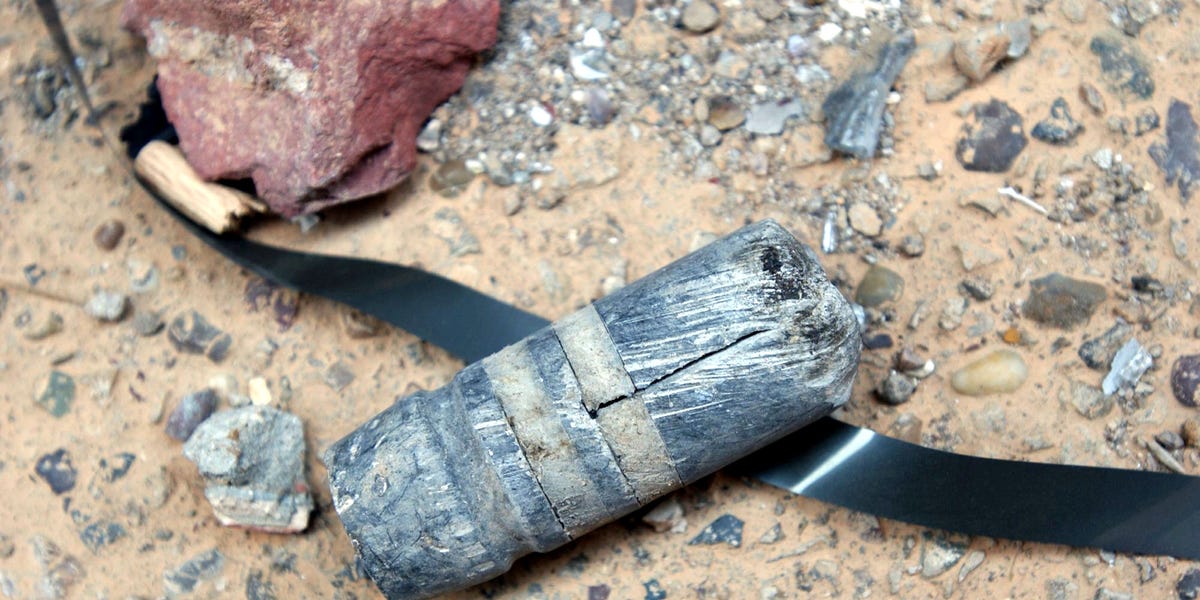
That “depleted” label can be misleading. It does not mean harmless, and it does not mean powerless. DU is extremely densesignificantly denser than leadwhich makes it useful in armor-piercing ammunition. A DU penetrator fired at high speed can punch through tank armor with tremendous force. It also has pyrophoric properties, meaning it can ignite under extreme impact conditions. That makes it especially destructive inside armored vehicles.
In simple terms, a depleted uranium round is less like a traditional explosive shell and more like a very fast, very dense metal dart. It does not need to explode like a bomb to be dangerous. Its destructive power comes from speed, mass, heat, and penetration. That is why militaries have valued DU ammunition for anti-tank warfare.
Why Ukraine’s Allies Wanted These Rounds
Ukraine’s battlefield challenge has been brutally practical: Russian armor, fortified lines, and layered defenses are hard to break. Modern tanks are designed to survive ordinary fire, and anti-armor weapons must be powerful enough to defeat steel, composite armor, and reactive protection systems.
Depleted uranium rounds are designed for precisely that job. When fired from tanks such as the Challenger 2 or Abrams, they can improve the odds of destroying heavily armored vehicles. For Ukraine, that capability matters because every destroyed tank can reduce Russian pressure, protect Ukrainian troops, and open space for maneuver.
From the Western perspective, the logic was straightforward: if Ukraine is receiving advanced tanks, it should also receive ammunition that allows those tanks to perform effectively. A fancy tank without appropriate ammunition is like a sports car with no fuelimpressive in the driveway, less useful in a race.
But weapons do not arrive in a political vacuum. The same feature that makes DU ammunition valuable on the battlefieldits uranium contentalso makes it controversial in public debate. Supporters focus on military effectiveness. Critics focus on toxicity, contamination, and escalation risk. Both sides know the word “uranium” carries emotional weight, and in an information war, emotional weight is never left unused.
Is Depleted Uranium Ammunition a Nuclear Weapon?
No. Depleted uranium shells are not nuclear weapons. They cannot create a nuclear blast, cannot produce a nuclear chain reaction, and are not comparable to tactical nuclear warheads. Their battlefield effect is kinetic and incendiary, not nuclear.
However, the matter is not as simple as saying “not nuclear, therefore no concern.” DU is weakly radioactive and chemically toxic. Its primary risks are associated with inhalation or ingestion of dust particles, especially after impact. When a DU round hits an armored target, some of the material can burn and turn into fine particles. Those particles may settle near the impact site or be carried by wind, depending on conditions.
So the accurate answer is this: depleted uranium ammunition is conventional ammunition with toxic and low-level radiological hazards. It is not a nuclear weapon, but it is also not something civilians should pick up from a battlefield as if it were a souvenir. Battlefield souvenirs are already a terrible idea; radioactive heavy metal souvenirs are somehow even worse.
Why Putin Called It Escalation
Putin’s warning should be understood in the larger pattern of Russian nuclear rhetoric since the full-scale invasion of Ukraine began in 2022. Moscow has repeatedly used nuclear language to discourage deeper Western involvement, slow arms deliveries, and create political anxiety among NATO publics.
By calling depleted uranium rounds weapons with a “nuclear component,” Putin connected a conventional ammunition transfer to the fear of nuclear war. That phrasing was politically useful because it blurred the line between uranium as a material and nuclear weapons as a strategic category. To a weapons engineer, the distinction is obvious. To a worried viewer hearing the word “uranium” on the evening news, it may be less obvious.
This is why the controversy became so loud. The issue was not only whether the shells were dangerous. The issue was whether supplying them changed the escalation ladder. Western officials said no: DU rounds are conventional, and Russia itself has long possessed depleted uranium ammunition. Russia said yes: the transfer showed NATO was moving into more dangerous territory.
In international politics, escalation is partly about capability and partly about perception. A weapon can be technically conventional but politically explosive. Depleted uranium rounds sit exactly in that uncomfortable space.
Health and Environmental Risks: What the Science Says
The health debate around depleted uranium has lasted for decades, especially after its use in the Gulf War, Iraq, Serbia, and Kosovo. The main concern is not external radiation from an intact DU round. The greater concern is exposure to DU dust after impact, especially through inhalation, ingestion, or embedded fragments.
Uranium is a heavy metal, and heavy metals are generally not famous for being friendly to kidneys, lungs, or long-term peace of mind. Technical agencies have emphasized that uranium exposure can affect the kidneys, and inhaled insoluble uranium compounds can damage the respiratory tract. The International Atomic Energy Agency has advised minimizing handling of DU ammunition and using protective gear when contact is necessary.
Environmental risk depends heavily on battlefield conditions. Soil type, rainfall, groundwater movement, wind, target density, and cleanup practices all matter. In many cases, DU particles settle near impact sites. But in war zones, “near impact sites” may include farms, roads, villages, and areas where civilians eventually return. That is why post-conflict marking, testing, cleanup, and public education are important.
The scientific record does not support the claim that DU rounds are nuclear bombs in disguise. It does support caution around contaminated wreckage and impact areas. A balanced view avoids both panic and dismissal. Panic turns science into fog. Dismissal leaves civilians with the cleanup bill.
Past Examples: Why the Controversy Never Went Away
Depleted uranium ammunition was used by U.S. forces in the 1991 Gulf War and the 2003 Iraq War, and by NATO forces in the Balkans. Since then, veterans, doctors, activists, governments, and international organizations have debated possible links between DU exposure and health problems.
Some official studies have found limited evidence of widespread radiological harm. At the same time, communities in affected regions have raised serious concerns about cancer, birth defects, unexploded ordnance, and contaminated land. The difficulty is that war zones contain many hazards at once: smoke, oil fires, explosives, industrial pollution, damaged infrastructure, stress, poor medical access, and other toxic exposures. Separating one cause from many overlapping harms is scientifically difficult.
That uncertainty is part of why DU remains controversial. Even when governments argue the risks are manageable, the people living near former battlefields often ask a different question: “Manageable for whom?” A risk that looks small on a military spreadsheet can feel very different when it is buried in a field where children may later play.
The Military Logic Versus the Political Cost
From a military standpoint, depleted uranium rounds offer a clear advantage against armored targets. They are powerful, proven, and compatible with certain Western tanks. For Ukraine, which faces Russian armored vehicles and entrenched defenses, that advantage has obvious appeal.
From a political standpoint, the cost is also clear. DU ammunition gives Russia a propaganda opening. Moscow can use the word “uranium” to suggest NATO is recklessly nuclearizing the war, even if the ammunition is conventional. That claim may not persuade weapons experts, but it can influence public opinion, especially in countries already nervous about escalation.
This creates a classic wartime dilemma: a weapon may be militarily useful and politically costly at the same time. Leaders must decide whether the battlefield benefit outweighs the diplomatic backlash, the environmental cleanup burden, and the risk of misperception.
Could This Really Lead to Nuclear Escalation?
Depleted uranium shells themselves do not mechanically lead to nuclear escalation. They do not lower the technical threshold for using nuclear weapons. They do not require nuclear command systems. They do not produce nuclear yield. In that narrow sense, the answer is no.
But escalation is not only mechanical. It is psychological, political, and strategic. If one side interprets a weapons transfer as a major provocation, it may respond with threats, deployments, exercises, or other moves meant to restore deterrence. After the DU dispute, Russia also highlighted plans involving tactical nuclear weapons in Belarus, further intensifying the atmosphere of nuclear signaling.
The real danger is not that a DU shell becomes a nuclear weapon. The real danger is that nuclear language becomes normalized. When officials repeatedly talk about nuclear response, nuclear red lines, nuclear deployments, and nuclear readiness, the public conversation becomes more combustible. The more often leaders wave matches around a gas station, the less comforting it is when they say, “Relax, we are only making a point.”
What This Means for Ukraine
For Ukraine, depleted uranium ammunition represents another attempt to close the capability gap with Russia. Ukrainian forces need tools that can defeat armor, protect troops, and increase pressure on Russian positions. In a grinding war, small improvements in firepower can matter.
Yet Ukraine also inherits the long-term consequences of weapons used on its territory. If DU rounds are fired in Ukrainian fields, villages, or industrial areas, Ukraine will eventually be responsible for marking, studying, and cleaning contaminated sites. That means military necessity today may create environmental duties tomorrow.
This does not mean Ukraine should be denied effective defensive tools. It does mean transparency matters. Areas where DU rounds are used should be documented when possible. Soldiers should receive handling guidance. Civilians should be warned not to touch suspicious debris. Cleanup planning should begin before the war ends, not years later when memories fade and paperwork disappears into the bureaucratic sofa cushions.
How Readers Should Understand the Debate
The best way to understand the depleted uranium controversy is to separate three questions.
First: Are depleted uranium shells nuclear weapons?
No. They are conventional armor-piercing munitions. Calling them nuclear weapons is inaccurate.
Second: Are they risk-free?
Also no. DU is a toxic heavy metal with low-level radioactivity. Impact sites and contaminated debris require caution, protective procedures, and long-term environmental awareness.
Third: Can the political dispute increase nuclear tension?
Yes, indirectly. If leaders use DU transfers to justify nuclear threats or deployments, the political environment becomes more dangerous, even if the ammunition itself is not nuclear.
That three-part answer is less dramatic than a headline, but it is more useful. The world has enough drama. What it needs is a little more precision wearing sensible shoes.
Experiences and Lessons Related to the Topic
Anyone who has followed security debates around Ukraine has probably noticed a pattern: the public often hears about a weapon only after it becomes politically explosive. Tanks, missiles, drones, cluster munitions, and depleted uranium rounds all traveled the same road. First, they were technical items discussed by specialists. Then they became symbols. Finally, they turned into arguments about morality, escalation, and national survival.
One experience that stands out from observing this debate is how quickly technical language becomes emotional language. “Depleted uranium” sounds frightening because it contains the word uranium. For many readers, uranium immediately brings to mind nuclear reactors, radiation suits, disaster zones, and Cold War nightmares. That reaction is understandable. But it can also be manipulated. A central lesson is that public communication must explain not only what a weapon does, but what it does not do. DU rounds are not nuclear bombs. That sentence should appear early, clearly, and repeatedly in responsible coverage.
Another lesson is that dismissing public concern rarely works. When officials simply say “this is conventional ammunition” and move on, they may sound technically correct but emotionally tone-deaf. People living in war zones do not experience weapons as categories in a defense manual. They experience them as smoke, wreckage, warnings, rumors, and future uncertainty. If a farmer is told that a burned-out tank nearby may contain toxic dust, the farmer is not comforted by the phrase “not a nuclear weapon.” The practical questions are: Can my children go there? Can animals graze there? Who will test the soil? Who pays for cleanup?
A third experience is that escalation debates often become battles over imagination. One side imagines battlefield necessity: Ukrainian crews facing Russian armor and needing the strongest available rounds. The other imagines long-term contamination and a wider war. Both images have power because both contain pieces of reality. Good analysis should hold both at once. It should be possible to say Ukraine has legitimate defense needs and also say DU contamination requires serious management.
Finally, this topic shows why nuclear rhetoric is so dangerous. Once leaders connect ordinary battlefield developments to nuclear warnings, every new shipment becomes a potential crisis headline. That does not mean every warning is equally credible. It does mean repeated nuclear language can numb audiences or frighten them into confusion. Neither outcome is healthy. A public that panics cannot think clearly; a public that becomes numb may stop noticing real danger.
The practical experience from this debate is simple: precision is not boringit is protective. Knowing the difference between a nuclear weapon, a radioactive material, and a toxic heavy metal helps citizens evaluate claims without falling for either propaganda or complacency. In a war where information moves almost as fast as missiles, clear language is a form of public safety.
Conclusion: The Shell Is Conventional, the Politics Are Not
Putin’s warning that depleted uranium shells could lead to nuclear escalation was less about physics than politics. DU rounds cannot produce a nuclear explosion, and they belong to the category of conventional armor-piercing ammunition. But because they contain uranium, carry toxic risks, and evoke nuclear fear, they are politically powerful far beyond their size.
The controversy reveals the central tension of the Ukraine war: every new military capability can strengthen Ukraine’s defense while also triggering Russian warnings about escalation. Some warnings are strategic messaging. Some may reflect real concern. All of them shape the diplomatic climate.
The smartest position is neither panic nor indifference. Depleted uranium shells are not nuclear weapons, but their use should be documented, controlled, and followed by serious cleanup planning. Russia’s rhetoric should be analyzed carefully, not accepted uncritically. Western governments should explain their decisions clearly, not hide behind jargon. And readers should remember that in modern war, the battle over meaning can be almost as intense as the battle over territory.
In the end, depleted uranium ammunition is a reminder that the most dangerous word in geopolitics is not always “uranium.” Sometimes it is “misunderstanding.”