Note: This article synthesizes real manufacturer documentation, maker reports, reseller specifications, and community troubleshooting knowledge about Palette 2, filament splicing, buffer behavior, calibration, and multi-material 3D printing. No outbound source links are included by request.
Multi-material 3D printing has always sounded a little like magic: load several colors, press print, and watch a single-nozzle printer suddenly act like it went to art school. The Mosaic Palette 2 helped make that idea practical by cutting and splicing up to four different 1.75 mm filaments into one continuous strand, then feeding that custom strand into a standard FDM printer. But like every clever machine in the 3D printing universe, it has a favorite hobby: reminding users that physics still has a seat at the table.
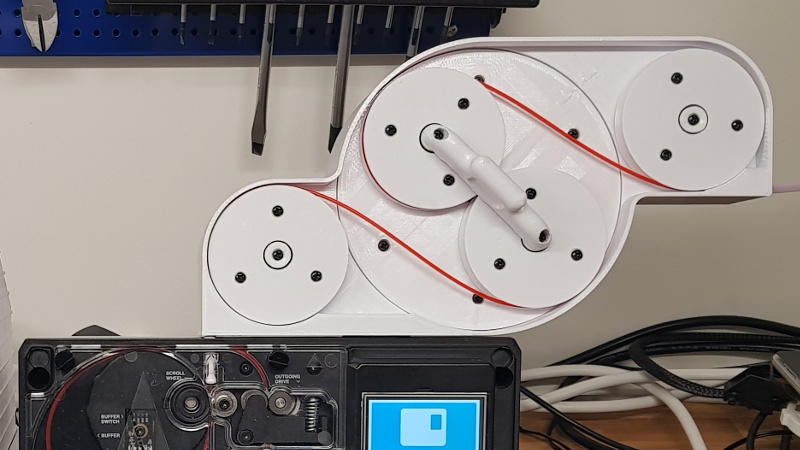
That is where the external buffer comes in. An external buffer boosts 3D printer filament splicing on the Palette 2 by giving freshly joined filament more room to cool, stabilize, and stay ahead of the printer’s appetite. When a printer runs fast, the Palette 2 must keep producing accurate filament segments without letting the buffer collapse. A bigger buffer can reduce that pressure, improve consistency, and make high-speed multi-color printing feel less like juggling spaghetti during an earthquake.
The idea is simple, but the results can be surprisingly meaningful. By expanding the amount of stored filament after splicing, makers have shown that the Palette 2 can maintain better flow during demanding prints, especially when frequent color changes or faster print speeds are involved. It is not a magic wand, but it is a smart mechanical upgrade for a machine that already depends heavily on timing, calibration, and clean filament movement.
What Is The Palette 2 And Why Does Filament Splicing Matter?
The Palette 2 is a multi-material filament splicing system from Mosaic Manufacturing. Instead of replacing your printer’s hot end with multiple extruders, it prepares a single strand of filament made from different colors or materials joined end to end. Your printer sees one filament. The final model sees a rainbow, a soluble support interface, or a carefully planned material combination. Everybody wins, assuming calibration behaves itself.
The basic process is straightforward. Palette 2 drives filament from one of its input channels, cuts it, brings in the next filament, heats the ends, compresses them together, cools the splice, and sends the new strand toward the printer. Software such as CANVAS or compatible workflows tells Palette where each color or material segment should begin and end. The printer then consumes that custom filament strand at exactly the right time.
That timing is everything. If a red segment arrives too early, the red door on your model might become a red roof. If the splice is weak, the filament can break before it reaches the hot end. If the splice is too thick, it may jam in the feed path. If the printer consumes filament faster than the Palette can prepare it, the buffer can collapse. In other words, filament splicing is less like gluing two noodles together and more like running a tiny plastic railroad with a very picky schedule.
Why The Stock Buffer Can Become A Bottleneck
The stock Palette 2 buffer exists for an important reason: freshly spliced filament needs time and space before it is pulled into the printer. During splicing, the machine heats, joins, and cools filament so the connection is strong enough and dimensionally consistent enough to pass through the system. The buffer gives Palette a small reserve of prepared filament, helping it stay ahead while the printer continues extruding.
The challenge is capacity. The original internal buffer stores a limited amount of filament. In typical prints at moderate speeds, that may be enough. But when print speed rises, color changes become frequent, or materials demand more careful splicing, the machine may not have enough reserve. The printer keeps pulling filament, the Palette is still making the next splice, and suddenly the buffer is under stress.
Palette users may recognize related symptoms: buffer collapse warnings, inconsistent calibration, pauses, missed transitions, or a general sense that the machine is working with the emotional energy of someone carrying too many grocery bags in one trip. A larger external buffer helps by increasing the slack between the Palette 2 and the printer. More slack means the spliced filament has more runway before it reaches the extruder.
How An External Buffer Improves Palette 2 Filament Splicing
An external buffer is usually a 3D printed or custom-built add-on that expands the filament storage path after the splice is created. Instead of relying only on the Palette 2’s internal buffer, the filament travels through an additional loop or guided path. This gives the system more stored filament, more cooling distance, and more flexibility during rapid filament demand.
1. More Cooling Time For Fresh Splices
Splicing is not only about connecting two filaments. It is about creating a connection that is strong, centered, and close enough to normal filament diameter to move smoothly. After heat and compression, the joint needs to cool before it is dragged through tubes, gears, and the printer’s extruder. A larger buffer gives that splice a calmer journey. Think of it as letting the splice finish its coffee before asking it to run a marathon.
2. Better Performance At Higher Print Speeds
When a printer is moving slowly, the Palette 2 has more time to prepare the next segment. At higher speeds, the printer consumes filament quickly, and the Palette must keep up. Reports from the maker community showed that adding a substantial external buffer could allow much faster printing than the stock buffer setup could comfortably handle. The improvement comes from giving the machine more prepared filament to draw from while the next splice is being made.
3. Reduced Risk Of Buffer Collapse
Buffer collapse happens when the printer pulls down the available filament reserve faster than Palette can replenish it. Mosaic’s own troubleshooting language treats buffer collapse as a signal to check speed, filament path, and jams. An external buffer does not eliminate the need for calibration, but it can make the system more tolerant by increasing the amount of available slack.
4. Smoother Multi-Color Transitions
Multi-color printing depends on accurate segment lengths. Palette uses calibration systems to keep color changes aligned with the print. If the filament path has too much tension or too little reserve, tiny errors can become visible at the nozzle. A stable buffer path supports more predictable movement, especially during prints with many short segments.
The Numbers That Make The Upgrade Interesting
One well-known external buffer modification for the Palette 2 expanded the filament storage by adding roughly 280 mm of extra buffer length to the stock capacity, which was around 125 mm. That means the modified setup could store more than three times the original amount of spliced filament. In practical terms, that extra room gave the Palette 2 more time to splice, cool, and recover before the printer consumed the next segment.
That does not mean every printer will instantly become a 200 mm/s multi-color superhero. Print speed depends on the printer’s motion system, hot end flow rate, slicer settings, material behavior, cooling, acceleration, and the user’s patience level. Still, the external buffer demonstrates an important truth: the Palette 2 is not limited only by electronics or software. Sometimes, a simple mechanical change can unlock performance the hardware was struggling to maintain.
External Buffer Design: What Matters Most?
A good Palette 2 external buffer should do one job beautifully: store extra filament without adding drag, sharp bends, or chaos. The design does not need to look like it came from NASA. In fact, if your buffer looks like a gentle, organized filament racetrack, you are probably moving in the right direction.
Low Friction
Filament should move freely through the buffer. Any tight contact point, rough printed surface, or awkward tube angle can increase resistance. That resistance may affect calibration or make the printer pull unevenly. Smooth guide surfaces, clean PTFE paths, and rounded curves help keep the movement predictable.
Gentle Bend Radius
Freshly spliced filament should not be forced through aggressive bends. Even a good splice can become vulnerable if it is bent sharply before fully stabilizing. A larger, sweeping path is better than a compact design that bends filament like it owes you money.
Consistent Filament Path
The buffer should keep filament contained and aligned. Loose loops can snag. Poorly placed exits can tug at the Palette or printer. A clean path from Palette to buffer to printer helps the entire setup behave like one coordinated system rather than three devices arguing over plastic string.
Easy Access
Jams happen. Splices fail. Filament breaks. That is not pessimism; that is 3D printing wearing its everyday shoes. An external buffer should be easy to inspect, open, and clear. A beautiful sealed design becomes less beautiful the first time a small broken piece of filament hides inside it like a tiny plastic goblin.
Calibration Still Matters: The Buffer Is Not A Free Pass
An external buffer can improve performance, but it does not replace proper Palette 2 calibration. The machine still needs accurate splice tuning, clean filament, reliable drive engagement, and correct printer settings. If your splices are weak, bulky, or inconsistent, more buffer space may simply give bad splices a longer scenic route before they fail.
Mosaic’s support guidance emphasizes several important basics. Filament diameter should be consistent and within the recommended range for reliable splicing. Splice tuning should be performed when introducing new materials, brands, or unusual filament types. Flexible filaments require extra caution and are generally better attempted after users have already achieved successful results with rigid materials. These are not glamorous tips, but they are the kind that save prints at 2 a.m.
Users should also watch for material compatibility. PLA-to-PLA splices are usually more forgiving than unusual combinations involving flexible, soluble, nylon, or filled filaments. Different materials soften, compress, and cool differently. A buffer can support the process, but it cannot make incompatible materials fall in love. Some filament relationships are simply not meant to be.
Practical Example: When The External Buffer Helps Most
Imagine printing a four-color logo on a single-extruder printer using the Palette 2. The model has frequent color transitions, small lettering, and short color segments. The printer is moving at a brisk pace because you would like the print finished sometime before the next lunar eclipse. In this situation, the Palette 2 must repeatedly splice short pieces and keep feeding the printer without falling behind.
With only the stock buffer, the available reserve may shrink quickly during busy sections. If the Palette pauses to complete a splice while the printer continues consuming filament, the system has less room for timing error. With an external buffer, there is a larger reserve of finished filament between the Palette and printer. The printer can keep drawing while the Palette catches up. That added breathing room can mean fewer buffer warnings, smoother transitions, and less drama.
Another useful case is printing with a faster machine that has already been tuned for higher speeds. Modern printers can move quickly, but the Palette 2 was designed in an era when many hobby printers were slower. An external buffer helps bridge that gap by addressing the physical delay between splice creation and filament consumption.
Possible Downsides Of Adding An External Buffer
No upgrade is perfect, and an external buffer is no exception. The first downside is complexity. More parts mean more alignment, more mounting decisions, and more places where filament can rub or snag. The second downside is space. Some external buffers require extra room beside or above the printer, and many 3D printing desks already look like a robot lost a yard sale.
Another concern is calibration behavior. Palette’s feedback systems depend on predictable filament movement. If the external buffer adds inconsistent drag, springiness, or unusual path length changes, it may create new problems while solving old ones. The goal is not simply “more buffer.” The goal is “more smooth, controlled buffer.” That distinction matters.
There is also the warranty and support question. Any modification can complicate official troubleshooting. If something goes wrong, the first recommendation may be to return the system to stock configuration. That is reasonable. Before adding an external buffer, document your original setup, keep removable parts, and avoid irreversible changes when possible.
Tips For Getting Better Results With A Palette 2 External Buffer
Start With A Reliable Stock Setup
Before adding anything, make sure the Palette 2 works properly in its original configuration. Run calibration, test simple multi-color prints, and confirm that your splice settings are good. Upgrades work best when they improve a stable system, not when they become a decorative bandage for unresolved problems.
Use Consistent Filament
Filament diameter matters. Variations can create weak splices, oversized joints, or feed issues. Measure filament from new brands before trusting them in long multi-material jobs. Dry filament also helps, especially with materials that absorb moisture. Wet filament can pop, ooze, and behave like it has personal objections to your project.
Keep The Path Short Enough To Control
More buffer is useful, but absurdly long paths can add friction and delay. A good external buffer adds meaningful slack without turning your printer station into a filament theme park. Keep curves gentle, supports stable, and the exit path aligned with the printer’s intake.
Test With Simple Prints First
Do not make your first external-buffer test a 38-hour four-material dragon with soluble supports and emotional baggage. Start small. Use a two-color calibration cube, a logo plate, or a simple color-transition model. Watch how the filament moves through the buffer, then increase complexity once the setup proves itself.
Why This Upgrade Still Matters In The Age Of Newer Multi-Material Systems
Today, multi-material 3D printing includes newer systems, automatic material stations, tool changers, and printers with integrated filament management. Yet the Palette 2 remains interesting because it represents a clever approach: make one continuous custom filament strand and let a single-extruder printer do the rest. It is elegant, portable, and compatible with many open-material printers.
The external buffer upgrade matters because it shows how community experimentation can extend hardware beyond its original limits. Instead of waiting for a new machine, makers identified a bottleneck and solved it with a practical mechanical addition. That is the best kind of 3D printing hack: not flashy for the sake of being flashy, but useful because it makes the machine behave better.
It also highlights a broader lesson for hobbyists and professionals. In 3D printing, reliability often comes from managing the boring details: friction, cooling time, filament diameter, path alignment, and speed. The external buffer is not glamorous. It is not covered in RGB lighting. It does not need a motivational slogan. It simply gives the Palette 2 more room to do its job, and sometimes that is exactly what a machine needs.
Experience Notes: What Using An External Buffer Feels Like In Real Printing
Using an external buffer with the Palette 2 changes the personality of the setup. Without the buffer, a fast multi-color print can feel tense. You watch the filament path, listen for the cutter, glance at the printer, and wonder whether the next transition will arrive on time. It is a little like watching someone assemble a sandwich while riding a bicycle. Impressive, yes. Relaxing, not especially.
With a well-designed external buffer, the system feels less rushed. The filament has more stored length between the Palette and the printer, and that extra reserve makes the workflow feel more forgiving. During sections with repeated color changes, the printer can keep drawing from the buffer while Palette completes its next splice. The visual difference is subtle, but the operational difference is noticeable: fewer frantic moments, fewer sudden warnings, and a smoother rhythm between machines.
The biggest improvement often appears during faster prints. On a tuned printer, it is tempting to raise speed and assume every accessory can keep up. The Palette 2, however, has a mechanical process to complete. It cannot simply “think faster” and magically join filament. It must cut, heat, compress, cool, and feed. The external buffer gives that sequence more breathing room. The result is a setup that feels better matched to printers capable of higher flow and faster travel.
That said, the first few sessions may involve tinkering. The buffer may need repositioning. A tube may need a gentler curve. A printed guide may need sanding. A spool holder may need to move because filament tension is sneaking into the system like a raccoon through a pet door. These small adjustments are normal. The goal is to make filament movement boring. In 3D printing, boring movement is beautiful movement.
One useful habit is watching the buffer during the first layers and again during dense color-change sections. The filament should move smoothly, without jerks, scraping, or sudden tightness. If the buffer repeatedly empties, the print may still be too fast or the splice settings may need attention. If filament piles up awkwardly, the path may not be guiding it cleanly. Treat the buffer like a traffic system: the best design prevents jams before anyone starts honking.
The experience also teaches patience with material choices. PLA combinations are usually the easiest place to begin. PETG, TPU, soluble supports, and specialty filaments can demand more splice tuning. The external buffer helps the mechanical timing, but material compatibility still matters. A strong splice is the foundation. The buffer is the helpful assistant carrying the bricks, not the engineer designing the bridge.
For users who enjoy modifying equipment, the external buffer is satisfying because it solves a real problem with a visible mechanical answer. You can see the extra filament path. You can observe the smoother feed. You can understand why the upgrade works without needing a secret firmware spellbook. It is a reminder that many 3D printing improvements come from respecting the physical behavior of plastic, not just changing numbers in a slicer.
In everyday use, the best external buffer is the one you stop thinking about. Once tuned, it becomes part of the workflow: load filament, start the Palette, begin the print, and let the system do its oddly beautiful plastic choreography. That is the real win. The upgrade does not make the Palette 2 effortless, but it can make it calmer, faster, and more capable. For multi-material printing, calm is not boring. Calm is victory.
Conclusion
An external buffer boosts 3D printer filament splicing on the Palette 2 by solving a practical mechanical limitation: the need for more stored, cooled, ready-to-feed filament between the splicer and the printer. By increasing buffer capacity, makers can reduce the risk of buffer collapse, support higher print speeds, improve the stability of color transitions, and give freshly formed splices more time to settle before entering the extruder path.
The upgrade is not a cure for poor calibration, bad filament, weak splice tuning, or overly ambitious slicer settings. However, when paired with a properly tuned Palette 2, a clean filament path, and realistic print speeds, an external buffer can make multi-color and multi-material printing more reliable. It is a smart reminder that sometimes the best 3D printer upgrades are not complicated. Sometimes they are just extra room for filament to breathe.