Energy drinks occupy a curious corner of the beverage aisle. Their cans look sporty, their names sound heroic, and their advertisements promise sharper focus, longer endurance, and enough motivation to reorganize a garage at 2 a.m. Yet many consumers still do not fully understand what these products contain, how they differ from sports drinks, or how quickly their caffeine intake can add up.
That confusion is not simply the result of careless shopping. Poor energy drink labeling, inconsistent package designs, complicated ingredient lists, aggressive marketing, and limited caffeine education all contribute to widespread misperceptions. A shopper may see vitamins, electrolytes, “zero sugar,” or botanical ingredients and assume the product is a healthy performance beverage. Meanwhile, the most important numberthe total caffeine per containermay receive far less visual attention than the flavor, logo, or promise of “extreme energy.”
Energy drinks are not automatically dangerous for every healthy adult, nor is caffeine a nutritional supervillain wearing a tiny black cape. The real problem is that consumers cannot make informed decisions when essential information is unclear, misunderstood, or overshadowed by marketing.
The Word “Energy” Creates the First Misperception
The confusion begins with the category name itself. In nutrition, energy technically refers to calories. In energy drink marketing, however, “energy” usually means stimulation, alertness, and reduced feelings of fatigue. Those are not the same thing.
Caffeine does not create energy in the way food supplies calories. It temporarily blocks adenosine receptors in the brain, reducing the sensation of tiredness and increasing alertness. The body may feel more awake, but it has not magically received sleep, hydration, or a balanced meal. The can is not a portable eight-hour nap, despite what the lightning bolts on the label may suggest.
This distinction matters because consumers may use energy drinks to compensate for chronic sleep loss, skipped meals, demanding work schedules, intense study sessions, or long gaming nights. The stimulant can disguise fatigue temporarily without addressing its cause. When the effect fades, the original tiredness may return along with irritability, headache, or another craving for caffeine.
Why Energy Drink Labels Can Be Difficult to Interpret
Caffeine Disclosure Is Not Always Prominent
Many major energy drink brands voluntarily print the caffeine amount on their containers. That is an improvement over the marketplace described in earlier reports, when caffeine quantities were frequently absent or buried in supplemental information. However, voluntary disclosure does not produce a perfectly standardized system.
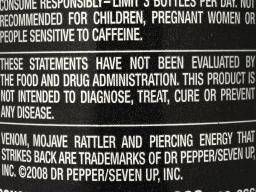
One product may print “200 mg caffeine” near the nutrition panel. Another may place the number in small text beside a warning. A third may emphasize a proprietary energy blend without clearly showing how much of each stimulant ingredient is present. Restaurant and fountain beverages can create additional confusion because caffeine information may not appear where customers order or refill their drinks.
The FDA notes that energy drinks sold in the United States vary widely in caffeine content. A single container may deliver an amount comparable to multiple cups of coffee. For most healthy adults, total daily caffeine consumption of up to about 400 milligrams is generally not associated with negative effects. That figure is not a challenge, a target, or a coupon that expires at midnight. Individual sensitivity varies considerably.
Serving Size Can Hide the Real Dose
Serving-size math is another common source of misunderstanding. A tall can may appear to be one drink but contain more than one labeled serving. Consumers who glance only at the per-serving amount can underestimate the caffeine, calories, sugar, or other ingredients they consume when they finish the container.
The clearest label would display caffeine per serving and per entire container in large, easy-to-find text. After all, very few people open a can, drink exactly 43 percent, carefully mark the remaining liquid with laboratory tape, and place it in the refrigerator for tomorrow.
Botanical Ingredients Can Add More Caffeine
Guarana, green tea extract, yerba mate, and kola nut may sound more natural than synthetic caffeine, but “natural” does not mean caffeine-free. Guarana naturally contains caffeine, so consumers need to know whether the stated caffeine total includes every source.
Long ingredient lists also create a health halo. B vitamins, taurine, ginseng, amino acids, and plant extracts can make a beverage look nutritionally sophisticated. However, caffeine remains the primary ingredient responsible for the familiar increase in alertness. Evidence supporting dramatic performance benefits from many additional ingredients is limited or inconsistent.
Energy Drinks and Sports Drinks Are Not the Same
One of the most persistent energy drink misperceptions is that energy drinks and sports drinks serve the same purpose. They do not.
Sports drinks are designed primarily to supply fluid, carbohydrates, and electrolytes during prolonged or vigorous physical activity. Even sports drinks are unnecessary for many ordinary workouts, but their basic purpose is hydration and fuel replacement.
Energy drinks are formulated mainly to increase alertness through caffeine and other stimulants. Some contain substantial sugar, while others use low-calorie sweeteners. They are not ideal hydration beverages for children playing a soccer game, teenagers practicing in hot weather, or adults replacing fluid after a long run.
Packaging often blurs this difference. Both categories use athletic imagery, bold colors, performance language, and sponsorships connected to sports or gaming. A teenager may reasonably conclude that the can beside the gym bag is designed for exercise. Without clear education, marketing becomes the teacherand marketing rarely assigns homework on heart rate, sleep quality, or total caffeine intake.
Lack of Caffeine Education Leaves Consumers Guessing
Many People Do Not Track Total Daily Caffeine
Consumers often think about caffeine product by product rather than as a daily total. A morning coffee, caffeinated pre-workout powder, afternoon energy drink, chocolate snack, and evening soda may seem unrelated. The body, unfortunately, does not organize caffeine into separate folders.
Caffeine can remain active for hours, and its effects vary according to body size, genetics, medications, pregnancy, health conditions, sleep habits, and regular caffeine use. Someone who tolerates two cups of coffee comfortably may react very differently to a rapidly consumed energy drink, especially on an empty stomach.
Young Consumers Need More Than a Tiny Warning
Children and teenagers are especially important in the energy drink education debate. Pediatric health organizations recommend that young people avoid energy drinks and caffeine-containing stimulant beverages. Developing bodies may be more sensitive to effects such as rapid heartbeat, elevated blood pressure, anxiety, stomach discomfort, restlessness, and sleep disruption.
Sleep deserves particular attention. A student may drink caffeine to finish homework, sleep poorly because of the caffeine, struggle to wake up, and reach for another drink the next day. The result is a self-reinforcing cycle in which the proposed solution contributes to the original problem.
Schools, coaches, pediatricians, parents, and youth sports organizations can help by explaining the difference between hydration and stimulation. Simply telling teenagers that something is “bad” is rarely enough. Teenagers have survived group projects; they can detect an incomplete explanation from three hallways away.
The Health Effects Should Be Explained Without Hype
Public education works best when it is accurate rather than alarmist. Moderate caffeine consumption is tolerated by many adults, and caffeine can temporarily improve alertness, reaction time, and concentration. The issue is dose, timing, individual sensitivity, and the presence of other ingredients or substances.
Common Signs of Too Much Caffeine
Excessive caffeine can cause jitteriness, anxiety, nausea, headache, insomnia, increased heart rate, heart palpitations, and elevated blood pressure. More serious caffeine toxicity may involve severe agitation, abnormal heart rhythms, seizures, dehydration, or other medical complications.
Controlled research has also found that consuming large quantities of certain energy drinks within a short period can affect blood pressure and the electrical activity of the heart. These findings do not mean one sip will make a heart leap dramatically from a chest like a cartoon character. They do support caution, particularly for people with heart disease, high blood pressure, stimulant sensitivity, or relevant medication use.
Sugar Adds a Separate Health Concern
Traditional energy drinks may contain large amounts of added sugar. One container can contribute a substantial share of the recommended daily added-sugar limit. Frequent consumption can add calories and increase risks associated with sugar-sweetened beverages, including tooth decay, weight gain, and metabolic disease.
Sugar-free energy drinks remove that particular concern, but they do not remove caffeine. “Zero sugar” is not another way of saying “zero stimulant,” “ideal for children,” or “drink three before lunch.”
Alcohol and Energy Drinks Are a Risky Combination
Mixing caffeine with alcohol is particularly concerning. Caffeine can make a person feel more alert without restoring judgment, coordination, or reaction time. Someone may feel less sleepy while remaining just as impaired.
This mismatch can encourage additional drinking and risky decisions. Clear warnings and college-level education should emphasize that caffeine does not sober a person up. It merely creates the possibility of being wide awake while making terrible decisions with impressive confidence.
Marketing Can Create a Misleading Health Halo
Modern energy drinks are increasingly promoted through wellness, fitness, productivity, gaming, beauty, and lifestyle language. Terms such as “clean energy,” “focus,” “performance,” “thermogenic,” “vitamin enriched,” and “plant powered” can make a high-caffeine drink appear closer to a nutritional supplement than a stimulant beverage.
Attractive cans, candy-inspired flavors, influencer partnerships, and sports sponsorships may be especially appealing to younger consumers. Even when a company states that a product is not intended for children, the overall design may still feel youth-friendly.
Consumers naturally use visual shortcuts. A green leaf suggests natural ingredients. A muscular athlete suggests performance. A slim can suggests wellness. A sugar-free statement suggests healthfulness. None of those cues reveals whether the drink contains 80, 160, 200, or 300 milligrams of caffeine.
What Better Energy Drink Labeling Could Look Like
Effective labeling should not require a nutrition degree, magnifying glass, or detective board covered in red string. Several improvements could reduce energy drink misperceptions:
- Front-of-package caffeine disclosure: Display total caffeine prominently in milligrams.
- Per-container information: Show the amount consumers receive if they finish the entire package.
- All-source totals: Confirm that caffeine from guarana, tea extracts, and other ingredients is included.
- Plain-language warnings: Identify groups that should avoid the product or consult a healthcare professional.
- Clear category language: State that an energy drink is not a sports hydration beverage.
- Responsible marketing: Avoid presentation that makes highly caffeinated products especially attractive to children.
Warning labels alone are not a complete solution. Some consumers ignore warnings, misunderstand milligram amounts, or interpret high caffeine as evidence that a product is more powerful and therefore more desirable. Labels must be paired with education that explains what the numbers mean.
How Consumers Can Make Safer Choices
Adults who choose to consume energy drinks can reduce uncertainty by following a simple label-reading routine.
- Find the total caffeine per container. Do not rely only on the serving-size figure.
- Add caffeine from every source. Include coffee, tea, soda, supplements, chocolate, medications, and other energy products.
- Check the added sugar. A stimulating drink can also be a sugar-sweetened beverage.
- Avoid rapid stacking. Drinking multiple caffeinated products close together makes it easier to overshoot personal tolerance.
- Pay attention to symptoms. Palpitations, severe anxiety, vomiting, chest discomfort, fainting, confusion, or seizures require appropriate medical attention.
- Do not combine energy drinks with alcohol. Feeling alert does not mean being sober.
People who are pregnant or breastfeeding, take stimulant medications, have cardiovascular conditions, experience anxiety disorders, or are unusually sensitive to caffeine should discuss consumption with a qualified healthcare professional.
Experience-Based Lessons: How Misperceptions Play Out in Real Life
The labeling problem becomes easier to understand through common real-world situations reported by families, educators, coaches, healthcare professionals, and consumers. These examples are composites rather than stories about specific individuals, but the patterns are familiar.
The Student Who Thought It Was a Sports Drink
Consider a high school athlete buying a brightly colored can before afternoon practice. The package features athletic graphics, fruit flavoring, B vitamins, and words related to performance. The student assumes it belongs in the same category as an electrolyte beverage.
Practice begins in hot weather. Instead of focusing on water and proper hydration, the student consumes a large dose of caffeine. Later, the student feels shaky, notices a pounding heartbeat, and sleeps poorly. The next morning begins with exhaustion and another caffeinated drink.
The mistake is understandable. The package communicated excitement and performance more effectively than it communicated the distinction between a stimulant beverage and a hydration product. A clear front label and a short lesson from a coach could have changed the decision.
The Office Worker Who Accidentally Stacked Caffeine
Another common pattern involves a busy adult who begins the day with coffee, drinks an energy beverage after lunch, and takes a caffeinated workout supplement before the gym. Each choice seems ordinary in isolation.
By evening, the person feels restless and tired at the same timeone of caffeine’s least charming tricks. Sleep becomes difficult, and the following day requires even more stimulation. The problem is not necessarily a single product. It is the absence of a visible daily total.
People routinely track calories, protein, steps, and screen time, yet many have no practical framework for tracking caffeine. Better education would encourage consumers to think in milligrams across the entire day rather than in cups, cans, scoops, and shots.
The Parent Reassured by “Zero Sugar”
Parents may also interpret sugar-free labeling as a general declaration of healthfulness. A zero-sugar can looks preferable to soda, particularly when it includes vitamins and plant-derived ingredients. The parent may overlook the caffeine amount or assume that a product sold beside ordinary soft drinks is suitable for teenagers.
This is where simple pediatric guidance matters. Parents do not need a lecture on every chemical in the beverage aisle. They need a memorable rule: energy drinks are stimulant products, not routine drinks for children and adolescents.
The Consumer Who Believed More Caffeine Meant Better Performance
Some adults deliberately choose the highest-caffeine option because they associate a larger number with greater effectiveness. Yet more stimulation does not guarantee better performance. Too much caffeine can produce trembling hands, racing thoughts, stomach discomfort, poor concentration, and disrupted sleepthe opposite of calm, sustained productivity.
The experience resembles turning up the volume on a radio with weak reception. At first it sounds louder. Eventually, it is mostly noise.
The Most Useful Lesson
Across these situations, the central lesson is not that consumers are foolish or energy drinks are uniquely evil. The lesson is that people make decisions using the information placed in front of them. When marketing is vivid and warnings are quiet, marketing wins.
Better labels would make caffeine totals instantly visible. Better education would teach consumers how body size, timing, sleep, medications, alcohol, and multiple caffeine sources affect risk. Together, those changes would replace vague fear with practical knowledge.
Conclusion: Clear Information Is the Best Antidote to Confusion
Poor labeling and limited education remain major contributors to energy drink misperceptions. Although caffeine disclosure has improved among leading brands, consumers still face inconsistent labels, serving-size confusion, hidden caffeine sources, wellness-oriented marketing, and uncertainty about the difference between energy drinks and sports drinks.
A balanced public-health approach should avoid both extremes. Energy drinks should not be treated as harmless flavored water, but every can does not need to be discussed as though it contains experimental rocket fuel. Consumers deserve standardized caffeine information, honest marketing, age-appropriate education, and straightforward explanations of risk.
When people understand what caffeine does, how much they are consuming, and who may be especially vulnerable, they can make better decisions. A label cannot replace sleep, hydration, or common sensebut a good one can at least stop hiding behind the barcode.