Every so often, space news delivers a headline that sounds like it escaped from a science-fiction movie: a new NASA telescope has found an Earth-like world. Cue the dramatic music, the glowing blue planet artwork, and at least one person asking whether we should start packing sunscreen. The real story is even more interesting, because it shows how modern astronomy actually works: not with one magical snapshot of a second Earth, but with patient measurements, repeated signals, careful confirmation, and a lot of scientists refusing to get carried away until the data behaves itself.
The telescope at the center of this story is NASA’s Transiting Exoplanet Survey Satellite, better known as TESS. Launched in 2018, TESS became one of NASA’s most important planet-hunting tools, scanning bright nearby stars for tiny dips in light that may reveal planets crossing in front of them. In 2019, TESS announced its first Earth-sized exoplanet, HD 21749c. Soon after, its discoveries helped lead to one of the most exciting finds in modern exoplanet research: TOI 700 d, the first Earth-sized planet found by TESS in the habitable zone of its star.
That distinction matters. “Earth-sized” does not automatically mean “Earth-like,” and “habitable zone” does not mean “currently inhabited by friendly aliens with excellent Wi-Fi.” But it does mean astronomers have found a world with some of the basic ingredients that make scientists lean forward in their chairs: a rocky-planet scale, a star that can be studied, and an orbit where liquid water could be possible under the right atmospheric conditions.
What Did NASA’s TESS Actually Find?
In 2019, TESS confirmed HD 21749c, a planet roughly comparable in size to Earth. It orbits a star about 53 light-years away, which is practically “down the street” by cosmic standards, although your GPS would still give up immediately. HD 21749c was important because it proved TESS could do exactly what it was built to do: find smaller planets around relatively nearby stars.
HD 21749c is not considered a comfortable Earth twin. It orbits very close to its star, completing a year in only about eight days. That makes it a fascinating scientific target but not a cozy vacation destination. Think less “blue oceans and forests” and more “please do not remove your helmet.”
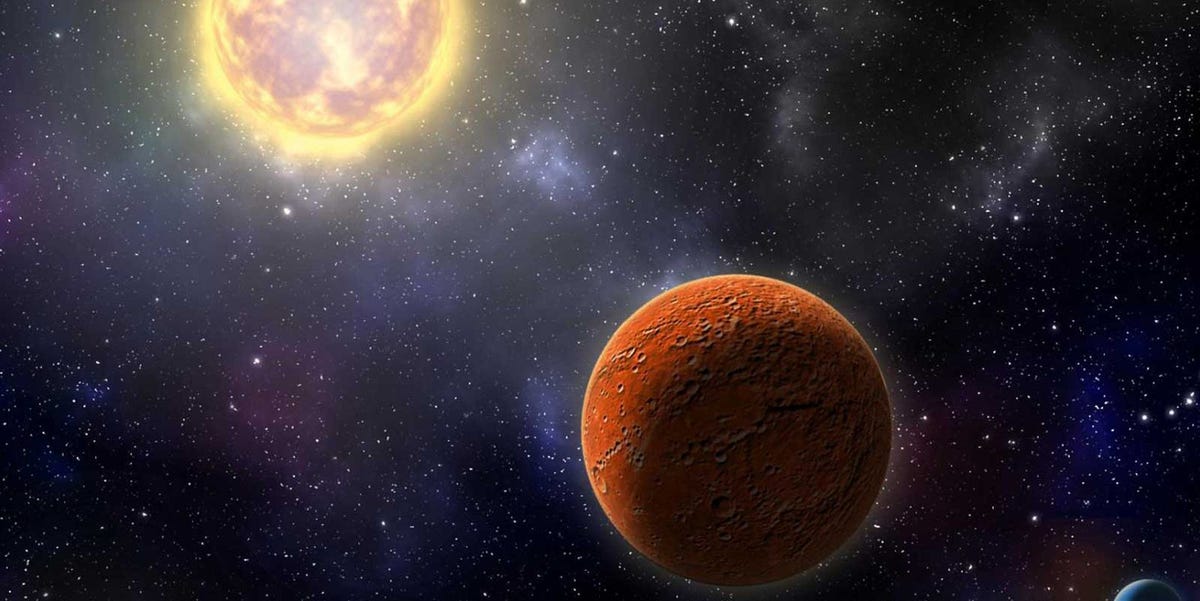
The discovery that truly made headlines as an Earth-sized world in a habitable zone was TOI 700 d. This planet orbits TOI 700, a small, cool M dwarf star about 100 light-years away in the constellation Dorado. TOI 700 d is roughly Earth-sized, orbits every 37 days, and receives about 86 percent of the stellar energy Earth receives from the Sun. Those numbers are why scientists took notice.
Why the 2019 Exoplanet Discovery Was a Big Deal
By 2019, astronomers had already confirmed thousands of exoplanets, so another planet might sound like adding one more grain of sand to the cosmic beach. But the TESS discoveries mattered because they marked a new phase in the search for nearby, smaller worlds. NASA’s earlier Kepler Space Telescope had shown that planets are common throughout the galaxy. TESS was designed to find planets around brighter, closer stars that are easier to study with future telescopes.
That is the key difference. Kepler gave scientists the grand statistical picture: the galaxy is packed with planets. TESS helps identify the neighbors. A nearby exoplanet around a bright star is more than a catalog entry; it is a target for follow-up observations, atmosphere studies, mass measurements, and climate modeling.
In other words, TESS did not just ask, “Are there planets out there?” It asked, “Which planets are close enough and bright enough for us to investigate next?” That is like moving from knowing restaurants exist in a city to finally getting a menu, a map, and a table near the window.
How TESS Finds Exoplanets
TESS uses the transit method. When a planet passes in front of its star from our point of view, the star’s light dims slightly. The dip is tiny, but space telescopes are very good at noticing tiny things. If the same dimming pattern repeats on a predictable schedule, scientists can infer that a planet may be orbiting the star.
The transit method can reveal a planet’s size, orbital period, and distance from its star. But it does not immediately tell us everything. Scientists still need follow-up observations to rule out false positives, such as eclipsing binary stars or instrumental noise. For TOI 700 d, NASA’s Spitzer Space Telescope helped confirm the signal, strengthening the case that the planet was real.
This is why exoplanet discovery is less like shouting “Eureka!” and more like solving a cosmic detective case. The suspect is a tiny dip in starlight. The witnesses are telescopes. The evidence is repeated observation. The detective wears a cardigan and has a spreadsheet with more columns than seems emotionally healthy.
Meet TOI 700 d: The Earth-sized Habitable-Zone World
TOI 700 d quickly became one of the most discussed TESS discoveries because it sits in the habitable zone of its star. The habitable zone is the range of distances where liquid water could exist on a planet’s surface, assuming the planet has a suitable atmosphere. It is often called the Goldilocks zone because conditions may be neither too hot nor too cold.
The TOI 700 system includes multiple planets. TOI 700 b is close to Earth in size and likely rocky, but it orbits much closer to the star. TOI 700 c is larger, between the sizes of Earth and Neptune, and may be gas-rich. TOI 700 d is the outer planet that drew the most attention because its orbit places it in the star’s habitable zone.
TOI 700 d is not a confirmed second Earth. Scientists do not yet know whether it has an atmosphere, oceans, continents, clouds, or anything that would make it feel familiar. But based on its size and orbit, it is a strong candidate for further study. That is the honest version of the headline: not “NASA found Earth 2.0,” but “NASA found a world worth taking very seriously.”
Why “Earth-like” Needs Careful Translation
The phrase “Earth-like planet” is powerful for SEO, news headlines, and daydreams during boring meetings. But in astronomy, it needs careful handling. A planet can be Earth-like in size but not in temperature. It can be in the habitable zone but have no atmosphere. It can be rocky but roasted, frozen, airless, or blasted by stellar radiation.
For example, Venus is close to Earth in size, yet nobody calls it a pleasant backup plan. Mars sits near the outer edge of the Sun’s habitable zone, but its thin atmosphere and cold surface make liquid water difficult to sustain today. Size and location are only the first clues.
That is why scientists prefer terms like “Earth-sized,” “potentially rocky,” or “habitable-zone planet.” These phrases may not sound as dramatic, but they are more accurate. Science is picky that way. It ruins the party, then brings better snacks.
The Role of M Dwarf Stars in the Search for Life
TOI 700 is an M dwarf, a small and cool type of star. M dwarfs are common in the Milky Way, and because they are dimmer than the Sun, their habitable zones are much closer in. This makes planets easier to detect because they orbit quickly and transit more often.
However, M dwarf systems come with complications. Some small stars can be active, producing flares and radiation that may strip away planetary atmospheres over time. TOI 700 appears relatively quiet compared with many M dwarfs, which makes the system especially interesting. A quiet star gives a planet a better chance of holding onto an atmosphere, though it does not guarantee habitability.
Planets orbiting close to M dwarfs may also be tidally locked, meaning one side always faces the star while the other remains in darkness. That sounds bad at first, like a planet with a permanent sunburn on one cheek and freezer burn on the other. But climate models suggest that with the right atmosphere, winds and clouds could move heat around and create stable conditions.
Climate Models: Imagining Possible Versions of TOI 700 d
Because scientists cannot yet see TOI 700 d’s surface directly, they use computer models to explore what might be possible. NASA researchers modeled different atmospheric compositions and surface conditions, including ocean-covered versions and drier land-world scenarios.
Some models suggested that TOI 700 d could maintain temperate conditions under certain atmospheric setups. One version imagined a planet with a carbon-dioxide-rich atmosphere, similar to what early Mars may have had. Another explored a cloudless land world with winds transporting heat across the planet.
These models do not prove the planet is habitable. They show that habitability is plausible under some conditions. That distinction is important. Modeling an exoplanet is like planning a dinner party for a guest you have never met, whose address is 100 light-years away, and whose dietary preferences may include “methane fog.” You can make educated guesses, but you should not order the cake yet.
Why Spitzer Helped Confirm the Discovery
TESS found the transit signal, but the Spitzer Space Telescope played an important role in confirming TOI 700 d. Spitzer observed the planet’s transit at infrared wavelengths, helping rule out false-positive explanations and increasing confidence that the signal came from a real planet.
This teamwork is common in astronomy. One telescope may discover a candidate, while other instruments confirm and refine the details. Ground-based observatories, space telescopes, star catalogs, and data pipelines all contribute to the final picture.
That is part of what makes exoplanet science so impressive. A world 100 light-years away is not found by one person staring dramatically through a telescope. It is found through collaboration, calibration, software, physics, and scientists politely arguing with the data until the data admits what it knows.
What Makes TESS Different from Kepler?
NASA’s Kepler mission transformed astronomy by showing that planets are extremely common. Kepler stared at one patch of sky and monitored many stars with incredible precision. TESS uses a different strategy: it surveys almost the entire sky, focusing on bright nearby stars.
This makes TESS discoveries especially valuable for follow-up research. A planet around a brighter star is easier to study because astronomers can collect more light and separate subtle planetary signals from the star’s background glow.
In simple terms, Kepler told us the galaxy is full of planets. TESS is helping us find the ones close enough to inspect. It is the difference between knowing there are houses across town and finally getting invited to look through the windowsnot in a creepy way, of course. Astronomers prefer “remote spectral characterization.” Much classier.
Could TOI 700 d Have Life?
The honest answer is: we do not know. Scientists have not detected life on TOI 700 d. They have not confirmed an atmosphere, liquid water, or biosignatures. What they have found is an Earth-sized world in a location where liquid water could be possible if other conditions cooperate.
That may sound modest, but it is scientifically thrilling. The search for life beyond Earth is built on steps. First, find planets. Then find small rocky planets. Then find those in habitable zones. Then study their atmospheres. Then look for chemical signs that might be linked to biology, while also ruling out non-biological explanations.
TOI 700 d fits into that long search as a promising milestone. It reminds us that the galaxy contains worlds that are not merely giant gas balls or scorching hot Jupiters, but planets closer to Earth’s scale. Whether any of them are alive is still one of the biggest questions in science.
Why the Discovery Captured Public Imagination
People love Earth-like planet stories because they touch something ancient and human: the question of whether we are alone. A planet like TOI 700 d gives that question a location, a name, and a set of numbers. Suddenly, “somewhere out there” becomes a real system in Dorado, around a cool red star, with a planet orbiting every 37 days.
There is also something humbling about the discovery. Earth can feel enormous when you are stuck in traffic, but astronomy has a way of shrinking our ego to a reasonable travel size. The idea that another rocky world may exist in a star’s habitable zone reminds us that Earth is special, but perhaps not unique in every way.
Still, the most inspiring part is not the fantasy of immediate escape. It is the progress of knowledge. A few decades ago, no planets had been confirmed around Sun-like stars. Today, thousands are known, and missions like TESS are finding smaller, closer, more intriguing worlds.
What Comes Next in Exoplanet Research?
The next step is characterization. Finding an exoplanet is only the opening chapter. Scientists want to know its mass, density, atmosphere, climate, and chemistry. They want to determine whether planets like TOI 700 d are rocky, whether they have atmospheres, and whether those atmospheres contain molecules such as water vapor, carbon dioxide, methane, or oxygen.
Studying small habitable-zone planets is extremely difficult. Even with powerful telescopes, signals from distant rocky worlds are tiny. TOI 700 d may be challenging for the James Webb Space Telescope to characterize in detail, but it remains important because it helps researchers understand what kinds of planets TESS can find and what future missions should target.
Future observatories may be designed specifically to study Earth-sized planets around nearby stars. If that happens, TESS discoveries will serve as a treasure map. Some of the dots on that map may turn out to be dry rocks. Others may surprise us. Either way, the search is only getting better.
SEO Takeaway: The Real Meaning of “New NASA Telescope Found an Earth-like World”
The phrase “New NASA Telescope Found an Earth-like World – Exoplanet Discovery 2019” points to a real and exciting era in astronomy. In 2019, TESS proved its ability to find Earth-sized planets such as HD 21749c. Around the same period of early TESS science, researchers identified TOI 700 d, later announced as the mission’s first Earth-sized habitable-zone planet.
The best way to understand the story is not as a single dramatic moment, but as a chain of discoveries. TESS opened the door. HD 21749c showed the mission could detect small worlds. TOI 700 d showed that TESS could identify Earth-sized planets in the habitable zones of nearby stars. Together, these discoveries changed the conversation about where the next potentially habitable exoplanets may be found.
Experience Notes: What This Discovery Feels Like from a Human Perspective
Reading about a new NASA telescope finding an Earth-like world is a strangely personal experience. The numbers are scientificlight-years, orbital periods, stellar flux, planetary radiusbut the emotional response is immediate. You picture a horizon. You imagine a sky. You wonder whether the planet has clouds, storms, oceans, frozen deserts, or a sunrise that never moves because one side always faces the star.
For many people, the most memorable part of the TESS discoveries is not the technical data but the shift in imagination. Exoplanets used to feel abstract, like dots in a textbook. TESS makes them feel like places. Not places we can visit, at least not with any technology currently available, but real worlds with measurable sizes and orbits. They become part of the mental map of the universe.
The discovery also changes how we look at Earth. When scientists describe TOI 700 d as Earth-sized and in the habitable zone, it highlights how many things had to go right here at home. Earth has a stable atmosphere, liquid water, a protective magnetic field, plate tectonics, a suitable distance from the Sun, and a biosphere that has spent billions of years rewriting the chemistry of the air. Suddenly, our ordinary blue planet seems less ordinary.
There is also a useful lesson in patience. Popular headlines often make it sound as if scientists found a second Earth and are simply waiting for the welcome committee to wave back. The reality is slower and more careful. Astronomers detect a light dip, confirm the pattern, compare models, check false positives, publish results, invite criticism, refine the numbers, and then start asking better questions. That process is not less exciting than science fiction. It is more impressive because it is real.
For students, writers, and space fans, the TESS story is a reminder that discovery is not always a lightning bolt. Sometimes it is a spreadsheet, a telescope, a clean signal, and a team of researchers who know that a tiny shadow crossing a distant star can change what humanity understands about the galaxy. That is beautiful in a nerdy way, which is often the best kind of beautiful.
For web readers, this topic works so well because it combines mystery, technology, and possibility. It has the emotional hook of “another Earth,” the scientific backbone of NASA data, and the future-facing promise of next-generation telescopes. It invites curiosity without needing exaggeration. The facts are already fascinating enough.
The 2019 exoplanet discovery era showed that TESS was not just another telescope floating in space; it was a planet-finding machine that helped move astronomy from counting worlds to selecting the most interesting ones for deeper study. Whether TOI 700 d is truly habitable remains unknown. But its discovery proves that Earth-sized worlds in promising orbits are within reach of modern science. Somewhere in the quiet starlight, tiny shadows are still passing across distant suns, and each one may be the beginning of another story.
Conclusion
The discovery of Earth-sized exoplanets by NASA’s TESS mission marked a major step in the search for worlds beyond our solar system. The 2019 detection of HD 21749c demonstrated TESS’s power to find small planets around nearby stars, while TOI 700 d became the mission’s first Earth-sized habitable-zone planet. These discoveries do not prove that another Earth exists, but they bring scientists closer to identifying planets where the conditions for habitability might be possible.
The most accurate way to describe the story is this: NASA’s new planet-hunting telescope found Earth-sized worlds that changed the future of exoplanet research. Some are too hot for life as we know it. Some, like TOI 700 d, sit in more intriguing orbits. All of them help answer one of humanity’s oldest questions: are there other worlds like ours?
For now, the answer is not “we found Earth 2.0.” The answer is better: we are learning how to find it.