Everyone loves the idea of a free Uber ride. It sounds almost magical: tap a button, summon a car, glide across town, and somehow your wallet remains untouched like it is under museum glass. But in the real world, free Uber rides are less like unicorns and more like parking spots near the front doorpossible, occasionally glorious, but never something you should count on at 5:43 p.m. in the rain.
So, can you get a free Uber ride? Yes, sometimes. But the answer comes with a few asterisks wearing tiny lawyer shoes. Free or nearly free Uber rides usually come from official promo codes, referral credits, Uber Cash, event vouchers, credit card perks, or employer and university programs. What you should avoid are random “unlimited free Uber ride” websites, suspicious social media codes, and anyone asking you to pay for a discount with a gift card. That is not a deal; that is a financial raccoon in a trench coat.
This guide explains how free Uber rides actually work, which savings methods are legitimate, and how to lower your ride-hailing bill without turning every commute into a detective novel.
Can You Really Get a Free Uber Ride?
Yes, but usually not in the “Uber is suddenly a charity with heated seats” sense. A free Uber ride typically means a discount or credit covers the full fare, or at least enough of it that your final charge is zero. For example, a new rider promotion might cover part of your first trip. A friend’s referral code might unlock ride credit. A company or event organizer may send an Uber Voucher that pays for transportation. Certain credit cards add Uber Cash to your account every month, which can make short rides feel free if the credit covers the fare.
The key detail is that most free ride offers have limits. They may expire quickly, apply only in the United States, work only for first-time users, exclude tips and tolls, or cap the maximum savings. In other words, the app may say “discount,” but the fine print says, “Please read me before you start planning a free cross-country road trip.”
The Most Legit Ways to Get a Free or Nearly Free Uber Ride
1. New Rider Promo Codes
Uber has long used first-ride promotions to attract new users. These offers vary by city, account, and time period, but the basic structure is simple: new users enter or receive a promo, take an eligible first ride, and get a discount up to a stated amount.
To check for a valid Uber promo code, open the Uber app, go to Account, then Wallet, and look for the Promotions section. If you have a code, enter it before requesting the trip. Do not wait until the driver pulls up and then attempt a dramatic last-second coupon rescue. Promo codes generally need to be applied before the ride begins.
Many first-ride offers are not truly unlimited free rides. A promotion might be something like a percentage off with a maximum dollar cap. If your ride costs more than the cap, you pay the difference. If the ride costs less than the cap, congratulationsyou may get a genuinely free trip, minus anything not covered by the promotion.
2. Uber Referral Credits
Uber’s referral program is one of the classic ways people have earned free or discounted rides. A current rider shares a referral code or invite link with someone who has never taken an Uber ride. The new rider applies the code before their first trip. After that first eligible ride is completed, the person who referred them may receive a reward.
This system can work well, but only when the rules are followed. The new rider must usually be genuinely new to Uber Rides, and the referral code must be added before requesting the first trip. If your friend already has an Uber account from three phones ago and one forgotten airport ride, the app may not treat them as a new rider.
Referral rewards change often. Sometimes they are ride credits. Sometimes they are account-specific offers. The safest move is to check the referral section inside the app rather than relying on a random blog post from 2017 that still thinks every city has hoverboards by now.
3. Uber Vouchers From Events, Employers, Schools, or Transit Programs
Uber Vouchers are one of the most overlooked ways to get a ride covered by someone else. Businesses, event organizers, universities, healthcare providers, and transit agencies can create vouchers that pay for part or all of an eligible Uber ride. These vouchers may include restrictions such as location, date, time, ride type, or maximum value.
For example, a conference may send attendees a voucher for rides between the hotel and event venue. A wedding host might cover rides home after the reception. A university could offer late-night safe ride support. A transit agency may subsidize rides that connect people to train stations, medical appointments, or underserved routes.
If you receive an Uber Voucher, read the details before booking. Some vouchers only work within a small geographic zone, during specific hours, or for a single trip. A voucher intended for “downtown to campus” probably will not cover your spontaneous journey to a taco truck two counties away, no matter how emotionally important those tacos are.
4. Uber Cash From Gift Cards or Rewards
Uber Cash is a balance inside your Uber account that can be used for eligible rides and Uber Eats orders. You can add Uber Cash by redeeming gift cards, receiving certain credits, or getting promotional funds from eligible programs. If your Uber Cash balance covers the full cost of a ride, your out-of-pocket cost can be zero.
Gift cards are not technically “free” unless someone else gives them to you. Still, they can help you budget for transportation, especially if you buy them during a legitimate retailer promotion. Around holidays, warehouse clubs, grocery stores, or online retailers sometimes offer small discounts on gift cards. A $50 Uber gift card purchased for less than $50 is not glamorous, but savings do not have to arrive wearing sunglasses.
Be careful with gift cards. Never buy an Uber gift card because a stranger, caller, fake support agent, or online seller promises a special discount. Gift cards are for gifts and account balances, not for paying mysterious people who appear in your messages with urgent punctuation.
5. Credit Card Uber Benefits
Some U.S. credit cards include Uber-related benefits that can feel like free rides if you already use the card and the credit would otherwise go unused. For example, eligible American Express Gold Card members can receive monthly Uber Cash for rides and orders in the U.S. Eligible American Express Platinum Card members may receive a larger monthly Uber Cash benefit, including an extra December amount, plus potential Uber One statement credits depending on the card and terms.
The important phrase is “if you already use the card.” Opening a premium credit card only for Uber credits can be a bad deal if the annual fee, spending habits, and other benefits do not make sense for you. A $10 monthly credit is lovely. Paying a large annual fee for benefits you do not use is like buying a treadmill because it came with a free water bottle.
Always check the latest card terms. Credit card perks change, enrollment may be required, credits may expire monthly, and Uber Cash benefits may apply only when an eligible card is added and selected as a payment method.
How to Save on Uber Without Waiting for a Free Ride
Use UberX Share When Available
UberX Share can lower your fare by matching you with one or two riders headed in a similar direction. It is designed to be cheaper than a standard UberX, but it may add extra walking, pickup time, or detours. It is best when you are not in a hurry and do not mind sharing the ride with strangers who may or may not be carrying a suspiciously loud bag of chips.
UberX Share is not available everywhere, and availability can change by city and time. If you see it in the app, compare the price against UberX. For short urban trips, the savings can be worthwhile. For a time-sensitive airport ride, the cheaper option may not be worth the stress of watching your boarding time approach like a horror movie villain.
Compare Uber With Lyft Before Booking
One of the easiest ways to save money is also the one many riders skip: open both Uber and Lyft before booking. Prices can differ for the same route at the same moment because each app uses its own demand, driver supply, and pricing system. Neither app is always cheaper.
Make a habit of entering the same pickup and destination in both apps. Check the final fare, estimated pickup time, and ride type. Sometimes Uber wins. Sometimes Lyft wins. Sometimes both apps look at rush hour traffic and laugh directly into your bank account. But a 30-second comparison can save real money over time.
Shift Your Pickup Spot
Small location changes can make a surprising difference. If you are leaving a stadium, concert, hotel, airport area, or crowded downtown block, walking a few minutes away from the most chaotic pickup zone may reduce the fare and help your driver reach you faster.
This does not mean wandering into unsafe areas or playing hide-and-seek behind a loading dock. Choose a well-lit, legal, easy-to-find pickup location. A calm side street, transit stop, or nearby business entrance can sometimes beat the default pin surrounded by 400 people all trying to leave at once.
Wait Out Surge Pricing
Uber’s upfront pricing considers factors such as time, distance, demand, traffic, fees, tolls, and available drivers. When demand spikes, prices can rise quickly. If your trip is not urgent, wait 5 to 15 minutes and check again. After a concert, ballgame, or sudden rainstorm, the first price you see may be the “everyone is panicking” fare.
Another trick is to compare ride types. UberX, Uber Comfort, UberXL, and UberX Share can move differently depending on driver availability. Occasionally, a higher-tier option is only slightly more expensive, or a shared option is much cheaper. The app’s ride menu is not just decoration; it is a tiny marketplace with wheels.
Split the Fare With Friends
If you are traveling with friends, splitting the fare can make Uber much cheaper than driving separately or ordering multiple rides. Uber offers fare-splitting features in some situations, and you can also handle repayment through payment apps if everyone agrees ahead of time.
The secret is to set expectations before the ride. Nobody enjoys the ancient ritual of “I’ll Venmo you later,” followed by six weeks of silence and one person becoming a transportation creditor. Decide how the fare will be divided, whether tips are included, and who is ordering the ride.
Use Public Transit for Part of the Trip
You do not always need Uber door-to-door. One of the smartest savings strategies is the hybrid trip: take a bus, train, or subway for the expensive middle portion, then use Uber for the first or last mile. This is especially useful in cities where rides into downtown, airports, or event districts become pricey during peak hours.
For example, instead of taking Uber all the way from home to a stadium, you might ride transit to a nearby station and use Uber only for the final stretch. Or after landing at the airport, take a train into the city and request Uber from there. It may add a little planning, but it can cut the fare dramatically.
Consider Uber One If You Ride Often
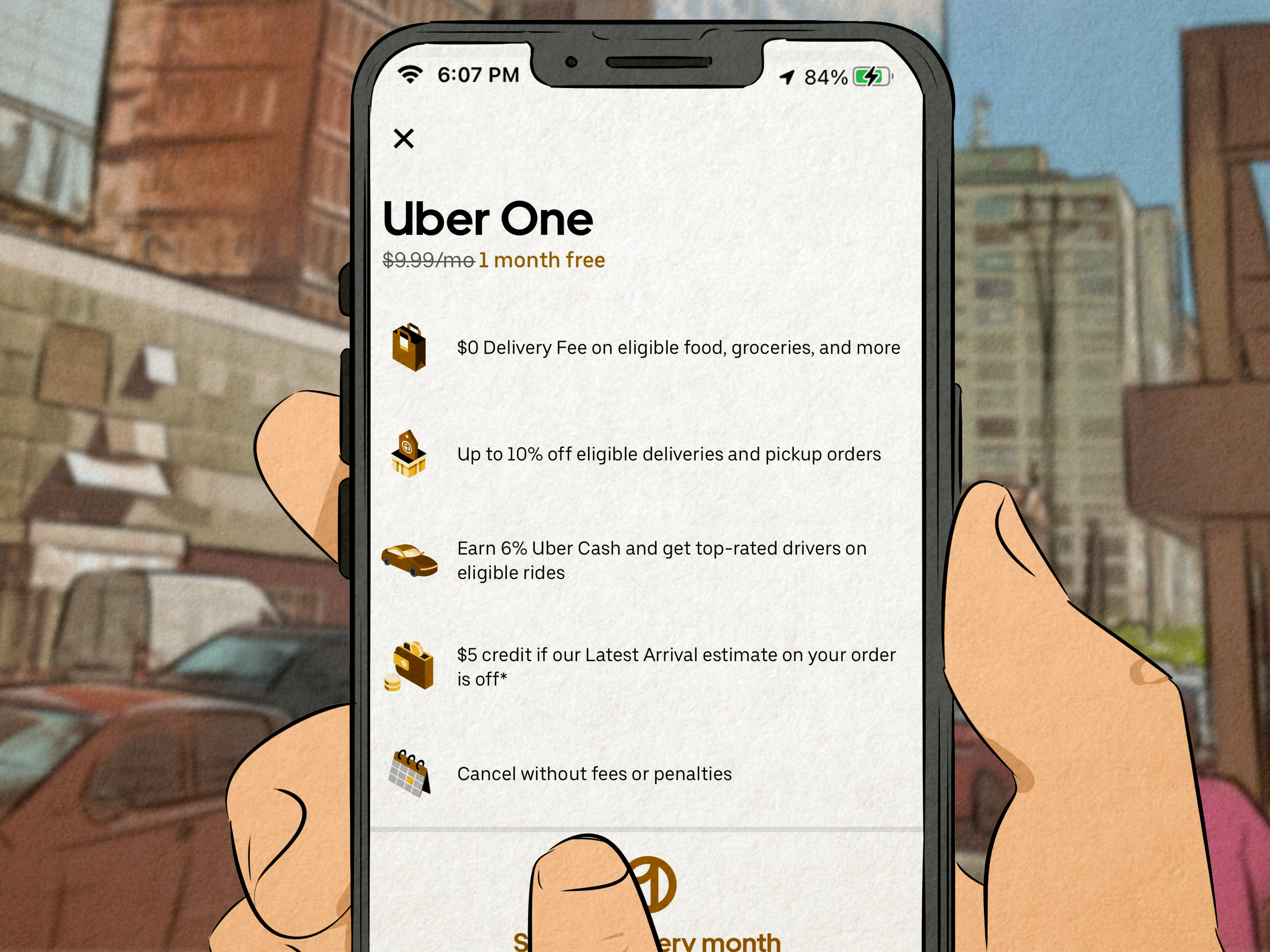
Uber One is a paid membership that offers Uber and Uber Eats benefits, including Uber One credits back on eligible rides in the U.S. The value depends on your habits. If you use Uber frequently and also order through Uber Eats, it may pay for itself. If you take one ride every three months and treat food delivery like a rare ceremonial event, it may not.
Before subscribing, review your past Uber spending. If the monthly membership costs more than your expected ride credits and food delivery savings, skip it. A subscription should save you money, not become another small monthly charge hiding in your budget like a raccoon under the porch.
Common Mistakes That Make Uber More Expensive
Booking Without Checking the Fare Breakdown
Always look at the full price before confirming. Upfront fares may include fees, tolls, airport surcharges, and other charges. A promo code may not apply to all parts of the fare. Tips are typically separate. If the number looks higher than expected, do not assume the app is just being dramatic; compare options before tapping request.
Ignoring Expiration Dates
Promo codes, Uber Cash credits, card benefits, and vouchers often expire. Monthly credits may vanish at the end of the month. First-ride promos may expire days after activation. Event vouchers may work only during a specific window. If you receive a credit, use it strategically rather than letting it sit there like a gym membership in February.
Falling for Fake Promo Codes
The internet is filled with websites claiming to offer secret Uber promo codes. Some are harmless but outdated. Others are designed to collect clicks, personal information, or worse. Be skeptical of any site promising unlimited free Uber rides, hacked credits, or codes that require you to complete surveys, download files, or share login details.
Use official Uber channels, the in-app Wallet, reputable credit card benefit pages, employer or school portals, and verified event voucher links. If a “deal” feels like it was written by a pirate with a marketing degree, close the tab.
Best Strategy: Stack Legit Savings
The biggest Uber savings usually come from combining legal, official discounts. For example, a rider might use monthly Uber Cash from an eligible credit card, choose UberX Share when available, and avoid peak surge times. Another rider might compare Uber and Lyft, walk two blocks away from a crowded venue, and use an event voucher for the final fare.
The point is not to chase mythical free rides forever. The point is to build a routine that reduces your average transportation cost. A single free Uber ride is nice. Saving $3 to $8 on rides repeatedly is better. That is how small habits turn into real money.
Real-World Experiences and Practical Lessons From Trying to Save on Uber
Most people learn Uber savings the same way they learn not to touch a hot pan: one expensive moment of regret. The classic scenario is leaving an arena, festival, airport, or downtown bar district at the exact same time as thousands of other people. You open Uber, see a fare that looks like it includes a small piano purchase, and suddenly walking home feels like a character-building exercise.
A practical rider experience starts with timing. When a big event ends, the first 10 minutes are often the worst. Everyone is requesting at once, drivers are stuck in traffic, and pickup zones become a slow-motion puzzle. Waiting a little while can help. Getting a snack, walking to a less crowded block, or checking both Uber and Lyft can produce a lower fare and a smoother pickup. The ride may not become free, but it may stop looking like a monthly utility bill.
Another common experience is the “short ride surprise.” You need to travel only a mile or two, but the fare is weirdly high because demand is hot, pickup is complicated, or drivers are scarce. In that case, the best savings move may be changing the pickup spot or using public transit for part of the route. A five-minute walk can sometimes save more than a promo code. It also gives you the brief moral satisfaction of exercise, which you can immediately ruin with fries if you choose.
Frequent riders often discover that subscriptions and credits work best when they are used intentionally. Uber One credits, card-based Uber Cash, and vouchers are helpful only if you remember they exist. A monthly Uber Cash credit that expires unused is not savings; it is a tiny ghost haunting your Wallet tab. Set a reminder near the end of the month if you have credits that reset. Use them for a planned ride, airport transfer, or errand instead of waiting until the last minute.
People also learn that “free” is not always the same as “best.” A voucher may cover only one route. A shared ride may save money but add time. A promo may exclude tips, tolls, or fees. A credit card perk may not be worth chasing if the card itself does not fit your budget. The smartest approach is flexible: compare apps, check ride types, read restrictions, and decide whether the savings are worth the trade-off.
Finally, safe saving matters. Do not accept rides outside the app to avoid fees. Do not buy discount codes from strangers. Do not share your Uber login. Do not send gift card numbers to anyone claiming they can unlock ride credit. Real savings should make your trip cheaper, not turn your account into a crime scene with push notifications.
The best experience-based rule is simple: treat Uber like airline tickets in miniature. Prices change, timing matters, flexibility helps, and the person who compares before booking usually wins. You may not get a free Uber ride every time, but with a smart routine, you can spend less without making transportation feel like a second job.
Conclusion
So, can you get a free Uber ride? Yes, but usually through official credits, promos, referrals, vouchers, gift cards, or credit card benefitsnot through magic codes from suspicious websites with 19 pop-ups and a button that says “CLICK FOR INFINITE RIDES.” Free Uber rides are real, but they are limited, conditional, and often account-specific.
For everyday savings, focus on habits you control: compare Uber and Lyft, use UberX Share when it makes sense, avoid surge periods, shift your pickup location, split fares with friends, use transit for part of the trip, and keep track of expiring credits. The goal is not just one free ride. The goal is becoming the kind of rider who pays less again and again, calmly, legally, and with enough money left for coffee.
Note: Uber promotions, credit card benefits, ride types, and voucher rules change by city, account, date, and eligibility. Always verify current terms inside the Uber app or the official benefit provider before booking.