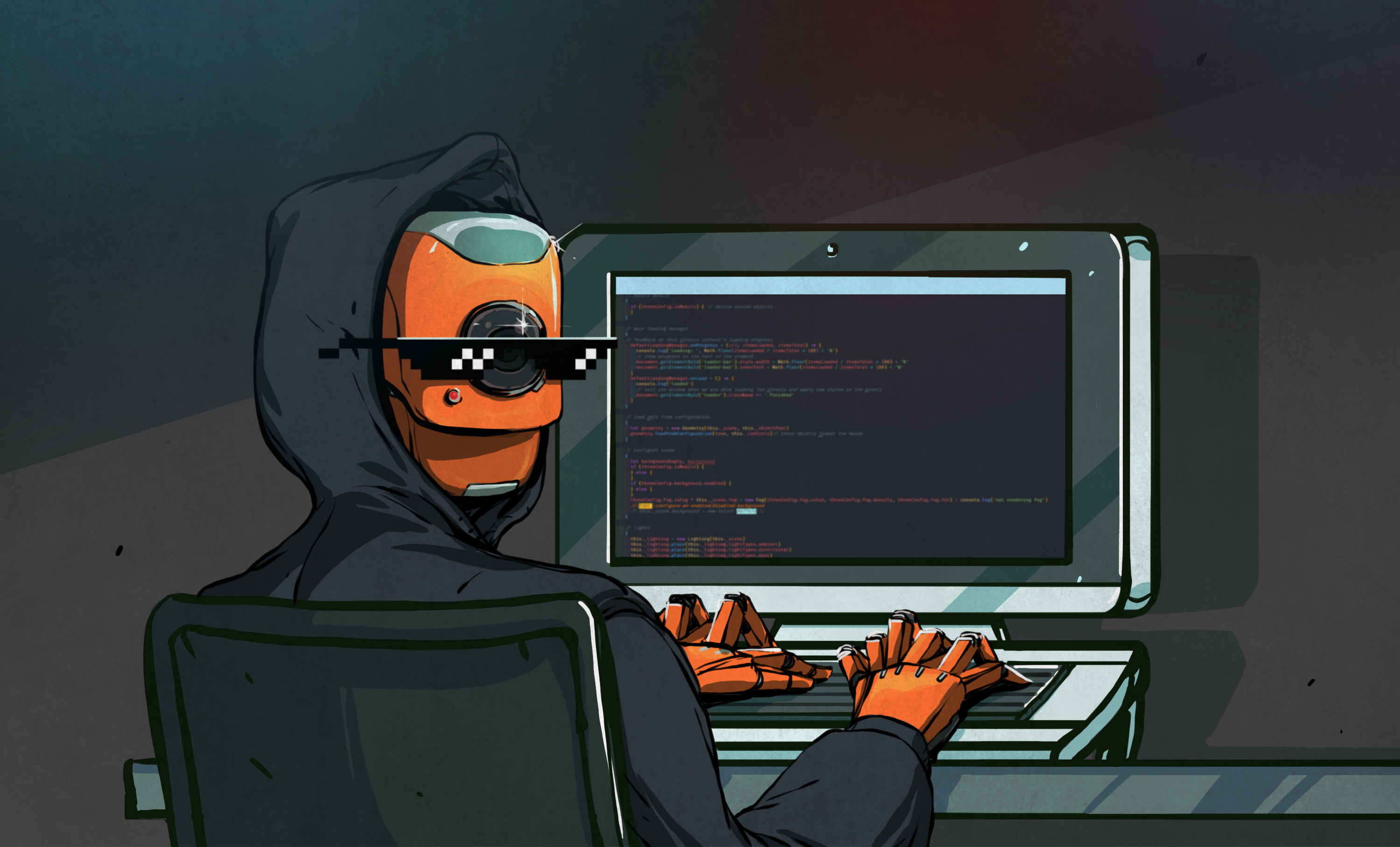
There is something wonderfully funny about the word “sandbox.” To a child, it means tiny shovels, plastic buckets, and the occasional dramatic dispute over who owns the red truck. To federal agencies, it increasingly means something far more serious: a protected place to test artificial intelligence before it touches public services, national security missions, weather forecasting, cybersecurity operations, benefits processing, or any other area where “oops” is not an acceptable deployment strategy.
That is the heart of MITRE’s Federal AI Sandbox, a secure artificial intelligence experimentation environment designed to help U.S. government agencies prototype, train, evaluate, and transition AI systems for mission use. The project is not just another shiny AI announcement with buzzwords polished to a mirror finish. It reflects a real and growing problem inside government: agencies are being pushed to adopt AI, but many do not have the computing power, specialized expertise, clean data pipelines, or secure testing environments needed to do it responsibly.
In plain English, MITRE is saying: before the feds unleash AI into the wild, maybe let it run around in a fenced yard first.
What Is MITRE’s Federal AI Sandbox?
The MITRE Federal AI Sandbox is a high-performance, secure environment where federal agencies can experiment with advanced AI tools without immediately exposing sensitive systems, public-facing workflows, or mission-critical infrastructure to untested technology. Developed in partnership with NVIDIA, the Sandbox is powered by an NVIDIA DGX H100 SuperPOD, including 248 NVIDIA H100 GPUs and 9 petabytes of storage. Located in Ashburn, Virginia, it gives MITRE and federal agencies the kind of computing muscle usually associated with top-tier AI labs, not the average government office still arguing with a procurement portal from 2009.
The goal is straightforward: transform underused federal data into AI-ready resources, train large language models and other foundation models, and develop mission-specific AI systems that can support government work. MITRE has highlighted applications in weather modeling, benefits and service delivery, cybersecurity, aviation, imagery analysis, military command and control, infrastructure protection, and fraud reduction.
This matters because AI in government is not like adding a chatbot to a shoe store website. If a commercial chatbot recommends the wrong sneakers, someone gets mildly annoyed. If a government AI tool mishandles benefits eligibility, aviation safety data, emergency weather modeling, or cyber threat detection, the stakes become much higher. A sandbox lets agencies test, break, measure, improve, and govern AI before it becomes part of real-world decision-making.
Why Federal Agencies Need A Sandbox In The First Place
Federal agencies are swimming in data, but much of it is fragmented, sensitive, old, siloed, or stored in formats that make modern AI systems sigh dramatically. At the same time, agencies face pressure to improve public services, modernize workflows, detect fraud, strengthen cybersecurity, and deliver faster decisions. AI promises to help, but promise alone does not build trustworthy systems.
One of the biggest barriers is compute. Training and evaluating advanced AI models requires serious infrastructure. Most agencies do not have spare supercomputers tucked behind the office printer. Even when agencies have cloud contracts, they may lack the controlled environment needed to evaluate AI on sensitive government data. The Federal AI Sandbox attempts to solve that by giving agencies access to shared, secure, advanced computing capabilities through MITRE’s federally funded research and development centers.
Another barrier is expertise. Building a useful AI system requires data engineers, model evaluators, cybersecurity specialists, domain experts, privacy professionals, procurement teams, legal reviewers, and mission owners who can all speak enough of each other’s language to avoid catastrophe. That is harder than it sounds. The Sandbox can act as a neutral technical space where those groups work together before an AI tool is purchased, deployed, or scaled.
Then there is the issue of trust. Federal AI systems must be accurate, secure, auditable, resilient, and explainable enough for their intended use. They also need to respect privacy, civil rights, civil liberties, and procurement rules. The phrase “move fast and break things” is less charming when the “things” include public services, national infrastructure, or taxpayer data.
MITRE’s Role: The Government’s Technical Referee
MITRE is not a typical tech vendor. It is a not-for-profit organization that operates federally funded research and development centers, also known as FFRDCs. These centers provide long-term technical expertise to government sponsors across areas such as defense, aviation, health, homeland security, civil systems, and cybersecurity. By law, FFRDCs do not manufacture products or compete directly with industry, which gives MITRE a special role as a bridge between government, academia, and private companies.
That structure is important. Agencies need access to commercial innovation, but they also need independent evaluation. If every AI recommendation comes from a company selling the software, the advice can start to sound suspiciously like, “Great news, our product is the answer to every question.” MITRE’s position allows it to help agencies compare approaches, test performance, evaluate risk, and shape requirements without being just another bidder in the room.
The Federal AI Sandbox fits that role neatly. It provides a place where government problems can meet modern AI infrastructure without forcing every agency to build its own mini-AI lab from scratch. That matters because duplication is one of government technology’s most expensive hobbies.
What The Sandbox Could Actually Do
1. Improve Cybersecurity Operations
Cybersecurity teams face oceans of alerts, logs, indicators, vulnerabilities, and incident reports. Many security operations centers already struggle with workforce shortages and alert fatigue. AI models trained for cyber defense could help analysts detect patterns, prioritize threats, summarize incidents, and respond faster. In a federal AI sandbox, these tools can be tested against realistic but controlled data before they are trusted in live environments.
That does not mean replacing human analysts with a magical cyber robot wearing sunglasses. It means giving analysts better tools. A well-tested AI assistant might flag suspicious behavior, explain why it matters, and suggest next steps. A poorly tested one might hallucinate threats, miss real attacks, or produce confident nonsense with the swagger of a movie hacker. The sandbox is where those differences become visible.
2. Advance Weather Modeling
MITRE has also connected the Federal AI Sandbox to weather modeling. High-resolution weather prediction is a major public safety issue, especially as communities deal with severe storms, flooding, wildfires, aviation risks, and infrastructure planning. AI can help process massive atmospheric datasets and generate faster, more localized forecasts.
MITRE’s work with Weather 1K, a large high-resolution AI training dataset, shows how the Sandbox can support models that move from experimental research toward operational value. Better local forecasting is not just a convenience for deciding whether to bring an umbrella. It can help emergency managers, transportation planners, farmers, pilots, utility operators, and defense teams make better decisions under pressure.
3. Modernize Benefits Processing
Government benefits programs often involve dense regulations, complex eligibility rules, multiple agencies, and a mountain of paperwork that appears to reproduce when no one is looking. AI could help interpret policy documents, assist case workers, identify missing information, detect fraud, and speed up service delivery.
But benefits processing is also a high-trust area. A system that affects access to food assistance, healthcare, disability support, veterans’ services, or retirement benefits must be tested carefully. The Sandbox offers a way to evaluate whether AI tools are accurate, fair, secure, and useful before they influence workflows that affect real people.
4. Support National Security And Mission Planning
AI can process images, text, radar, sensor data, audio, and other data types at scales humans cannot manage alone. MITRE has described multimodal perception systems and reinforcement learning decision aids as possible areas for the Sandbox. For national security agencies, that could mean better analysis, faster simulations, improved planning tools, and stronger decision support.
Still, national security AI requires extreme caution. A model that performs well in a demo may behave differently when faced with incomplete, adversarial, classified, or rapidly changing information. A sandboxed environment allows agencies to stress-test those tools without confusing prototype performance with operational readiness.
The Policy Backdrop: Faster AI, But Not Reckless AI
The Federal AI Sandbox sits inside a broader federal push to accelerate AI adoption while maintaining governance and public trust. Recent federal guidance has emphasized innovation, responsible use, procurement discipline, privacy protection, civil liberties, cybersecurity, and risk management for high-impact AI use cases. NIST’s AI Risk Management Framework and Generative AI Profile also give agencies a vocabulary for thinking about trustworthy AI throughout the system life cycle.
That policy environment creates a practical tension. Agencies are told to move faster, modernize services, and use AI to improve government performance. They are also told to manage risk, protect data, document impacts, and avoid harmful outcomes. The Sandbox is MITRE’s answer to that tension: build a place where speed and caution can share a conference room without throwing staplers at each other.
In a healthy AI adoption process, experimentation does not replace governance. It feeds governance. The results of controlled tests can inform procurement language, security controls, model evaluation standards, training plans, and deployment decisions. A sandbox is not a loophole around oversight. It is where oversight gets evidence.
Why This Matters For Taxpayers
For ordinary citizens, federal AI infrastructure may sound abstract. But the practical results could show up in familiar places: faster disaster warnings, smoother benefits applications, better fraud detection, stronger cyber defense, safer transportation systems, and more responsive public services. If AI can help agencies reduce backlogs, understand regulations faster, and detect problems sooner, the public may feel the benefits without ever knowing a supercomputer named Judy was involved.
Taxpayers should also care because AI mistakes can be expensive. Failed technology projects already cost government plenty. Failed AI projects can add new problems: biased outputs, privacy exposure, security weaknesses, vendor lock-in, unexplainable decisions, and public backlash. A shared testing environment can reduce duplication and help agencies learn from each other instead of repeating the same expensive mistakes in separate buildings.
The Vendor Question: Public Interest Meets Private Power
MITRE’s collaboration with NVIDIA highlights a bigger reality: advanced AI depends heavily on private-sector hardware, software, cloud ecosystems, and engineering talent. Government cannot build modern AI capacity in isolation. It needs industry. But it also needs independence, transparency, and bargaining power.
The Sandbox model gives agencies a way to interact with frontier technology while keeping evaluation grounded in public-sector needs. That is especially important when vendors promote tools that may be powerful but not automatically suitable for government use. A model that dazzles in a marketing demo might still fail when confronted with federal data formats, strict security requirements, accessibility needs, records rules, or mission-specific accuracy thresholds.
In that sense, MITRE’s Sandbox is not just a playground. It is a proving ground. The toys are expensive, the rules matter, and nobody should be allowed to bury a bad model under the sand and pretend everything is fine.
Risks MITRE And Agencies Still Need To Manage
No sandbox eliminates risk by itself. Agencies still need strong governance around data access, model evaluation, privacy, cybersecurity, bias testing, documentation, and human oversight. They must decide what data can be used, who can access it, how models are monitored, and when a prototype is mature enough to move toward production.
Another challenge is translating experiments into real-world deployments. Many promising prototypes die in the valley between “cool demo” and “approved system.” Federal agencies must connect sandbox results to procurement, budgeting, workforce training, legal review, and change management. Otherwise, the Sandbox becomes a very impressive science fair with better GPUs.
There is also the question of public communication. Citizens deserve to know when AI is used in consequential government processes and how agencies are managing risks. The more important the decision, the more important transparency becomes. Trust cannot be bolted on after deployment like a decorative spoiler on a minivan.
Experience Notes: What Federal Teams Can Learn From The Sandbox Mindset
The most useful lesson from MITRE’s Federal AI Sandbox is not only about hardware. It is about attitude. The sandbox mindset says that serious organizations should create room to experiment before they scale. That may sound obvious, but in government technology programs, pressure often pushes teams toward two unhealthy extremes. One extreme is paralysis, where every new tool is studied until it becomes old enough to qualify for a pension. The other extreme is panic adoption, where leaders buy AI because everyone else is buying AI, and nobody wants to be the last agency still using spreadsheets named “final_final_v7_reallyfinal.xlsx.”
A sandbox offers a better middle path. It lets teams ask practical questions early. What data do we actually have? Is it clean enough? Is it legally usable? Does the model perform differently across populations, regions, agencies, or document types? Can humans understand the output? What happens when the model is wrong? Who is accountable? How do we turn testing results into procurement requirements? These questions are not boring paperwork. They are the guardrails that keep innovation from becoming expensive theater.
For teams working around AI, the experience is often humbling. The first surprise is usually data quality. Everyone imagines a neat lake of structured information. Then the team opens the files and finds scanned PDFs, inconsistent labels, outdated fields, missing metadata, duplicate records, and one mysterious folder called “Old Stuff Do Not Delete.” The Sandbox mindset helps because it treats data preparation as part of AI development, not a housekeeping chore for someone else.
The second lesson is that domain experts are essential. AI engineers can build models, but mission experts know what “good” looks like. A benefits specialist understands policy exceptions. A meteorologist knows when a forecast is physically suspicious. A cyber analyst can tell the difference between a meaningful signal and noisy nonsense. Without those experts, an AI project may optimize the wrong target with great confidence and terrible judgment.
The third lesson is that evaluation must be continuous. A model that works in a controlled test can degrade when policies change, attackers adapt, weather patterns shift, or users behave unexpectedly. Federal AI systems need monitoring, feedback loops, incident response plans, and clear retirement criteria. In other words, launch day is not graduation. It is the start of adult supervision.
The fourth lesson is cultural. Sandboxes make it safer to admit uncertainty. That is valuable in government, where teams often feel pressure to present confidence even when the technology is experimental. A good sandbox encourages honest testing: break the model, document the weakness, improve the design, and try again. Failure inside a sandbox is not embarrassment. It is tuition.
Finally, the Sandbox experience reminds agencies that AI adoption is not a software purchase; it is an operating model. The real value comes when technical testing, policy review, cybersecurity, privacy, procurement, training, and mission leadership work together. MITRE’s Federal AI Sandbox is important because it gives that collaboration a place to happen. It turns AI from a conference buzzword into a disciplined engineering process. And frankly, if the federal government is going to play with powerful new tools, a sandbox is exactly where the first messy experiments belong.
Conclusion: The Sandbox Is A Test Of Federal AI Maturity
MITRE wants the feds to play in its sandbox, but the invitation is not childish. It is strategic. The Federal AI Sandbox gives agencies a way to explore advanced AI with the computing power, security, expertise, and mission focus that public-sector work requires. It recognizes that federal AI cannot be both reckless and trustworthy. It must be tested, measured, governed, improved, and only then deployed.
The promise is big: better weather intelligence, faster benefits processing, stronger cybersecurity, smarter national security tools, and more efficient public service. The caution is just as important: AI systems must be evaluated before they affect real people and real missions. MITRE’s Sandbox is one attempt to make that balance practical.
In the end, the question is not whether federal agencies should use AI. They already are, and they will use more of it. The real question is whether they will adopt it with discipline. MITRE’s answer is simple: bring the models, bring the data, bring the hard mission problems, and test them in the sandbox before letting them loose on the playground.