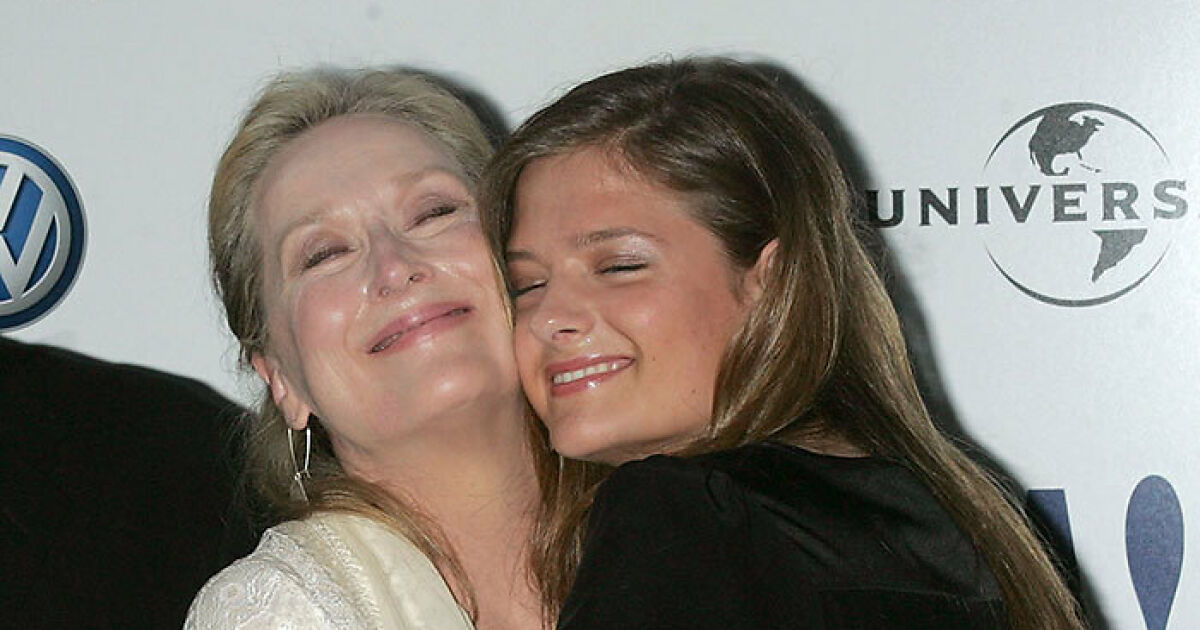
Louisa Jacobson Gummer, the youngest daughter of Meryl Streep and sculptor Don Gummer, has stepped into a new chapter with the kind of casual confidence that makes the internet stop scrolling, blink twice, and say, “Wait, did that just happen?” Yes, it did. The actress, best known for playing Marian Brook on HBO’s The Gilded Age, publicly shared her relationship with producer Anna Blundell in a Pride Month Instagram post that quickly became one of the most talked-about celebrity coming-out moments of 2024.
The post arrived on June 22, 2024, which also happened to be Meryl Streep’s 75th birthday. That timing gave the story an extra pop-culture sparkle. While many celebrity children might mark a parent’s milestone with a sweet throwback photo or a polite “happy birthday, mom,” Jacobson chose a carousel that blended romance, fashion, humor, queer joy, and a clear sense of personal freedom. In other words, she did not just enter a new era. She entered it wearing good tailoring.
Her caption, “blessed to be entering the Joyful New Era bb,” appeared alongside a photo with Anna Blundell and a reference to a New York Times headline about a joyful new era of lesbian fashion. The post was widely interpreted as Jacobson coming out and making her relationship Instagram official. The internet, naturally, reacted with applause, heart emojis, rainbow flags, and the occasional theatrical gasp. For a star connected to one of Hollywood’s most admired families, the moment felt both intimate and culturally loud.
Who Is Louisa Jacobson Gummer?
Louisa Jacobson Gummer was born into a family where creativity is not exactly a side hobby. Her mother, Meryl Streep, is a three-time Oscar winner and one of the most respected actors in modern cinema. Her father, Don Gummer, is a sculptor. Her siblings have also worked in the arts: Henry Wolfe is a musician, while Mamie Gummer and Grace Gummer are actresses.
Still, Louisa has built her own professional identity. She uses the name Louisa Jacobson in her acting career and earned attention for her role as Marian Brook in The Gilded Age, the lavish period drama created by Julian Fellowes. On the show, Marian is a young woman navigating money, manners, ambition, romance, and the social rules of 1880s New York. That is a lot of pressure for one fictional woman, especially when every room has chandeliers big enough to require their own ZIP code.
Jacobson studied at Vassar College and later trained at the Yale School of Drama. Her background includes theater work as well as television, giving her the kind of classical acting foundation that fits naturally into a series full of corsets, drawing rooms, and conversations where one raised eyebrow can start a social war.
The Instagram Post That Started the Conversation
Jacobson’s June 2024 post was not a long public statement. There was no corporate-looking announcement, no Notes app essay, and no dramatic press conference. Instead, she let a few images, a caption, and a very internet-savvy fashion reference do the talking.
The carousel included a photo of Jacobson with Anna Blundell, a producer and photo professional, as well as stylish images that played into the “Joyful New Era” theme. The inclusion of the lesbian fashion headline gave the post context, humor, and a wink of cultural awareness. It was soft-launch meets hard-launch meets Pride Month mood board.
That style of coming out reflects the way many public figures now share personal milestones: not through a single formal declaration, but through visual storytelling. For fans, the message felt clear. Jacobson was publicly embracing a queer identity and celebrating her relationship. The tone was joyful rather than defensive, playful rather than overly polished.
Why the Timing Mattered
The date, June 22, added an unexpected layer to the story. It was Pride Month, a time when LGBTQ+ visibility is already part of the cultural conversation. It was also Meryl Streep’s birthday. The overlap made the post feel almost cinematic, as if written by a screenwriter who enjoys subtle chaos and excellent timing.
Of course, Jacobson’s story is her own. The focus should not be reduced to “Meryl Streep’s daughter did something interesting.” But the Streep connection is part of why the story traveled so quickly. Celebrity families attract attention, and when a member of such a famous family shares a personal truth, the public tends to lean in.
Who Is Anna Blundell?
Anna Blundell is a producer and photo professional who appeared in Jacobson’s post and has also shown up in social media moments connected to Jacobson before the June 2024 announcement. The pair’s public-facing relationship seemed to unfold gradually, with earlier photos appearing before the more definitive Pride Month post.
That gradual reveal is common in modern celebrity culture. A hand in a photo, a shared elevator selfie, a tagged appearance, a supportive comment, and then suddenly the internet is acting like a detective with a ring light. But Jacobson’s June post moved the relationship from speculation into public acknowledgment.
For readers, the detail that matters most is not gossip, but tone. The post did not frame the relationship as scandal or spectacle. It framed it as happiness. That distinction is important. In a media world that often treats queer celebrity news as a dramatic twist, Jacobson’s announcement felt refreshingly normal: here is love, here is style, here is a caption, carry on.
Why Louisa Jacobson’s Coming Out Resonated
Celebrity coming-out stories still matter because visibility still matters. It would be wonderful if every person could share their identity without fear, debate, or headlines. But the world is not quite there yet. Public figures who come out can help shift the emotional weather for fans watching from home, especially young people who may be wondering whether their own truth can fit inside their family, career, faith, culture, or community.
Jacobson’s story resonated because it did not appear wrapped in anxiety. It looked like celebration. The “Joyful New Era” phrase became the perfect shorthand for that feeling. There was no sense of apology. No heavy explanation. No attempt to shrink. Just a woman sharing her life with a playful confidence that said, “This is where I am, and it feels good.”
That kind of visibility has power. It reminds people that coming out does not always have to be framed by fear. Sometimes it is a party. Sometimes it is a fashion post. Sometimes it is a red-lit selfie with your girlfriend and a caption that sends queer Twitter into a happy little spiral.
The Role of Fashion in the Moment
One reason the post caught so much attention was its stylish framing. By referencing lesbian fashion and including strong looks, Jacobson tapped into a larger conversation about queer aesthetics. Fashion has long been one of the ways LGBTQ+ people signal identity, community, rebellion, softness, strength, and humor.
In Jacobson’s case, the combination of suits, silk, and self-aware styling created a visual language. The post was not simply saying, “Here is my girlfriend.” It was also saying, “Here is a vibe.” And the vibe was polished, romantic, cheeky, and unmistakably proud.
This matters because queer fashion is not just about clothes. It is about permission. The permission to dress outside expectation. The permission to blur categories. The permission to use style as a personal flag before anyone else gets to define you. Jacobson’s post joined that tradition with a wink and a wardrobe.
From Private Life to Public Conversation
There is a delicate balance in covering any celebrity coming-out story. Public interest is real, especially when the person is connected to a famous family and a successful television show. But identity is not a plot device, and relationships are not public property. The healthiest way to understand Jacobson’s announcement is to treat it as a public sharing of joy, not an invitation to overanalyze every private detail.
That is especially important because Jacobson did not deliver a lengthy autobiography. She shared a post. Fans and outlets responded to what she chose to make visible. Respecting that boundary is part of responsible celebrity coverage.
At the same time, the public response shows how hungry audiences are for queer stories that feel happy, ordinary, stylish, and unburdened by tragedy. Pop culture has not always been kind to LGBTQ+ narratives. For decades, queer characters were too often punished, hidden, mocked, or used as symbols rather than full human beings. Moments like Jacobson’s help widen the frame.
Louisa Jacobson and LGBTQ+ Visibility
In 2025, Jacobson spoke publicly about the support she received after coming out and was honored with the Human Rights Campaign Visibility Award at the organization’s Greater New York Dinner. She described visibility as connected to vulnerability and emphasized the power of allowing oneself to be seen.
That message fits naturally with her profession. Acting requires emotional openness. It asks performers to stand in front of others and reveal something truthful, even when playing someone fictional. Coming out, in a very different but equally human way, also asks for truth. It asks a person to step out from behind expectation and say, “This is me.”
Jacobson’s comments about vulnerability added depth to the Instagram moment. What first looked like a joyful social media post later became part of a larger conversation about representation, courage, and connection. She did not just receive attention for coming out; she used that attention to speak about why visibility can help people feel less alone.
How Fans Reacted
The online reaction was enthusiastic, funny, and very much in the language of the internet. Fans celebrated the relationship reveal, the Pride Month timing, the fashion reference, and the fact that it happened on Meryl Streep’s birthday. Many comments treated the moment as iconic, and the word “iconic” was not doing light duty here. It was clocked in, wearing comfortable shoes, and working overtime.
Part of the excitement came from the contrast between Jacobson’s relatively private public image and the boldness of the post. She is not a celebrity who courts daily tabloid attention. That made the announcement feel more surprising and more personal. It was not a brand campaign. It was not a red-carpet stunt. It was a life update with style.
For fans of The Gilded Age, the news also added another layer of interest to Jacobson’s rising profile. Viewers who know her as Marian Brook saw a fuller picture of the actress behind the role. And for LGBTQ+ fans, seeing another performer publicly embrace queer identity offered a welcome moment of representation.
Why This Story Is Bigger Than Celebrity News
At first glance, the headline looks like classic entertainment news: famous mother, actress daughter, new girlfriend, social media reveal. But underneath the celebrity packaging is a bigger cultural story about how coming out has changed and why it still matters.
Older generations often associate coming out with formal declarations, difficult family conversations, or risky public admissions. Those experiences are still real for many people. But younger public figures and internet-era celebrities sometimes approach coming out with a different rhythm. They may post a photo, use a caption, attend an event with a partner, or simply stop hiding. The declaration can be subtle and still meaningful.
Jacobson’s post reflected that shift. It did not ask permission. It did not over-explain. It simply celebrated. That is why the story felt modern. It showed a version of coming out that is not only about struggle, but also about style, humor, romance, and self-possession.
The Meryl Streep Connection
It is impossible to discuss the public reaction without mentioning Meryl Streep. As one of the most beloved actors in American film, Streep brings a level of cultural attention that follows her family members, whether they seek it or not. Louisa Jacobson has had to build her career under a very large shadow, which is probably the understatement of the century. Being the child of Meryl Streep in acting is like showing up to a karaoke night and learning your mother invented music.
Yet Jacobson has carved out her own path. Her role in The Gilded Age gave her a major platform, and her stage work has helped establish her as more than a famous last name. The coming-out post added another dimension to her public identity, one rooted not in family legacy but in personal authenticity.
Experiences Related to Louisa Jacobson’s Coming-Out Moment
For many people, stories like Louisa Jacobson’s can stir up personal memories. Maybe someone remembers the first time they hinted at their identity online, choosing a photo carefully, rewriting a caption ten times, and then pretending not to check the comments every twelve seconds. Maybe someone remembers introducing a partner to friends, family, or coworkers and hoping the moment would feel ordinary rather than loaded. Maybe someone simply remembers wanting to be seen without becoming a debate topic.
That is one reason Jacobson’s post felt meaningful beyond celebrity culture. It captured a familiar emotional experience in a very public way. Coming out is often described as one big moment, but in real life it is usually a series of moments. You come out to yourself. Then maybe to a friend. Then a sibling. Then a parent. Then coworkers. Then the wider world, if you choose. Each step has its own weather. Some are sunny. Some are stormy. Some are just awkward, like trying to open a pull door by pushing it while everyone watches.
Jacobson’s “Joyful New Era” framing is powerful because it gives people another emotional model. Instead of centering fear, it centers arrival. That does not erase the difficulty many LGBTQ+ people face, but it offers a hopeful image: the possibility that being honest can lead not only to acceptance, but to delight. There is value in seeing queer love presented as fashionable, funny, romantic, and normal.
For readers who are not LGBTQ+, the experience may be different but still important. A story like this can be a reminder that support does not need to be complicated. When someone shares who they are or introduces the person they love, the best response is often simple: joy, respect, and maybe a heart emoji if the setting allows. Not every moment requires a speech. Sometimes the most loving thing is to say, “I’m happy for you,” and mean it.
For LGBTQ+ readers, especially those who are still private about their identity, Jacobson’s public happiness may feel like a little window opening. It says that identity can be part of a full life that includes career, family, ambition, art, romance, and excellent outfits. It also shows that visibility can come in different tones. Some people come out loudly. Some come out quietly. Some come out through a joke, a partner photo, a Pride post, or a sentence at dinner. All of those paths are valid.
The experience of watching a public figure come out can also create a sense of community. Fans gather in comments, group chats, and social feeds, not just to discuss a celebrity, but to celebrate a shared feeling. That collective joy is not trivial. In a world where LGBTQ+ rights and visibility remain contested in many places, joy itself can feel like resistance. A happy queer love post may look light, but for someone who needs hope, it can land with surprising force.
Jacobson’s story also highlights how personal milestones can become cultural mirrors. People saw in her announcement different things: a celebrity relationship reveal, a Pride Month celebration, a fashion moment, a family-adjacent pop-culture headline, or a meaningful act of visibility. The best stories often hold all of that at once. They are specific enough to be real and broad enough for people to find themselves inside them.
Conclusion
Louisa Jacobson Gummer’s coming-out moment was memorable because it felt joyful, modern, and unmistakably her own. By sharing her relationship with Anna Blundell during Pride Month, the Gilded Age actress turned a personal update into a broader celebration of queer visibility. The post was stylish, funny, romantic, and culturally sharp, proving that sometimes a few photos and the right caption can say more than a carefully managed statement ever could.
Beyond the celebrity headline, the story matters because it reflects a changing public conversation around identity. Coming out does not have to be framed only through fear or struggle. It can also be about happiness, humor, love, community, and the freedom to step into a new era on your own terms. For Jacobson, that era appears to be full of confidence, creativity, and support. For fans, it offers a reminder worth keeping: authenticity does not need to whisper.