If you have ever watched Saturday Night Live and thought, “How did that comedian become a senator, a pop star, a haunted substitute teacher, and someone’s weird uncle in under nine minutes?” the answer is simple: wigs. So many wigs. Wigs sprinting through hallways. Wigs waiting on foam heads like tiny celebrity ghosts. Wigs that must be funny, accurate, fast, durable, and somehow not look like they were purchased during a panic attack at 11:17 p.m.
And according to widely reported behind-the-scenes accounts, that is where Lorne Michaels, the famously calm, cryptic, and occasionally terrifying creator of SNL, can become unexpectedly sharp. The extremely specific reason he may shame a cast member is not bombing a sketch, missing a cue, or laughing during a scene. It is hairmore specifically, a wig that looks too big, too fake, too distracting, or too much like the joke itself.
Yes, after five decades of shaping American sketch comedy, the man often described as the quiet center of Studio 8H still notices when the hair is doing too much. And honestly, that may explain more about Saturday Night Live than any grand theory about comedy ever could.
Why Lorne Michaels Cares So Much About Wigs
To casual viewers, a wig is just a prop sitting on someone’s head. At SNL, it is a production decision, a character shortcut, and sometimes a comedy landmine. A good wig tells the audience who a performer is before the first line lands. A bad wig pulls the audience out of the sketch before the first joke gets a fighting chance.
That distinction matters at SNL because the show moves at a speed that would make a normal workplace file a complaint with human resources. Sketches are pitched, written, rewritten, rehearsed, cut, revived, altered, dressed, lit, performed, and sometimes quietly buried in the span of a few days. By Saturday night, the cast is not simply acting. They are changing identities at NASCAR pit-crew speed.
So when Michaels critiques a wig, he is not being fussy for the sport of it. He is protecting the sketch. If the hair is too loud, the joke becomes smaller. If the wig looks artificial when it is supposed to be invisible, the audience starts watching the hairline instead of the premise. And once the audience has decided the wig is the star, the sketch is in trouble.
The Secret Comedy Rule: Hair Should Help the Joke, Not Hijack It
There is a practical reason Michaels may dislike an over-the-top wig: comedy depends on focus. In a live sketch, every visual element competes for attention. The costume, set, lighting, cue cards, facial expression, props, accent, and camera angle are all trying to guide the audience toward the laugh. A distracting wig is like a trumpet player wandering into a piano solo. Technically, music is happening. Emotionally, everyone is confused.
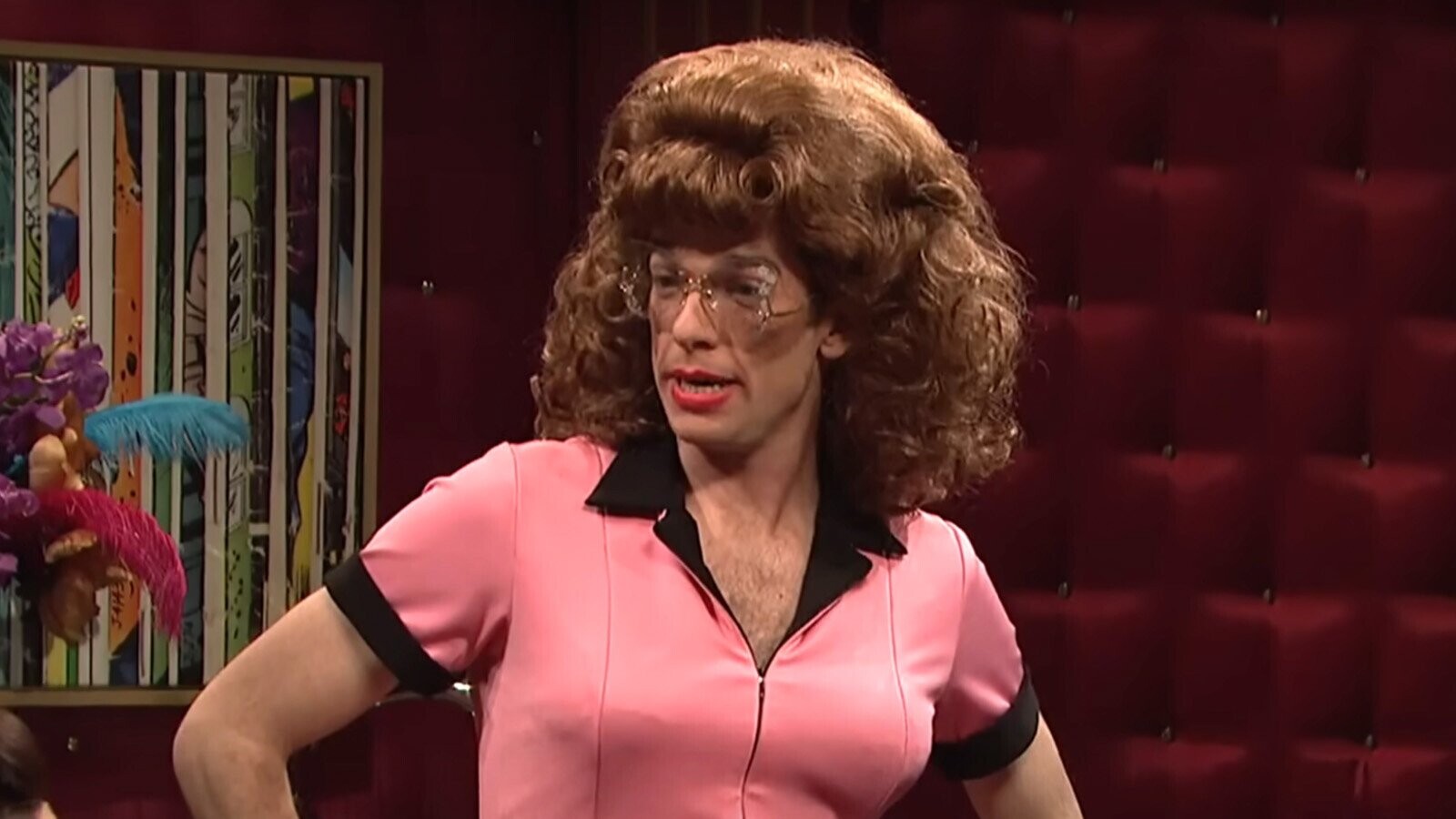
For impressions, the right hair can be magical. Think of political cold opens, celebrity parodies, morning-show hosts, pop stars, and strange fictional archetypes. The audience often needs to recognize the target instantly. Hair can do half the work before a performer says a word. But there is a fine line between “That looks like the person” and “That looks like a Halloween wig trying to file taxes.”
That is likely why Michaels’s eye goes straight to the details. The joke may be written on paper, but the laugh is built on camera. A wig that is too shiny, too stiff, too tall, too modern, too historical, too glamorous, or too obviously synthetic can flatten a sketch that otherwise works. The problem is not that wigs are silly. The problem is that they must be silly in the correct direction.
Inside SNL’s Hair-and-Wig Machine
The scale of SNL hair work is enormous. Public profiles of the show’s wig department have described an average episode as involving roughly 80 wigs. Over a full season, that can mean well over a thousand wig assignments, adjustments, records, resets, and emergency fixes. The show even uses “self wigs,” which are designed to look like a performer’s normal hair so cast members can jump between sketches without waiting for a full hair reset.
That detail sounds funny until you remember that SNL is live television. A performer may exit one sketch as a medieval creep, race backstage, change costume, grab a prop, get into a new wig, and appear moments later as a suburban mom, a senator, or a game-show contestant named something like Craig Bonkers. There is no luxury of stopping the show because the bangs are emotionally unprepared.
Behind the scenes, the wig department tracks what each performer has worn, what worked, what failed, and what must be ready again. The operation is part craft, part logistics, part disaster prevention. If the show’s writers are building comedy out of panic, the hair team is building order out of panic’s older, meaner cousin.
Lorne Michaels and the Power of Small Details
Lorne Michaels has been the central creative force behind Saturday Night Live since the show began in 1975. Over the years, he has developed a reputation for appearing almost impossibly composed while everyone else is operating on caffeine, fear, and deli sandwiches. Former cast members and writers often describe him as mysterious, indirect, and intensely observant.
That reputation fits the wig story perfectly. Michaels does not need to yell about the entire universe. He can point to one detail and make everyone understand the larger problem. A bad wig is not just a bad wig. It is a sign that the sketch has lost precision. It says the idea is being pushed too hard, or the character is not grounded, or the production choice is begging for attention instead of earning it.
In other words, the wig becomes a diagnostic tool. If the hair is wrong, maybe the tone is wrong. If the tone is wrong, maybe the joke is wrong. If the joke is wrong, welcome to SNL, where your sketch may now be replaced by a five-minute bit about a man who cannot stop saying “meatball mortgage.”
Why the Criticism Feels So Very SNL
The funniest part of this story is that wigs are essential to the show. SNL without wigs would be like Jaws without the shark, or a family group chat without one person sending blurry screenshots. The show’s history is packed with transformations: political impressions, celebrity parodies, fake commercials, recurring characters, oddball talk-show hosts, historical figures, and deeply specific people who seem to exist only in the fluorescent lighting of an airport Chili’s.
So for Michaels to shame cast members over wigs is both ironic and completely logical. He is not anti-wig. He is anti-bad-wig. He is not saying hair should never be funny. He is saying hair should not be funnier than the performer unless that is the entire point of the sketch.
That is a very producer-like distinction. Performers may love the biggest choice in the room. Writers may love the weirdest choice in the room. Designers may love the most visually exciting choice in the room. Michaels, at his most Michaels-like, appears to ask: does this choice serve the show?
The Difference Between a Funny Wig and a Desperate Wig
A funny wig reveals character. A desperate wig begs the audience to laugh before the sketch has done the work. That difference can be subtle. A fake mustache, a bad bob, a stiff political haircut, or a giant period-piece curl pile can all be hilarious if the sketch knows why it is using them. But when a wig is added as decoration rather than storytelling, it can make the whole scene feel cheaper.
Great sketch comedy often works because the performers commit to absurdity as if it were normal. The hair, costume, and makeup must support that illusion. If everything screams “Look how goofy this is,” the audience no longer discovers the joke. The joke has already walked onstage wearing a neon sign.
This is why some of the best SNL transformations are not the most outrageous. They are the most precise. The hair catches the rhythm of a person. The costume suggests a social type. The makeup supports the face rather than burying it. When all of that clicks, the performer has room to play. When it does not, the performer spends the sketch competing with a synthetic side part.
What the Wig Obsession Reveals About SNL’s Culture
The wig anecdote also reveals something important about SNL culture: the show is built on tiny choices made under brutal pressure. Viewers see 90 minutes of television. The staff sees a week-long obstacle course where every sketch must fight to survive. A joke can die because of timing. A monologue can wobble because of charm. A visual gag can fail because the audience sees the mechanics too clearly.
Michaels’s job is to protect the final broadcast from all of those invisible failures. That means he watches more than the jokes. He watches entrances, pacing, lighting, costumes, music cues, audience energy, and yes, wigs. In that sense, the hair criticism is not random. It is part of a broader production philosophy: comedy is fragile, and anything that distracts from it must be fixed.
It also explains why so many alumni describe Michaels as both intimidating and essential. He may not always give performers the emotional response they want, but he gives the show a center. He is the person asking whether the sketch works for the audience at home, not just for the writers who loved it at 3 a.m.
Why Viewers Love These Behind-the-Scenes Stories
Stories like this are catnip for SNL fans because they turn a giant cultural institution into a workplace comedy. Suddenly the legendary creator is not just deciding the future of American satire. He is also looking at a cast member’s head and thinking, “Absolutely not.”
That contrast is irresistible. SNL has helped launch the careers of Eddie Murphy, Tina Fey, Will Ferrell, Amy Poehler, Kristen Wiig, Bill Hader, Maya Rudolph, Kenan Thompson, Kate McKinnon, and many more. It has shaped political comedy, late-night television, viral sketches, digital shorts, and celebrity culture. Yet somewhere in the middle of all that history is a producer worried that a wig has gone rogue.
That is not trivial. It is the work. Television history is made out of thousands of small decisions nobody at home is supposed to notice. The better the production, the less visible the labor becomes. A perfect wig disappears into the character. A bad wig becomes the character, then eats the sketch, then sends a thank-you note.
Examples That Show Why Hair Matters on SNL
Political impressions are the easiest example. A performer playing a president, senator, governor, or cable-news personality often needs the audience to understand the reference immediately. Hair becomes a visual headline. The same is true for celebrity impressions, especially singers and actors with iconic looks. If the wig is accurate enough, the performer starts with an advantage.
But SNL also uses hair to create fictional people fast. A bowl cut can suggest childhood awkwardness. A stiff bob can signal a local news anchor who has never met a scandal she could not overpronounce. A messy ponytail can create instant chaos. A slick side part can turn a cast member into a man who definitely owns a Bluetooth headset and says “circle back” in casual conversation.
The challenge is restraint. The audience should laugh at the character, not at the craft failure. When the hair is calibrated correctly, it feels inevitable. When it is wrong, the sketch starts with a question nobody wants the audience asking: “What is happening on that person’s head?”
Why Lorne Michaels’s Specific Standards Still Matter
After 50 years, it would be easy for SNL to run on nostalgia alone. But the show survives because it is still made week by week, joke by joke, choice by choice. Michaels’s attention to something as specific as wigs suggests why the machine continues to function. He understands that live comedy is not only about the big idea. It is about execution.
That may be the real lesson behind the shaming. In a creative workplace, vague standards are almost useless. “Be funnier” does not help much. “That wig is distracting from the sketch” is specific. It gives the team something to fix. It also reminds performers that comedy is not only personal brilliance. It is collaboration with wardrobe, hair, makeup, props, lighting, cue cards, cameras, editors, and the audience’s wandering attention span.
In that way, Michaels’s wig criticism is less petty than it sounds. It is a reminder that every element on screen must earn its place. Even the hair has to audition.
Experience Section: What This Topic Teaches Anyone Creating Comedy, Content, or Performance
The most useful lesson from the Lorne Michaels wig story is that small details can carry big consequences. Anyone who has worked on a stage, video shoot, school presentation, podcast, livestream, office pitch, or social media campaign has probably experienced the same problem in a different costume. One distracting element can pull people away from the message.
Maybe the microphone keeps popping. Maybe the slide deck uses seven fonts and looks like it was designed by a raccoon with a Canva trial. Maybe the speaker’s background has laundry in it. Maybe a TikTok creator has a great joke, but the lighting makes the video look like it was filmed inside a refrigerator. The audience may not consciously analyze the problem, but they feel it. Their attention drifts. The idea loses power.
That is why Michaels’s supposed wig standard is so relatable beyond SNL. Professionals in any creative field eventually learn that polish is not vanity. Polish is respect for the audience. It says, “We thought about what you would see, hear, and feel.” A clean detail can make a performance look effortless. A messy detail can make effort look amateur.
There is also a lesson about leadership. The best creative feedback is often specific, not dramatic. A leader who says “This does not work” may be correct, but not helpful. A leader who says “The wig is overpowering the character” has identified a fixable problem. That kind of note can sting, especially if everyone is exhausted, but it moves the work forward.
For performers, the lesson is humility. Sometimes the thing you love most about a character is the thing that has to go. Maybe the accent is too big. Maybe the costume is too busy. Maybe the wig is hilarious in the mirror but distracting on camera. Good comedy often requires killing the choice that makes the performer laugh so the audience can laugh at the actual sketch.
For writers, the lesson is clarity. If the joke needs a giant wig to survive, the premise may not be strong enough. Visual comedy is wonderful, but it should amplify the idea, not cover for it. The best sketches usually have a clean comic engine: a recognizable situation, a strange twist, escalating behavior, and a payoff. Hair can help sell that engine, but it cannot replace it.
For content creators and marketers, this story is a surprisingly useful SEO and branding lesson. Your headline, thumbnail, introduction, images, formatting, and tone are the “wig” of your content. They shape the first impression. If they are misleading, messy, or overdone, readers may bounce before they ever reach the good stuff. But when those elements fit the message, the audience relaxes and follows you into the idea.
That is why the topic is funny but also oddly wise. Lorne Michaels shaming someone over a wig sounds like a backstage punchline. But underneath it is a serious creative principle: details are not decorations. Details are part of the storytelling. At SNL, a wig can make a senator recognizable, turn a pop star into a parody, or help a cast member become four people in one night. It can also ruin the illusion if it demands too much attention.
The next time a sketch lands perfectly, most viewers will not think about the wig. That is exactly the point. The best craft disappears. The laugh remains.
Conclusion
Lorne Michaels’s alleged habit of calling out SNL cast members over wigs may sound hilariously specific, but it captures the entire philosophy of the show. Saturday Night Live is not just written; it is engineered. Every laugh depends on timing, performance, production design, and dozens of invisible decisions made under impossible deadlines.
A wig is never just a wig in Studio 8H. It is a character tool, a visual cue, a production shortcut, and sometimes a comedy hazard. Michaels notices because his job has always been to notice what might weaken the show before America notices it first. That is why this tiny backstage detail feels so revealing. It shows a producer who understands that live comedy is built not only from big talent, but from small corrections.
And if that means occasionally shaming a cast member because the hair is louder than the joke, well, welcome to SNL. Please place your wig on the foam head, take the note, and be ready for air in three minutes.
Note: This article is based on publicly reported entertainment journalism, official production information, and widely available behind-the-scenes accounts about Saturday Night Live, Lorne Michaels, and the show’s hair-and-wig production process. Source links are intentionally omitted for clean web publication.