Editor’s note: The historic Georgetown residence known as the Marbury House was initially listed for $7.5 million in October 2025. Later reports in May 2026 said it sold for about $6.125 million. This article preserves the original listing angle while adding current context for readers.
A Georgetown Mansion With More Story Than Some Museums
Some homes come with walk-in closets. Others come with a wine cellar, a dramatic staircase, or a kitchen island large enough to land a small helicopter. Then there is the Marbury House at 3307 N Street NW in Washington, D.C., a red-brick Federal-style residence that comes with presidential history, Supreme Court significance, Georgetown prestige, and the kind of old-house charm that makes real estate lovers suddenly start saying things like “original millwork” at dinner parties.
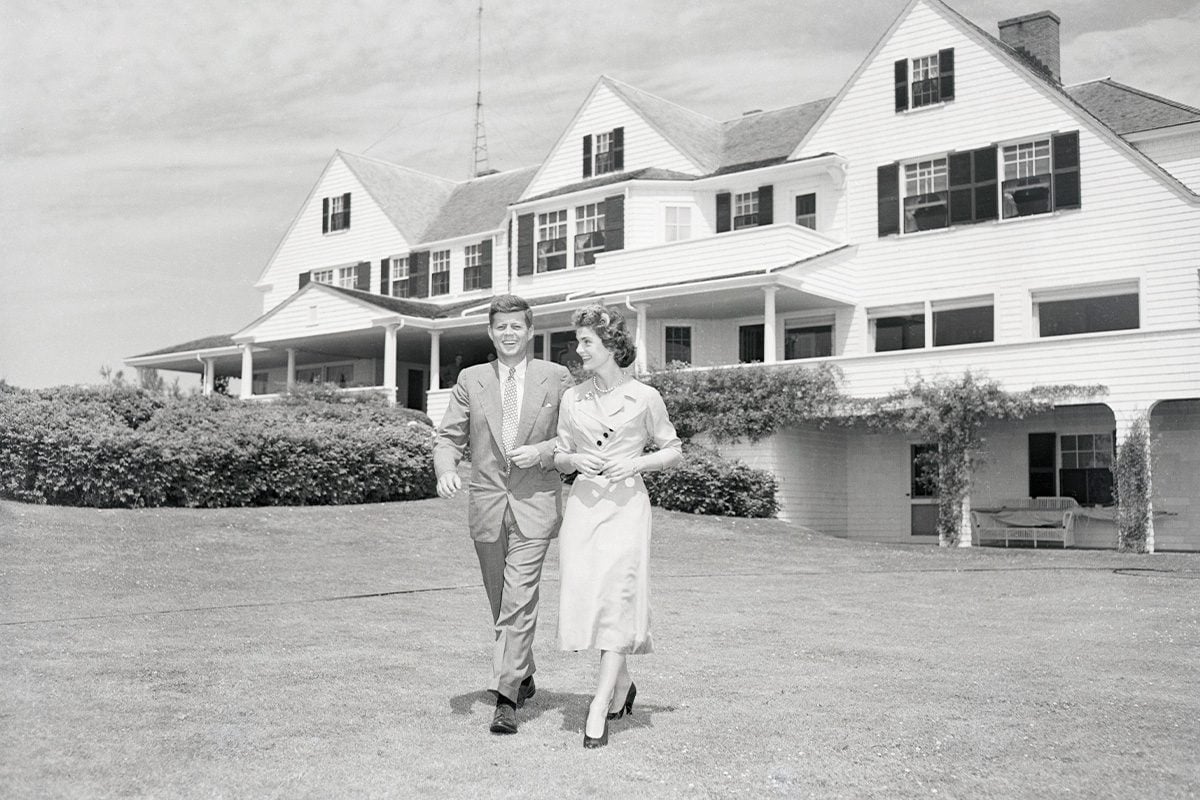
Best known as the Washington home of John F. Kennedy and Jacqueline Kennedy before they moved into the White House, the property was listed for $7.5 million, instantly turning it into one of the most talked-about historic homes in the capital. The price tag was not just about bedrooms, bathrooms, and square footage. Buyers were looking at a rare piece of American political theater: the place where a young senator, his stylish wife, and their growing family lived during the final stretch before Camelot became a national brand.
In a city full of important addresses, this one has a special sparkle. It sits in Georgetown, one of Washington’s most desirable neighborhoods, where cobblestone streets, historic row houses, leafy side gardens, and discreetly expensive front doors do a lot of quiet bragging. The home itself is elegant without shouting. That, of course, is very Kennedy.
What Is the Marbury House?
The Marbury House is a historic Federal-style residence built around 1811. It is named for William Marbury, the Georgetown businessman whose legal dispute helped lead to the landmark Supreme Court case Marbury v. Madison. That case is famous for helping establish the principle of judicial review, meaning the home’s historical résumé was impressive even before the Kennedys arrived.
Located at 3307 N Street NW, the property has been described as one of Georgetown’s most notable houses. Its architectural appeal starts with the basics: a symmetrical red-brick façade, tall windows, refined proportions, and a sense of dignity that modern luxury homes often try to imitate with mixed results. The house has the presence of an old statesmancalm, polished, and completely aware that it has seen things.
Inside, the residence has been reported to include five bedrooms, multiple bathrooms, fireplaces, formal entertaining rooms, a study, garden access, and carefully preserved historic details. Depending on the listing source, the home has been described at approximately 5,215 square feet, though some reports reference a larger figure when including broader usable space. Either way, it is not exactly a starter home unless your starter pack includes a presidential archive and a Georgetown parking miracle.
JFK and Jackie Kennedy’s Life at 3307 N Street NW
John and Jacqueline Kennedy purchased the Georgetown home in the late 1950s, before JFK became the 35th president of the United States. At the time, Kennedy was a rising political figure, serving as a U.S. senator from Massachusetts and preparing for the campaign that would eventually make him one of the most famous presidents in American history.
The house became the family’s Washington base during a crucial period. It was not merely a private residence; it was also a social and political setting. Meetings, conversations, press moments, and campaign-era strategy all orbited around the home. Imagine trying to decide where to put the sofa while your husband is also deciding how to win the presidency. Suddenly, choosing curtains feels like a matter of national security.
Jackie Kennedy reportedly invested heavily in redecorating the home, bringing her refined eye to the interiors. Her taste leaned toward classical elegance, historical awareness, and European-inspired polish. That sensibility later became central to her famous White House restoration. In other words, the Marbury House was not just where the Kennedys lived before the White House; it was also a preview of Jackie’s public identity as a guardian of American style and heritage.
Why the $7.5 Million Listing Drew So Much Attention
The $7.5 million asking price attracted attention because the property sits at the intersection of several powerful real estate categories: luxury Georgetown home, historic Federal architecture, Kennedy connection, and limited inventory. Any one of those would make a listing interesting. Put them all together, and you have a home that practically arrives on the market wearing a tuxedo.
Historic homes in Georgetown are not ordinary luxury products. They are part residence, part preservation project, part status symbol, and part emotional purchase. Buyers are not simply comparing price per square foot. They are evaluating rarity, provenance, architectural integrity, neighborhood prestige, and the intangible thrill of telling guests, “Yes, this is where JFK lived before becoming president.” That sentence alone probably adds several inches to everyone’s posture.
The property’s later reported sale around $6.125 million shows that even legendary homes must deal with market reality. Luxury buyers may admire history, but they still negotiate. The final sale price, however, does not diminish the home’s significance. Instead, it provides a clearer snapshot of how the market values a property where American legal history, political mythology, and Georgetown charm all meet under one roof.
Inside the Architecture: Federal Style With Georgetown Grace
Federal-style architecture is known for balance, proportion, and restraint. It does not rely on oversized columns or dramatic flourishes to make its point. Instead, it whispers. The Marbury House reflects that tradition with its brick exterior, orderly window placement, and classic urban townhouse form. The effect is polished, confident, and deeply Washingtonian.
Homes from this period often feature elegant staircases, fireplaces, wood floors, paneled rooms, and formal layouts designed for entertaining. That fits the Marbury House perfectly. Its rooms were made for conversation, not just decoration. You can imagine political aides moving through the hallway, Jackie arranging a room with museum-level taste, and JFK stepping outside to address reporters before the next campaign trip.
There is also the indoor-outdoor appeal. Reports have noted garden and patio spaces, a prized feature in dense Georgetown. In a neighborhood where outdoor space can feel like winning a small lottery, a private garden becomes more than a bonus. It becomes a sanctuaryan outdoor room where history can catch its breath.
Georgetown: The Perfect Backdrop for a Kennedy Home
Georgetown is one of Washington, D.C.’s most atmospheric neighborhoods. Long before it became shorthand for expensive townhouses and brunch reservations, it was a historic port town with deep roots in early American commerce, politics, and architecture. Today, it blends university energy, diplomatic polish, boutique shopping, and residential charm in a way few neighborhoods can match.
For the Kennedys, Georgetown offered both privacy and proximity. It was close enough to the machinery of government but residential enough to feel like a real neighborhood. Its streets were elegant without being sterile. Its houses had history without feeling frozen. That combination suited Jackie Kennedy’s sensibility and JFK’s political moment.
The neighborhood also helped shape the public image of the couple. The young senator and his stylish wife living in a historic Georgetown home created a picture of modern American leadership rooted in tradition. It was polished, intellectual, social, and visually compelling. In today’s language, the branding was flawlessexcept nobody had to call it branding because the Kennedys made it look effortless.
The Home’s Deeper Historical Layer: William Marbury
Before the Kennedys gave the house its Camelot glow, William Marbury gave it a constitutional footnote that became a headline in American legal history. Marbury was tied to Marbury v. Madison, the 1803 Supreme Court case that helped define the judiciary’s power to review laws and government actions. That makes the home unusual even among historic Washington residences.
Most celebrity homes have one famous chapter. The Marbury House has two major ones. First, it connects to the early Republic and the development of American constitutional law. Second, it connects to the 20th-century rise of John F. Kennedy and the cultural mythology surrounding his presidency. It is not often that one address can claim both judicial review and Jackie Kennedy’s decorating instincts. That is range.
This layered history is a major part of the property’s appeal. A buyer is not simply acquiring an old house. They are becoming the next caretaker of a building that has touched different eras of American identity: the founding generation’s legal debates, midcentury political optimism, and modern luxury real estate fascination.
How Jackie Kennedy’s Taste Still Shapes the Home’s Appeal
Jacqueline Kennedy remains one of the most influential style figures in American history. Her approach to interiors was not flashy. It was intelligent, graceful, and historically literate. She understood that rooms could tell stories, and she believed important spaces deserved care. That philosophy later guided her celebrated work on the White House, where she emphasized preservation, authenticity, and national heritage.
At the Marbury House, Jackie’s influence helped create a refined domestic setting suitable for both family life and political entertaining. She blended elegance with function, creating rooms that could host serious conversations without feeling stiff. That balance is one reason the home still fascinates design lovers. It represents a moment when private taste and public destiny occupied the same parlor.
Modern buyers often chase “timeless” design, but Jackie Kennedy practically wrote the manual. Her style favored antiques, proportion, texture, and restraint. She showed that luxury does not have to announce itself with a megaphone. Sometimes it simply sits beautifully in the corner, perfectly upholstered, waiting for someone to notice.
What Makes a Kennedy Home So Valuable?
The Kennedy name carries enormous cultural weight. It evokes politics, glamour, tragedy, public service, old money, family legacy, and the enduring idea of Camelot. Homes connected to the family tend to attract attention because they offer something photographs and biographies cannot: a physical connection to the people behind the legend.
For real estate collectors, provenance matters. A house once owned by JFK and Jackie is not just “historic” in a general sense. It is tied to specific, memorable years in American public life. The family lived there before JFK’s inauguration in January 1961, making it the last private Washington residence they occupied before entering the White House.
That timing is powerful. The home captures the threshold moment: before the presidency, before the full weight of history, before the myth hardened into marble. It reflects ambition, preparation, family life, and transition. In many ways, that makes it more intimate than the White House itself. The Marbury House was not the national stage. It was the backstage.
Living Like a Kennedy: What the Buyer Really Gets
To “live like a Kennedy” in this context does not mean recreating a midcentury political dynasty, though owning a very good navy blazer probably would not hurt. It means living in a home where history is part of daily life. The buyer gets fireplaces that suggest long conversations, formal rooms made for hosting, a garden suited to quiet escapes, and an address that carries instant recognition among history buffs and luxury real estate watchers.
They also get responsibility. Historic homes require care, patience, and respect. Old houses have quirks. Doors may not behave like new doors. Floors may creak. Restoration decisions may involve specialists, approvals, and budgets that make ordinary renovation look like a weekend craft project. But for the right owner, those quirks are not problems. They are personality.
The Marbury House offers something newer luxury homes often cannot: depth. A newly built mansion may have a gym, theater, elevator, and smart-home system that can probably order almond milk on command. But it cannot manufacture two centuries of stories. The Marbury House already has them.
Experiences Inspired by the Marbury House and Kennedy-Era Georgetown
Even if you are not in the market for a multimillion-dollar Georgetown residence, the Marbury House offers a surprisingly useful lesson in how to experience Washington, D.C. differently. Many visitors rush from monument to museum to motorcade-adjacent photo opportunity, but the Kennedy story reminds us that the city’s most memorable history often lives on quieter streets. Georgetown is perfect for that slower kind of exploration.
A Kennedy-inspired day in D.C. might begin with a walk through Georgetown’s residential blocks, where brick sidewalks, iron railings, old trees, and carefully preserved façades create a sense of continuity. You do not need to enter private homes to appreciate the atmosphere. Simply noticing the scale of the houses, the rhythm of the windows, and the relationship between architecture and street life can make the neighborhood feel like an open-air design lesson.
From there, visitors can explore nearby historic sites, independent shops, and cafés. The best approach is not to treat Georgetown like a checklist but like a neighborhood with layers. One block may feel polished and diplomatic; another may feel collegiate and casual. That blend helps explain why public figures have long been drawn to the area. It offers access to power without losing the charm of daily life.
For design lovers, the Marbury House also inspires a practical home-decor experience. You can borrow Jackie Kennedy’s principles without borrowing a bank’s entire lending department. Start with restraint. Choose fewer pieces, but better ones. Mix history with comfort. Use books, art, warm lighting, and natural materials to make rooms feel collected rather than staged. A small apartment can still carry a Georgetown spirit if it values proportion, character, and thoughtful details.
For history enthusiasts, the home is a reminder to connect buildings with biography. Reading about JFK’s 1960 campaign is one thing; imagining the family’s private life in a Georgetown townhouse during that intense period adds texture. The home becomes a lens through which to understand ambition, image-making, family, and public service. Places make history feel less abstract. They give it stairs, windows, gardens, and front doors.
Finally, the Marbury House encourages a better way to think about luxury. True luxury is not always the biggest room or the shiniest finish. Sometimes it is a sense of place. Sometimes it is the privilege of preserving something beautiful. Sometimes it is a dining room where conversations matter, a study lined with books, or a garden where the city fades for a few minutes. That is the real fantasy behind “live like a Kennedy.” It is not just about money. It is about taste, history, and the feeling that your home belongs to a story larger than yourself.
Conclusion: A Rare Address Where History Feels Personal
The former JFK and Jackie Kennedy home at 3307 N Street NW is more than a luxury listing. It is a rare Washington property where early American legal history, Georgetown architecture, Kennedy-era glamour, and modern real estate fascination all converge. Its $7.5 million listing price reflected not only its size and location but also its powerful emotional and historical appeal.
For buyers, admirers, and curious readers, the Marbury House offers a glimpse into the private world behind a very public legacy. It reminds us that presidents do not begin as monuments. They begin in homes, neighborhoods, conversations, and ordinary rooms made extraordinary by what happens next. And in this case, what happened next was the White House, Camelot, and a permanent place in American memory.