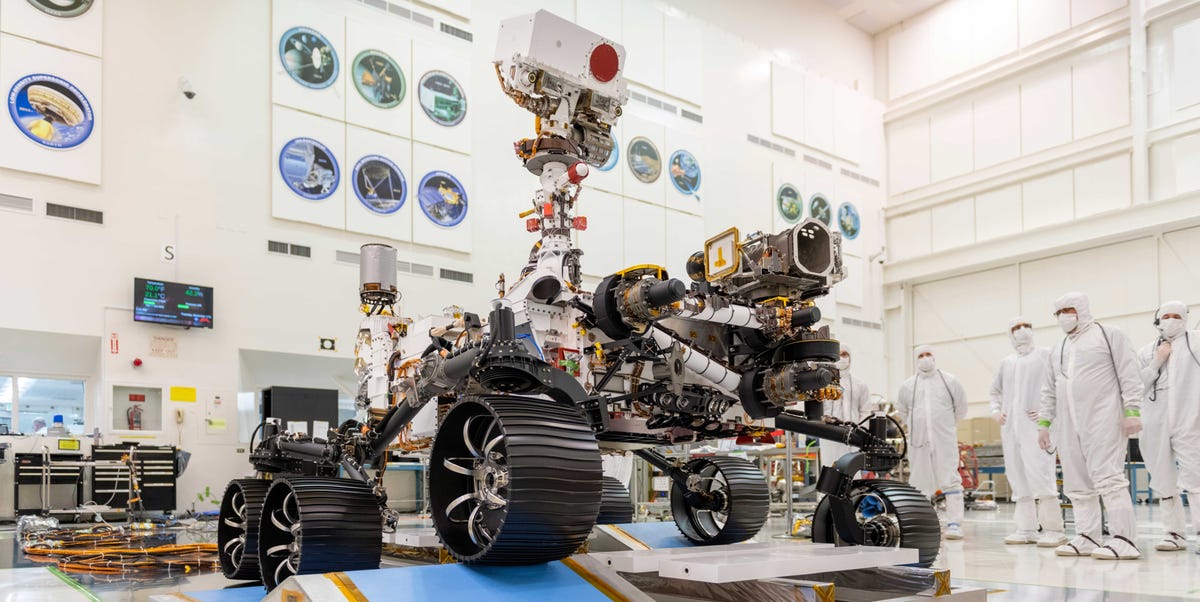
Keeping a Mars rover clean sounds like the kind of chore a very ambitious parent might assign: “Please tidy your room, wipe down the spacecraft, and don’t bring Earth bacteria to another planet.” But in space exploration, cleanliness is not about shiny hubcaps or Instagram-worthy lab coats. It is about protecting science, protecting Mars, and making sure that when a rover finds something interesting, scientists do not have to ask the most embarrassing question in astrobiology: “Did we accidentally bring that with us?”
Mars rovers are built to survive radiation, freezing nights, rocky terrain, software glitches, power limits, and enough red dust to make a vacuum cleaner wave a white flag. Yet before a rover ever touches Mars, it must pass through one of the strictest cleaning routines in engineering. NASA and its partners do not simply build a rover and say, “Looks good, launch it.” They assemble it in controlled cleanrooms, monitor contamination, sterilize hardware where possible, limit human contact, clean tools, inspect surfaces, and track materials that could confuse future science.
The phrase keeping the Mars rover clean really has two meanings. First, engineers must keep the rover biologically and chemically clean on Earth before launch. Second, once the rover lands, mission teams must manage Martian dust, dirty instruments, sampling surfaces, and contamination risks during science operations. The result is a strange but fascinating mix of microbiology, geology, robotics, housekeeping, and “please do not sneeze on the interplanetary robot.”
Why Mars Rover Cleanliness Matters
Cleanliness is central to Mars exploration because Mars is not just another dusty destination. It is one of the most important places in the solar system to search for evidence of ancient habitability and possible past microbial life. If a rover carries too much Earth material to Mars, it can complicate the very discoveries it was sent to make.
NASA’s planetary protection approach focuses on avoiding forward contamination, which means preventing Earth organisms or biological material from hitchhiking to another world. Imagine sending a detective to a crime scene after sprinkling your own fingerprints everywhere. That is the contamination nightmare scientists want to avoid. When a rover studies Martian rocks, soil, and dust, researchers need confidence that unusual organic molecules, minerals, or microscopic clues belong to Mars and not to a technician’s lunch, a cleaning cloth, or a very stubborn microbe.
For missions like Perseverance, cleanliness has an additional purpose: protecting future sample science. Perseverance was designed to collect and seal Martian rock, regolith, and atmospheric samples in carefully prepared tubes. If those samples are eventually returned to Earth, laboratories will examine them with instruments far more sensitive than anything that can fit on a rover. That means even tiny traces of Earth-based contamination could become a big scientific headache.
The Cleanroom: Where Rovers Go Before Mars
Before launch, Mars rovers are assembled in cleanrooms that look part hospital, part spaceship garage, and part “do not touch anything unless five people approve it.” These environments use filtered air, controlled humidity, carefully cleaned surfaces, and strict procedures to reduce dust, moisture, and biological contamination. Workers wear full protective garments, including hoods, gloves, masks, boot covers, and special suits. The goal is not fashion. It is to keep skin flakes, hair, fibers, microbes, and ordinary Earth grime away from spacecraft hardware.
Cleanroom discipline can be surprisingly practical. Tools are cleaned. Parts are bagged or covered when not in use. Hardware is handled only by trained personnel. Surfaces may be wiped with approved solvents such as alcohol. Components that can tolerate heat may undergo dry heat microbial reduction, a process that uses controlled temperature and time to reduce viable organisms. Not every part of a rover can be baked like a potato, of course. Electronics, sensors, seals, adhesives, and delicate instruments may require gentler methods, so engineers choose cleaning techniques based on the material and mission requirement.
The process also includes measurement. NASA does not simply assume a cleanroom is clean because everyone looks like they are dressed for a very cautious snowstorm. Teams sample surfaces, monitor bioburden, track particles, and document what materials have been near the hardware. This recordkeeping is crucial because future scientists may need to distinguish between true Martian signals and trace materials that came from Earth.
Planetary Protection: The Science of Not Bringing Guests
Planetary protection may sound like a superhero department, but it is a serious field that guides how missions are designed, assembled, tested, and operated. The rules depend on where a spacecraft is going and what it will do. A mission that flies by a planet has different cleanliness needs than one that lands, drills, samples, or explores areas that might preserve evidence of life.
Mars receives special attention because it once had liquid water, active geology, and environments that may have been habitable. Even though the surface today is cold, dry, and exposed to harsh radiation, scientists do not want Earth microbes interfering with the search for life or with future human exploration. Some organisms on Earth can survive surprisingly harsh conditions, especially as spores or in dormant states. Cleanrooms reduce risk, but they are not magic force fields. That is why planetary protection combines cleaning, sterilization, monitoring, material selection, and documentation.
In plain English, NASA’s approach is this: clean the rover as much as practical, know what remains, and design the mission so contamination does not undermine science. It is less glamorous than a rocket launch, but without it, the science would be much less trustworthy.
Perseverance and the Cleanest Sample Hardware Ever Launched
NASA’s Perseverance rover raised the cleanliness challenge to a new level. Its Sample Caching System was built to collect Martian material and seal it inside tubes for possible return to Earth. Because those samples could be used to look for signs of ancient microbial life, the sampling hardware had to be extraordinarily clean.
The sample tubes were not ordinary metal containers. They were precision-cleaned, sterilized, inspected, and protected. Their interiors needed to avoid biological contamination, organic contamination, inorganic contamination, and particles that could interfere with scientific analysis. Even tiny residues matter when scientists are hunting for subtle chemical fingerprints.
Perseverance also carries witness tubes. These are similar to sample tubes, but instead of collecting Martian rock cores, they are designed to “witness” the contamination environment around sampling activities. They contain materials that can capture molecular and particulate contaminants. If scientists later analyze returned samples, witness tubes can help identify whether any detected Earth-related material was present during sample collection. Think of them as the rover’s contamination diary, except much more expensive and far less likely to be misplaced under a couch cushion.
Mars Dust: The Red Planet’s Most Persistent Houseguest
Once a rover lands, Earth contamination becomes only part of the cleanliness story. Mars has its own cleaning problem: dust. Martian dust is fine, widespread, and persistent. It coats rocks, settles on spacecraft, blows through the atmosphere, and can reduce visibility, power, and instrument performance. It is the glitter of the solar system: once it gets everywhere, good luck pretending it is gone.
Dust affects missions in different ways. Solar-powered rovers and landers depend on clean solar panels to generate energy. When dust accumulates, power drops. Spirit and Opportunity, NASA’s twin Mars Exploration Rovers, experienced natural “cleaning events” when Martian winds removed some dust from their solar arrays. These events sometimes gave the rovers a welcome energy boost and helped extend their missions far beyond their original 90-day plans.
NASA’s InSight lander faced the opposite problem later in its mission. Dust gradually coated its solar panels, reducing power. Engineers developed a clever trick: the lander’s robotic arm trickled sand near a solar panel so wind could carry grains across the dusty surface and knock some dust loose. It was not exactly a spa treatment, but it worked well enough to provide a modest energy boost.
Why Not Put Windshield Wipers on Every Rover?
The obvious question is: if dust is such a problem, why not install a brush, wiper, blower, or tiny robot maid? The answer is that every cleaning system adds mass, complexity, power demand, failure points, and risk. On Mars, a stuck brush is not an inconvenience. It is a mission issue. A wiper that scratches a solar panel, jams in dust, or fails in extreme cold may cause more trouble than it solves.
Engineers must constantly trade one benefit against many costs. A rover has limited mass, limited power, limited space, and limited time. If a cleaning mechanism is included, something else may need to be removed. For nuclear-powered rovers such as Curiosity and Perseverance, solar-panel dust is not the same survival threat it was for Spirit, Opportunity, or InSight. These larger rovers use radioisotope power systems, so they do not rely on solar arrays. Dust still matters, but it is less likely to starve the rover of electricity.
That does not mean Curiosity and Perseverance ignore dust. They manage it through design, operations, instrument calibration, covers, careful imaging, and specialized tools for science targets.
Cleaning Rocks, Not Just the Rover
Sometimes the most important thing to clean on Mars is not the rover itself but the rock in front of it. Martian rocks are often coated in dust that hides color, texture, grain structure, and chemistry. If a rover is going to study a rock surface, it may need to remove that dusty layer first.
Curiosity carries a Dust Removal Tool, a motorized wire-bristle brush mounted on the turret at the end of its robotic arm. It can sweep dust off rock surfaces so cameras and instruments can examine cleaner material underneath. This is the Martian equivalent of wiping fog off your glasses, except the glasses are a billion-dollar robot’s science target.
Perseverance uses a different approach. After abrading a rock surface, the rover can fire small puffs of nitrogen gas from its Gaseous Dust Removal Tool. These puffs clear away tailings and dust from the freshly abraded patch, revealing the surface for close inspection by instruments such as cameras and spectrometers. In other words, Perseverance brought canned air to Mars. Somewhere, an office keyboard is jealous.
Clean Data Is as Important as Clean Hardware
Keeping a Mars rover clean is not only about physical surfaces. It is also about keeping the science record clean. Rover teams use calibration targets, repeated measurements, imaging sequences, and contamination knowledge to interpret data correctly. If an instrument sees an interesting signal, scientists ask whether it could come from Mars, from the rover, from the sampling system, from dust, from lighting conditions, or from previous operations.
This is especially important when studying organic molecules. Organic chemistry does not automatically mean biology. Organic compounds can form through non-biological processes, arrive by meteorites, or appear through interactions between rock and water. That is why contamination control is paired with careful scientific interpretation. A rover’s job is not to shout “life!” at the first interesting molecule. Its job is to collect evidence carefully enough that future scientists can make stronger conclusions.
The Human Side of Rover Cleanliness
Behind every clean rover is a team of humans trying very hard not to be human near it. People shed skin cells. People breathe. People carry microbes. People forget things. Cleanroom work requires patience, discipline, and humility. You may be helping build one of the most advanced machines ever sent to another planet, but you still have to follow the gowning procedure, label the tool, wipe the surface, and avoid leaning over the hardware like it is a kitchen counter.
That human discipline is one of the quiet achievements of Mars exploration. The rover may be the celebrity, but cleanroom technicians, contamination-control specialists, microbiologists, materials engineers, systems engineers, and mission planners make the science credible. Their work is not always dramatic, but it is the difference between a historic discovery and a confusing lab result with a long awkward silence.
Challenges That Never Completely Go Away
No spacecraft can be made perfectly clean. The goal is controlled cleanliness, not fantasy cleanliness. Hardware must survive assembly, testing, transport, launch, cruise, entry, descent, landing, and years of operations. Materials outgas. Dust moves. Mechanical parts wear. Drills create powder. Wheels disturb soil. Winds coat surfaces. Instruments age. Mars is not a museum display case; it is an active environment.
The challenge is to design systems that remain useful despite these realities. That means sealing sample tubes properly, protecting sensitive parts, documenting contamination sources, using witness materials, planning operations carefully, and building enough redundancy into the mission. A Mars rover is not clean because it stays untouched. It is clean because the mission understands, limits, and tracks what touches it.
What Future Mars Missions Can Learn
Future Mars missions will face even bigger cleanliness challenges. Sample return missions require both protecting Mars from Earth contamination and protecting Earth from returned material until scientists understand it. Human missions will be more complicated still. Astronauts are walking ecosystems. They bring air, water, food, waste, microbes, tools, habitats, suits, and dust-covered boots. Keeping future Mars exploration clean will require new technologies for airlocks, suitports, sample handling, sterilization, waste control, and habitat maintenance.
The rover era is teaching NASA and the broader space community how to manage those risks. Every cleanroom procedure, witness tube, dust-clearing tool, and contamination-control report adds experience. It also reminds us that exploration is not only about going farther. It is about going carefully enough that what we find still means something.
Conclusion: Clean Rovers Make Better Discoveries
Keeping the Mars rover clean is one of the least flashy and most important parts of exploring the Red Planet. It begins on Earth in carefully controlled cleanrooms, continues through launch preparation, and follows the rover across Mars in the form of dust management, instrument care, sample protection, and contamination knowledge. Cleanliness protects Mars from Earth, protects Earth-based science from confusion, and protects the credibility of discoveries that may shape our understanding of life in the universe.
Mars is dusty, harsh, and wonderfully inconvenient. It does not care how carefully a rover was polished before launch. But through smart engineering, strict planetary protection, clever dust-removal tools, and meticulous science operations, NASA gives each rover the best possible chance to explore without muddying the evidence. In the search for ancient life, a clean rover is not just a tidy rover. It is a more honest witness.
Extra Field Notes: Experiences Related to Keeping the Mars Rover Clean
The best way to understand Mars rover cleanliness is to compare it with experiences that feel familiar, then multiply the stakes by a few million miles. Anyone who has cleaned a camera lens before a once-in-a-lifetime photo knows the basic feeling. A tiny smear can ruin the image. Now imagine the lens is on Mars, the photo may influence planetary science, and nobody can walk over with a microfiber cloth. That is the emotional universe rover teams live in every day.
Cleanliness also resembles working in a professional kitchen, where cross-contamination is the enemy. A chef does not chop vegetables on a board used for raw chicken because the meal might become unsafe. NASA does not allow uncontrolled biological or chemical material near Mars hardware because the science might become unreliable. In both cases, the boring steps matter: wash, separate, label, inspect, repeat. The difference is that dinner guests complain on Earth, while a contaminated Mars sample could confuse scientists for decades.
There is also a lesson from camping in dry, dusty places. Dust finds every zipper, pocket, bottle cap, and sandwich. You can keep wiping, but the environment keeps participating. Mars is like that, only colder, drier, and less forgiving. Rover teams cannot defeat dust completely, so they design around it. They watch power levels, inspect wheels, image hardware, protect instruments, and plan activities with the environment in mind. The goal is not a spotless rover. The goal is a rover that can keep doing excellent science while wearing a thin red coat.
Another useful experience is maintaining sensitive lab equipment. Scientists know that good data begins before the experiment starts. Calibration, clean tools, controlled samples, and documentation are not paperwork for paperwork’s sake. They are the foundation that lets researchers trust results later. Perseverance’s witness tubes capture this philosophy beautifully. They do not collect headline-making rock cores, but they help future scientists understand what else may have been present during sampling. That kind of quiet backup plan is the difference between confidence and guesswork.
Finally, rover cleanliness teaches a surprisingly human lesson: exploration rewards patience. The public sees the launch, the landing, the dramatic images, and the discoveries. Less visible are the thousands of careful actions that make those moments possible. Someone cleaned a tool. Someone checked a seal. Someone documented a material. Someone asked whether a tiny residue might matter ten years later in a laboratory. That careful mindset is not glamorous, but it is heroic in its own way. Mars exploration succeeds because people take small details seriously, even when the destination is an entire planet away.