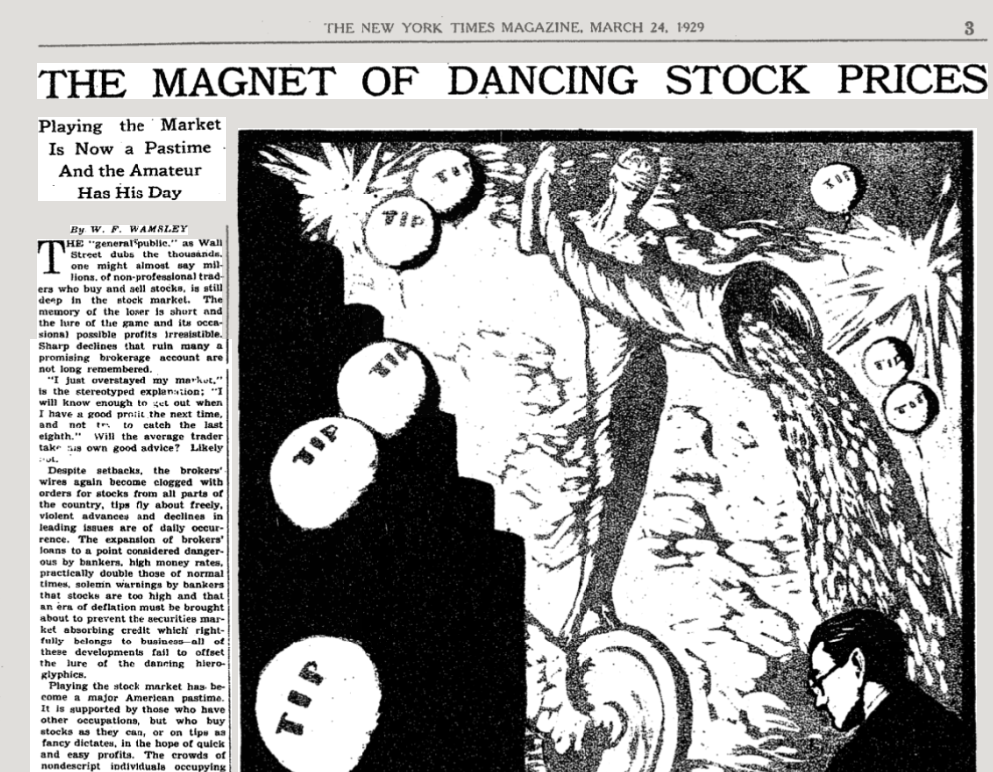
Jesse Livermore was not just a famous stock trader. He was a walking thunderstorm in a tailored suit, a man who could read market movement with eerie confidence and still be defeated by the oldest enemy on Wall Street: himself.
The Man Who Heard the Market Before It Spoke
Long before trading apps flashed green and red candles across pocket-sized screens, Jesse Lauriston Livermore watched prices crawl across ticker tape. Born in Massachusetts in 1877, Livermore entered the financial world as a teenager, working as a board boy who wrote stock quotes by hand. That job looked humble from the outside, but for a curious mind, it was a private theater of human emotion.
Every tick told a story. A rising price whispered confidence. A sudden drop smelled like fear. A stalled quote hinted that buyers and sellers were wrestling behind the curtain. Livermore noticed patterns in these “dancing stock prices” before most people even realized there was choreography. To him, the market was not a machine. It was a crowd with a pulse.
That pulse became his obsession. Livermore learned that prices often moved as if pulled by an invisible magnet: greed pulling them higher, fear dragging them lower, hope making them bounce, and panic sending them tumbling down the stairs like a suitcase with commitment issues.
What Does “The Magnet of Dancing Stock Prices” Mean?
The phrase describes the seductive pull of price movement. Stocks rarely move in a straight line. They wiggle, leap, hesitate, reverse, and sometimes do the financial equivalent of slipping on a banana peel. For traders, that movement can become hypnotic.
Livermore understood this magnetic force better than almost anyone of his era. He did not study balance sheets the way long-term investors do today. His world was price action, momentum, volume, timing, and crowd behavior. He wanted to know whether a stock was being accumulated, distributed, supported, abandoned, or pushed around by powerful interests.
The Stock Tape as a Psychological Mirror
To Livermore, the tape was not merely a record of transactions. It was a mirror reflecting fear, ambition, impatience, and overconfidence. A stock rising on strong demand could attract more buyers simply because it was rising. A falling stock could create more selling because people feared being the last guest at a very expensive party.
This is the magnet: price movement attracts attention, attention attracts money, and money creates more movement. The cycle can be profitable, dangerous, or both before breakfast.
From Bucket Shops to Wall Street Legend
Livermore’s early trading career began in bucket shops, informal betting houses where customers wagered on stock price movements without actually owning shares. It was a rough school, but it trained him to focus on timing and discipline. He became so successful that many shops reportedly banned him. Imagine being so good at a game that the casino politely asks you to go ruin someone else’s afternoon.
He earned the nickname “Boy Plunger” because of his youth and bold trading style. Later, he became known as “The Great Bear of Wall Street,” especially after profiting from market declines. His career was a dizzying carousel of enormous gains, devastating losses, comebacks, bankruptcies, and legendary trades.
The 1907 Panic and the Power of Being Right at the Wrong Time
During the Panic of 1907, Livermore reportedly made a fortune by shorting the market. He recognized weakness when others were still clinging to optimism. Yet his career shows that being right once, twice, or even spectacularly right does not make a trader invincible. The market does not hand out lifetime achievement trophies. It asks the same question every day: “What is your risk?”
The 1929 Crash and the Great Bear
Livermore’s most famous episode came around the 1929 stock market crash. While much of America was intoxicated by the roaring bull market, he built large short positions. When the crash arrived, he reportedly made around $100 million, an almost mythical sum for the period. Yet public opinion was not kind. Many people saw short sellers as villains, even though speculation, margin borrowing, weak oversight, and market excess were far larger forces in the disaster.
His 1929 triumph cemented his legend. It also made him a symbol of Wall Street’s darker glamour: brilliance, secrecy, leverage, and the uncomfortable truth that someone can profit while others suffer.
Livermore’s Trading Rules Still Echo Today
Jesse Livermore’s methods were shaped in a very different market. He did not have algorithmic trading, real-time analytics, exchange-traded funds, or a smartphone buzzing every six seconds like an anxious pigeon. Still, several of his core lessons remain surprisingly modern.
1. Cut Losses Quickly
Livermore believed that a trader should not argue with the market. If a position moved against him, the loss was information. Ignoring that information was expensive. This idea remains central to risk management today. A small loss is tuition. A huge loss is tuition plus a campus building named after your mistake.
2. Let Winners Work
One of Livermore’s famous principles was to avoid taking profits too quickly when a trade was working. He understood that large gains often come from sitting through normal fluctuations. This is difficult because the human brain loves certainty. A small profit feels safe. A larger potential profit feels like a raccoon holding fireworks.
3. Do Not Trade Every Wiggle
Although Livermore watched prices closely, he also learned that overtrading could be deadly. Not every movement deserves action. Some price dances are meaningful; others are market noise wearing tap shoes. The challenge is knowing the difference.
4. Study General Market Conditions
Livermore cared deeply about the broader market environment. A strong stock can struggle in a weak market, and a mediocre stock can float higher during a powerful bull trend. He recognized that the tide matters. Even a talented swimmer should respect the ocean.
5. Avoid Tips and Rumors
Livermore’s life includes painful examples of what can happen when traders rely on tips instead of their own tested judgment. Rumors are the junk food of the market: tasty, addictive, and likely to make your portfolio feel unwell.
The Psychology Behind Dancing Stock Prices
Why do stock prices dance? Because people do. Markets are built from human decisions, institutional flows, algorithms designed by humans, and narratives that spread from one investor to another. A stock price is not just a number. It is a compressed argument about the future.
When investors believe a company’s prospects are improving, demand can rise. When fear takes over, selling pressure can become contagious. During speculative periods, prices may detach from business reality because the crowd begins buying not what a company is worth, but what it hopes someone else will pay tomorrow.
Greed Pulls, Fear Pushes
Livermore’s career dramatizes the emotional engine of the market. Greed pulls traders into rising prices. Fear pushes them out during declines. Hope keeps losers alive too long. Pride prevents people from admitting they are wrong. The ticker tape simply records the evidence.
In modern markets, the dance happens faster, but the music is familiar. Social media can accelerate hype. Margin accounts can amplify losses. Volatility can turn confidence into panic with impressive speed. The tools have changed; the human nervous system has not received the memo.
Why Livermore Was Brilliantand Why He Still Lost
Livermore’s story is powerful because it refuses to be a simple success manual. He made fortunes, lost fortunes, rebuilt himself, and collapsed again. His life warns that skill is not the same as stability. A trader can understand price movement and still fail to master position size, emotion, lifestyle pressure, or the temptation to prove a point.
He was capable of extraordinary patience when waiting for a major move. Yet he could also violate his own rules. That contradiction makes him deeply human. It also makes him useful to study. The lesson is not “trade like Livermore and become rich.” The lesson is “study Livermore so you understand both the power and danger of speculation.”
The Problem With Being Addicted to Action
The magnet of dancing stock prices can become addictive. Every quote looks like an invitation. Every dip looks like opportunity. Every rally looks like confirmation. Without rules, the trader becomes less like a strategist and more like a person trying to swat flies in a room full of mirrors.
Livermore’s greatest strength was his sensitivity to market movement. His greatest weakness was that the market never released him. The dance kept calling.
Modern Lessons From Jesse Livermore
Today’s investors and traders operate in a more regulated market than Livermore did. The Securities Exchange Act of 1934 helped create a federal framework for oversight, disclosure, and market regulation. Modern investors also have access to public filings, investor education, diversified funds, and risk-management tools that earlier generations lacked.
Still, technology does not eliminate poor judgment. A zero-commission trade can still be expensive if it is impulsive. A fast chart can still encourage slow thinking to leave the building. A hot stock can still cool off exactly one minute after you decide you are a genius.
Use Livermore as a Mirror, Not a Map
Livermore is best viewed as a mirror. His career reflects ambition, courage, pattern recognition, emotional intensity, and the danger of excess. He can teach traders to respect momentum, but also to respect risk more. He can inspire curiosity, but should also inspire caution.
For long-term investors, his story offers a different lesson: you do not need to catch every move. You do not need to predict every crash. You do not need to wrestle the market daily while wearing emotional roller skates. A diversified, risk-appropriate plan may sound less dramatic, but drama is rarely a reliable retirement strategy.
The Magnet Still Works in Today’s Market
The magnet of dancing stock prices is stronger than ever because the market is now everywhere. Prices live on phones, watches, financial television, social feeds, and trading platforms designed to make movement feel urgent. A stock that jumps 20% in a day can attract attention from professionals, amateurs, influencers, and that one cousin who suddenly says “liquidity” at dinner.
Livermore would likely recognize the emotional rhythm. Breakouts still attract buyers. Crashes still create panic. Crowds still overreact. Traders still confuse luck with skill after a winning streak. The names change, the tickers change, but the psychology keeps wearing the same hat.
Price Is a Signal, Not a Spell
The danger is treating price movement as magic. A rising price does not automatically mean value. A falling price does not automatically mean bargain. Price is a signal that deserves investigation, not a spell that should control your hand.
Livermore’s genius was seeing that price action mattered. His tragedy was showing that even genius requires boundaries. The dancing stock prices may pull you closer, but risk management decides whether you leave the dance floor with your shoes, your wallet, and your dignity.
Experiences Related to Jesse Livermore & The Magnet of Dancing Stock Prices
Anyone who has watched a stock chart for more than five minutes understands why Livermore became fascinated. The first experience is visual. A stock opens quietly, then suddenly jumps. The chart forms a green candle, volume rises, and your brain leans forward. You may know nothing about the company’s debt, margins, management, or competitive position, but the movement alone feels meaningful. That is the magnet beginning to work.
A common experience for modern traders is the “I’ll just watch” trap. You open a chart with no plan, promising yourself you are only observing. Then the price breaks above yesterday’s high. A financial news headline appears. Social media starts buzzing. Within minutes, observation turns into temptation. Livermore’s world had ticker tape; today’s world has push notifications. Different delivery system, same emotional caffeine.
Another familiar experience is the pain of exiting too early. You buy a stock after careful analysis, it rises modestly, and you sell because the profit feels safe. Then the stock continues climbing for days, waving goodbye from a yacht you were almost invited to board. Livermore wrote often about the importance of sitting tight when the market confirms your view. The experience teaches that patience is not passive. In trading, patience can be an active discipline.
The opposite experience is even more educational: refusing to take a small loss. A position drops 3%, then 6%, then 10%. Instead of exiting, the trader begins negotiating with reality. “It will come back,” they say, as if the market is a golden retriever that wandered out of the yard. Livermore’s rule about cutting losses remains relevant because losses are not only financial. They consume attention, confidence, and decision-making energy.
Many investors also experience the strange pressure of crowd confidence. When everyone seems bullish, caution feels foolish. During speculative runs, people who ask basic questions are treated like party guests who brought a fire extinguisher to a champagne tower. Livermore’s career reminds us that crowds can be right for a while and dangerously wrong at the turn. The market can reward enthusiasm, then punish the latecomers who mistook momentum for immortality.
The most valuable personal experience related to Livermore’s story is learning to separate fascination from participation. You can admire a dramatic market move without joining it. You can study price action without surrendering to it. You can respect speculation while deciding that your own financial life requires slower, steadier tools. This is where Livermore becomes more than a trading legend. He becomes a caution sign with excellent tailoring.
For writers, investors, and market students, the lasting experience is humility. The market is bigger than any single opinion. It can make a careful person look foolish and a reckless person look brillianttemporarily. Livermore’s wins prove that price movement contains information. His losses prove that information alone is not enough. The trader still needs discipline, emotional control, position sizing, and the ability to walk away when the dance becomes too loud.
Conclusion: The Dance Is Beautiful, But the Floor Is Slippery
Jesse Livermore remains one of the most fascinating figures in stock market history because his life contains both the dream and the warning. He rose from modest beginnings to become a legendary speculator. He read price movement with remarkable skill. He profited from historic market events. Yet he also suffered devastating losses, broke his own rules, and became a symbol of how dangerous speculation can be when brilliance outruns restraint.
The magnet of dancing stock prices still pulls at traders today. Every breakout, reversal, rally, and crash asks for attention. Livermore teaches us to watch carefully, think independently, and respect the crowd without becoming its puppet. Most of all, he teaches that the market is not conquered once. It must be approached with humility every single day.
Note: This article is for educational and editorial purposes only. It is not financial, investment, legal, or tax advice.