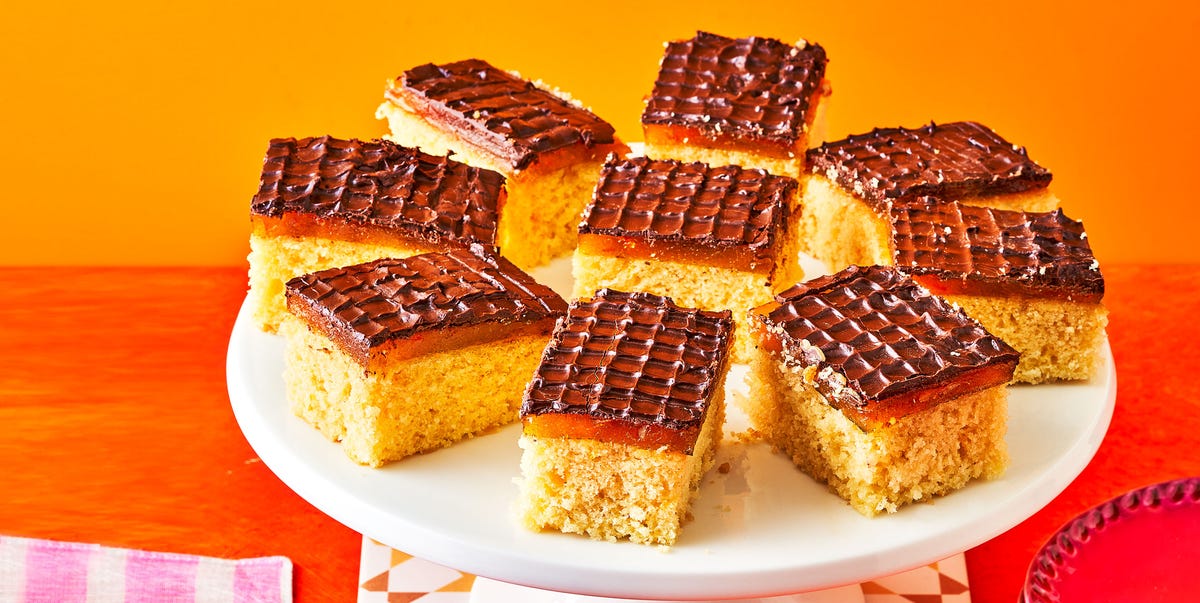
A Jaffa Cake traybake recipe is what happens when the famous chocolate-orange snack decides to stop being tiny and become the life of the dessert table. Instead of making individual little cakes one by one, you bake a soft sponge in a rectangular pan, crown it with a bright orange jelly layer, and finish the whole glorious situation with glossy chocolate. It is part cake, part candy bar, part “just one more square” problem.
This homemade version keeps the spirit of classic Jaffa Cakes: a light sponge base, a tangy orange middle, and a smooth chocolate topping. The traybake format makes it easier for parties, lunch boxes, potlucks, bake sales, birthdays, and those deeply important evenings when your dessert standards are high but your patience is wearing slippers.
The goal here is balance. The sponge should be soft but sturdy enough to hold the jelly. The orange layer should be zesty, not flat or candy-sweet. The chocolate should slice cleanly without cracking into dramatic little shards that make your counter look like dessert confetti. Follow the steps below and you will have a Jaffa Cake traybake that tastes nostalgic, looks polished, and disappears suspiciously fast.
What Is a Jaffa Cake Traybake?
A Jaffa Cake traybake is a larger, sliceable dessert inspired by traditional Jaffa Cakes. Classic Jaffa Cakes are known for three layers: sponge, orange-flavored jelly or jam, and chocolate. In traybake form, those same flavors are built in a 9-by-13-inch pan and cut into neat squares or bars.
The beauty of this recipe is its practicality. Individual Jaffa-style cakes are charming, but they can be fussy. You need molds, careful layering, and a steady chocolate hand. A traybake gives you the same chocolate-orange payoff with fewer tiny operations. Bake one sponge, pour one jelly layer, spread one chocolate topping, chill, slice, and accept applause gracefully.
Why This Jaffa Cake Traybake Works
The best Jaffa Cake traybake recipe depends on structure. If the sponge is too dry, the dessert feels stale before it even leaves the pan. If the jelly is too loose, the slices slide around like they are trying to escape. If the chocolate topping is too hard, it cracks when cut. This recipe solves those problems with a light sponge, a firm homemade orange gelatin layer, and a ganache-style chocolate topping that sets but remains sliceable.
Orange juice, orange zest, and a little marmalade build a fuller citrus flavor than boxed gelatin alone. The ganache topping uses semi-sweet or dark chocolate with warm cream, creating a smooth finish that feels rich without overpowering the orange. The result is a dessert with contrast: tender cake, cool jelly, and creamy chocolate in every bite.
Recipe Overview
| Prep Time | 35 minutes |
|---|---|
| Bake Time | 12 to 15 minutes |
| Chilling Time | 3 to 4 hours |
| Total Time | About 4 hours 30 minutes |
| Yield | 16 to 20 squares |
| Best Pan | 9-by-13-inch baking pan |
Ingredients
For the Sponge Base
- 3 large eggs, at room temperature
- 2/3 cup granulated sugar
- 1 teaspoon vanilla extract
- 1 teaspoon finely grated orange zest
- 3/4 cup all-purpose flour
- 1 teaspoon baking powder
- 1/4 teaspoon fine salt
- 3 tablespoons unsalted butter, melted and slightly cooled
- 2 tablespoons whole milk
For the Orange Jelly Layer
- 2 cups orange juice, divided
- 2 packets unflavored gelatin, 1/4 ounce each
- 1/3 cup granulated sugar
- 2 tablespoons orange marmalade
- 1 tablespoon fresh lemon juice
- 1/2 teaspoon orange zest, optional but recommended
For the Chocolate Topping
- 8 ounces semi-sweet or dark chocolate, finely chopped
- 1/2 cup heavy cream
- 1 tablespoon unsalted butter, optional, for shine
- Pinch of salt
Equipment You Need
- 9-by-13-inch baking pan
- Parchment paper
- Mixing bowls
- Electric mixer or stand mixer
- Small saucepan
- Offset spatula
- Sharp knife for slicing
How to Make Jaffa Cake Traybake
Step 1: Prepare the Pan
Preheat the oven to 350°F. Lightly grease a 9-by-13-inch baking pan and line it with parchment paper, leaving overhang on the long sides. That parchment overhang becomes your dessert elevator later, and yes, it feels oddly satisfying.
Step 2: Make the Sponge Batter
Add the eggs and sugar to a large bowl. Beat with an electric mixer for 4 to 5 minutes, until the mixture is pale, thick, and forms ribbons when lifted. This step gives the sponge its light texture, so do not rush it. Add the vanilla extract and orange zest, then mix briefly.
In a separate bowl, whisk together the flour, baking powder, and salt. Sift the dry ingredients over the egg mixture in two additions, folding gently after each one. Stir the melted butter and milk together, then drizzle it around the edge of the bowl. Fold carefully until no dry streaks remain.
Step 3: Bake the Sponge
Spread the batter evenly in the prepared pan. Bake for 12 to 15 minutes, or until the top springs back lightly and a toothpick inserted in the center comes out clean. Avoid overbaking. A dry sponge will still taste good, but it will not deliver that soft Jaffa-style bite.
Let the sponge cool completely in the pan. Do not pour jelly onto a warm cake unless you enjoy dessert geology, where layers sink, merge, and form mysterious underground rivers.
Step 4: Make the Orange Jelly
Pour 1/2 cup of the orange juice into a small bowl. Sprinkle the gelatin evenly over the top and let it stand for 5 to 10 minutes. This softens the gelatin and helps prevent clumps.
In a small saucepan, combine the remaining 1 1/2 cups orange juice, sugar, marmalade, lemon juice, and optional orange zest. Warm over medium heat until the sugar dissolves and the mixture is hot but not boiling. Add the bloomed gelatin and stir until completely dissolved.
Let the orange mixture cool until it is no longer hot. It should still be pourable. If it begins to thicken too much, warm it very gently for a few seconds and stir.
Step 5: Add the Jelly Layer
Pour the cooled orange jelly mixture evenly over the cooled sponge. Tilt the pan gently to help it reach the corners. Refrigerate for 2 to 3 hours, or until the jelly is fully set. The surface should look firm and glossy, not wobbly like it is making a life decision.
Step 6: Make the Chocolate Topping
Place the chopped chocolate in a heatproof bowl. Heat the cream in a small saucepan until steaming and just beginning to simmer around the edges. Pour the hot cream over the chocolate and let it sit for 3 minutes. Add the butter and salt, then stir slowly until smooth and glossy.
Let the ganache cool for 5 to 10 minutes so it is spreadable but not hot. Pour it over the set jelly layer and spread it gently with an offset spatula. Refrigerate for 45 to 60 minutes, or until the chocolate topping is firm enough to slice.
Step 7: Slice and Serve
Lift the traybake from the pan using the parchment overhang. For clean slices, warm a sharp knife under hot water, dry it, and cut straight down. Wipe the knife between cuts. This small step makes the difference between bakery-style squares and “I fought the chocolate and the chocolate won.”
Helpful Tips for the Best Jaffa Cake Traybake
Use Good Orange Juice
Since orange is the star, use juice that tastes bright and fresh. Fresh-squeezed orange juice is excellent, but a high-quality bottled orange juice also works. Avoid anything that tastes watery or overly bitter.
Do Not Skip the Marmalade
Marmalade adds a gentle bitterness and real citrus depth. It gives the jelly layer a more grown-up orange flavor, which balances the sweetness of the sponge and chocolate. If you prefer a smoother jelly layer, warm the marmalade well and strain the mixture before pouring.
Let Each Layer Cool Properly
Layered desserts reward patience. The sponge must be cool before the jelly goes on. The jelly must be fully set before the chocolate topping is added. The chocolate must be firm before slicing. Rushing turns a beautiful Jaffa Cake traybake into a delicious but chaotic pudding.
Choose the Right Chocolate
Semi-sweet chocolate creates a family-friendly topping. Dark chocolate gives a more classic, slightly bitter finish that pairs beautifully with orange. Milk chocolate can be used, but the traybake will taste sweeter and softer. If using milk chocolate, reduce the cream slightly so the topping sets well.
Flavor Variations
Dark Chocolate Orange Traybake
Use 70% dark chocolate for a deeper cocoa flavor. This version tastes more sophisticated and works well for dinner parties, coffee breaks, and adults who say they “do not really eat dessert” before eating two pieces.
Extra Orange Jaffa Cake Traybake
Add 1/2 teaspoon orange extract to the jelly layer and another 1/2 teaspoon orange zest to the sponge. This gives the dessert a stronger citrus aroma without making it taste artificial.
Holiday Jaffa Traybake
Add a pinch of cinnamon to the sponge and a small pinch of ground cloves to the orange jelly. The chocolate-orange combination becomes warmer and more festive, perfect for winter gatherings.
Mini Party Squares
Cut the traybake into 24 small squares instead of 16 large ones. This is ideal for buffets because guests can take a bite-sized piece without committing to a full dessert plate. Of course, they may return three times, but that is between them and the tray.
Common Mistakes and How to Avoid Them
The Jelly Soaks Into the Sponge
This usually happens when the sponge is warm or the jelly mixture is too hot. Always cool both before layering. The jelly should be liquid but not steaming.
The Chocolate Cracks When Sliced
A pure melted chocolate topping can crack. A ganache-style topping is easier to cut because the cream softens the chocolate just enough. Use a warm knife for the cleanest slices.
The Sponge Turns Dense
Dense sponge often comes from under-whipped eggs or aggressive folding. Beat the eggs and sugar until thick and pale, then fold gently. Think of the batter as a tiny orange-scented cloud with boundaries.
The Jelly Will Not Set
Check that the gelatin fully blooms before heating and fully dissolves once added to the warm orange mixture. Also give the traybake enough chilling time. The refrigerator is doing important architectural work.
How to Store Jaffa Cake Traybake
Store the finished traybake in an airtight container in the refrigerator for 3 to 4 days. Because it contains a jelly layer and ganache topping, refrigeration helps preserve texture and freshness. Let the slices sit at room temperature for 10 minutes before serving if you prefer a softer chocolate layer.
Freezing the fully assembled traybake is not ideal because gelatin can become watery after thawing. If you want to prepare ahead, bake the sponge, cool it, wrap it tightly, and freeze the sponge only. Thaw, then add the jelly and chocolate layers the day before serving.
Serving Ideas
This Jaffa Cake traybake is wonderful with coffee, black tea, iced tea, or a small glass of cold milk. For a plated dessert, serve each square with whipped cream and a little grated orange zest. For parties, arrange the slices on a white platter so the orange and chocolate layers stand out.
It also works beautifully as a bake sale dessert because the squares are sturdy, recognizable, and easy to portion. Wrap individual pieces in parchment or place them in cupcake liners for a neat presentation. Just make sure they stay cool until serving.
Experience Notes: What Making a Jaffa Cake Traybake Teaches You
The first time you make a Jaffa Cake traybake, you may discover that layered desserts have personalities. The sponge is cooperative. The chocolate is charming. The jelly, however, likes rules. It wants the right temperature, the right timing, and a little respect. Pour it too hot and it sinks into the sponge. Pour it too late and it starts setting in the bowl like it has decided to become modern art. The sweet spot is a cooled, still-pourable jelly that glides over the cake and settles into a smooth orange blanket.
One of the most useful lessons is that simple desserts are not always careless desserts. A Jaffa Cake traybake looks playful, but each layer has a job. The sponge needs enough air to stay light but enough strength to support the jelly. The orange layer needs enough gelatin to cut cleanly but not so much that it bounces like a rubber mat. The chocolate topping needs richness without becoming a hard shell that fractures at the first touch of a knife. When those layers work together, the texture is excellent: soft, cool, creamy, and slightly chewy in the best possible way.
This recipe is also a great reminder that orange and chocolate are popular for a reason. Orange brings acidity, fragrance, and freshness. Chocolate brings depth, richness, and that tiny moment of silence people have after taking a really good bite. The marmalade is especially helpful because it adds a faint bitter edge, which keeps the dessert from becoming too sweet. It is the ingredient that makes people say, “What is that?” while reaching for another square.
For home bakers, the traybake format removes stress. You do not need perfect individual rounds. You do not need to dip tiny cakes in chocolate. You do not need to pretend you enjoy washing twenty small molds. Everything happens in one pan, and the final dessert still looks impressive when sliced. The clean layers make it feel bakery-worthy, even if your kitchen currently contains a suspicious amount of chocolate on the spatula, the counter, and somehow your elbow.
The best practical experience tip is to make this dessert the day before you need it. Overnight chilling improves the structure, deepens the orange flavor, and makes slicing easier. It also saves you from last-minute dessert panic, which is a real condition and should probably come with its own warning label. When served cold from the refrigerator with neat layers and a glossy top, this Jaffa Cake traybake feels nostalgic, cheerful, and just fancy enough. It is the kind of bake that makes guests ask for the recipe before they have finished chewing, which is rude but understandable.
Conclusion
This Jaffa Cake traybake recipe turns a beloved chocolate-orange treat into an easy, shareable dessert with real show-off potential. The sponge is light, the orange jelly is bright and zesty, and the chocolate topping is smooth enough to slice beautifully. It is familiar but fresh, playful but polished, and simple enough for weekend baking.
Whether you serve it at a party, pack it for a bake sale, or quietly keep a few squares in the refrigerator for “quality control,” this traybake delivers the classic Jaffa Cake experience in a bigger, easier format. Just remember the golden rules: cool the sponge, set the jelly, use good chocolate, and warm the knife before slicing. Dessert drama belongs in the flavor, not in the cutting.