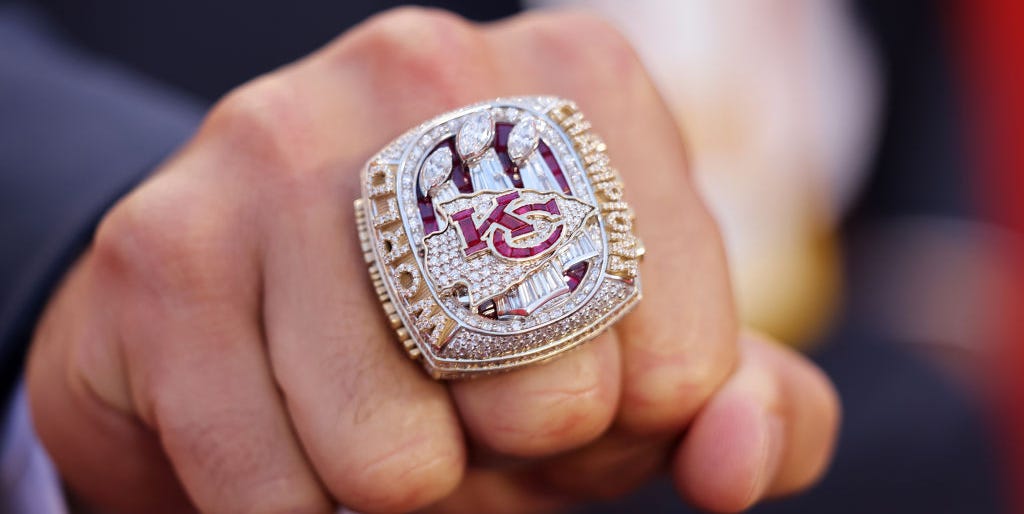
Super Bowl rings are the NFL’s smallest monuments and, somehow, also its loudest. They are part jewelry, part history book, part locker-room trophy, and part “please do not drop this into a garbage disposal.” Every year, the winning team lifts the Lombardi Trophy on national television, but months later, the players, coaches, executives, staff, and selected contributors receive the object they can actually wear: a custom championship ring packed with diamonds, hidden messages, team jokes, engraved scores, and enough symbolism to make a museum curator start stretching.
For fans, Super Bowl rings are mysterious because they rarely appear in normal life. You might see one on a retired player’s hand during a pregame show, in a Hall of Fame display case, or in a viral auction headline that makes you check your bank account and laugh softly. But behind the sparkle is a surprisingly detailed tradition. These rings do not simply say, “We won.” They say how a team won, who mattered, what the season felt like, and which tiny detail the owner insisted must be carved into gold forever.
Below are 12 things you probably did not know about Super Bowl rings, from their humble beginnings to today’s pop-out wings, twist-off tops, secret inscriptions, and price tags that could make a luxury car feel underdressed.
1. The First Super Bowl Ring Was Surprisingly Simple
Today’s Super Bowl rings look like they were designed by a jeweler, a historian, and a Las Vegas lighting technician working together after three espressos. The first one was much simpler. After the Green Bay Packers won the first AFL-NFL World Championship Game, later known as Super Bowl I, the team received rings that were elegant rather than explosive.
The early Packers ring carried the basic idea that still defines the tradition: a wearable symbol of team supremacy. It did not need secret compartments, removable pieces, or a diamond count that could double as a math exam. The point was honor. Vince Lombardi’s Packers had proven they were the best, and the ring made that victory permanent.
That modest start is part of what makes modern Super Bowl rings so fascinating. The tradition began with a clean championship keepsake and gradually evolved into one of the most elaborate pieces of sports memorabilia in America.
2. The NFL Helps Pay for Them, but Teams Often Go Way Beyond the Budget
One of the most common questions is simple: who pays for Super Bowl rings? The answer is: partly the NFL, partly the team, and partly the owner’s willingness to say, “Sure, add more diamonds.” The NFL typically contributes toward a set number of rings for the winning team, often reported as up to 150 rings, with a per-ring contribution. If the team wants more rings, larger rings, more stones, special mechanisms, or luxury presentation boxes, the franchise pays the extra cost.
That is why modern rings can vary so dramatically. A basic championship ring is already expensive, but a fully loaded Super Bowl ring can become a small architectural project. The NFL contribution helps preserve the tradition, while the team’s added spending allows each franchise to create something personal, theatrical, and sometimes gloriously excessive.
3. Not Only Players Get Super Bowl Rings
The starting quarterback gets a ring. The backup quarterback gets a ring. The long snapper, who may spend the whole season doing the most underappreciated magic trick in football, usually gets one too. But the list does not stop with the 53-man roster.
Super Bowl rings are commonly given to coaches, executives, trainers, equipment staff, front-office employees, and other people the organization considers part of the championship journey. Some teams create different tiers of rings or pendants for various staff groups. Others are more generous. The final decision belongs to the franchise, which means every championship creates its own ring map behind the scenes.
This is one reason rings can carry so much emotional weight inside a building. A Super Bowl title is not won only by the players catching passes under confetti. It is also won by scouts, analysts, medical staff, video crews, travel coordinators, cafeteria workers, and the person who somehow finds the right cleats in a thunderstorm.
4. Every Ring Is Basically a Secret Code
Super Bowl rings are not just jewelry; they are puzzle boxes. Designers use diamonds, rubies, sapphires, engravings, numbers, shapes, and hidden compartments to tell the story of a season. A diamond count might represent a final score. A gemstone color may echo a team’s identity. A hidden slogan might reference a coach’s message. A side panel may include the player’s name and jersey number.
For example, modern rings often include the Super Bowl number, the final score, playoff opponents, franchise title count, stadium references, team slogans, or the number of years between championships. Fans might only see sparkle, but team insiders see a full documentary compressed into a few square inches of precious metal.
In that sense, a Super Bowl ring is less like a normal ring and more like a championship yearbook that happens to fit on one finger. A very heavy yearbook, yes, but still.
5. Some Rings Have Hidden Features
The phrase “championship ring” sounds simple until you learn that some recent designs behave like tiny luxury gadgets. The Tampa Bay Buccaneers’ Super Bowl LV ring included a removable top, a first-of-its-kind feature for a Super Bowl ring. The ring celebrated the team’s 31-9 win and its historic achievement as the first team to win a Super Bowl in its home stadium.
The Kansas City Chiefs’ Super Bowl LVIII ring also leaned into hidden storytelling, including a removable top and interior references to the team’s overtime victory. Then the Philadelphia Eagles’ Super Bowl LIX ring went even more theatrical with pop-out wings activated by a hidden button. At that point, the rings were no longer just rings. They were championship jewelry with special effects.
These features matter because modern teams want rings that feel as unforgettable as the season itself. A standard design says, “We won.” A hidden compartment says, “We won, and we brought engineering.”
6. The Diamond Counts Usually Mean Something
Super Bowl rings do not throw diamonds around randomly, even when it looks like they were decorated by someone who owns a fireworks company. The number of stones is often carefully chosen.
The New England Patriots’ Super Bowl LI ring famously featured 283 diamonds, widely understood as a reference to their comeback from a 28-3 deficit against the Atlanta Falcons. The Buccaneers’ Super Bowl LV ring used 319 diamonds on the top to echo the 31-9 final score against Kansas City. The Chiefs’ Super Bowl LVIII ring featured 529 diamonds and 38 rubies, while the Eagles’ Super Bowl LIX design used diamond counts to honor playoff points and Super Bowl scoring details.
That is the fun of these rings: the numbers are rarely just numbers. They are little winks to fans who know the story. If a ring has 58 stones somewhere, there is a good chance Super Bowl LVIII is involved. If 40 diamonds appear in a meaningful spot, start checking the final score.
7. Rings Can Weigh More Than You Expect
A modern Super Bowl ring is not a delicate little band. It is a statement piece. Some recent designs weigh well over 100 grams, which means wearing one can feel less like wearing jewelry and more like giving your hand a strength-training session.
The Eagles’ Super Bowl LIX ring, for example, was described by the team as measuring 41 millimeters and weighing 140 grams in white gold, diamonds, and created green sapphire. That is not a ring you casually forget you are wearing. It has presence. It enters the room before the knuckle does.
This size has become part of the visual language of championship culture. The bigger the game, the bigger the ring. And in the NFL, where everything is already supersized, the jewelry apparently decided to join the offensive line.
8. Jostens Is the Most Famous Name in Super Bowl Rings, but Not the Only One
When many fans think of championship rings, they think of Jostens. The company has produced numerous Super Bowl rings and is deeply associated with the tradition. Jostens’ designs have helped shape the modern idea of a championship ring as a storytelling object rather than a simple piece of jewelry.
But Jostens is not the only company involved in Super Bowl ring history. Other jewelers have created rings for specific teams, including Tiffany & Co., Balfour, and Jason of Beverly Hills. The Buccaneers and Eagles, for instance, worked with Jason of Beverly Hills on highly customized modern designs.
The choice of jeweler can affect the personality of the ring. Some designs feel classic and formal. Others feel bold, experimental, and almost cinematic. Either way, the team’s leadership usually works closely with the jeweler to make sure the ring captures the franchise’s identity.
9. Super Bowl Rings Can Sell for Shocking Amounts at Auction
The material value of a Super Bowl ring is impressive, but the story attached to it is what can send auction prices into orbit. A ring connected to a famous player, historic upset, iconic franchise, or unforgettable game can become a collector’s dream.
Lawrence Taylor’s Super Bowl XXV ring sold for more than $230,000 in 2012. Plaxico Burress’ Super Bowl XLII ring, connected to the Giants’ stunning upset of the previously undefeated Patriots, sold for $280,600 at auction in 2025. An Eagles Super Bowl LIX ring connected to a practice squad player later sold for more than $124,000.
Why so much? Because buyers are not only purchasing gold and diamonds. They are buying a physical piece of football mythology. In sports collecting, provenance is everything. A ring tied to a legendary moment can become more valuable than its stones alone could ever justify.
10. Losing Teams Do Not Get Super Bowl Champion Rings
Here is a subtle but important distinction: the losing team in the Super Bowl does not receive Super Bowl champion rings. They may receive conference championship rings for winning the AFC or NFC, but those are not the same as the rings awarded to the team that wins the Super Bowl.
That difference matters emotionally. Conference championship rings recognize a major achievement, because reaching the Super Bowl is incredibly difficult. But the Super Bowl champion ring sits in its own category. It is the final proof that a team climbed the entire mountain and did not slip on the last icy step.
Some players cherish conference rings. Others are less enthusiastic, especially if the Super Bowl loss was painful. Understandable. Nobody wants jewelry that whispers, “Almost.”
11. The Ring Ceremony Is Its Own Big Event
The Super Bowl parade gets the wild crowd. The ring ceremony gets the emotion. Teams usually distribute rings months after the Super Bowl, often in a private event with players, coaches, staff, families, and franchise leadership. The ceremony gives everyone a chance to relive the season after the noise has settled.
These events can be surprisingly elaborate. Rings may arrive in custom boxes with lights, locks, rotating displays, or team-themed presentation details. The Chiefs, Eagles, Buccaneers, Patriots, and other recent champions have treated ring reveals like miniature premieres.
For players, the moment can feel different from the confetti celebration. During the Super Bowl, adrenaline takes over. At the ring ceremony, the achievement becomes tangible. The player can hold the season in one hand and finally think, “Yes, that really happened.”
12. Super Bowl Rings Are Getting More Personal Every Year
The biggest trend in Super Bowl ring design is personalization. Modern rings often include the recipient’s name, number, years with the team, position details, motivational phrases, playoff scores, and private team references. The goal is not merely to create one ring for the franchise, but to create a ring that feels personal to every recipient.
This personalization reflects how teams now view championships. A Super Bowl is not just a result. It is a journey: training camp, injuries, ugly wins, miracle plays, halftime adjustments, road games, locker-room speeches, and the moment when everything finally clicks. A great ring tries to preserve all of that.
That is why the best Super Bowl rings feel almost alive. They are not only shiny; they are specific. They do not say, “A football team won.” They say, “This team won, this way, against these opponents, in this season, with these people.”
What Super Bowl Rings Tell Us About Football Culture
Super Bowl rings reveal something important about American football: the sport loves memory almost as much as it loves victory. The NFL is built on weekly drama, but its history is preserved through objects. Jerseys, helmets, trophies, tickets, photos, and rings all help turn temporary moments into permanent stories.
A Super Bowl ring is especially powerful because it belongs to both the individual and the team. The Lombardi Trophy stays with the franchise. The ring goes home with the people who earned it. It sits in safes, display cases, closets, banks, Hall of Fame exhibits, and occasionally, yes, very unfortunate places involving chili or misplaced luggage.
For fans, rings also serve as proof. Arguments about dynasties, clutch performances, and greatness often end with one phrase: “How many rings?” It is not always a perfect measure of talent, but it remains the simplest language of winning. In the NFL, rings do not settle every debate, but they make some debates much shorter.
Experience Section: What It Feels Like to See Super Bowl Rings Up Close
The first thing you notice about a Super Bowl ring in person is not the sparkle. It is the size. Television does not fully prepare you for the reality that these rings are enormous. They look less like ordinary jewelry and more like championship architecture. When someone places one on a table, it has the energy of a tiny golden stadium.
Seeing one up close changes how you understand it. In photos, the ring looks glamorous. In person, it looks detailed. Your eye starts moving from the logo to the side panels, from the stones to the inscriptions, from the player name to the tiny numbers that represent a score, a season, or a franchise milestone. It becomes clear that almost nothing is accidental. Every corner has a job.
One of the funniest parts is imagining daily life with a ring that large. Could you type an email while wearing it? Technically, yes. Should you? Only if your keyboard has excellent insurance. Could you eat wings with it on? You could, but somewhere a jeweler would feel a disturbance in the force. Super Bowl rings are wearable, but they are not casual. They are not “running errands” rings. They are “I once stood on top of the football universe” rings.
The emotional reaction is also stronger than expected. Even if you are not a fan of the team, the ring carries the weight of a completed mission. Football seasons are brutal. Players get hurt. Coaches get criticized. Teams lose games they should win and win games they had no business surviving. By the time a franchise wins the Super Bowl, the ring feels like a final receipt for months of pressure.
For collectors, the appeal is obvious. A Super Bowl ring is rare, beautiful, and tied to a specific moment in sports history. But for players and staff, the value is more personal. It is a reminder of bus rides, film sessions, practices, medical treatments, bad weather, team meetings, and thousands of small decisions that never appear in highlight reels. The diamonds get the attention, but the memories give the ring its real weight.
That is why ring ceremonies can be so emotional. The championship game might end in February, but the ring arrives later, when everyone has had time to process what happened. By then, teammates may have signed elsewhere. Coaches may have changed jobs. The roster may already look different. The ring becomes a reunion with a season that can never be repeated.
There is also something wonderfully human about how each person treats the ring differently. Some wear it proudly at public events. Some lock it away. Some bring it out for charity appearances or fan gatherings. Some players joke about how heavy it is. Others get quiet when they talk about it. That variety makes sense because a Super Bowl ring is both a public symbol and a private memory.
In the end, the best way to understand Super Bowl rings is not as expensive jewelry, even though they certainly are. They are wearable stories. They capture the glory, the exhaustion, the weird inside jokes, the final score, the team identity, and the proof that for one season, everything came together. That is a lot to fit on a finger. No wonder they keep getting bigger.
Conclusion
Super Bowl rings are far more than flashy souvenirs. They are miniature archives of championship seasons, built from gold, diamonds, gemstones, hidden messages, personal details, and franchise pride. From the simple elegance of the Packers’ first ring to the pop-out wings of the Eagles’ Super Bowl LIX design, the tradition has grown into one of the most creative rituals in American sports.
What makes them special is not only the price tag or the sparkle. It is the storytelling. Every stone can mean something. Every engraving can preserve a moment. Every ring says that a group of people survived the NFL’s longest, loudest obstacle course and finished with confetti in their hair. In a league obsessed with legacy, the Super Bowl ring remains the ultimate wearable proof.
Note: This article synthesizes publicly available information from official NFL team announcements, championship ring makers, major U.S. sports outlets, and auction coverage, including recent details about the Chiefs, Eagles, Patriots, Buccaneers, NFL ring funding, and notable auction sales.