Interior doors are the quiet overachievers of home design. They do not usually get the dramatic reveal moment of a kitchen island or the applause reserved for a spa-style bathroom, but they shape how a home looks, sounds, moves, and feels every single day. A good interior door gives privacy when someone is on a video call, hides the laundry pile when guests arrive five minutes early, and keeps the dog from “helping” with dinner.
This comprehensive guide to inside interior doors will help you understand door types, materials, styles, sizes, installation options, finishes, hardware, maintenance, and buying decisions. Whether you are replacing one tired bedroom door or choosing every door for a new build, the right decision comes down to more than “white rectangle with knob.” Let’s open the dooryes, we had toto better choices.
What Are Interior Doors?
Interior doors are doors used inside a home to separate rooms, closets, hallways, bathrooms, pantries, offices, laundry areas, and storage spaces. Unlike exterior doors, they do not need to fight rain, wind, sun, and security threats. Their main jobs are privacy, room separation, sound control, style, and smooth traffic flow.
That said, “interior” does not mean “unimportant.” A flimsy hollow door between a bedroom and a noisy hallway can make a home feel less comfortable. A pocket door in a small bathroom can save precious floor space. A pair of glass French doors can turn a home office into a bright, polished room without making it feel sealed off from the rest of the house.
Main Types of Inside Interior Doors
1. Hinged Interior Doors
The classic hinged door is the most common interior door style in American homes. It swings open from one side on hinges and is used for bedrooms, bathrooms, closets, basements, offices, and utility rooms. Hinged doors are easy to understand, easy to hardware, and easy to match throughout a home.
They do require swing clearance, so they are not always ideal in tight hallways or small powder rooms. Before buying, check whether the door should swing left or right and whether it should open into or out of the room.
2. Panel Doors
Panel doors have raised or recessed sections that create depth and architectural character. Common choices include two-panel, three-panel, five-panel, and six-panel designs. A six-panel door can feel traditional, while a flat two-panel shaker door usually feels cleaner and more modern.
Panel doors are popular because they work in many home styles, from farmhouse to transitional to colonial. They also look more finished than plain flush doors, which is why they often appear in bedrooms and main living areas.
3. Flush Doors
Flush doors have a flat, smooth surface. They are simple, affordable, and great for minimalist spaces. A flush interior door can disappear visually when painted the same color as the wall, which is perfect if your design philosophy is “less visual noise, more coffee.”
Flush doors are common in modern homes, rental properties, closets, and utility spaces. They can be hollow core, solid core, or wood veneer, depending on budget and performance needs.
4. French Doors
Interior French doors usually feature glass panes and are often installed as a pair. They are excellent for offices, dining rooms, libraries, sunrooms, and flex spaces where you want separation without blocking light.
The downside is privacy. Clear glass French doors are beautiful, but they are not ideal for a bathroom unless your household has a very unusual relationship with mystery. Frosted, ribbed, or textured glass can provide a better balance of light and privacy.
5. Pocket Doors
Pocket doors slide into a wall cavity instead of swinging open. They are space-saving heroes in small bathrooms, closets, laundry rooms, and tight hallways. When open, the door almost disappears.
The catch is installation. Pocket doors usually require wall framing changes, so they are easiest to add during construction or major remodeling. Hardware quality matters because a poorly installed pocket door can wobble, scrape, or become the house’s most dramatic piece of furniture.
6. Barn Doors
Barn doors slide on a visible track mounted above the doorway. They bring rustic, industrial, or modern farmhouse personality to a room. They are popular for offices, pantries, laundry areas, and decorative openings.
However, barn doors do not seal as tightly as hinged doors. They are not the best choice when sound control, odor control, or full privacy is essential. Use them where style and space-saving matter more than acoustic performance.
7. Bi-Fold and Bypass Doors
Bi-fold doors fold in sections, while bypass doors slide past one another. Both are common for closets because they save space compared with a full-swing door. Bi-fold doors allow wider access to a closet opening, while bypass doors are simple and clean but only reveal one side at a time.
Interior Door Construction: Hollow Core, Solid Core, and Solid Wood
Hollow Core Interior Doors
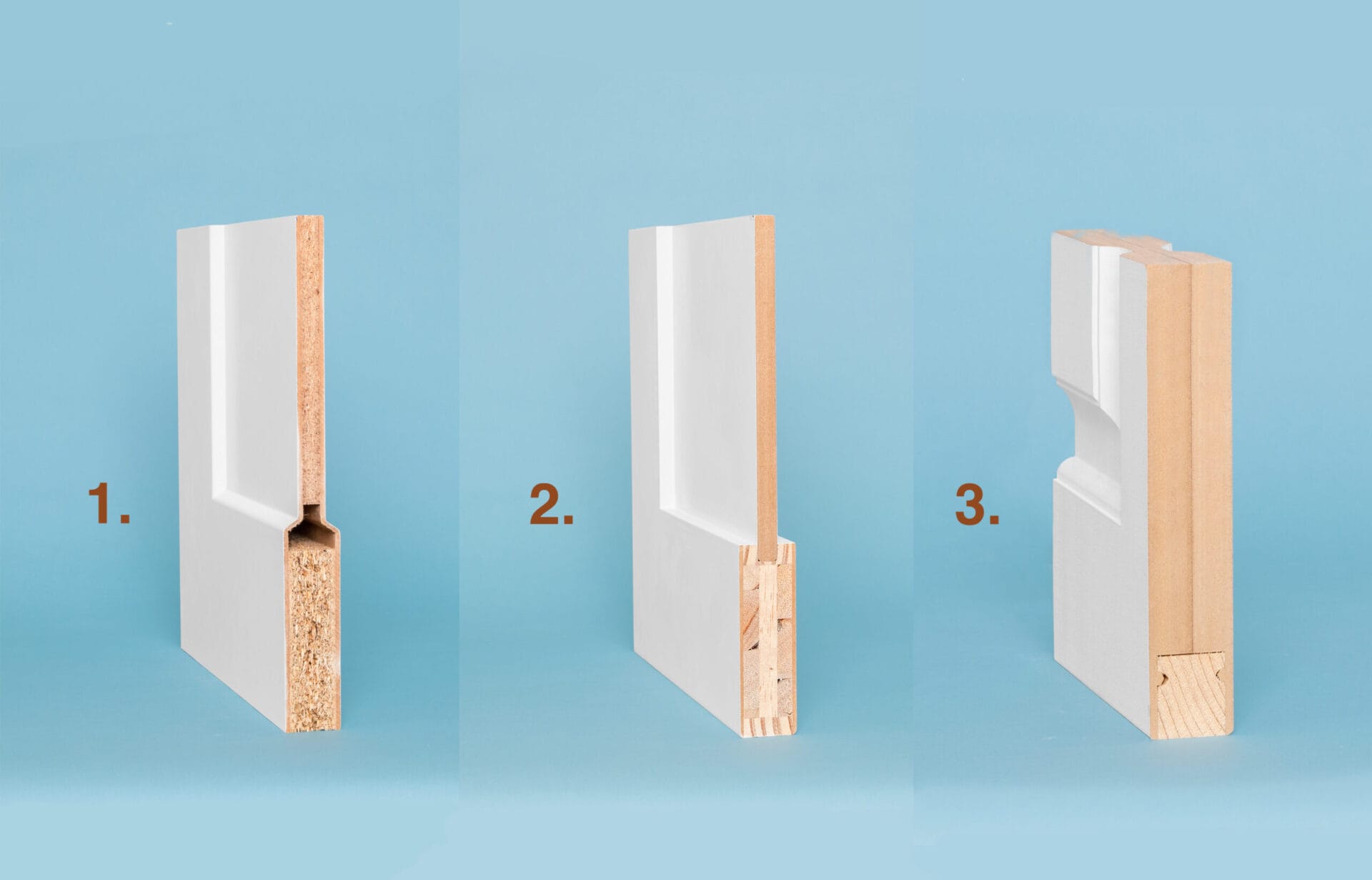
Hollow core doors are lightweight and budget-friendly. They usually have thin outer skins with an internal support structure, often a honeycomb-like core. These doors are easy to install and practical for closets, pantries, and low-traffic rooms.
The tradeoff is performance. Hollow core doors do not block sound well and are easier to dent or damage. If you have teenagers, musicians, barking dogs, or someone who believes every cabinet must close with thunder, hollow core doors may test your patience.
Solid Core Interior Doors
Solid core doors are made with a dense engineered core covered by a wood veneer, molded skin, or composite surface. They feel heavier, close with a satisfying thud, and provide better sound reduction than hollow core doors.
Solid core interior doors are a strong choice for bedrooms, bathrooms, offices, nurseries, media rooms, and laundry rooms. They cost more and are heavier to install, but the upgrade is noticeable every time you close one.
Solid Wood Interior Doors
Solid wood doors offer natural beauty, durability, and a premium feel. They can be stained, refinished, and repaired more easily than many composite doors. Wood species such as pine, alder, oak, maple, and walnut each bring a different look.
The main considerations are cost and movement. Wood can expand, contract, or warp with humidity changes if it is not properly finished and maintained. In very humid climates or rooms with moisture swings, engineered solid core doors may be more stable.
Prehung vs. Slab Interior Doors
What Is a Prehung Door?
A prehung interior door comes already attached to a frame with hinges. Many prehung units are also pre-bored for a knob or lever. They are convenient when building new walls, replacing a damaged frame, or remodeling a doorway that is not square.
Prehung doors can make installation more straightforward, but they are bulkier and require careful leveling, shimming, and fastening. The frame must be plumb, level, and square, or the door may swing open by itself like a haunted-house extra.
What Is a Slab Door?
A slab door is just the door panelno frame, no hinges, and usually no installed hardware. Slab doors are ideal when the existing frame is in good condition and you only want to replace the door itself.
They are often less expensive than prehung doors, but they require more precise carpentry. Hinge mortises, lockset holes, and trimming must line up correctly. A slab door is a great option for skilled DIYers, but it can be frustrating if the old frame is crooked.
Standard Interior Door Sizes
Common interior door heights in the United States include 80 inches, 84 inches, and 96 inches. The 80-inch door is the familiar standard in many homes, while taller doors are popular in newer homes with higher ceilings.
Common widths include 24, 28, 30, 32, and 36 inches. Closets may use narrower doors, while bedrooms and bathrooms often use 30- or 32-inch doors. For improved accessibility, many homeowners choose 36-inch-wide doors because they can provide a more comfortable passage for mobility needs, moving furniture, and everyday convenience.
Interior door thickness is often 1 3/8 inches for many standard residential doors, though some doors are thicker depending on construction, style, or fire-rating requirements. Always measure the existing door, jamb, rough opening, and wall thickness before ordering.
How to Choose the Best Interior Door for Each Room
Bedrooms
For bedrooms, privacy and sound control matter. Solid core doors are usually worth the upgrade, especially for primary bedrooms, children’s rooms, and guest rooms. A simple panel or shaker style works well because it can match nearly any decor.
Bathrooms
Bathrooms need privacy, durability, and moisture awareness. A painted solid core or molded composite door is practical. Avoid unfinished wood in damp areas. Use privacy hardware with an emergency release, because locked bathroom doors have a special talent for creating family drama.
Home Offices
A home office door should reduce noise and create visual separation. Solid core hinged doors are best for serious work zones. French doors can look beautiful, but consider frosted glass or curtains if video calls are part of your routine.
Closets and Pantries
Closets and pantries often work well with hollow core, bi-fold, bypass, or simple slab doors. If the door is used many times a day, invest in better hardware. Closet doors may not be glamorous, but when they fall off track, they become very memorable.
Laundry Rooms
Laundry areas benefit from doors that reduce noise. A solid core hinged door is excellent if space allows. Louvered doors may improve airflow, but they do not block sound well. Choose based on whether ventilation or quiet matters more.
Interior Door Styles and Design Trends
Interior doors should match the home’s architecture and the feeling you want from room to room. Shaker doors are popular because they are clean and versatile. Traditional raised-panel doors fit classic homes. Flush doors suit modern spaces. Glass doors brighten dark hallways and small rooms.
Color also matters. White remains the safe and timeless choice, but black interior doors can add contrast and sophistication. Warm neutrals, muted greens, deep blues, and natural wood tones can make doors part of the design rather than background scenery.
A helpful rule: keep most doors consistent throughout the home, then make special doors intentional. For example, use matching shaker doors for bedrooms and bathrooms, then add a glass French door for the office or a barn door for the pantry.
Hardware: The Jewelry of Interior Doors
Door hardware includes knobs, levers, hinges, locks, pulls, latches, and stops. Levers are easier to operate than knobs and often feel more updated. Matte black, satin nickel, polished chrome, aged brass, and oil-rubbed bronze are common finishes.
Choose passage hardware for hallways and closets, privacy hardware for bedrooms and bathrooms, dummy hardware for non-latching closet doors, and keyed hardware only where security is needed. Matching every hinge and handle finish creates a polished look, but mixing metals can work if it feels intentional across the home.
Installation Basics: What Makes a Door Work Well?
A beautiful door installed badly is still a bad door. Proper installation depends on a square opening, plumb jambs, level head jamb, correct shimming, accurate hinge alignment, and even reveals around the door. Small errors can cause rubbing, sticking, swinging, rattling, or latching problems.
For prehung doors, installers usually position the unit in the rough opening, level the head jamb, plumb the hinge side, shim behind hinges and strike areas, fasten the jamb, test the swing, and install trim. For slab doors, the work includes trimming the slab if needed, cutting hinge mortises, drilling for hardware, and fitting the door to the existing frame.
DIY installation is possible, especially for patient homeowners with the right tools. But if you are replacing several doors, dealing with old uneven frames, or installing pocket doors, a professional can save time, frustration, and the kind of language that scares pets.
Maintenance and Repair Tips
Interior doors last longer when they are cleaned, adjusted, and protected from moisture. Wipe painted doors with a soft cloth and mild cleaner. Tighten loose hinge screws. Lubricate squeaky hinges lightly. Touch up chips before they grow into peeling patches.
If a door sticks, check humidity first. Seasonal swelling can cause temporary rubbing. If the problem continues, inspect hinges, jamb alignment, and paint buildup. Hollow core doors with holes can sometimes be patched, but large damage may justify replacement. Solid wood doors can often be sanded, filled, and refinished.
Budgeting for Interior Doors
Interior door costs vary widely based on size, material, construction, style, finish, glass, hardware, and installation. Hollow core doors are the most budget-friendly. Solid core doors cost more but improve privacy and durability. Solid wood and custom doors sit at the higher end.
When budgeting, remember the extras: hinges, knobs or levers, trim, paint, stain, delivery, disposal, and labor. A “cheap” door may not be cheap if it needs extensive fitting or if you replace it again in two years because it sounds like cardboard and looks like it lost a wrestling match.
Common Mistakes to Avoid
One common mistake is choosing interior doors based only on price. Another is ignoring sound control in bedrooms and offices. Homeowners also forget to check swing direction, wall thickness, rough opening size, and hardware type before ordering.
Design mistakes happen too. A rustic barn door may look charming online but feel awkward in a formal hallway. A clear glass office door may be pretty until someone realizes every snack break is now public information. Function should lead, and style should follow closely behind wearing nice shoes.
Experience-Based Guide: Lessons From Real Interior Door Projects
After dealing with interior door upgrades in real homes, one lesson becomes obvious: doors are small design decisions that behave like big ones. At first, replacing an interior door seems simple. Measure the old door, buy a new one, hang it, celebrate. Then the old house quietly laughs, because the frame is slightly out of square, the floor slopes just enough to matter, and the previous owner painted over the hinges with the enthusiasm of a birthday cake decorator.
The first practical experience worth sharing is to measure more than once and measure more than one thing. Do not only measure the door slab. Measure width, height, thickness, hinge locations, bore placement, jamb depth, and the gap around the door. If buying a prehung door, remove or account for casing so you understand the rough opening. A quarter inch can decide whether installation feels smooth or becomes a weekend-long negotiation with gravity.
The second lesson is that solid core doors change how a home feels. In one bedroom upgrade, replacing a hollow core door with a solid core shaker door made the room feel calmer immediately. The hallway noise dropped, the latch sounded better, and the room felt more private. Nobody walked in and shouted, “Amazing acoustic improvement!” because normal people do not talk that way at home. But everyone noticed the room felt more settled.
The third lesson is that hardware deserves attention. Cheap hinges can squeak, cheap knobs can feel loose, and mismatched finishes can make a hallway look accidentally assembled. A good lever set in a consistent finish can modernize even a modest door. It is like putting a good belt on a basic outfit: suddenly, things look intentional.
The fourth lesson is to respect swing direction. One bathroom door that swings the wrong way can make a small room feel like a puzzle box. In tight spaces, pocket doors, barn doors, or outswing configurations can solve problems, but they need planning. Do not choose a barn door only because it looks good online. Make sure there is enough wall space beside the opening and enough privacy for the room’s purpose.
The fifth lesson is that paint can make or break the final result. Doors collect fingerprints, scuffs, pet scratches, and mysterious marks that no one in the household will ever confess to making. A durable interior enamel or trim paint with the right sheen is worth it. Semi-gloss and satin finishes are common because they are easier to clean than flat paint. Dark colors look stylish but may show dust and dents more clearly, while white doors are classic but reveal smudges faster.
Finally, patience matters. A well-installed interior door should close smoothly, latch without force, and reveal even gaps. When a door rubs at the top corner or refuses to latch, the problem is often alignment, not attitude. Take time with shims, hinges, and test swings. Doors may be simple objects, but they reward careful work. And when they are done right, they quietly improve daily life every time someone closes a room, opens a closet, or enjoys a little peace behind a properly fitted door.
Conclusion
Inside interior doors are more than room dividers. They influence privacy, sound, comfort, accessibility, style, and home value. The best interior door is not always the most expensive one; it is the one that fits the room’s purpose, matches the home’s design, and performs well over time.
Choose hollow core doors for budget-friendly, low-demand spaces. Choose solid core doors when privacy, durability, and sound control matter. Choose solid wood doors when natural character and long-term refinishing potential are priorities. Think carefully about slab versus prehung, measure accurately, select hardware intentionally, and never underestimate the power of a door that closes without drama.
A home with the right interior doors simply feels better. It is quieter, more polished, more functional, and less likely to make you mutter at a sticking latch before your first cup of coffee. That is a home improvement win worth opening up to.