Hypersonic missiles are the kind of headline that makes people sit up straighterpartly because “hypersonic” sounds
like something you order at a sci-fi drive-thru, and partly because it signals a serious leap in military technology.
When India announced it had successfully carried out a flight trial of its first long-range hypersonic missile, it
wasn’t just a bragging-rights moment. It was a “welcome to the fast lane” milestone in a global race where speed,
maneuverability, and perception matter almost as much as the hardware itself.
This article breaks down what happened, what “hypersonic” really means (spoiler: it’s not just “very fast”), why
the test matters strategically, and what comes next. We’ll keep it clear, grounded in real reporting and technical
explainers, and only mildly terrifyinglike a roller coaster with excellent safety inspections.
What India Tested (and Why “First Time” Is the Key Phrase)
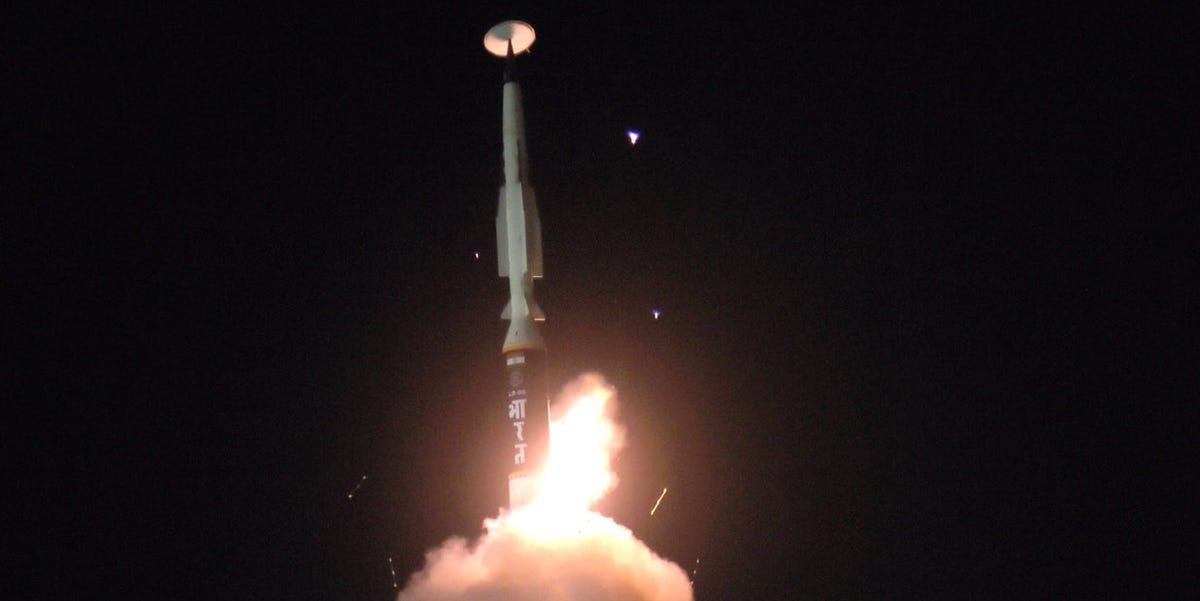
India’s announcement centered on a successful flight trial of a long-range hypersonic missile from
Dr. APJ Abdul Kalam Island off the coast of Odisha. Officials described it as the country’s
first long-range hypersonic missile, designed to carry “various payloads” to ranges
greater than 1,500 kilometers. The test reportedly involved tracking from downrange assets (including
ship-based instrumentation) and confirmed terminal maneuvers and a high-accuracy impact at the intended point.
The “first time” part matters because India has worked on hypersonic technology for years. But there’s a big
difference between technology demonstrations (proving the physics, propulsion, and materials can survive)
and weapon-class systems that integrate guidance, range, maneuverability, and repeatable performance in a
realistic test profile. In plain English: it’s one thing to build a car that can go fast on a test track, and another
to ship a model that can do it reliably in bad weather, at night, with a trunk full of groceries.
Hypersonic 101: What Makes a Missile “Hypersonic”?
“Hypersonic” typically means traveling at Mach 5 or higherfive times the speed of soundwhile
maneuvering in the atmosphere. Traditional ballistic missiles can also reach very high speeds, but they follow
more predictable arcs. Hypersonic systems are designed to be fast and hard to predict.
The Two Big Families: Boost-Glide vs. Hypersonic Cruise
-
Hypersonic glide vehicles (boost-glide): A rocket boosts the vehicle up, then it separates and
glides through the atmosphere toward a target, maneuvering along the way. -
Hypersonic cruise missiles: These stay powered during flight by a high-speed air-breathing engine,
often discussed in terms of scramjet technology (supersonic combustion ramjet).
The big engineering headache is heat. Hypersonic flight produces intense aerodynamic heatingso materials, coatings,
and thermal management become just as important as propulsion and guidance. If you’ve ever touched a seatbelt buckle
left in the sun, you already understand the vibe. Now multiply that… a lot.
Why Hypersonic Missiles Make Defense Planners Lose Sleep
Hypersonic weapons are attractive to militaries for a simple reason: they compress timelines and complicate defense.
If a weapon can arrive very quickly and maneuver en route, defenders have less time to detect it, track it, classify
it, decide what it is, choose a response, and then execute an interceptassuming an intercept is even feasible.
Speed Is Only Half the Story
Many public explainers focus on raw speed (Mach numbers make for great graphics). But the more important change is
the combination of:
- Lower and more variable flight paths compared with classic ballistic trajectories
- Maneuverability that can create uncertainty about the intended target
- Shortened decision windows for defenders and political leaders
- Challenging tracking geometry where radar and satellites may have gaps during flight phases
That doesn’t mean hypersonic weapons are magic or unstoppablephysics still has rules, and testing is hard. But it
does mean they can force costly changes in sensors, command-and-control, and defensive architectures.
India’s Hypersonic Path: Years of Work Behind One Night of Headlines
India’s long-range hypersonic milestone didn’t appear out of thin air. It sits on top of years of research,
incremental tests, and the slow (sometimes painfully slow) work of building domestic capability across materials,
propulsion, and guidance. Indian defense R&D organizations have also publicly highlighted progress in scramjet-related
ground testingan important stepping stone for hypersonic cruise missile ambitions.
This matters because hypersonics are not one single technology. They’re a stack:
materials + propulsion + sensors + guidance + manufacturing quality + test infrastructure.
If one layer is weak, the whole system becomes a very expensive fireworks show.
So What Does This Launch Change for India?
The strategic meaning depends on how the capability matures and how it’s integrated into doctrine. But several
implications stand out.
1) Signaling and “Membership” in an Elite Club
Hypersonic capability is often framed as a marker of advanced military-industrial capacity. A successful long-range
test signals that India is narrowing the gap with other major powers working in this area. Even if operational
deployment takes time, the message is: “We’re in the race, and we’re not jogging.”
2) Deterrence and Regional Military Planning
In South Asia and the broader Indo-Pacific, hypersonic systems could affect how countries think about high-value
assets, command nodes, and maritime forces. If a system can reach targets quickly and maneuver around defenses, it
may influence crisis calculationsespecially in scenarios where leaders fear losing key assets early in a conflict.
3) Maritime Relevance (Why the Ocean Keeps Showing Up in These Stories)
Many hypersonic discussions quickly drift toward anti-ship roles because ships are valuable, mobile, and central to
power projection. A long-range hypersonic systemif it can be paired with reliable targeting and real-time tracking
could theoretically increase pressure on naval operations in contested areas. The important asterisk is that targeting
moving ships at long distances is not a “press button, receive carrier” problem. It’s a full ecosystem of sensors,
networks, and decision-making under stress.
What Comes Next: The Unsexy (but Critical) Phase
After a headline test, the hard part is turning a milestone into a dependable capability. That usually means:
- More flight tests across different profiles, conditions, and configurations
- Guidance and navigation refinement to prove repeatable accuracy
- Manufacturing consistency so performance doesn’t vary wildly unit to unit
- Integration with platforms, command chains, and targeting systems
- Doctrine: deciding what the system is for, when it’s used, and how escalation is managed
That last pointdoctrinerarely trends on social media, but it’s where real stability questions live. A weapon that
arrives fast can create “use-it-or-lose-it” anxiety in a crisis if an opponent fears being hit before it can respond.
Even a conventional system can contribute to escalation pressure if it’s hard to tell what kind of payload it carries.
The Big Debate: Deterrence Booster or Instability Multiplier?
Hypersonic weapons are often sold as enhancing deterrence by strengthening a country’s ability to hold targets at risk.
That’s the classic logic: if you can respond decisively, adversaries hesitate.
The counterargument is that hypersonics can also increase instability by shortening warning times and increasing
uncertainty. If leaders have less time to interpret an incoming threator if defenses and early-warning systems can’t
reliably track itthere’s a higher risk of rapid, worst-case decision-making. Think fewer chess moves, more speed chess
with someone yelling the rules at you from across the room.
The reality can be both: hypersonics may improve deterrence in some contexts while raising escalation risks in others.
That’s why many analysts emphasize the need for better sensors, clearer signaling, and crisis communication channels
alongside new capabilities.
Quick FAQs People Ask After a Hypersonic Headline
Is India’s hypersonic missile nuclear-capable?
Public statements around the long-range test described the missile as able to carry “various payloads” without
specifying types. It’s best not to treat that phrase as a definitive public confirmation of any specific payload
capability. What can be said more confidently is that hypersonic technology is being pursued globally in both
conventional and strategic contexts.
How fast is it?
Hypersonic generally means Mach 5 or above, but exact speed figures can vary by flight phase and are not always
publicly released. Speed alone also doesn’t tell you maneuverability, detectability, or real-world effectiveness.
When will it be operational?
A successful flight trial is a milestone, not a finish line. Operational timelines depend on additional testing,
production readiness, integration, and doctrine. In most countries, that can take years.
Experiences Around a Hypersonic “First”: What It Feels Like on the Ground
Big weapons tests are often described in abstract termsMach numbers, ranges, and acronyms that sound like failed
Wi-Fi passwords. But a “first successful launch” is also a human story, because thousands of small experiences stack
together to create one clean headline.
In the control room, the experience is less Hollywood and more “intense spreadsheet energy.” Engineers and range
officers watch streams of telemetry, status flags, and timing gates that must line up with unforgiving precision.
The launch itself may last seconds, but the tension has been building for months. People remember the quiet right
before ignitionthe kind of silence where someone clears their throat and it sounds like a thunderclap.
Out at the test range and along tracking corridors, teams operate the unglamorous heroes of modern trials:
instruments, antennas, optical trackers, and verification systems. A successful test doesn’t just mean the missile flew;
it means the data arrived, the sensors performed, and the record is credible. That’s why ship-based instrumentation
and downrange tracking matterwithout them, a test can become a rumor with a smoke trail.
For the materials and propulsion specialists, success feels like relief mixed with suspicion. Relief, because the
vehicle survived heating loads that can punish a design’s weakest seam. Suspicion, because one success is rarely the
end of the story. Hypersonic development is full of “it worked once, now do it again… and again… and again… and also
in different weather.” The most common post-test emotion isn’t celebrationit’s the urge to replay every second of
the data to find what almost went wrong.
Analysts and planners experience the event differently. Their first reaction is often: “What does this mean for
timelines and assumptions?” A new capabilityespecially a highly publicized onereshapes narratives. It can influence
budget priorities, procurement choices, and how neighbors think about their own deterrence. In other words, the missile
isn’t just flying through air; it’s flying through spreadsheets, memos, and strategy briefs across the region.
And then there’s the public experience, which is a blend of pride, anxiety, and curiosity. People who live near test
areas may think about safety and disruption. Others see it as proof of national technical progress. Many simply wonder
how something can move so fast and still hit a target with precisionan instinct that’s equal parts awe and “please
tell me there are professionals in charge here.” The honest answer is: there are, and their day-to-day experience is
mostly discipline, checklists, and relentless iteration.
That’s what a hypersonic “first” really feels like: not a single cinematic moment, but a long chain of human effort
that finally clicks into placefollowed immediately by the knowledge that the next test is already waiting.
Conclusion: A Fast Milestone with Long Shadows
India’s first successful long-range hypersonic missile flight trial is a significant technological and strategic
milestone. It signals maturation in advanced missile development and places India more firmly into global hypersonic
conversations that already involve major powers and intense defense planning. At the same time, hypersonic weapons
raise real questions about regional stability, warning time, and escalation dynamicsissues that won’t be solved by
speed alone.
Expect the next chapter to be less about headlines and more about repetition: more testing, more data, more engineering
fixes, and more debate about how such capabilities should be used (or restrained) in a region where perception can
move faster than any missile ever will.