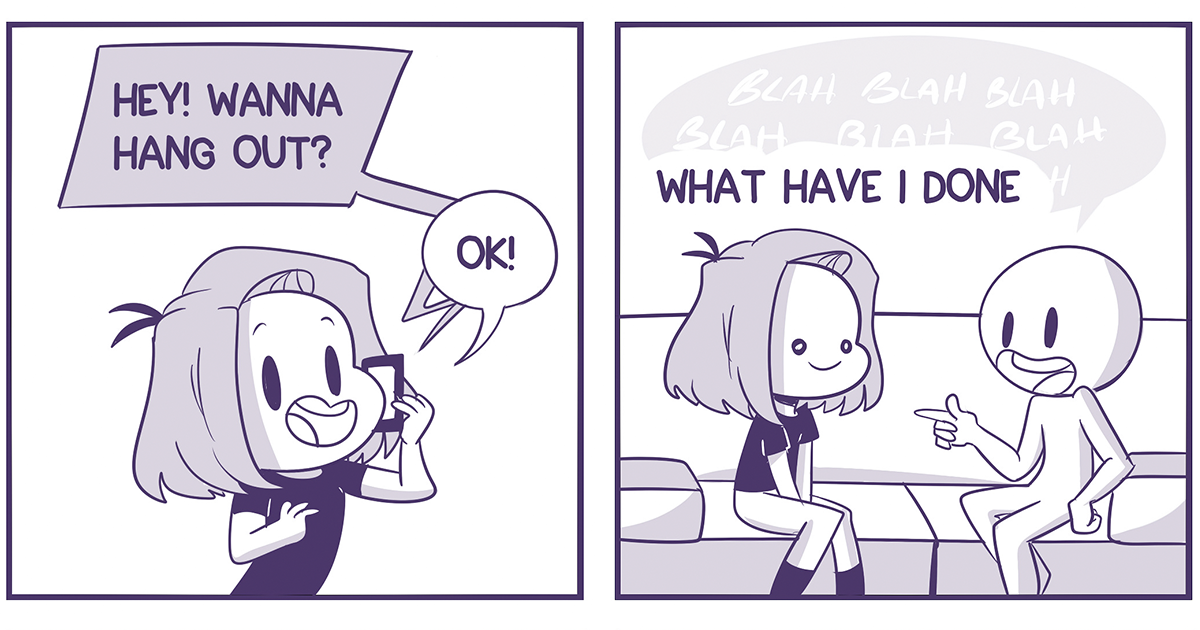
Stress has a way of turning ordinary thoughts into a crowded group chat where nobody stops typing. My to-do list was loud, my brain was louder, and even “relaxing” somehow became another task I could fail at. Then one day, armed with a cheap sketchbook, a black pen, and the artistic confidence of a startled potato, I drew a four-panel comic about spilling coffee before a meeting.
It was not elegant. The main character looked like a marshmallow wearing business casual. The coffee cup was shaped like a small satellite dish. But I laughed. More importantly, I felt lighter.
That tiny comic became a habit. A habit became a creative outlet. And that creative outlet slowly grew into the biggest passion in my life: making comics.
Comic creation gave me a place to put the worries that were rattling around in my head. Instead of carrying stress all day, I could turn it into exaggerated facial expressions, chaotic speech bubbles, suspicious-looking pigeons, and characters who handled life about as gracefully as I did.
Making comics for stress relief did not magically erase every hard day. It did, however, give those days a shape, a punchline, and occasionally a cape.
How Making Comics Became My Stress-Relief Habit
I did not begin with a grand plan to become a comic artist. I did not announce, “Friends, family, and random cashier at the grocery store, I am now entering my sequential-art era.” I simply needed something quieter than doom-scrolling and more satisfying than staring at the ceiling while overthinking a conversation from 2017.
At first, my comics were tiny. Four panels. One joke. One awkward moment. One mildly dramatic cat.
A typical strip might show me opening my laptop, seeing 47 unread emails, pretending I was fine, and then transforming into a Victorian ghost. The stories were simple, but the process was surprisingly grounding. Drawing forced me to slow down. Writing a caption forced me to identify what I was actually feeling. Deciding how a character should react gave me enough distance to laugh at the situation instead of drowning in it.
That is the quiet magic of comic-making: it turns an overwhelming experience into a sequence of manageable moments.
Stress usually arrives as one giant, blurry monster. A comic breaks it into panels. First, the problem happens. Then, the character reacts. Then, something absurdly human gets in the way. Finally, there is a moment of recognition, relief, or laughter.
Suddenly, the monster has eyebrows. And once your stress has eyebrows, it is a little less terrifying.
Why Comics Are Such a Powerful Creative Outlet
Comics are a unique form of visual storytelling because they combine words, pictures, timing, facial expressions, silence, and imagination. A single panel can show a character’s face. Two panels can show disappointment. Three panels can show that the character has somehow made the situation worse by bringing a leaf blower indoors.
You do not need expensive equipment, a studio full of art supplies, or the ability to draw hands that look like hands. A comic can begin with a pencil, a notebook, and one honest observation.
For me, that accessibility mattered. When stress is high, complicated hobbies can feel like another mountain to climb. Comics can be small. You can make one panel during lunch, draw a tiny character before bed, or create a mini diary comic while waiting for your laundry to finish its slow, mysterious dance.
Creative activities such as drawing, doodling, writing, and making art are often used as healthy ways to pause, reflect, and express emotions. Comics add another helpful layer: they let you tell a story about what happened without needing to explain everything in a serious, polished paragraph.
A character can say what you are not ready to say directly. A visual metaphor can capture a feeling that regular words cannot quite hold. A giant rain cloud over someone’s head can express emotional exhaustion faster than a 900-word text message beginning with, “So, honestly, it’s complicated.”
Comics Give Your Feelings a Safe Costume
One of the first things I learned as a beginner comic artist was that I did not have to make every story a literal autobiography. I could borrow from my life, exaggerate the details, invent a character, and let that character carry the emotional weight.
Maybe I was anxious about work, but my comic character was a wizard whose inbox had become a portal to another dimension. Maybe I felt socially drained, but the comic showed a raccoon trying to attend a party after three days of hiding in a recycling bin.
The distance made difficult emotions easier to explore. It also made the work more fun. Stress can feel heavy, but a comic does not have to be gloomy to be honest. Humor can be a bridge between “I am struggling” and “I can still keep going.”
The First Comics Were Messy, and That Was the Point
My early comics were not masterpieces. They were more like evidence from a crime scene where perspective, anatomy, and lettering had all been harmed.
I drew heads too big. Bodies too small. Chairs that looked like confused insects. My speech bubbles wandered around the page with the confidence of tourists who had lost the map.
But I kept making them.
That mattered more than getting everything right. Perfectionism is one of stress’s favorite disguises. It whispers that you should not begin until you can do it brilliantly. It tells you that every sketch must be impressive, every idea must be original, and every page must look ready for a museum wall.
Comic-making taught me a better rule: finish the small thing.
Finish the rough comic. Finish the silly idea. Finish the strip that only three people may understand. Finished work teaches more than endless planning ever will.
Over time, I learned that an imperfect comic can still be funny, moving, relatable, and memorable. Readers do not connect with flawless linework alone. They connect with recognizable feelings. They connect with the universal horror of sending an email and immediately noticing a typo in the subject line.
How I Turn Everyday Stress Into Comic Ideas
The best comic ideas are often hiding in ordinary moments. You do not need to invent a galaxy-spanning superhero saga every morning before breakfast. Although, to be fair, the battle against an alarm clock can feel pretty cosmic at 6:30 a.m.
I started paying closer attention to the small frustrations, strange habits, and emotional plot twists that happened during a normal week. Those became my raw material.
Start With a Tiny Moment
A good stress-relief comic does not need a complicated storyline. Start with one moment that made you feel something strongly:
- You opened the fridge five times and still found no new snacks.
- You rehearsed a phone call for 20 minutes, then avoided making it.
- You had one productive morning and immediately acted like a life coach.
- Your pet judged you for working too late.
- You tried to rest, then felt guilty for resting.
That last one is especially comic-worthy because so many people know the feeling. The brain says, “Take a break.” Then the brain immediately says, “But make it efficient.”
Once you have the moment, ask yourself three questions: What happened? How did it feel? What would make it visually funnier or more dramatic?
That is enough to build a comic strip.
Use Exaggeration Without Losing the Truth
Comics thrive on exaggeration. A minor inconvenience can become a monster. An awkward silence can stretch across three panels. A tiny decision can feel like a courtroom trial, complete with a judge, a jury, and a dramatic witness named “Overthinking.”
Exaggeration is not dishonesty. It is emotional shorthand. It helps readers feel the intensity of a moment quickly.
For example, instead of drawing a character looking mildly worried at a calendar, draw the calendar growing teeth. Instead of writing, “I felt tired,” show a character using a coffee mug as a pillow. Instead of saying, “I had too many tasks,” show a desk covered in sticky notes that have formed their own government.
The goal is not to make life look ridiculous. The goal is to remind yourself that difficult moments can be viewed from more than one angle.
The Simple Comic-Making Process That Kept Me Going
As my comic-making hobby became more serious, I created a simple process that kept the work enjoyable. The routine was flexible enough for busy days but structured enough to stop me from staring at a blank page like it had personally insulted me.
Step 1: Keep an Idea List
I started collecting comic ideas in my phone, notebook, and occasionally on the back of receipts. Nothing fancy. Just quick notes such as “cat thinks Zoom call is for him,” “stress monster wearing a tie,” or “me pretending not to care about a text reply.”
The important part was capturing the idea before my brain replaced it with the urgent question, “Did I lock the front door?”
Step 2: Write the Emotional Beat First
Before drawing, I decide what the comic is really about. Is it frustration? Relief? Embarrassment? Hope? A weird combination of all four?
Knowing the emotional beat helps me choose the ending. A funny comic may end with a surprise. A reflective comic may end with a quiet image. A personal comic may end with a small moment of self-compassion.
Step 3: Make Rough Thumbnails
Thumbnails are tiny, rough sketches that help plan the page or strip. They are not supposed to be beautiful. They are supposed to answer practical questions: Where does the character stand? What happens first? Is there room for the dialogue? Can a reader understand the joke without needing a treasure map?
Planning with thumbnails saved me from many problems. It is easier to move a stick figure in a tiny sketch than to redraw a fully inked panel because your character is somehow sitting inside the refrigerator.
Step 4: Draw, Letter, and Let It Breathe
Once the rough layout works, I draw the final version. Some days that means ink and paper. Other days it means a tablet and a digital brush. Both count. The best tools are the ones that make you want to return tomorrow.
Then I add dialogue, captions, and sound effects. Lettering matters because comic text guides the reader through the page. I learned to keep it clear, readable, and slightly less dramatic than my internal monologue.
Finally, I step away for a little while. A short break helps me notice awkward pacing, confusing wording, or a speech bubble that appears to be floating out of someone’s elbow.
From Private Sketchbook to Biggest Passion
At first, my comics were mostly for me. They were private stress relievers, small visual journal entries, and proof that I had survived another chaotic Tuesday.
Eventually, I began sharing a few online. This was terrifying. Posting personal art can feel like walking into a room, handing strangers your diary, and hoping nobody uses it as a coaster.
But people responded.
Someone commented that they also felt overwhelmed by ordinary tasks. Someone else said a comic about social anxiety made them laugh because it felt painfully familiar. Another person told me that a tiny strip about burnout made them feel less alone.
That changed everything.
Comics were no longer just a way to release stress. They became a way to connect. A personal comic could become a shared experience. A weird little drawing made at a kitchen table could travel farther than I ever expected and meet someone on exactly the day they needed it.
That is when comic creation became my biggest passion. Not because I suddenly had perfect artistic skills. Not because every post went viral. Not because I became the official ruler of speech bubbles.
It became my passion because it gave me purpose. It allowed me to turn everyday emotions into stories that could make someone pause, smile, or feel seen.
What Making Comics Has Taught Me About Stress and Creativity
Making comics has taught me that stress does not always need to be defeated in one dramatic final battle. Sometimes it needs to be noticed. Named. Drawn with a silly hat. Given a ridiculous voice. Put into a panel where it cannot take up the entire page.
It has taught me that creativity is not reserved for people with expensive supplies, art degrees, or a suspiciously photogenic studio. Creativity grows through repetition. It gets stronger when you show up imperfectly and make something anyway.
It has taught me that small projects matter. A four-panel comic can change the mood of an afternoon. A sketchbook can become a safe place. A funny character can carry a truth that feels too heavy to say directly.
Most of all, it has taught me that passion often starts quietly. It may begin with a doodle, a joke, a messy page, or a desperate attempt to make a stressful day feel less powerful.
Then one day, you look back and realize that the thing you started to survive the hard moments has become one of the things that makes life feel bigger, brighter, and more yours.
Note: Creative hobbies can be a valuable part of stress management, but they are not a replacement for professional mental health care when stress, anxiety, or low mood becomes difficult to manage alone.
More Experiences From the Sketchbook: How Comics Changed the Way I See Everyday Life
Once I started making comics regularly, I noticed something unexpected: life became more interesting, even on boring days. I began looking at the world like a cartoonist. The grocery store line was no longer just a grocery store line; it was a possible three-panel story about a cashier, a confused customer, and a rogue avocado rolling toward freedom.
Waiting rooms became places to study body language. Coffee shops became accidental character-design laboratories. The person tapping one foot while staring at their phone? That is a comic character waiting for a delayed train. The dog wearing a raincoat? That is clearly the main hero of a gentle adventure series about saving the neighborhood from puddles.
This shift did not make stress disappear, but it changed my relationship with it. When something frustrating happened, part of me would quietly ask, “Could this be a comic?” That question created a little breathing room between the event and my reaction.
Maybe the printer jammed five minutes before an important meeting. In the moment, I still wanted to launch it into the sun. But later, I could draw a comic where the printer becomes a tiny villain with paper for teeth. The situation was still annoying, but now it had a story shape. It had a beginning, middle, and ending. It had a joke.
I also learned that not every comic needed to be funny. Some of my favorite pieces came from quiet moments: sitting outside after a hard day, missing someone, feeling nervous about a change, or recognizing that I had made progress without noticing it.
A comic can hold silence. A blank panel can hold exhaustion. A small drawing of a character taking one deep breath can say more than a dramatic speech.
That was a major lesson for me. I had assumed comics were mainly about punchlines, action scenes, and people getting hit with pies. Those things are wonderful, of course. Pies remain an underappreciated storytelling device. But comics can also be tender, awkward, reflective, and deeply personal.
As I continued creating, I developed recurring characters. One was an anxious little cloud who worried about everything, including weather forecasts. Another was a stubborn houseplant that gave unrequested advice. They became emotional shortcuts. When I did not know how to explain a feeling, I could let one of them experience it first.
Readers began recognizing them too. That felt strangely powerful. These characters started as scribbles in a sketchbook, but they became familiar companions for people I had never met.
Making comics also made me more patient with my own progress. Some strips took an hour. Some took a week. Some ideas looked brilliant in my head and became deeply confusing on paper, like a dream involving elevators, penguins, and tax forms.
Instead of treating those imperfect attempts as failures, I learned to treat them as practice. Every page taught me something about pacing, dialogue, composition, humor, or honesty. Every bad drawing made the next drawing slightly less bad. That is not glamorous, but it is real.
Now, whenever I feel stuck, I return to the simplest version of the habit: one pen, one page, one small truth. I do not need to create a masterpiece. I only need to begin.
Sometimes the result is a comic. Sometimes it is a doodle. Sometimes it is a tiny character yelling, “I AM DOING MY BEST,” while holding a sandwich.
And honestly, that is often enough.
Conclusion
Making comics started as a small way to relieve stress, but it grew into a creative practice that changed how I process emotions, notice everyday life, and connect with other people. The beauty of comics is that they make room for both humor and honesty. You can turn a rough day into a ridiculous character, a quiet moment into a meaningful page, or a tiny observation into a story someone else recognizes immediately.
You do not need to be a professional illustrator to start making comics. Begin with one idea, one feeling, and one simple panel. Let the art be messy. Let the joke be weird. Let the process belong to you.
Sometimes a sketchbook is not just paper. Sometimes it is a pressure valve, a journal, a playground, and the beginning of a passion you never saw coming.