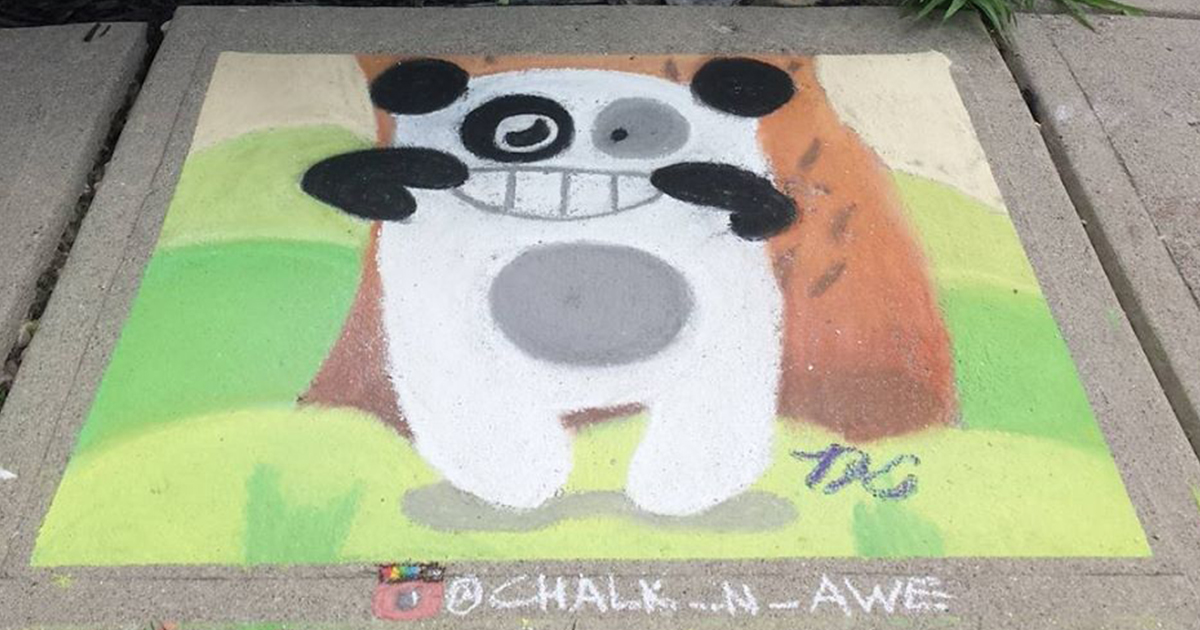
There are plenty of ways to say thank you. You can send a polite email, buy a box of cookies, or give someone a mug that says something brave like, “World’s Okayest Coworker.” But I wanted to do something a little more personal for the Bored Panda team.
So I drew them a gift.
Not a tiny doodle on the back of a receipt. Not a stick figure that looks like it has just discovered taxes. I mean a full illustration packed with tiny details, expressive pandas, creative chaos, coffee cups, sketchbooks, office jokes, and enough personality to make the whole thing feel like a visual thank-you card.
Bored Panda has built a community around art, design, photography, humor, and the wonderfully strange things people make when they decide normal is overrated. Its creator community gives artists a place to share projects and bring stories to a broader audience. That made a standard “Thanks for everything!” message feel far too small. A hand-drawn gift felt more fitting.
This was my attempt to make something that could say, “I see the creativity here,” without sounding like a corporate memo written by a printer that has become self-aware.
Why I Chose a Drawing Instead of a Typical Gift
A handmade drawing is a strange little object. It is not always practical. You cannot charge your phone with it. You cannot wear it to a dinner party unless you have very advanced fashion confidence. But it carries something that store-bought gifts often miss: evidence of time.
Every line says that someone stopped what they were doing, sat down, and decided another person was worth the effort. Even the imperfect lines matter. Especially the imperfect lines. A slightly crooked coffee mug or a panda with one eyebrow too high can make an illustration feel more human than something polished into oblivion.
Drawing has long been treated as an intimate look into an artist’s thinking. Museums often describe sketches and studies as a window into the creative process, where ideas can be tested, changed, abandoned, rescued, and turned into something larger.
That was exactly what I wanted this gift to be: not just a finished image, but a snapshot of appreciation in progress.
There is something wonderfully honest about a drawing. It does not pretend to be effortless. It does not arrive in a perfect box with a barcode and a return policy. It announces, loudly and proudly, “I had an idea, I cared enough to chase it, and now there is ink everywhere.”
The Big Idea: A Tiny Universe for the Bored Panda Team
I started with one question: what would a thank-you illustration for a creative team actually look like?
The obvious answer was pandas. But simply drawing one panda holding a sign that says “Thank You” felt too easy. It would be cute, sure, but it would also be the artistic equivalent of showing up to a costume party dressed as “a person wearing a hat.” Technically acceptable. Spiritually disappointing.
So I imagined a tiny Bored Panda universe.
In the center of the illustration, I placed a cheerful panda at a messy creative desk. The panda had a sketchbook open in front of it, a pencil behind one ear, and a cup of coffee nearby that was working harder than several members of Congress. Around the desk, I added little scenes inspired by the kinds of stories creative communities love: a photographer trying to capture a cat that refuses to cooperate, a designer surrounded by color swatches, an illustrator arguing with a stubborn marker, and a writer staring at a blank page as if it had personally betrayed them.
I wanted the drawing to feel busy without becoming visual spaghetti. That meant building the composition in layers.
Layer One: The Main Characters
The pandas had to feel expressive. A good character drawing does not need a thousand details; it needs a clear attitude. One panda was focused. One was delighted. One was holding a clipboard as though it had finally discovered the meaning of life. Another was upside down for absolutely no professional reason.
That last panda may have been my favorite. Every creative team needs at least one person who looks calm during chaos but is secretly balancing seven ideas, three deadlines, and a sandwich on their keyboard.
Layer Two: The Creative Clutter
Creative desks are rarely clean in the way furniture catalogs imagine. Real desks have pens without caps, notes with mysterious arrows, one charger that belongs to nobody, and a snack that may or may not have been there since Tuesday.
So I added all of it.
There were pencils, paint splatters, a tiny paper airplane, sticky notes, a half-finished comic panel, a camera lens cap, and one very suspicious cookie crumb. The goal was to make the illustration rewarding to inspect. A person could look at it quickly and smile, then look again and discover a tiny panda trying to use a ruler as a microphone.
Layer Three: Hidden Thank-You Messages
The best part of drawing a gift is hiding small details for people to find later. I tucked miniature thank-you messages into the artwork: on a poster, inside a sketchbook, on a sticky note, and in the steam rising from a coffee cup.
None of them were giant or overly sentimental. I did not want the illustration to sound like a motivational poster hanging above a beige office carpet. I wanted it to feel casual, warm, and slightly ridiculous.
Because appreciation does not have to be dramatic to be real. Sometimes it is simply saying, “You make interesting things happen, and that matters.”
What I Learned While Drawing It
The drawing did not arrive fully formed in my head like a magical gift from the Illustration Fairy. That would have been convenient, but the Illustration Fairy has terrible customer service.
Instead, the process was full of rough sketches, rejected ideas, accidental smudges, and a few moments where I stared at the paper long enough to qualify as furniture.
At first, I tried to make everything perfect. Every panda needed to be symmetrical. Every object needed to be placed just right. Every tiny facial expression needed to make immediate emotional sense. That approach lasted approximately twelve minutes before I remembered that creativity usually gets better when you stop treating it like a hostage negotiation.
Art institutions regularly highlight experimentation, preliminary sketches, playful prompts, and unexpected materials as central parts of creative work. The National Gallery of Art, for example, encourages sketchbook-based drawing activities designed to welcome people into imaginative artmaking rather than intimidate them with perfection.
That idea helped me relax. The goal was not to prove that I could draw the most technically flawless panda ever documented. The goal was to make a gift with heart.
Once I accepted that, the drawing became more fun.
I started letting the little accidents stay. A wobbly line became part of a panda’s fur. A misplaced dot became a floating crumb. A smudge became a shadow. One accidental squiggle eventually turned into what I decided was a very fashionable scarf.
This is one of the underrated joys of illustration: mistakes are often just unfinished ideas wearing fake mustaches.
Why Creative Gifts Feel More Personal
A hand-drawn gift does not need to be expensive to feel meaningful. In fact, its value often comes from the opposite direction. It is valuable because it cannot be duplicated perfectly. Even if someone asked me to redraw the exact same piece, it would never be identical. The lines would change. The colors would shift. One panda would probably become more judgmental.
That uniqueness matters.
Research and workplace guidance consistently suggest that people respond to genuine recognition more strongly than generic praise. Feeling valued can support satisfaction, creativity, connection, and a willingness to contribute.
A drawing is not a replacement for fair treatment, good communication, or a healthy workplace. No illustration can fix a broken culture. A panda in a party hat is powerful, but it is not a human-resources department.
Still, thoughtful appreciation can make a difference. It can remind people that their effort is noticed. It can create a moment of shared humor. It can turn a normal workday into one where someone pauses and thinks, “Okay, that was actually nice.”
And in a world full of automated messages, stock graphics, and birthday cards signed by twelve people who may or may not know whose birthday it is, a handmade creative gift feels refreshingly specific.
The Emotional Math Behind a Thank-You Drawing
I think the emotional formula goes something like this:
Time + attention + a tiny bit of absurdity = a memorable gift.
The time says, “You were worth planning for.”
The attention says, “I noticed the details.”
The absurdity says, “Please enjoy this panda wearing headphones while editing a spreadsheet.”
That combination matters because people do not always remember expensive gifts. They remember the gifts that feel personal. The oddly specific gifts. The gifts that prove someone was paying attention.
Art participation is also closely connected with social and community engagement. Research supported by the National Endowment for the Arts has explored how participating in the arts can help build broader forms of connection and civic involvement.
That does not mean every doodle will transform civilization before lunch. But creative work can create a shared language. It gives people something to point at, laugh about, discuss, and remember together.
For me, this illustration became a small visual version of that idea. It was not just about pandas. It was about celebrating the people behind creative stories, funny discoveries, strange projects, and all the little sparks that make an online community feel alive.
The Experience of Making This Gift: 500 Extra Words From My Sketchbook
Drawing this gift made me remember why I fell in love with illustration in the first place. Before a drawing becomes a finished image, it is just a pile of possibilities. A blank page does not judge you. It does not ask whether your first idea is brilliant. It simply waits, quietly, while you decide whether today is the day you draw a panda with too many snacks in its desk drawer.
I started with several rough thumbnails. In one version, the pandas were standing in a giant newsroom. In another, they were floating through space inside a bamboo-shaped rocket. One early sketch involved a panda riding a skateboard through a hallway while carrying a laptop. It was exciting, but it also looked like the panda was fleeing from a deadline, which felt slightly too realistic.
Eventually, I settled on a cozy creative studio scene because it gave me room to include lots of small stories. A gift illustration should feel like an invitation. I wanted viewers to look around and find something new every time. Maybe they would notice the panda reading comments. Maybe they would spot the tiny framed picture of a banana. Maybe they would wonder why a houseplant appears to be writing a screenplay.
The more I worked, the more I realized that this drawing was not really about making a perfect tribute. It was about making an honest one. Creative teams are not made of perfect people who always have flawless ideas before breakfast. They are made of people who try things, revise things, laugh at mistakes, solve problems, and occasionally discover that the file was never saved.
That is why I left little imperfections in the final piece. A line may wobble. A coffee cup may lean a little too far. One panda may have an expression that suggests it has seen something deeply alarming in the group chat. Those flaws are not failures. They are proof that the artwork was made by a person, not assembled by a mysterious factory hidden inside a mountain.
The process also reminded me that gratitude becomes more meaningful when it is specific. Saying “thank you” is great. Saying “thank you for making room for unusual ideas, strange humor, visual storytelling, and people who cannot stop creating things” is better. It tells someone exactly what you appreciate about them.
That is what I hoped this drawing would communicate to the Bored Panda team. Thank you for helping creative people show their work. Thank you for making space for art, design, photography, humor, and stories that are too weird, sweet, funny, or heartfelt to stay hidden in a folder on someone’s computer.
And thank you for proving that the internet can still be a place where people gather around a drawing of a panda wearing glasses and collectively decide, “Yes. This is important.”
Final Thoughts
I drew this gift for the Bored Panda team because a simple message did not feel like enough. I wanted to make something playful, personal, and full of small details that reflected the joy of creating and sharing art.
It is not the biggest gift in the world. It is just a drawing.
But sometimes “just a drawing” is exactly the point.
It is a little piece of time. A little piece of imagination. A thank-you note disguised as pandas, pencils, coffee stains, and creative chaos.
And honestly, that sounds like a pretty good gift to me.
Note: This first-person feature is ready for publication; match any visual descriptions to the final artwork before publishing.