Writing an affidavit sounds like one of those tasks that should come with a powdered wig and a dramatic courtroom soundtrack. In reality, it is much simpler than that. An affidavit is just a written statement of facts that you swear is true. The hard part is not making it sound fancy. The hard part is making it clear, accurate, and useful.
If you are helping with a court case, confirming a fact for a legal matter, or supporting a personal or business transaction, learning how to write an affidavit the right way matters. A sloppy affidavit can confuse the judge, annoy the clerk, or make your point disappear faster than free donuts in a break room. A strong affidavit, on the other hand, is organized, factual, and easy to follow.
This guide walks through how to write an affidavit in 10 practical steps. It also explains what an affidavit is, when to use one, what mistakes to avoid, and why the difference between an affidavit and a declaration can matter more than people think.
What Is an Affidavit?
An affidavit is a written statement made under oath. The person who signs it is called the affiant. In plain English, the affiant is saying, “These facts are true to the best of my knowledge, and I am willing to sign that statement under oath.”
Affidavits are commonly used in family law, probate matters, civil cases, real estate issues, identity or residency verification, protective order requests, and other legal situations where written facts matter. They are also often used to attach supporting documents, called exhibits, such as letters, receipts, contracts, medical records, or photographs.
One important wrinkle: not every court or legal setting requires a notarized affidavit. In some situations, an unsworn declaration under penalty of perjury may be accepted instead. That is why checking the local rule, form packet, or filing instructions is step zero hiding inside step one.
Why Learning How to Write an Affidavit Properly Matters
A good affidavit does three jobs at once. First, it tells your story in a format the court or institution can actually use. Second, it shows that your facts come from personal knowledge rather than rumor, guesswork, or family-group-chat chaos. Third, it helps the reader quickly understand what happened, when it happened, and why it matters.
That means your affidavit should not sound like a movie script, a heated text message, or a dramatic social media thread. It should sound calm, specific, and credible.
How to Write an Affidavit: 10 Steps
Step 1: Confirm You Really Need an Affidavit
Before you type a single word, check whether the court, agency, bank, or organization wants a formal affidavit or whether it will accept a declaration signed under penalty of perjury. This is not a tiny technical detail. In some places, a notarized affidavit is required. In others, a declaration is enough.
If you are filing in court, start with the local form packet, clerk instructions, or court website. If there is an approved form, use it. Reinventing the wheel is admirable in art class, not in legal paperwork.
Step 2: Add the Correct Caption and Case Information
If the affidavit is for a court case, the top of the document should match the case caption exactly. That usually includes the name of the court, the names of the parties, and the case number. Do not improvise here. Use the same caption that appears on the complaint, petition, motion, or other court filing.
For example:
In the Circuit Court of Jefferson County, State of X
Jane Smith, Plaintiff, v. Robert Smith, Defendant
Case No. 24-CV-1025
This helps the clerk and judge connect your affidavit to the correct file. A beautifully written affidavit with the wrong case information is still a problem.
Step 3: Identify Yourself Clearly
Near the beginning, state who you are and why you are competent to make the statement. Use your full legal name. Depending on the purpose, you may also include your age, address, occupation, or relationship to the parties.
A simple opening might look like this:
I, Maria Thompson, being duly sworn, state as follows:
Then briefly explain how you know the facts:
I am the tenant of the apartment located at 225 West Elm Street, Unit 3B, and I have personal knowledge of the facts stated below.
This part matters because affidavits should be based on firsthand knowledge. If you did not see it, hear it, receive it, or personally experience it, be careful. Courts generally do not want gossip dressed up in formal language.
Step 4: Write in First Person and Stick to Facts
An affidavit should almost always be written in the first person, using “I,” not “the affiant” every other sentence like you are narrating a documentary about yourself.
Keep the tone factual. Say what happened, when it happened, where it happened, and how you know. Avoid arguments, sarcasm, insults, and wild speculation. “I saw the car enter the intersection after the light turned red” is useful. “The other driver is clearly the worst human being ever licensed” is less useful.
Good fact-based sentences often answer these questions:
- Who was involved?
- What happened?
- When did it happen?
- Where did it happen?
- How do you know it happened?
Step 5: Organize the Statement in Numbered Paragraphs
Numbered paragraphs make an affidavit easier to read, quote, and respond to. Many court forms use them for exactly that reason. Each paragraph should cover one fact or one short group of related facts.
For example:
- On March 3, 2026, I was present at 8:15 a.m. in the parking lot of 1200 Pine Avenue.
- I saw a blue pickup truck back into a parked silver sedan.
- I took two photographs of the damage immediately afterward.
This structure keeps the affidavit clean and makes it easier for a judge, lawyer, or reviewer to refer to “paragraph 3” instead of hunting through one giant wall of text.
Step 6: Include Only Facts You Personally Know
This is one of the most important rules in affidavit writing. If your statement is based on your own observation, actions, or records you personally reviewed, say so. If it is based on what someone else told you, that can be a problem unless the purpose of the statement is simply to explain that the conversation happened.
Here is the difference:
Better: “I received a letter from the landlord on January 8, 2026, stating that my lease would not be renewed.”
Worse: “My neighbor said the landlord is secretly trying to remove everyone in the building.”
If you need to refer to a document, identify it clearly and attach it if appropriate.
Step 7: Attach and Label Exhibits the Right Way
If a document supports a fact in your affidavit, attach it as an exhibit. Common exhibits include contracts, emails, invoices, text screenshots, police reports, lease notices, school records, and photos.
Label each attachment clearly as Exhibit A, Exhibit B, and so on. Then mention the exhibit in the paragraph where it matters:
A true and correct copy of the notice I received on January 8, 2026, is attached as Exhibit A.
This keeps the affidavit grounded in evidence rather than memory alone. It also saves the reader from playing detective with a stack of mystery papers.
Step 8: Add the Required Oath or Penalty-of-Perjury Language
An affidavit is not just a regular statement with nicer margins. It must include language showing that the contents are sworn or affirmed to be true. The wording varies by jurisdiction and by whether you are using a notarized affidavit or an unsworn declaration.
A general affidavit often includes language such as:
I swear under oath that the facts stated in this affidavit are true and correct to the best of my knowledge.
If a declaration is permitted instead, the form may require language like:
I declare under penalty of perjury that the foregoing is true and correct.
Use the wording required by the court or form packet whenever possible. This is not the place to get creative with synonyms.
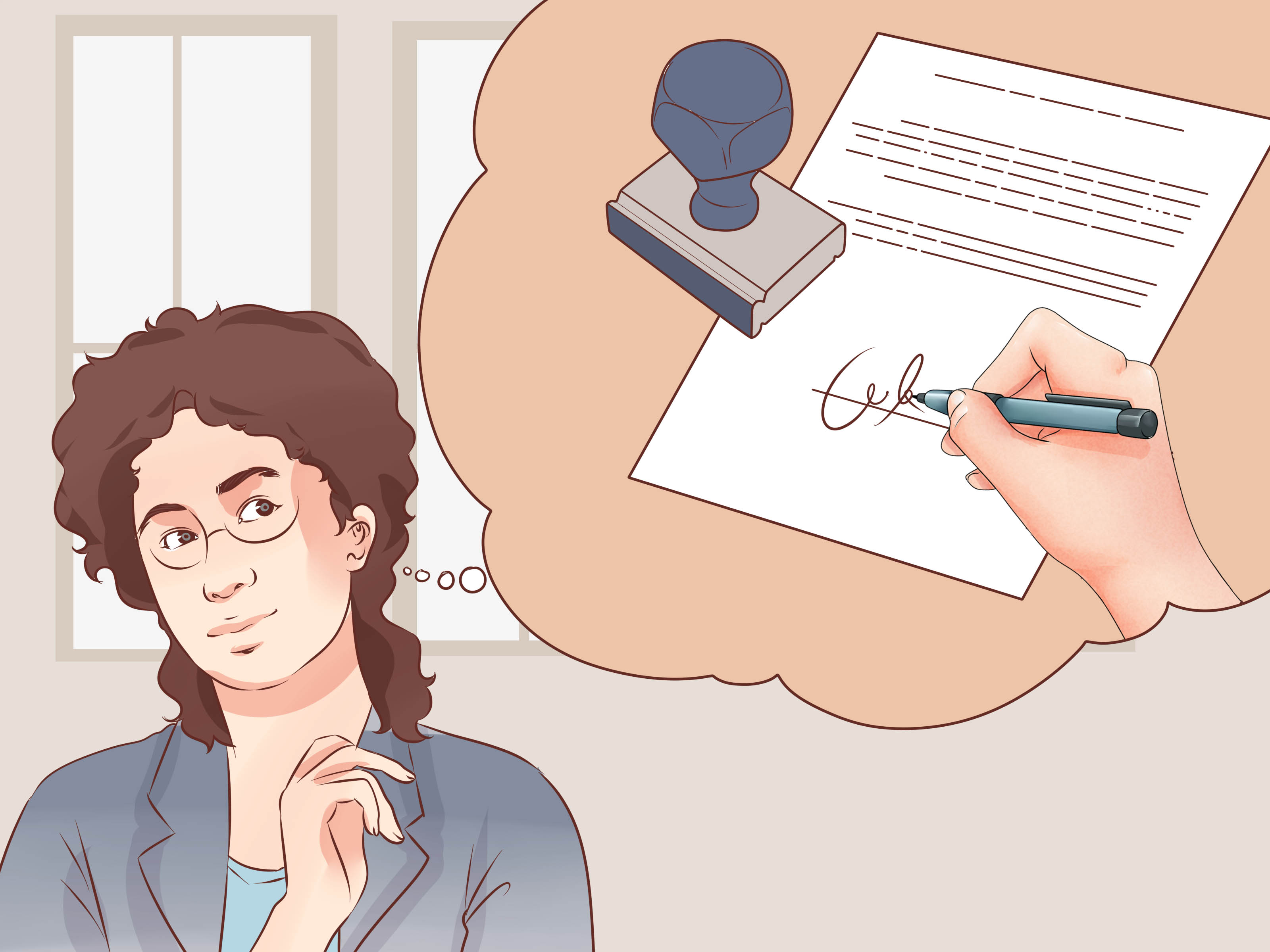
Step 9: Sign It Properly and Notarize It If Required
If the document must be notarized, do not sign it early just because you are feeling efficient. Wait until you are in front of the notary, clerk, judge, or other authorized officer. Bring identification. The notary will verify your identity, watch you sign, and complete the notarial section.
If you are using an unsworn declaration instead of an affidavit, you may not need a notary, but you still need the correct penalty-of-perjury language, date, and signature. Again, local rules win every argument.
Step 10: Review, File, and Keep a Copy
Before filing or submitting the affidavit, read it slowly from top to bottom. Then read it again as if you were a stranger who knows nothing about the situation. Check names, dates, addresses, exhibit labels, and case information. Make sure each paragraph is clear and that every statement is something you could testify to in person if asked.
Then sign, notarize if required, file it with the appropriate court or agency, and keep a copy for your records. If the affidavit is part of a lawsuit, make sure you follow any service requirements too.
Common Mistakes to Avoid When Writing an Affidavit
- Using opinions instead of facts: “He was acting suspicious” is weaker than describing what you actually saw.
- Including hearsay as if it were firsthand knowledge: Be careful with secondhand statements.
- Forgetting the case caption: Courts love matching paperwork. Help them out.
- Skipping the oath or penalty-of-perjury language: Without it, the document may not do its job.
- Signing before the notary when notarization is required: That can force you to redo the entire document.
- Attaching exhibits without labeling them: Exhibit chaos is real.
- Making it too long and dramatic: Strong affidavits are detailed, but they are not novels.
Simple Affidavit Example
Here is a very basic sample structure:
I, Daniel Reed, being duly sworn, state as follows:
- I am over the age of 18 and have personal knowledge of the facts stated in this affidavit.
- On February 14, 2026, at approximately 7:30 p.m., I was standing outside 455 Oak Street in Denver, Colorado.
- I saw a delivery van strike a mailbox in front of that address.
- The van did not stop after the collision.
- I took a photograph of the van as it drove away. A true and correct copy of that photograph is attached as Exhibit A.
I swear under oath that the foregoing is true and correct to the best of my knowledge.
Executed on March 1, 2026.
[Signature]
[Notary block, if required]
The key point is not the poetry. It is the precision.
Affidavit vs. Declaration: What Is the Difference?
This topic deserves its own spotlight because many people search for how to write an affidavit when what they actually need is a declaration. Traditionally, an affidavit is sworn before a notary or another authorized official. A declaration is usually signed under penalty of perjury without notarization.
In many federal contexts, an unsworn declaration can substitute for an affidavit if it uses the proper wording. But that does not mean every state form, every agency, every bank, or every court clerk will accept one. Some still want a notarized affidavit. That is why the smartest move is always to check the exact requirement before you start drafting.
Final Thoughts
Knowing how to write an affidavit is less about sounding legal and more about being organized, truthful, and specific. The best affidavits do not wave their arms around. They quietly present facts, show personal knowledge, attach supporting exhibits, and follow the required format.
If you remember nothing else, remember this: use the correct form, tell the truth, write in first person, stick to what you know, and do not sign in front of a notary from memory. That is not how notaries work, and it is definitely not how good affidavits are made.
When the stakes are high, especially in court, having a lawyer review your affidavit is wise. But even if you are drafting one on your own, these 10 steps will help you create a document that is clear, credible, and far more useful than a frantic last-minute statement written at 11:47 p.m. with three open tabs and a cup of regret.
Real-World Experiences and Practical Lessons About Writing an Affidavit
People often assume the hardest part of writing an affidavit is the legal language. In real life, the hardest part is usually deciding what belongs in the document and what does not. Many first-time affiants want to include every detail they remember, every frustration they feel, and every theory they have about why the other person behaved badly. That impulse is completely human, but it usually weakens the affidavit. The most effective affidavits come from people who slow down, separate facts from feelings, and focus on what they personally saw, heard, received, or did.
A common experience is realizing that memory is less tidy than people think. Someone may remember an argument clearly but not the exact date. Another person may remember receiving a letter but not the full address printed on the envelope. That is why supporting documents matter so much. Emails, text messages, notices, receipts, photographs, and calendar entries can turn a fuzzy memory into a precise statement. In practice, many strong affidavits are built with one hand on the keyboard and the other hand sorting through documents that confirm the timeline.
Another real-world lesson is that tone matters more than most people expect. A judge, clerk, lawyer, or agency reviewer reading an affidavit is usually looking for clarity and credibility. When the affidavit sounds overly dramatic, sarcastic, or theatrical, it can distract from the facts. By contrast, a calm affidavit often feels more believable even when the events described are serious. People who write the best affidavits tend to sound direct and steady. They do not over-explain every emotion. They simply describe what happened in a way that is easy to follow.
Many people also learn the hard way that formatting is not just cosmetic. Numbered paragraphs, labeled exhibits, and a proper signature block can make the difference between a document that feels usable and one that feels chaotic. In actual legal practice, readers often refer back to paragraph numbers and exhibit labels. If everything is neatly organized, your affidavit becomes much easier to understand and much harder to misread.
Finally, experience shows that the best affidavits are usually revised, not rushed. A first draft may be too emotional, too vague, or too long. A second draft is often where the document becomes stronger. Dates get checked. Extra opinions get cut. Facts get tightened. Exhibit references get added. The final version ends up shorter, clearer, and more persuasive. That is the quiet secret behind many good affidavits: they are not born polished. They are edited into honesty, structure, and usefulness.