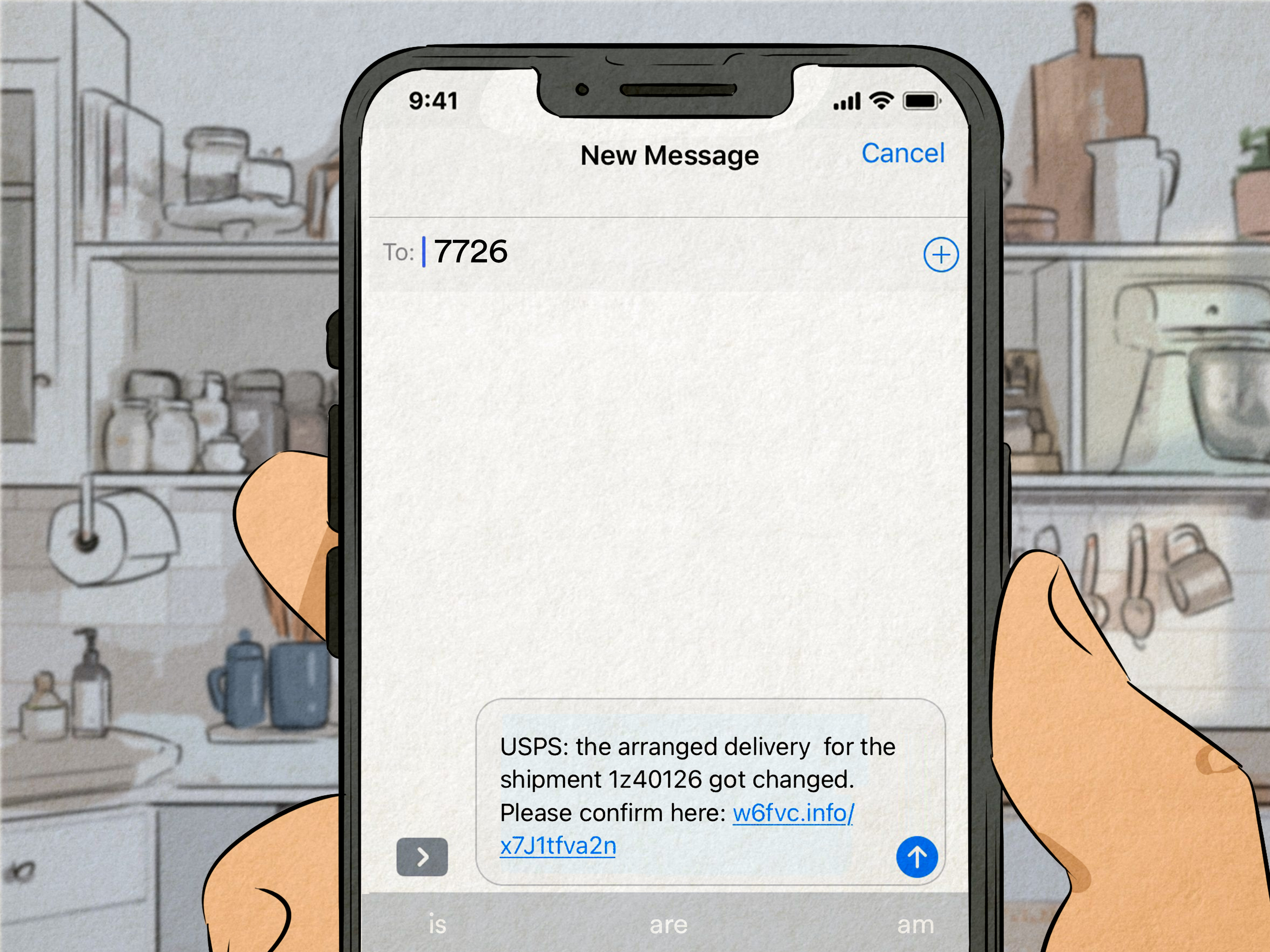
A package is supposedly on the way. The seller sends a tracking number. A text message says USPS cannot deliver your parcel because your address is incomplete. Then a link appears, asking for a tiny redelivery fee or a quick confirmation of your credit card details.
At first glance, everything looks ordinary. That is exactly what makes fake USPS tracking scams effective.
Package-related scams often borrow the language, logos, colors, and urgency of legitimate shipping notifications. Some use completely invented tracking numbers. Others use real numbers connected to someone else’s shipment, expired information, fraudulent labels, or convincing screenshots designed to prevent you from checking the shipment independently.
The good news is that you do not need to become a postal detective with a magnifying glass and a corkboard covered in red string. A few careful checks can help you identify a fake USPS tracking number, recognize a phishing attempt, and protect your money and personal information.
What Is a Fake USPS Tracking Number?
A fake USPS tracking number is any tracking identifier presented as proof of a legitimate USPS shipment when it does not actually verify the promised transaction or package.
The simplest version is a made-up string of numbers that USPS does not recognize. More sophisticated scams may involve:
- A real tracking number belonging to another person’s package
- A number copied from an old or unrelated shipment
- A shipping label that was created but never actually given to USPS
- A manipulated screenshot of fake tracking activity
- A link to a counterfeit website that displays fabricated tracking updates
- A legitimate-looking number paired with a fraudulent seller or nonexistent order
This distinction matters because a tracking number can look valid without proving that your specific purchase is moving toward your address.
What Does a Real USPS Tracking Number Look Like?
USPS uses different tracking formats for different services. Many domestic tracking numbers contain a long sequence of digits, often 20 to 22 digits. Official USPS examples include formats beginning with numbers such as 9400, 9205, and 9407. Some international mail identifiers use a combination of letters and numbers.
However, format alone is not a reliable authenticity test.
A scammer can easily copy the appearance of a legitimate number. Creating 22 random digits requires considerably less criminal genius than the movies would have us believe. A number should therefore be verified through the official USPS tracking system rather than judged only by its length or starting digits.
A valid-looking number is not the same as a valid shipment
Suppose a seller sends you a number that produces real tracking results. That is encouraging, but it still does not automatically prove that the package belongs to you. In certain marketplace scams, a seller may provide tracking for an unrelated package delivered to the same city or ZIP Code.
Public tracking information also does not normally reveal a recipient’s complete street address, so you cannot always confirm ownership simply by looking at the public results. Instead, compare the shipment date, origin, destination area, seller information, expected delivery window, and order timeline. When necessary, contact the marketplace, payment provider, or USPS through independently obtained contact information.
How to Check Whether a USPS Tracking Number Is Fake
1. Enter the number directly on the official USPS website
Do not use the tracking link supplied in a suspicious text, email, social media message, or seller chat. Open your browser yourself and go directly to the official USPS website. Enter the tracking number manually or paste only the number into the official tracking tool.
This simple habit defeats one of the most common tricks in package scams: sending victims to a counterfeit website that looks almost identical to a legitimate postal page.
A fake site can display virtually anything the scammer wants, including imaginary scans, a moving progress bar, a delivery map, or a cheerful message announcing that your package is “99% delivered.” The graphics may be impressive. The package may still be as real as a unicorn’s driver’s license.
2. Check the domain before entering information
Scam websites frequently use domains designed to resemble the USPS name. They may add extra words, unusual spelling, hyphens, random characters, or unrelated domain endings.
Do not assume a website is legitimate merely because the address contains terms such as “USPS,” “postal,” “tracking,” or “delivery.” Scammers are perfectly capable of putting trusted brand names inside deceptive web addresses.
The safest approach is not to inspect a suspicious link and debate whether it looks convincing. Instead, avoid the link completely and navigate to USPS independently.
3. Compare the tracking timeline with your actual order
Tracking activity should make basic chronological sense.
Be suspicious when:
- The tracking history begins before you placed the order
- The package was supposedly delivered before the seller claimed to ship it
- The origin is inconsistent with the seller’s explanation
- The destination area does not reasonably match your location
- The seller repeatedly changes the tracking number without a clear explanation
No single inconsistency automatically proves fraud. Sellers may use fulfillment centers, shipping partners, replacement labels, or third-party logistics companies. Still, unexplained contradictions deserve investigation.
4. Understand what “label created” really means
A common source of confusion is a tracking status indicating that shipping information has been created or that USPS is awaiting the item.
This usually means a label or shipping record exists. It does not necessarily mean USPS physically possesses the package yet.
Legitimate merchants sometimes generate labels hours or even days before carrier acceptance. Therefore, a short delay is not automatically a scam. The warning sign is a seller who repeatedly insists that the package is actively traveling while the tracking record remains stuck at a pre-shipment stage for an unreasonable period and the seller refuses to provide a credible explanation.
5. Do not trust screenshots as proof
A screenshot is not independent verification.
Images can be cropped, edited, fabricated, or captured from an unrelated shipment. A legitimate seller should normally be able to provide a tracking number that you can verify independently.
When a seller says, “The tracking website only works on my phone, so just trust this screenshot,” your internal alarm bell is allowed to make some noise.
6. Look for mismatched delivery details
A common e-commerce scam involves providing a real tracking number for a shipment sent to someone else in the same general geographic area. The marketplace system may see a “delivered” scan and initially assume the seller fulfilled the order.
Warning signs include a package marked delivered when nothing arrived, a delivery date that conflicts with your order history, or tracking activity that appears to belong to an entirely different shipping timeline.
Save your order confirmation, seller messages, payment records, and tracking information. These records can be valuable when disputing the transaction with a marketplace, card issuer, or payment service.
Fake USPS Text Messages Are an Even Bigger Warning Sign
Many people searching for information about fake USPS tracking numbers first encounter the scam through a text message. The message usually claims that a package cannot be delivered because of an address problem, unpaid fee, missing ZIP Code, customs issue, or failed delivery attempt.
The message then urges the recipient to click a link immediately.
This is commonly called smishing, a form of phishing conducted through SMS or other text messaging services.
USPS and the U.S. Postal Inspection Service have repeatedly warned consumers about unsolicited package-tracking messages. Legitimate USPS text tracking is generally connected to a tracking request initiated by the customer for a specific shipment. Official guidance also warns that USPS tracking text messages do not contain web links.
Therefore, an unexpected text claiming that your package has a problem and directing you to click a link should be treated as highly suspicious.
The “small redelivery fee” trick
One particularly effective version asks for a tiny payment to reschedule delivery. The amount may be only a few cents or a few dollars.
The small amount is part of the psychological trick. People may think, “Why would a scammer bother stealing 30 cents?”
Because the real prize may be the card number, expiration date, security code, billing address, phone number, password, or other personal data entered into the fake payment form.
A tiny fake fee can become a very expensive introduction.
Major Red Flags of a USPS Tracking Scam
Be especially cautious when several of these warning signs appear together:
- You receive an unexpected delivery message
- The sender creates extreme urgency
- You are told to click a link immediately
- The website address is not the official USPS domain
- The message requests card details or sensitive personal information
- You are asked to pay a surprise redelivery charge through an unsolicited link
- The tracking number works only on a website supplied by the sender
- The seller refuses to let you verify the shipment independently
- The tracking timeline does not match the order
- The message contains unusual grammar, formatting, or sender information
Grammar mistakes can still be a warning sign, but do not rely on them. Modern scam messages can be polished, professional, and convincing. A perfectly written message can still lead to a perfectly fraudulent website.
What a Failed Tracking Search Doesand Does NotProve
If USPS does not immediately recognize a number, do not jump straight from “no result” to “international criminal conspiracy.”
Possible explanations can include:
- A typing or copying error
- A newly generated label that has not entered the system fully
- A delay before the first physical scan
- A shipment initially handled by another logistics provider
- An incorrect tracking number supplied accidentally
- A genuinely fake number
Give a legitimate merchant a reasonable opportunity to correct an honest mistake. At the same time, do not allow endless excuses to push you beyond marketplace dispute or credit card chargeback deadlines.
How to Verify a Suspicious Package Safely
Check the retailer or marketplace account
Open the shopping website or app independently instead of following the message link. Review the order directly in your account and compare the official order details with the tracking information you received.
Use USPS tracking independently
Type the official USPS website address yourself and enter the tracking number there. This prevents a fake website from controlling the information you see.
Contact the seller through the original platform
Do not move a dispute to a random phone number, messaging app, or email address supplied in a suspicious message. Use the marketplace’s official communication and dispute tools whenever possible.
Contact USPS through independently verified channels
When you genuinely need assistance, obtain contact information from the official USPS website or another official U.S. government resource rather than from the suspicious message.
What to Do If You Clicked a Fake USPS Link
Clicking a suspicious link is serious, but the appropriate response depends on what happened next.
If you clicked but entered nothing
Close the page. Do not download files, install apps, accept configuration profiles, or grant unusual permissions. Keep your operating system, browser, and security software updated, and watch for abnormal device or account activity.
The U.S. Postal Inspection Service has advised people who interact with suspicious package-tracking URLs to take the incident seriously. If financial information may have been exposed, contact your financial institution promptly.
If you entered a password
Change the compromised password immediately using the legitimate website or app. Change it anywhere else you reused the same password. Enable multifactor authentication where available.
Password reuse turns one stolen credential into a master key. Scammers know this, which is why one fake delivery page can create problems far beyond shipping.
If you entered credit or debit card information
Contact the card issuer or bank using the number on the back of the card or another trusted source. Explain that the details may have been entered on a phishing website. Monitor transactions closely and follow the institution’s instructions regarding replacement cards, account controls, or disputed charges.
If you provided highly sensitive personal information
If information such as a Social Security number was compromised, use official identity-theft recovery resources. Depending on the circumstances, appropriate steps may include fraud alerts, credit freezes, account monitoring, and reporting identity theft.
How to Report a Fake USPS Tracking Scam
Reporting helps authorities and service providers identify patterns, domains, phone numbers, and campaigns used in fraud.
For USPS-related suspicious emails or text messages, the U.S. Postal Inspection Service provides reporting channels for postal scams. Suspicious texts can also be forwarded to 7726, which spells SPAM on a telephone keypad and is widely used by wireless providers for spam reporting.
Consumers can also report fraud to the Federal Trade Commission. Identity theft should be addressed through official federal identity-theft recovery resources. Complaints about unwanted or illegal texts may also be appropriate for the Federal Communications Commission.
Before deleting a scam message, consider preserving useful evidence such as screenshots, sender information, website addresses, transaction records, and the fake tracking number.
How Online Shoppers Can Avoid Fake Tracking Number Scams
Pay with methods that offer dispute protections
Be cautious when an unknown seller insists on irreversible payment methods. Credit cards and reputable marketplace payment systems often provide stronger mechanisms for disputing undelivered or misrepresented purchases than cash-like payment methods.
Keep every important record
Save the product listing, order confirmation, promised shipping date, seller messages, tracking number, and payment receipt. Fraud disputes are much easier when you have documentation instead of a vague memory that the seller’s username contained three dragons and perhaps a number seven.
Do not let urgency override verification
Scammers want action before thought. A message claiming that your package will be destroyed, returned, permanently lost, or fed to a warehouse monster unless you respond within 30 minutes is designed to create panic.
Slow down. Open the retailer’s app. Check your real orders. Visit USPS independently. A legitimate shipment will survive the extra minute required to verify it.
Remember that expecting a package does not make the message legitimate
Millions of people are waiting for deliveries at any given time. Scammers do not necessarily know that you ordered something. They can send enormous numbers of messages and rely on coincidence.
That is why a fake “Your USPS package is delayed” text can feel uncannily accurate on the same afternoon you are waiting for new shoes, a laptop charger, and a family-size quantity of coffee.
Real-World Experiences and Lessons From USPS Tracking Scams
The following scenarios reflect common experiences and recurring patterns seen in package-delivery scams. They are composite examples rather than claims about one specific individual.
Experience 1: The package that was “delivered” before it was ordered
Imagine buying a discounted electronic device from an unfamiliar online store. Two days later, the seller provides a USPS tracking number. The number works, and the buyer initially feels relieved.
Then one detail stands out: the tracking history shows that the package was delivered three days before the order was placed.
The number itself was real. The shipment was real. It simply had nothing to do with the purchase.
The lesson is important: checking whether a tracking number exists is only the first step. The timeline must also match the transaction. A real tracking number can still be used as fake proof of fulfillment.
Experience 2: The 30-cent delivery fee
Another common experience begins with an ordinary-looking text. The recipient happens to be waiting for a package, so the message saying “your address could not be confirmed” feels perfectly timed.
The linked page uses familiar postal colors and asks for a tiny redelivery payment. The amount is so small that it hardly feels dangerous.
But the page requests a full card number, expiration date, security code, billing address, email address, and phone number. That is an enormous amount of information for a supposedly tiny delivery adjustment.
The lesson: evaluate the information being requested, not merely the amount being charged. A small fee can be bait for a much larger theft.
Experience 3: The screenshot-only seller
A marketplace buyer asks for tracking. The seller responds with a screenshot showing a package “in transit.” When the buyer requests the actual number, the seller becomes evasive. The tracking page is supposedly unavailable, the shipping company is supposedly updating its system, and the seller’s cousin’s neighbor apparently works in logistics and says everything is fine.
Eventually, no package arrives.
The key lesson is that screenshots are evidence only of what appeared on a screen. They are not a substitute for independent verification.
Experience 4: The number that did not work immediately
Not every strange tracking experience is fraud. A legitimate small business may create a shipping label in the evening and hand the package to USPS the next day. The tracking number may show little or no activity at first.
A nervous customer might assume the worst, only to see the first acceptance scan appear later.
This experience teaches the opposite lesson: use warning signs in combination. A short tracking delay, by itself, is not proof of a fake shipment. Context, seller behavior, elapsed time, and independent verification all matter.
Experience 5: The real number for the wrong package
One of the more frustrating situations occurs when tracking shows “Delivered” in the buyer’s general area, but the buyer received nothing. The seller points triumphantly to the delivery scan and refuses to discuss the matter further.
In a potential tracking-number manipulation scheme, the number may belong to another package delivered nearby. Because public tracking information does not reveal every recipient detail, the fraudulent seller hopes the “Delivered” status will be enough to defeat a dispute.
The best response is documentation. Preserve the order date, seller messages, delivery claims, payment details, and tracking timeline. Use the official dispute process promptly and explain the mismatch clearly.
The biggest lesson from all of these experiences
The most effective defense is not memorizing every possible tracking format or trying to become better at spotting fake logos. Scammers continually change numbers, websites, wording, and designs.
A stronger habit is independent verification.
Do not enter through the door a stranger points you toward. Open the retailer’s official app yourself. Visit USPS independently. Contact your financial institution through a trusted number. Keep records. Pause when a message creates artificial urgency.
Those habits remain useful even when the scam changes its costume.
Conclusion: Trust the Verification, Not the Message
Fake USPS tracking scams succeed because they blend into everyday life. People order products constantly, receive shipping notifications routinely, and understandably become concerned when a package appears to have a problem.
To spot a fake USPS tracking number, verify it directly through the official USPS tracking system, compare the shipment history with your actual order, question unexplained inconsistencies, and never rely solely on screenshots or links supplied by strangers. Remember that a number can be real yet still belong to an unrelated package.
Unexpected USPS texts containing links deserve particular caution. Do not let a supposed address problem, delivery deadline, or tiny redelivery fee rush you into sharing sensitive information. Navigate independently, verify first, and report suspicious activity when appropriate.
The internet may have made package tracking wonderfully convenient. Unfortunately, it also gave scammers the ability to send a fake delivery notice before breakfast. Fortunately, one old-fashioned security tool still works remarkably well: stopping for a moment and checking the facts yourself.