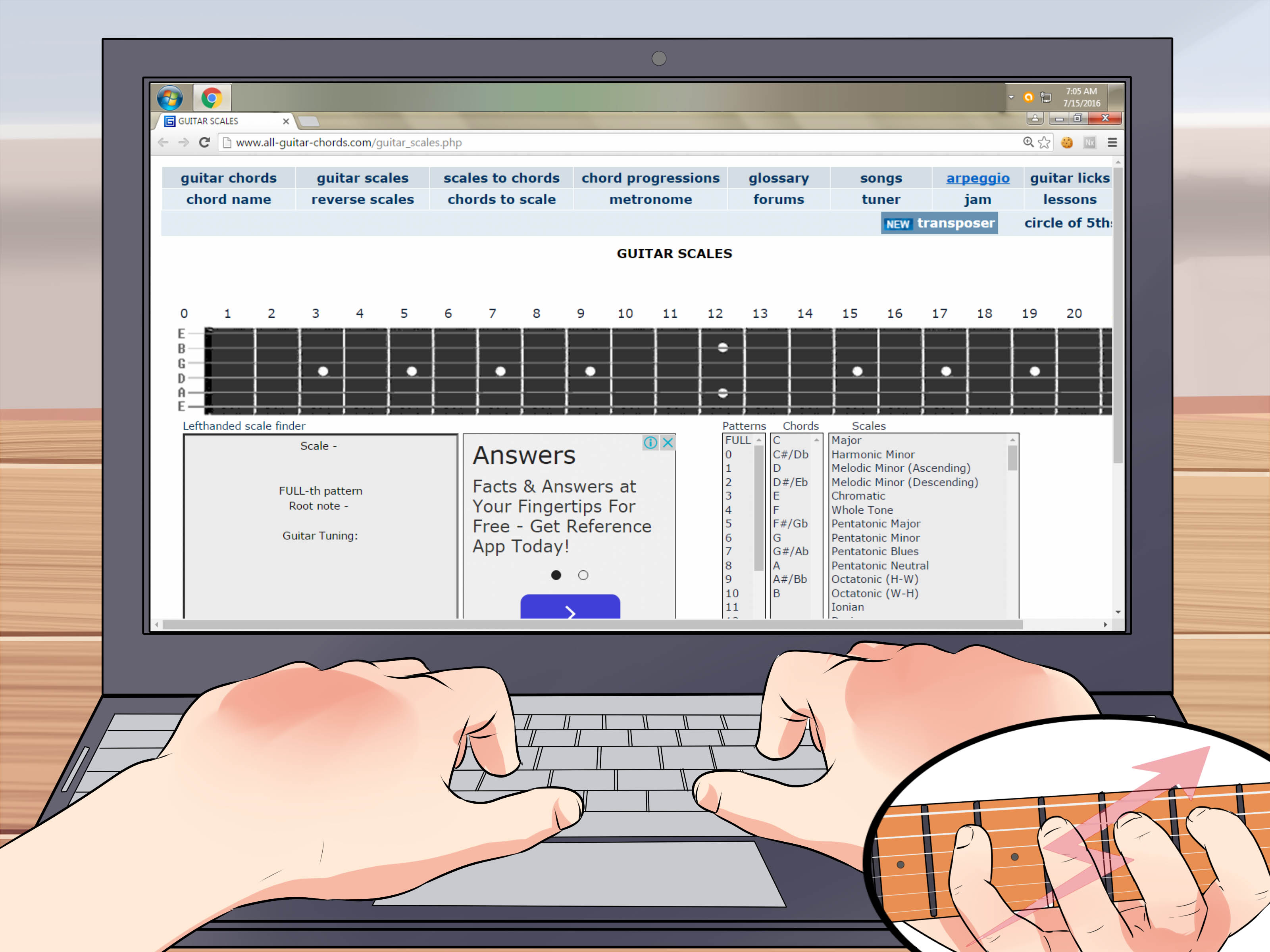
Note: This publish-ready article is written in standard American English and synthesized from real guitar education guidance, with no source-link clutter added to the article body.
Practicing guitar scales can feel a little like eating vegetables: you know they are good for you, but nobody picks up a guitar dreaming of a romantic evening with the C major scale. The good news? Scales do not have to be boring, robotic, or painfully academic. When you practice them the right way, guitar scales become the secret map of the fretboard, the workout routine for your fingers, and the launchpad for solos that do not sound like a confused squirrel running across the strings.
Whether you play acoustic, electric, blues, rock, country, metal, worship, jazz, or “whatever sounds cool in my bedroom at midnight,” learning how to practice guitar scales helps you build timing, finger strength, fretboard knowledge, picking accuracy, and musical confidence. The key is not to race through scale patterns like you are trying to win a tiny finger Olympics. The key is to practice slowly, clearly, rhythmically, and musically.
Below are 13 practical steps for learning guitar scales in a way that actually improves your playing. You will also find examples, practice tips, common mistakes, and a real-world experience section to help you turn scale practice from a chore into a useful daily habit.
Why Guitar Scales Matter
A guitar scale is a group of notes arranged in a specific order. Those notes create a musical flavor. The major scale sounds bright and complete. The minor pentatonic scale sounds bluesy, rocky, and instantly familiar. The natural minor scale has a moodier personality, like it just walked into a room wearing a black jacket and thinking about life.
Scales help you understand which notes work over chords. They also train your hands to move with control across the fretboard. If chords are the furniture in a musical room, scales are the hallways, doors, windows, and sneaky little shortcuts. They help you move around without bumping into everything.
How to Practice Guitar Scales: 13 Steps
1. Choose One Scale to Start With
Do not try to learn every scale on the internet in one weekend. That is how guitar players end up with 47 browser tabs open, three half-learned patterns, and a thousand-yard stare. Start with one beginner-friendly scale and stay with it long enough to understand it.
For most beginners, the A minor pentatonic scale is a great starting point. It has five notes, fits naturally under the fingers, and works beautifully in rock, blues, pop, and country. Another excellent choice is the C major scale, especially if you want to understand music theory and how notes relate to chords.
Pick one scale, one key, and one position. For example, start with A minor pentatonic in the fifth position. Learn it slowly before moving to other keys or fancy variations.
2. Learn the Root Note First
The root note is the home base of a scale. In A minor pentatonic, the root note is A. In C major, the root note is C. Knowing the root helps you understand where the scale begins, where it resolves, and why certain notes feel stable.
Before you play a full scale pattern, find every root note inside that pattern. Say the note name out loud as you play it. This small habit makes a big difference because it keeps you from memorizing shapes without knowing what they mean. Guitarists often fall into the “box pattern trap,” where fingers know the shape but the brain has gone out for coffee.
For example, if you practice A minor pentatonic at the fifth fret, notice that the sixth string, fifth fret is A. The fourth string, seventh fret is also A. The first string, fifth fret is another A. These notes are your musical landing pads.
3. Use the Correct Fingering
Good fingering keeps your hand relaxed and efficient. Bad fingering turns scale practice into finger Twister. When possible, assign one finger per fret. If you are playing around the fifth fret, your index finger handles the fifth fret, middle finger handles the sixth, ring finger handles the seventh, and pinky handles the eighth.
This approach builds coordination and prevents unnecessary hand movement. It also trains your pinky, which may initially behave like it has never met the rest of your hand. Be patient. The pinky is dramatic, but it can be trained.
Keep your thumb behind the neck, your wrist comfortable, and your fingers curved. Press close to the fret, not in the middle of the space between frets. You should use just enough pressure to make the note clear. If your hand feels like it is arm-wrestling the guitar, relax.
4. Practice Slowly Before You Practice Fast
Speed is not the first goal. Clean sound is the first goal. If every note buzzes, dies early, or arrives late, playing faster will only create faster mistakes. Slow practice allows your hands and ears to work together.
Start at a tempo where you can play every note clearly. That may be 60 beats per minute, 50 beats per minute, or even slower. There is no shame in slow practice. Every great guitarist has spent time crawling through exercises before flying across the fretboard.
Listen carefully to each note. Is it clean? Is it even? Is one note louder than the others? Are you accidentally muting a string? Slow practice reveals these details. Fast practice hides them under a blur of confidence and denial.
5. Use a Metronome
A metronome is not a punishment device invented by strict music teachers. It is a tool that teaches your hands to agree with time. Practicing guitar scales with a metronome improves rhythm, timing, picking accuracy, and consistency.
Set the metronome to a comfortable tempo. Play one note per click. Once that feels easy, play two notes per click. Later, try four notes per click. Keep the notes evenly spaced. Do not rush the easy parts or panic during the tricky parts.
A simple metronome routine might look like this:
- Play quarter notes at 60 BPM.
- Play eighth notes at 60 BPM.
- Increase by 5 BPM only when the scale sounds clean.
- Stop increasing the tempo when your accuracy falls apart.
The goal is not to “beat” the metronome. The goal is to lock in with it until your timing feels steady and natural.
6. Practice Alternate Picking
Alternate picking means using a downstroke followed by an upstroke, then repeating that pattern. Down, up, down, up. It sounds simple, but it can transform your scale practice.
Many beginners pick randomly without realizing it. Random picking might work at slow speeds, but it often falls apart when the tempo increases. Alternate picking creates balance and efficiency. It also helps both hands synchronize.
Try this exercise: play your scale using strict alternate picking, even when changing strings. Start with a downstroke on the first note. The next note gets an upstroke. Continue without cheating. If your picking hand gets confused, slow down and isolate just two strings.
Think of alternate picking like walking. If you step left-left-left-right-left, you will look unusual and probably alarm nearby pedestrians. Down-up picking gives your hand a natural rhythm.
7. Play the Scale Ascending and Descending
Do not only climb up the scale. Come back down too. Many players can ascend a scale smoothly but descend like they are falling down musical stairs. Practicing both directions builds control and makes the pattern feel complete.
Play from the lowest note to the highest note, then reverse direction without stopping. Keep the timing even. Make sure the top note does not become a pause button. It should connect smoothly into the descending pattern.
Once you can play up and down cleanly, loop the scale continuously for one minute. The challenge is to keep tone, rhythm, and hand position consistent. If tension builds, stop and reset.
8. Break the Scale Into Small Sections
If a full scale pattern feels overwhelming, divide it into tiny pieces. Practice two strings at a time. Then practice three strings. Then connect the sections.
Small-section practice is especially helpful when one part of the pattern causes mistakes. Maybe the shift from the third string to the second string feels awkward. Instead of replaying the entire scale and hoping for magic, isolate that string change and repeat it slowly.
This is how efficient practice works: find the messy spot, zoom in, clean it up, and then place it back into the full pattern. It is like fixing a leaky faucet instead of remodeling the entire house because the sink made a noise.
9. Use Rhythm Variations
Playing scales in straight quarter notes is useful, but do not stop there. Rhythm variations make scale practice more musical and less predictable. They also prepare you for real songs, where notes rarely march along in perfectly equal rows.
Try these rhythm ideas:
- Quarter notes
- Eighth notes
- Triplets
- Sixteenth notes
- Long-short patterns
- Short-long patterns
You can also accent different notes. For example, accent every first note in a group of four. Then accent the second note, then the third, then the fourth. This improves pick control and helps your phrasing sound more intentional.
10. Practice Scale Sequences
A scale sequence is a repeated pattern played through the notes of a scale. Instead of playing 1-2-3-4-5-6-7, you might play 1-2-3, 2-3-4, 3-4-5, and so on. Sequences build technique and make scales sound more like music.
Here are a few useful sequence ideas:
- Play the scale in groups of three notes.
- Play the scale in groups of four notes.
- Skip every other note to practice intervals.
- Play one note forward, then one note back.
For example, in a C major scale, a three-note sequence might be C-D-E, D-E-F, E-F-G, and so on. On guitar, this trains your fingers to move beyond simple up-and-down patterns.
11. Connect Scales to Chords
Scales become far more useful when you connect them to chords. If you are playing over an A minor chord, the A minor pentatonic scale makes sense because its notes fit the chord’s sound. If you are playing over a C major chord progression, the C major scale can help you create melodies that belong in that key.
Try this: strum an A minor chord, then play your A minor pentatonic scale. Listen for how the notes relate to the chord. Some notes feel restful. Others create movement. This is where scale practice becomes music instead of finger gymnastics.
You can also record a simple chord progression on your phone or use a looper pedal. Play the scale over it and listen. The goal is not to shred. The goal is to hear how notes behave against harmony.
12. Turn Scale Patterns Into Phrases
Nobody wants to hear a guitarist play a scale straight up and down for an entire solo. Well, maybe another guitarist who just bought a metronome. But most listeners want melody, rhythm, space, and expression.
After you learn a scale pattern, turn it into short phrases. Play three or four notes, pause, then answer with another idea. Add slides, bends, hammer-ons, pull-offs, and vibrato when appropriate. Use repetition. Leave space. Let the notes breathe.
Here is a simple phrasing exercise: choose only four notes from the scale. Create five different short melodies using those notes. This forces creativity and prevents your fingers from running on autopilot.
13. Track Your Progress
Scale practice works best when you can measure improvement. Keep a simple practice log. Write down the scale, key, tempo, and what felt difficult. For example:
- A minor pentatonic, fifth position, 70 BPM, eighth notes, clean
- C major scale, open position, 60 BPM, trouble descending
- G major scale, second position, 65 BPM, string changes need work
This helps you avoid practicing the same comfortable thing forever. It also gives you proof that you are improving, even when progress feels slow. Guitar growth often happens quietly. One day your fingers simply stop arguing with you.
A Simple 20-Minute Guitar Scale Practice Routine
If you are not sure how to organize your scale practice, use this easy 20-minute routine:
Minutes 1–3: Warm Up Slowly
Play the scale without a metronome. Focus on relaxed hands, clean notes, and accurate fingering.
Minutes 4–8: Use the Metronome
Set a slow tempo and play one note per click. Then try two notes per click. Keep everything even.
Minutes 9–12: Practice Trouble Spots
Isolate the hardest string change, finger stretch, or descending section. Repeat it slowly until it becomes smoother.
Minutes 13–16: Add Rhythm Variations
Use triplets, accents, or groups of three and four. This keeps your brain involved and your timing honest.
Minutes 17–20: Make Music
Play over a backing track, looper pedal, or simple chord progression. Create short phrases instead of running the scale mechanically.
Common Mistakes When Practicing Guitar Scales
Practicing Too Fast
Speed without control is just chaos wearing sunglasses. If your notes are uneven or sloppy, slow down. Clean playing at 60 BPM is better than messy playing at 140 BPM.
Ignoring Timing
Many guitarists focus on finger movement and forget rhythm. But a good solo is not only about which notes you play. It is also about when you play them.
Only Memorizing Shapes
Scale shapes are useful, but they are not the whole story. Learn the root notes, intervals, and chord connections. Otherwise, you may know where your fingers go but not why they are going there.
Never Using Scales Musically
If you only practice scales as exercises, they will sound like exercises. Spend part of every practice session making melodies, even simple ones. Music should show up before your fingers file a complaint.
Best Guitar Scales for Beginners
Here are a few scales worth learning early:
- Minor pentatonic scale: Great for rock, blues, pop, and beginner solos.
- Major scale: Essential for understanding music theory and key signatures.
- Major pentatonic scale: Bright, melodic, and useful in country, pop, and worship music.
- Blues scale: Similar to minor pentatonic but with an added blues note for extra grit.
- Natural minor scale: Useful for darker melodies and minor-key songs.
You do not need to master all of them immediately. Start with one, use it in real music, and add new scales as your ears and fingers become ready.
How Often Should You Practice Guitar Scales?
Short, consistent practice beats occasional marathon sessions. Ten focused minutes a day can produce better results than one exhausted two-hour session on Sunday night while your guitar silently judges you from across the room.
For beginners, practicing scales for 10 to 20 minutes per day is enough. Intermediate players may spend more time exploring positions, sequences, modes, and improvisation. The important thing is to practice with a goal. Do not simply run patterns while thinking about lunch.
How to Make Scale Practice More Fun
Scale practice becomes more enjoyable when you make it sound like music. Use backing tracks in different styles. Play with a drum loop. Create small licks. Challenge yourself to improvise using only three notes. Move the scale to a new key and see how it changes the mood.
You can also practice call-and-response. Play a short phrase, then answer it with another phrase. Pretend you are having a conversation. Some phrases ask questions. Some phrases answer. Some phrases say, “I have no idea what I am doing, but I am doing it confidently.” That is part of the journey.
Experience Section: What Practicing Guitar Scales Really Feels Like
Learning how to practice guitar scales is not always glamorous. In fact, at first it can feel suspiciously like your fingers have formed a tiny union and are refusing overtime. The index finger usually behaves. The middle finger tries to help. The ring finger acts independent. The pinky looks at the fretboard and says, “Absolutely not.”
One of the most common experiences beginners have is frustration with slow progress. You learn a scale shape, play it a few times, and expect it to magically turn into a solo. Instead, it sounds like someone reading a phone number on guitar. That is normal. The first goal is not musical genius. The first goal is familiarity. You are teaching your fingers where the notes live and teaching your ears what those notes sound like.
A helpful experience-based tip is to practice scales in small emotional doses. If you sit for 45 minutes forcing yourself through one pattern, you may begin to dislike both the scale and possibly the entire concept of music. Instead, practice for five focused minutes, then apply the scale to something fun. Play it over a backing track. Make a silly two-note riff. Try to imitate a favorite guitarist. The brain learns better when it has a reason to care.
Another real lesson: the metronome will expose you. Lovingly, but brutally. Many players think they are playing evenly until the click starts. Suddenly, the first note is early, the string change is late, and the descending part sounds like it slipped on a banana peel. Do not take this personally. The metronome is not insulting you. It is giving you honest feedback. Start slower than your ego wants. Your future playing will thank you.
It also helps to record yourself. This can be uncomfortable at first because recordings do not accept excuses. They reveal buzzes, uneven timing, weak notes, and rushed phrases. But they also reveal progress. A scale that sounded clumsy two weeks ago may suddenly sound smoother. That small improvement is motivating. Guitar progress is often built from tiny wins stacked quietly over time.
Many guitarists also discover that scales become more interesting when connected to songs. For example, the A minor pentatonic scale suddenly feels useful when you realize it appears in countless rock and blues-inspired solos. The major scale becomes less abstract when you hear how it creates familiar melodies. Theory becomes easier when it stops being a worksheet and starts becoming sound.
One of the best personal habits is ending scale practice with creativity. After working on technique, spend a few minutes improvising. Do not worry about being impressive. Use bends, slides, pauses, and repeated notes. Try to make one small phrase that sounds good. Then make another. This teaches you that scales are not the music itself; they are the ingredients. Nobody eats flour straight from the bag and calls it cake. You have to mix, shape, bake, and maybe add a little frosting.
Over time, scale practice changes how you see the fretboard. Instead of random frets, you begin to see patterns. Instead of guessing notes, you start making choices. Your fingers move with more confidence. Your solos become less random. Your rhythm improves. Your ear gets sharper. And yes, eventually your pinky may even become a productive member of society.
The biggest experience-based takeaway is this: practice guitar scales patiently, but do not practice them lifelessly. Use clean technique, steady timing, and thoughtful repetition. Then turn the scale into music as soon as possible. That is where the real growth happens.
Conclusion
Practicing guitar scales is one of the most reliable ways to improve your technique, timing, fretboard knowledge, and improvisation skills. The secret is to slow down, stay consistent, use a metronome, learn root notes, connect scales to chords, and turn patterns into phrases. You do not need to learn every scale at once. Start with one useful scale, practice it clearly, and apply it musically.
Remember, scales are not meant to trap you in boring exercises forever. They are meant to set you free on the fretboard. Practice them like a musician, not a robot. Your fingers, ears, and future solos will all be better for it.