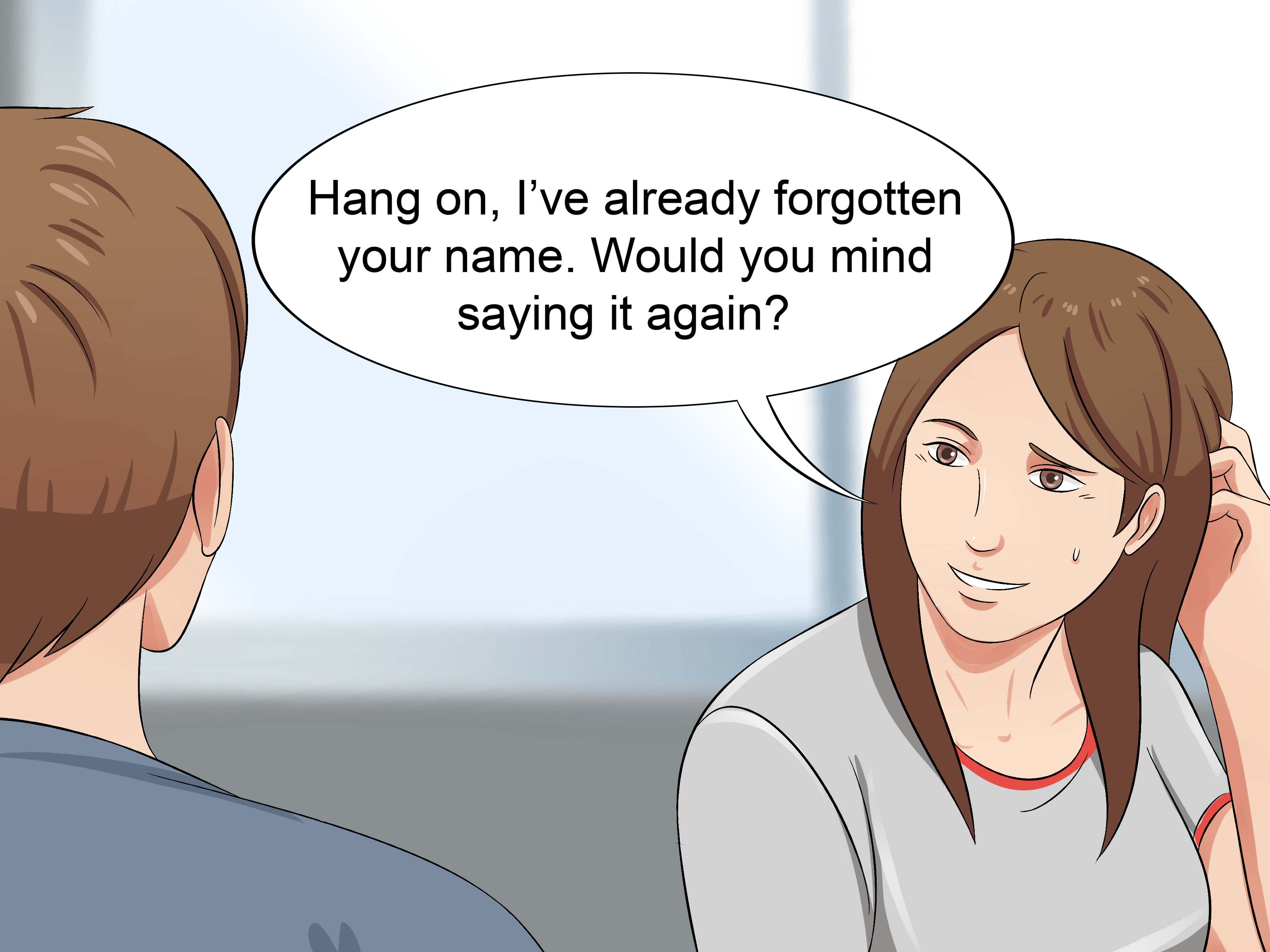
Forgetting someone’s name is one of those tiny social disasters that feels much larger than it is. Your brain freezes, your smile stays suspiciously wide, and suddenly every sentence you say becomes an Olympic-level event designed to avoid the person’s name. “Great to see you… human I definitely recognize.” Smooth? Not exactly. Common? Absolutely.
The good news is that forgetting a name does not mean you are rude, careless, or secretly turning into a goldfish. Names are oddly difficult for the brain because they often feel disconnected from meaning. You may remember that someone works in marketing, has a golden retriever named Pickles, loves hiking, and once survived a conference lunch made entirely of beige foodbut their actual name? Gone. Vanished. Packed a tiny suitcase and left.
This guide explains how to find out someone’s name that you have forgotten in a polite, practical, and socially graceful way. Whether you are at work, a party, a family event, a neighborhood barbecue, or a networking meeting, these eight steps will help you recover the missing name without making the situation feel awkward.
Why We Forget Names So Easily
Before fixing the problem, it helps to understand why it happens. Remembering a person’s name requires attention, encoding, storage, and retrieval. In plain English: you have to hear the name clearly, focus on it, connect it to the person, store it in memory, and then pull it back out later. That is a lot of mental paperwork for one syllable spoken while someone is shaking your hand and the room is full of noise.
Names are also less descriptive than other facts. If someone tells you they are a dentist, your brain can connect that to teeth, appointments, white coats, and the universal fear of hearing “you may feel a little pressure.” But if they say, “I’m Brandon,” the name itself may not give your brain much to attach to unless you create a connection.
Forgetting a name occasionally is normal. The real skill is not having a perfect memory; it is knowing how to recover gracefully when your memory decides to take a coffee break.
How to Find Out Someone’s Name That You Have Forgotten: 8 Steps
Step 1: Stay Calm and Do Not Announce Your Panic
The first step is simple: do not panic. The moment you realize you have forgotten someone’s name, your brain may start making helpful suggestions like “run away,” “fake a phone call,” or “move to another state.” Ignore those suggestions. A calm expression gives you time to solve the problem.
Most people are far less focused on your memory lapse than you think. They are usually thinking about the conversation, the event, their own schedule, or whether the spinach dip is worth the risk. If you act relaxed, the situation stays relaxed.
Use neutral phrases while you gather clues. Try:
- “It’s great to see you again.”
- “How have you been?”
- “What have you been working on lately?”
- “I was just thinking about the last time we talked.”
These phrases keep the conversation moving without forcing you to say the missing name. The goal is not to be sneaky in a creepy spy-movie way. The goal is to buy yourself a few seconds while your brain searches the dusty filing cabinet labeled “People I Definitely Know.”
Step 2: Use Context Clues From the Conversation
Sometimes the name is not truly gone; it is just hiding behind other details. Start by asking natural questions that may trigger your memory. Think about where you met the person, who introduced you, what they do, and what you discussed before.
For example, if you remember meeting them at a company training session, you might ask, “Are you still working with the product team?” If they mention a department, project, school, city, or mutual friend, that information may help you retrieve the name.
You can also listen for other people using the person’s name nearby. At group events, names often appear naturally when someone joins the conversation. A friend might say, “Oh, Jessica, I meant to ask you…” and suddenly your brain lights up like a vending machine that finally accepted your dollar.
Context works because memory is often cue-based. A face may not immediately unlock a name, but a place, job title, hobby, or shared experience can lead you back to it.
Step 3: Check Digital Clues Quietly and Respectfully
If you have a phone and a few seconds of privacy, digital clues can help. Look through your contacts, email, calendar invitations, text messages, social media connections, event apps, or LinkedIn. Search by details you do remember, such as the company name, location, event, or mutual contact.
For example, if you know the person works at a local nonprofit, search your email for the nonprofit’s name. If you met at a conference, open the conference app or attendee list. If you connected on LinkedIn, check recent connections or search by company.
Be respectful. Do not scroll through someone’s personal profile in front of them like you are conducting a background check. A quick private search is fine. A dramatic investigation with zooming, squinting, and whispering “enhance” is less fine.
This step is especially useful for professional settings. Many people’s names appear in email signatures, meeting invites, name badges, project documents, Slack channels, or LinkedIn profiles. A small digital breadcrumb can save you from a large social pretzel.
Step 4: Ask for Their Contact Information
One of the smoothest ways to find out someone’s name is to ask for their contact details. This works well when you genuinely want to stay in touch or follow up.
You might say:
- “I’d love to send you that article we talked about. What’s the best email for you?”
- “Let me add you to my contacts so we can continue this later.”
- “Are you on LinkedIn? I’d like to connect.”
When they give you their email, business card, LinkedIn profile, or phone contact, their name usually appears naturally. This method is practical because it turns a memory problem into a useful follow-up action.
However, do not use this trick if you have no intention of following up. People can sense when a request is fake. If you ask for an email and then stare at it only long enough to steal the name, the vibe may become odd. Use the method when it fits the moment.
Step 5: Use the “How Do You Spell It?” Technique
Asking someone to spell their name can be a graceful recovery tool, especially if the name might have multiple spellings. This works beautifully for names like Sara/Sarah, Jon/John, Steven/Stephen, Caitlin/Kaitlyn, or even names from different cultural backgrounds where spelling can vary widely.
Try saying:
- “I want to make sure I spell your name correctly. How do you spell it?”
- “Could you remind me of the spelling of your name?”
- “I’m adding your contact nowwhat spelling do you prefer?”
There is one obvious risk: if the person’s name is “Bob,” they may look at you as if you just asked how to spell “cat.” If that happens, do not panic. Smile and say, “I meant your last name.” This little escape hatch has rescued many people from conversational quicksand.
This method also shows respect. Many people appreciate when others care enough to get their name right, especially if their name is commonly misspelled or mispronounced.
Step 6: Bring in a Third Person
If you are with a friend, coworker, or partner who may know the person’s name, use teamwork. You can quietly ask your friend, “What’s his name again?” or you can create a natural introduction.
For example, say to the person whose name you forgot, “Have you met my colleague, Amanda?” Then pause. In many situations, the person will respond by introducing themselves: “Hi Amanda, I’m Chris.” Problem solved, no smoke alarm required.
This strategy works because introductions usually invite reciprocal introductions. It also keeps the social energy positive. Instead of focusing on your forgotten name, you are helping two people connect.
Use this technique with care. Do not shove your friend into the conversation like a human name-retrieval device. Keep it natural. The goal is connection, not extraction.
Step 7: Be Honest and Ask Politely
Sometimes the best solution is also the simplest: admit it. Honesty, when delivered warmly, is often less awkward than a long and suspicious dance around the missing name.
Say something like:
- “I’m so sorryplease remind me of your name.”
- “I remember our conversation, but your name has slipped my mind.”
- “I don’t want to get it wrong. Could you remind me of your name?”
The key is to avoid making the other person responsible for your embarrassment. Do not say, “You probably don’t remember me either,” or “I’m terrible with names.” The phrase “I’m terrible with names” may feel harmless, but it can sound like you are giving yourself permission not to try.
Instead, be brief, kind, and direct. Most people will understand. Many will laugh and say they do the same thing. Human memory is not a steel trap; it is more like a junk drawer with ambition.
Step 8: Lock the Name Into Memory This Time
Once you recover the name, do not let it escape again. Use memory techniques immediately. Say the name naturally once or twice, connect it to something meaningful, and review it later if needed.
For example, if the person’s name is Linda and she works in landscape design, you might silently connect “Linda” with “landscape.” If his name is Marcus and he loves marathon running, picture “Marathon Marcus.” The image may be silly, but silly often works. Your brain likes unusual hooks.
Try these memory habits:
- Repeat the name once naturally: “Thanks, Linda, that makes sense.”
- Connect the name to a detail: “Marcus runs marathons.”
- Write a quick private note after the conversation.
- Review the name before your next meeting or event.
- Use the name when saying goodbye: “It was good seeing you, Linda.”
Do not overuse the name in every sentence. “Linda, that’s interesting, Linda, and Linda, I agree, Linda” makes you sound less like a thoughtful conversationalist and more like a malfunctioning customer service script.
What Not to Do When You Forget Someone’s Name
Do Not Guess Wildly
Guessing can be risky. Calling someone “Rachel” when her name is “Rebecca” may be forgiven, but calling her “Janet” with total confidence can create a tiny thunderstorm. If you are unsure, ask.
Do Not Avoid Them Forever
Avoidance makes the problem grow. If this is someone you will see again, solve the name issue early. The longer you wait, the more awkward it becomes. Forgetting a name after one meeting is normal. Forgetting it after six months of hallway conversations becomes a sitcom plot.
Do Not Blame Your Brain Too Dramatically
A light apology is enough. You do not need to perform a courtroom defense of your memory. “Sorry, your name slipped my mind” works. “My brain is a haunted filing cabinet and I deserve no friends” is memorable, but perhaps a bit much.
How to Remember Names Better in the Future
Improving name recall is not about magical memory powers. It is about attention and repetition. When someone introduces themselves, stop planning your next sentence and listen closely. Look at their face. Hear the name. Say it back if it feels natural. Connect it with a visual cue, a rhyme, a familiar person, a job, or a detail from the conversation.
For example, “Nina from New York,” “Carlos with the camera,” or “Emily who edits podcasts” can be enough to make the name stick. The connection does not need to be clever. It only needs to work for you.
After important meetings, write down names and context. A note like “Jordanmet at marketing workshop, likes UX design, mentioned Chicago” can help you feel prepared before the next interaction. This is not cheating. This is being thoughtful with technology, which is basically what phones are for when they are not showing us videos of dogs wearing sunglasses.
Experience Section: Real-Life Lessons From Forgetting Names
Most people have at least one story about forgetting a name at the worst possible moment. One common experience happens at workplace events. You meet someone from another department, have a great conversation, and then three weeks later you see them near the elevator. You remember their role, their project, and even their opinion about cold brew coffee, but their name refuses to appear. In that moment, the best move is often honesty: “I’m sorry, I remember our conversation about the client launch, but your name slipped my mind.” This works because it proves you remember the person, not just the label.
Another familiar situation is the neighborhood encounter. You wave at someone for months, exchange comments about weather, trash pickup, dogs, lawn care, and the mysterious disappearance of recycling bins, yet somehow never learnor remembertheir name. The longer it continues, the stranger it feels to ask. But asking is usually less awkward than continuing indefinitely. A simple, “I just realized I never properly saved your name in my mindI’m Steven,” can turn an awkward pattern into a friendly reset.
Social events create their own comedy. At a party, names arrive quickly, often with music, laughter, food, and six people talking at once. The brain may prioritize faces and stories over names. In those settings, one useful habit is to repeat the name quietly in your head after hearing it, then connect it to something visual. If you meet “Grace” wearing green earrings, “Green Grace” might be enough. Nobody has to know your internal nickname system. Keep the weird little memory tools private and let them do their job.
Networking events are even trickier because you may meet ten people in twenty minutes. Business cards, name badges, and LinkedIn can help, but the best strategy is to slow down. Instead of collecting names like trading cards, focus on a few meaningful conversations. When you learn someone’s name, use it once naturally and make a note afterward. A short note after the event can make follow-up messages warmer and more personal.
There is also an emotional lesson here: people usually care less about the mistake than about the respect shown afterward. If you recover with kindness, most people will not judge you. In fact, many will feel relieved because they have forgotten names too. A sincere apology, a warm tone, and a real effort to remember next time can turn a potentially awkward moment into a surprisingly human one.
The biggest experience-based takeaway is this: do not let embarrassment make you act distant. When you forget a name, the temptation is to shorten the conversation or avoid the person. But connection matters more than perfection. Ask, learn, repeat, and move on. A forgotten name is not the end of a relationship. Sometimes it is just the beginning of a better habit.
Conclusion
Forgetting someone’s name is uncomfortable, but it is also deeply normal. The trick is to respond with calm, curiosity, and respect. Use context clues, digital tools, contact exchanges, spelling questions, introductions, or honest apologies. Once you recover the name, reinforce it with attention, association, and a quick review.
Names matter because people matter. Remembering a name tells someone, “You are not just background scenery in my day.” But when memory fails, grace matters too. Handle the moment kindly, learn from it, and keep the conversation human. After all, everyone forgets a name sometimeseven the people whose names we forgot.
Note: This article is written for general communication, etiquette, and memory-improvement purposes. Occasional name forgetting is common, but frequent memory problems that disrupt daily life should be discussed with a qualified health professional.