Note: Bok choy looks innocent enoughlike celery and spinach decided to start a bandbut its crunchy stalks and tender leaves cook at very different speeds. The good news: once you know how to cut bok choy for the dish in front of you, this leafy green becomes one of the easiest vegetables in your kitchen rotation.
For a raw salad, ramen bowl, sizzling stir-fry, or sheet-pan side, knife work is really texture management. Cut bok choy too large and the stems stay tough; cut it too small and it vanishes in the pan. Here is how to prep baby and mature bok choy for the result you actually want.
Start With the Right Bok Choy
Bok choy, also called pak choi, is a non-heading Chinese cabbage with juicy stalks and leafy tops. Every part is edible. Mature bok choy has broader, thicker pale stems; baby bok choy is smaller, milder, and more tender, making it ideal for attractive halves or quarters. Choose firm stems and fresh leaves, avoiding slimy spots or serious bruising. Keep it chilled and wash it close to cooking time.
How to Wash Bok Choy Before You Cut It
Grit is bok choy’s tiny practical joke: it hides where the stalks meet at the base. Use clean hands and a clean board, rinse under cool running water, and skip soap, detergent, and produce wash.
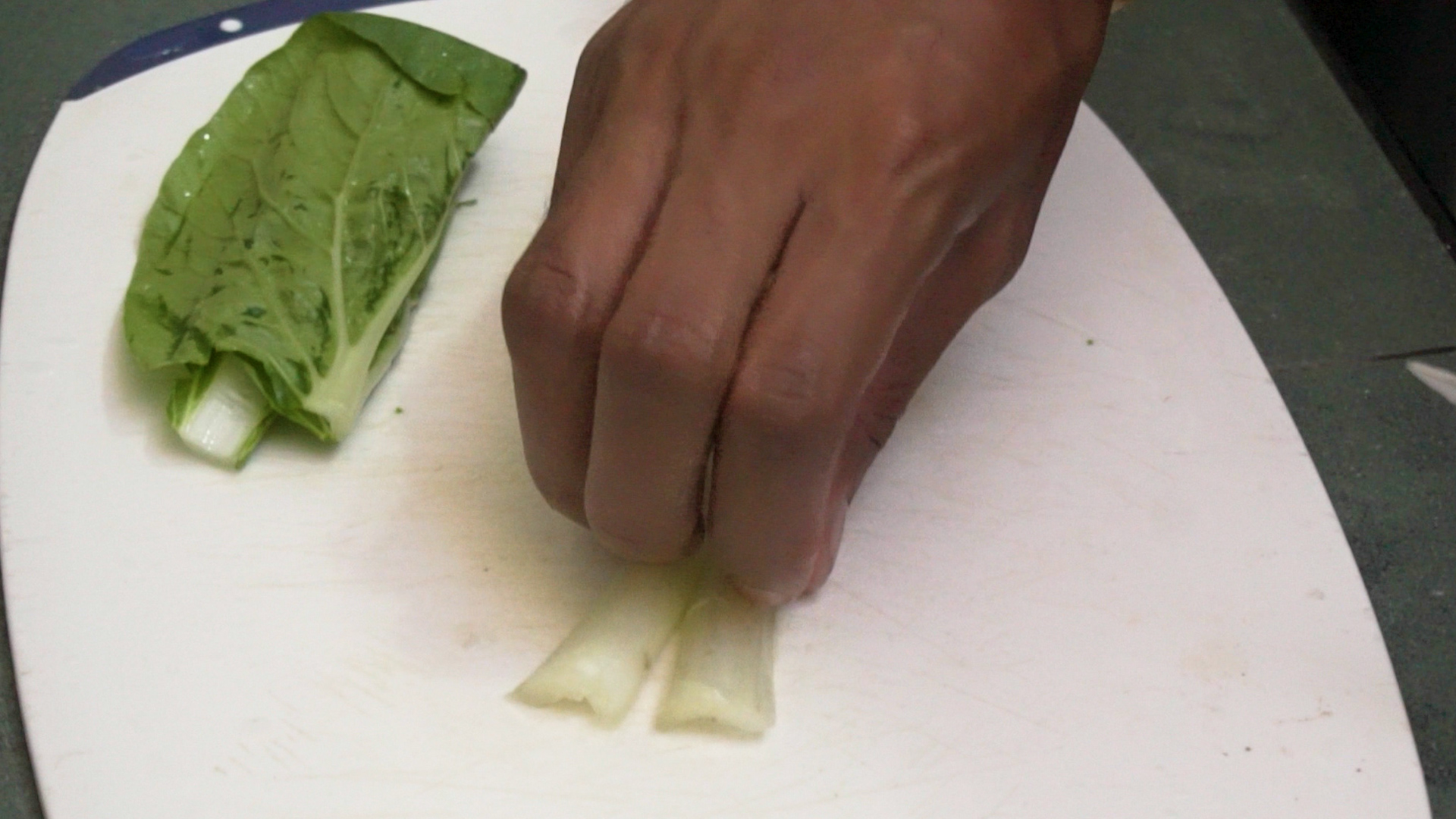
- Trim only a thin slice from the dry root end. Cut too much and the stalks will fall apart before you decide whether that is useful.
- For baby bok choy, halve the head lengthwise. For larger heads, quarter it or pull apart the stalks after trimming.
- Fan open the leaves and rinse into the base, where soil tends to camp out rent-free.
- Drain well, then pat dry or use a salad spinner. This is essential for a stir-fry: wet bok choy steams, while dry bok choy actually sizzles.
The Core Rule: Match the Cut to the Cooking Method
The stalks are thicker and crisp; the leaves are delicate and fast-cooking. For most hot dishes, separate them and add them at different times. For salads, slice both thinly. For braising, roasting, or grilling, keep the core attached so the plant stays intact.
How to Cut Bok Choy for Salads and Slaws
Raw bok choy is bright, crunchy, and much more exciting than another bowl of politely wilted lettuce. Baby bok choy is the easiest choice for salads, although mature bok choy works beautifully when sliced thinly.
Best Salad Cut: Thin Ribbons and Slivers
- Trim and wash the bok choy, then dry it thoroughly.
- Separate the leaves from the thickest stalks if using mature bok choy.
- Stack several leaves and slice crosswise into thin ribbons.
- Slice stalks crosswise into very thin half-moons, about 1/8 to 1/4 inch thick.
- Toss the stalks with the dressing first, then add the leaves just before serving.
This slaw-like cut works with apples, carrots, scallions, toasted peanuts, sesame seeds, edamame, mandarin oranges, or cooled quinoa. Try sesame-ginger, rice-vinegar, or Dijon dressing. For a heartier salad, slice stems extra thin and let them sit in the dressing for five minutes; they soften slightly but keep their snap.
How to Cut Bok Choy for Soups, Ramen, and Noodle Bowls
For soup, aim for spoon-friendly pieces that keep some character in hot broth. No one wants a giant leaf staging a chopstick takeover.
Best Soup Cut: Bite-Size Stems, Larger Leaf Pieces
For mature bok choy, separate the stalks and leaves. Slice the stalks crosswise or on a shallow diagonal into 1/2-inch pieces. Cut the leaves into 1 1/2- to 2-inch pieces. The larger leaf pieces wilt dramatically but remain easy to eat. Add the stems near the end of cooking, then add the leaves shortly afterward, usually during the final minute or two of a gentle simmer.
For pho, ramen, wonton soup, or hot pot, halve clean baby bok choy lengthwise; quarter larger heads. Keep the core attached so the leaves stay neat, and add them late enough that the stems remain tender-crisp.
How to Cut Bok Choy for Stir-fries
A stir-fry rewards prep work. Have the bok choy cut, dried, and divided before the pan gets hot.
Best Stir-fry Cut for Mature Bok Choy: Separate and Slice
- Trim, wash, and dry the bok choy.
- Pull the leaves away from the thicker stems.
- Slice the stems on a diagonal into 1/2-inch pieces. Diagonal cuts create more surface area for sauce and make chunky stems feel less bulky.
- Roughly chop the leaves into 1- to 2-inch pieces.
- Cook the stems first, then add the leaves after about 30 to 60 seconds. Toss only until the leaves wilt and the stems are crisp-tender.
This cut suits beef and bok choy, tofu, shrimp noodles, fried rice, and any “what is in the refrigerator?” dinner. Add garlic, ginger, scallions, or chile to hot oil; cook stalks first, then leaves. Finish with soy sauce, oyster sauce, black vinegar, sesame oil, or a splash of broth. Do not add too much sauce early: bok choy releases moisture as it cooks.
Best Stir-fry Cut for Baby Bok Choy: Halves, Quarters, or Separated Leaves
For a simple side dish, halve baby bok choy lengthwise and keep the core intact. For larger heads, cut them into quarters. This makes a beautiful presentation and gives you seared cut sides plus tender leaves. For a faster, more evenly mixed stir-fry, trim the rough bottom, separate the leaves, and cook them as loose pieces. That method is especially useful when the bok choy will be folded into noodles or rice.
How to Cut Bok Choy for Roasting, Grilling, Steaming, and Braising
For a composed side dish, preserve bok choy’s structure. Halve baby bok choy lengthwise through the core, or quarter larger heads; split mature bok choy into stalks or long wedges with a little base attached. These cuts work for steaming, roasting, grilling, and shallow braising. Oil and season the cut sides, then use garlic, ginger, miso, chile crisp, lemon, soy sauce, or sesame oil. Watch the leaves closely: they char quickly.
How to Cut Bok Choy for Dumplings, Spring Rolls, Fried Rice, and Fillings
For fillings, small and even beats dramatic. Separate the stems and leaves. Dice the stems into 1/4-inch pieces and finely chop the leaves. If bok choy is going into dumplings, pot stickers, steamed buns, or egg rolls, reduce its moisture first: lightly salt the chopped bok choy for several minutes, then squeeze it firmly in a clean towel or cook it briefly and cool it before mixing. This keeps the filling flavorful instead of watery.
For fried rice, chop stems and leaves small enough to blend with the rice. Add the diced stems with other vegetables, then fold in the leaves shortly before the egg or sauce. For spring rolls, cut the leaves into narrow ribbons and the stems into matchsticks so they are easy to roll and do not puncture the wrapper.
A Quick Bok Choy Cutting Cheat Sheet
- Raw salads: Thin leaf ribbons and paper-thin stem slices.
- Soups and ramen: 1/2-inch stem pieces; 1 1/2- to 2-inch leaf pieces.
- Stir-fries: 1/2-inch diagonal stem slices; rough 1- to 2-inch leaf pieces.
- Roasting, grilling, steaming, or braising: Baby bok choy halved or quartered lengthwise, core attached.
- Fried rice and fillings: Finely chopped stems and leaves, about 1/4 inch.
- Hot pot: Small heads halved or individual stalks left long enough to grab with chopsticks.
Common Bok Choy Cutting Mistakes to Avoid
- Cutting every piece alike: Stems need a smaller cut or a brief head start; leave leaves larger.
- Ignoring the base: Open the layers and rinse well. Grit is not “rustic.”
- Using wet bok choy in a wok: Water cools the pan and makes steam instead of sizzle.
- Discarding leaves: Add them late to soups, noodle bowls, sautés, and fillings.
- Over-trimming baby bok choy: Keep enough core to hold halves together.
Frequently Asked Questions
Can You Eat Bok Choy Raw?
Yes. After thorough rinsing, raw bok choy is excellent in salads and slaws. Choose tender baby bok choy or slice mature stems very thinly for the most pleasant texture.
Do You Eat the White Part of Bok Choy?
Absolutely. The pale stalks are crunchy, juicy, and edible. They simply take longer to cook than the leaves.
Can You Cut Bok Choy Ahead of Time?
Yes, but keep it dry. Store cut, fully dried bok choy in a covered container or resealable bag in the refrigerator and use it promptly. For maximum crunch, cut it the day you plan to serve it.
Final Takeaway: Let the Dish Tell You How to Cut Bok Choy
The best way to cut bok choy is not one rigid technique. Thin slices make it crisp and salad-friendly; bite-size pieces make it cooperative in soup; separated stems and leaves make stir-fries faster and more evenly cooked; intact halves make roasting and braising feel a little fancy with almost no extra effort. Clean it carefully, dry it well, respect the difference between stem and leaf, and bok choy will reward you with crunch, color, and a vegetable side that never feels boring.
Kitchen Experience: What Bok Choy Teaches You After a Few Dinners
The first useful lesson from cooking bok choy is that it does not need much help to taste good. Many vegetables demand a long roast, a heroic amount of butter, or a motivational speech before dinner. Bok choy mostly asks to be cleaned properly, cut with a little intention, and introduced to heat at the right moment. That makes it a comforting ingredient for busy nights, but it also exposes every small shortcut. Forget to rinse the base and you notice the grit immediately. Skip drying it and the wok reminds you, loudly, with a puddle.
Home cooks often discover that the most satisfying bok choy meals come from treating the stalks and leaves as partners rather than identical pieces of produce. The stalks bring the crunch. The leaves bring the tender, savory finish. When they go into a stir-fry at the same time, one of them usually loses the argument. When the stalks get a short head start, the whole dish suddenly tastes more deliberate, even if the rest of dinner is leftover rice, an egg, and whatever sauce bottle happens to be standing closest to the stove.
Salads offer a different kind of surprise. People who know bok choy only as a restaurant side dish may expect raw leaves to taste harsh or overly cabbage-like. Instead, thinly sliced bok choy has a clean, refreshing crunch that holds up far better than delicate lettuce. It is especially useful for packed lunches because it does not collapse the minute dressing appears. Pair it with sweet fruit, a sharp vinaigrette, nuts, and something chewy such as grains or noodles, and it becomes the kind of lunch that makes a sad desk feel slightly less tragic.
There is also a quiet confidence that comes from learning which cuts keep a head intact. A halved baby bok choy, seared cut-side down and finished with soy sauce and sesame oil, looks restaurant-ready without requiring tweezers or an overly dramatic plating soundtrack. In soups, those same halves feel generous and cozy. In dumpling filling, the very same vegetable becomes almost invisible after a fine chop. One bunch can behave like three different ingredients, which is a small miracle for anyone trying to avoid buying twelve specialty vegetables for one week of meals.
Perhaps the best experience is realizing that bok choy is forgiving when you pay attention. You do not need professional knife skills. A sharp knife, a clean rinse, and a plan for the stalks and leaves are enough. Make the cuts that fit the dish, taste as you go, and do not panic if a few leaves escape the board. They are not judging you. They are probably headed for a very good stir-fry.
That is why bok choy earns repeat appearances in practical kitchens. It flexes around what you have: a quick broth, a hot skillet, a half-used bag of noodles, or a bowl that needs fresh crunch. Learn the cuts once, and the vegetable stops feeling unfamiliar. It becomes dinner’s quietly dependable friend.