Converting yards to feet is one of those math skills that sounds tiny until you actually need it. Suddenly, you are standing in a hardware store, staring at rolls of carpet, garden edging, fabric, fencing, or extension cords, wondering whether “12 yards” is enough or whether you are about to create a home improvement disaster with a receipt.
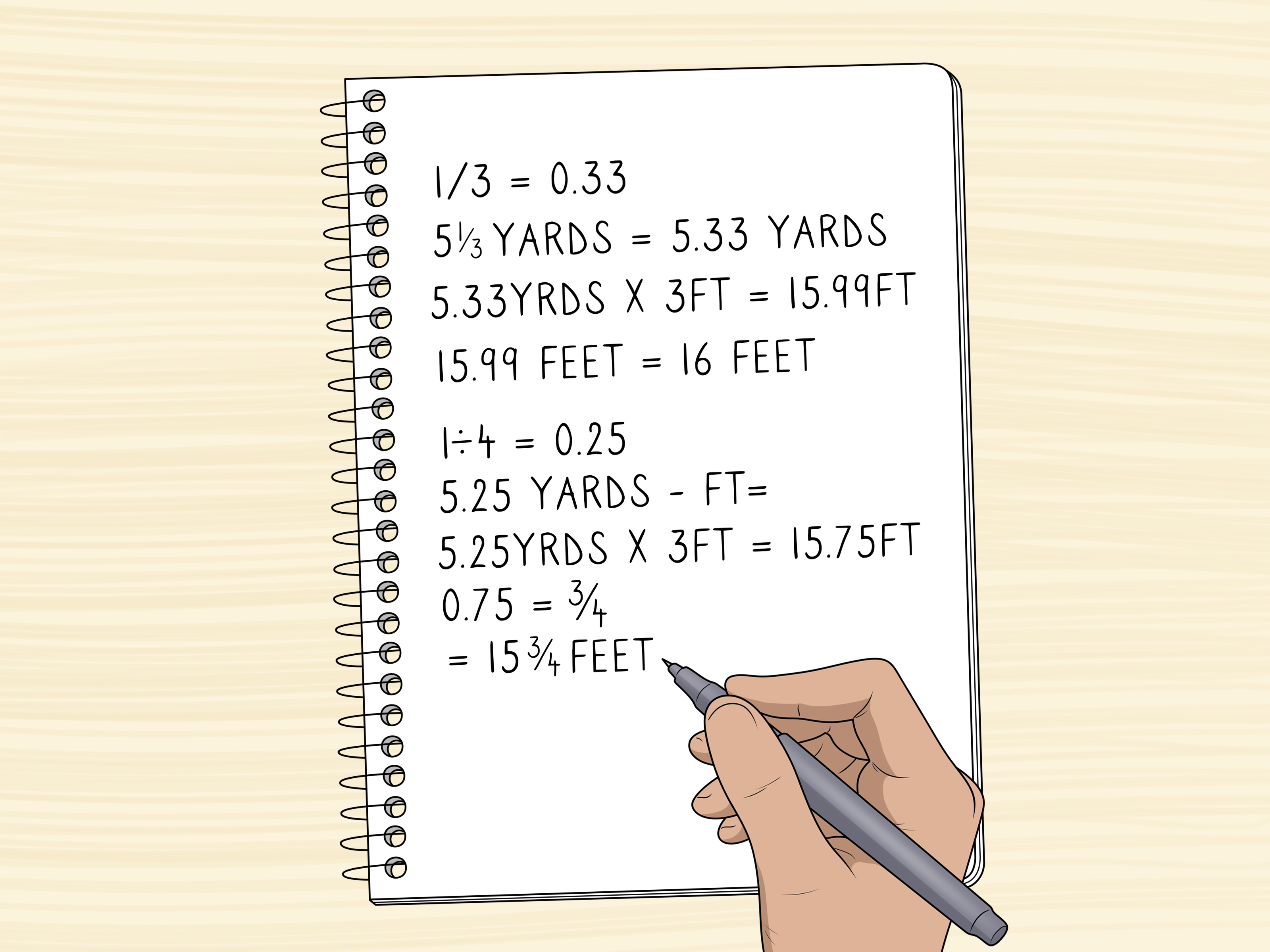
The good news? This conversion is beautifully simple. In the U.S. customary system of measurement, 1 yard equals 3 feet. That means the basic formula is:
Feet = yards × 3
That is the whole magic trick. No calculator wizardry, no math cape required. If you can multiply by 3, you can convert yards to feet. Still, knowing the formula is only the beginning. The real skill is knowing when to use it, how to avoid common mistakes, and how to apply it in everyday situations such as sports, landscaping, sewing, construction, and school assignments.
This guide breaks down how to convert yards to feet in 6 simple steps, with examples, quick-reference tips, and real-world experience to make the process stick in your brain like a measuring tape that refuses to roll back properly.
What Is a Yard?
A yard is a unit of length used in the U.S. customary and imperial measurement systems. It is commonly written as yd. In everyday life, yards are often used for medium-length measurements: football fields, fabric, lawns, driveways, landscaping materials, and walking distances that are too long for inches but too short for miles.
Think of a yard as roughly the length of a baseball bat, a long step, or the distance from the floor to a standard doorknob on some doors. It is not exact as a body-based estimate, of course, unless your body was professionally calibrated by a team of measurement scientists, which would be impressive but inconvenient.
What Is a Foot?
A foot is another unit of length in the U.S. customary system. It is commonly written as ft. One foot equals 12 inches, and three feet make one yard. Feet are used constantly in American measurements: room dimensions, human height, furniture sizes, building plans, sports fields, and signs that tell you how far away the nearest exit is when you are carrying something heavy.
The relationship between yards and feet is fixed and easy to remember:
1 yard = 3 feet
That single fact is the key to every yard-to-foot conversion.
How to Convert Yards to Feet: 6 Steps
Step 1: Write Down the Number of Yards
Start with the measurement you already have. This number may come from a problem, a product label, a sports field measurement, a fabric order, or a landscaping estimate.
For example, imagine you have:
8 yards
Do not convert anything yet. Just identify the yard value. This step seems obvious, but it helps prevent one of the most common conversion mistakes: multiplying the wrong number or mixing yards with square yards or cubic yards.
If the measurement is written as 8 yd, the “yd” is simply the abbreviation for yards. You are working with length, not area or volume.
Step 2: Remember the Conversion Factor
The conversion factor from yards to feet is:
1 yard = 3 feet
A conversion factor is just a number that lets you change one unit into another without changing the actual length. In this case, every yard contains exactly three feet. So when you convert yards to feet, you are asking, “How many groups of 3 feet are inside this many yards?”
For 8 yards, there are 8 groups of 3 feet.
Step 3: Multiply the Number of Yards by 3
Now use the formula:
Feet = yards × 3
For 8 yards:
8 × 3 = 24
So:
8 yards = 24 feet
This is the main action step. If you are moving from a larger unit to a smaller unit, you usually multiply. Since feet are smaller than yards, there will be more feet than yards. That is a helpful logic check. If you convert 8 yards and somehow get 2.67 feet, something has gone sideways, probably near the calculator buttons.
Step 4: Add the Correct Unit Label
After calculating the number, always write the unit: feet or ft. A number without a unit is like a sandwich without fillingtechnically present, but not very helpful.
Correct answer:
8 yd = 24 ft
Incorrect or incomplete answer:
8 yd = 24
In math assignments, construction estimates, recipes for DIY materials, and sports measurements, units matter. They tell the reader what the number means.
Step 5: Check Your Answer
A quick check can save you from silly mistakes. Since 1 yard equals 3 feet, the answer in feet should always be three times larger than the number of yards.
Example:
12 yards × 3 = 36 feet
Does 36 look three times larger than 12? Yes. Good.
Another quick mental trick is to break the number into smaller pieces. If you need to convert 15 yards, think:
10 yards = 30 feet
5 yards = 15 feet
30 + 15 = 45 feet
So:
15 yards = 45 feet
This method works well when you do not have a calculator nearby or when your phone battery has decided to retire early.
Step 6: Use the Conversion in a Real Situation
The final step is applying the conversion to something practical. Math becomes much easier when it stops floating around like a mystery cloud and starts helping with real tasks.
Suppose you are buying garden border material, and the package says one roll covers 10 yards. You want to know how many feet that is.
10 yards × 3 = 30 feet
So one roll covers 30 feet.
If your garden bed is 60 feet around, you would need two rolls. Look at thatsuddenly you are not just converting yards to feet; you are avoiding a second trip to the store while wearing old shoes covered in mulch.
Yards to Feet Formula
The standard formula is:
feet = yards × 3
This formula works for whole numbers, decimals, and fractions.
Example With a Whole Number
Convert 6 yards to feet:
6 × 3 = 18
6 yards = 18 feet
Example With a Decimal
Convert 2.5 yards to feet:
2.5 × 3 = 7.5
2.5 yards = 7.5 feet
Example With a Fraction
Convert 1/2 yard to feet:
1/2 × 3 = 1.5
1/2 yard = 1.5 feet
Since 1 foot equals 12 inches, 1.5 feet is also 18 inches. This is especially useful in sewing, crafting, and small home projects.
Quick Yards to Feet Conversion Chart
| Yards | Feet |
|---|---|
| 1 yd | 3 ft |
| 2 yd | 6 ft |
| 3 yd | 9 ft |
| 4 yd | 12 ft |
| 5 yd | 15 ft |
| 10 yd | 30 ft |
| 20 yd | 60 ft |
| 50 yd | 150 ft |
| 100 yd | 300 ft |
Why Do We Multiply by 3?
We multiply by 3 because a yard is made of three feet. Picture a yardstick divided into three equal sections. Each section is one foot long. So every time you add one yard, you are adding three feet.
Here is another way to see it:
1 yard = 3 feet
2 yards = 3 feet + 3 feet = 6 feet
3 yards = 3 feet + 3 feet + 3 feet = 9 feet
Multiplication is just repeated addition wearing a nicer outfit. Instead of adding 3 over and over, you multiply by 3 once.
Common Mistakes When Converting Yards to Feet
Mistake 1: Dividing Instead of Multiplying
To convert yards to feet, multiply by 3. To convert feet to yards, divide by 3. The direction matters.
Yards to feet: multiply by 3
Feet to yards: divide by 3
If you remember that feet are smaller than yards, the answer makes more sense. A smaller unit means you need more of them to cover the same distance.
Mistake 2: Confusing Feet With Inches
A foot is 12 inches, but a yard is 3 feet. These facts are related, but they are not interchangeable.
If you convert yards directly to inches, you multiply by 36 because 1 yard equals 36 inches. But if you convert yards to feet, you multiply only by 3.
Mistake 3: Mixing Up Linear, Square, and Cubic Measurements
This is a big one. A yard-to-foot conversion is a linear measurement. It measures length only.
But square yards and cubic yards are different:
1 square yard = 9 square feet
1 cubic yard = 27 cubic feet
Why? Because area uses length times width, and volume uses length times width times height. So the conversion factor changes. If you are measuring carpet, mulch, concrete, or soil, make sure you know whether the measurement is yards, square yards, or cubic yards before doing the math.
Real-World Examples of Converting Yards to Feet
Example 1: Football Field Measurements
American football fields are famously measured in yards. If a team gains 12 yards, how many feet did they gain?
12 × 3 = 36
The team gained 36 feet. That sounds longer, which is probably why announcers stick with yards. “Second and 30 feet” just does not have the same dramatic crunch.
Example 2: Buying Fabric
Fabric is often sold by the yard. If you buy 4 yards of fabric, how many feet is that?
4 × 3 = 12
You bought 12 feet of fabric. That is useful when planning curtains, table runners, costumes, or ambitious craft projects that begin with confidence and end with thread everywhere.
Example 3: Landscaping
Suppose a landscape border is 18 yards long. To convert that to feet:
18 × 3 = 54
The border is 54 feet long. This helps you compare product labels, estimate materials, and avoid buying either too little or enough edging to circle a small kingdom.
Example 4: Classroom Word Problem
A hallway is 25 yards long. How many feet long is the hallway?
25 × 3 = 75
The hallway is 75 feet long.
How to Convert Feet Back to Yards
Sometimes you need to reverse the process. To convert feet to yards, divide by 3:
yards = feet ÷ 3
Example:
45 feet ÷ 3 = 15 yards
So:
45 feet = 15 yards
This reverse conversion is useful when a project plan gives dimensions in feet, but a product is sold by the yard.
Simple Memory Tricks
Think “Yard Has Three Letters? Not Quite, But Close Enough”
The word “yard” does not have three letters, but “yd” is short and compact. A better trick is to picture a yardstick with three one-foot sections. Visual memory works better than forcing your brain to memorize lonely numbers.
Use the Bigger-to-Smaller Rule
When converting from a bigger unit to a smaller unit, multiply. Yards are bigger than feet, so multiply by 3.
Use Sports as a Shortcut
If you know football, remember that 10 yards for a first down equals 30 feet. From there, 5 yards equals 15 feet, 20 yards equals 60 feet, and so on.
Practical Experience: What Converting Yards to Feet Teaches You in Real Life
In real life, converting yards to feet is less about passing a math quiz and more about making everyday decisions without guessing wildly. The first experience many people have with this conversion happens in school, usually in a worksheet filled with cheerful numbers that pretend to be simple. Then the same skill shows up years later in a hardware store, fabric shop, backyard project, moving plan, or sports conversation, and suddenly the worksheet was not so random after all.
One of the most common experiences is buying materials. Imagine measuring a room for carpet. The room may be measured in feet, while carpet may be discussed in yards or square yards. If you understand that 1 yard equals 3 feet, you immediately have a better sense of scale. You know that a 9-foot wall is 3 yards long. A 12-foot section is 4 yards. This makes it easier to talk with contractors, compare estimates, and catch errors before they turn into expensive surprises.
Another practical example comes from landscaping. Homeowners often measure fences, garden beds, walkways, and lawn edges in feet, while some products are advertised in yards. A person planning a flower bed border might measure 45 feet around the edge and then realize that equals 15 yards. That quick conversion can help determine how many rolls of edging, fabric, or decorative material are needed. It also prevents the classic mistake of buying one package, getting halfway through the project, and having to return to the store looking like someone who lost a wrestling match with a shrub.
Sewing and crafting offer another memorable lesson. Fabric is commonly sold by the yard, but project instructions may include feet or inches. If a beginner buys 3 yards of fabric, that means they have 9 feet, or 108 inches, of length. Understanding the relationship between yards, feet, and inches helps makers plan cuts more carefully. It also reduces waste, which matters because nice fabric can be surprisingly expensive. One wrong measurement and your “simple weekend project” becomes a tiny napkin with emotional baggage.
Sports are also full of yard-to-foot conversions, especially American football. Fans often hear that a player gained 20 yards, but converting that to 60 feet gives a stronger physical sense of the distance. It helps younger students connect sports language with measurement skills. A football field becomes more than a place where people yell at referees; it becomes a giant math diagram wearing cleats.
The biggest lesson from real-world experience is that units are not decoration. They are part of the answer. Writing “24” is not as useful as writing “24 feet.” Whether you are estimating materials, measuring a room, helping with homework, or planning a DIY project, the unit tells the story. Once you get comfortable converting yards to feet, you start seeing measurement patterns everywhere. And yes, that may make you the person who casually says, “That is about 18 feet,” at a picnic. Accept your new power responsibly.
Conclusion
Converting yards to feet is simple, useful, and surprisingly practical. The entire process depends on one basic fact: 1 yard equals 3 feet. To convert yards to feet, multiply the number of yards by 3. That is it. Whether you are solving homework problems, measuring a room, buying fabric, estimating landscaping materials, or understanding sports distances, this conversion helps you move confidently between two common U.S. customary units of length.
The key is to pay attention to direction and units. Yards to feet means multiply by 3. Feet to yards means divide by 3. Linear yards are different from square yards and cubic yards, so always check what kind of measurement you are working with before you begin. Once you understand the pattern, converting yards to feet becomes quick mental math instead of a confusing chore.
Note: This article is based on standard U.S. customary measurement rules and widely accepted educational measurement references. Source links are not included in the article body as requested.