Pubic hair care should not require nerves of steel, a complicated skin-care routine, or an emergency meeting with your bathroom mirror. Yet the combination of coarse hair, delicate skin, sweat, friction, sharp blades, and enthusiastic grooming can turn a simple trim into several uncomfortable days of itching.
The first medically important fact is reassuring: pubic hair is normal, and keeping it does not make you dirty. There is no health or hygiene requirement to remove it. Grooming is a personal choice based on comfort, appearance, culture, sexual preferences, or the desire to stop a few determined hairs from escaping a swimsuit. Both the American College of Obstetricians and Gynecologists and Cleveland Clinic emphasize that leaving pubic hair natural is perfectly healthy.
When you do choose to trim, shave, wax, or otherwise remove pubic hair, technique matters. A nationally representative study of American adults who groomed their pubic hair found that about one-quarter reported a grooming-related injury. Most problems were minor, such as cuts, irritation, burns, or folliculitis, but the finding is a useful reminder that the skin down there deserves more care than a lawn being attacked by an overcaffeinated gardener.
What Pubic Hair Actually Does
Pubic hair begins growing during puberty and varies widely in color, density, texture, curl pattern, and coverage. None of these differences means that something is wrong. Some people naturally have a small patch of fine hair; others appear to be wearing winter insulation in July.
Although pubic hair is not medically essential, it can provide several practical benefits. It reduces direct skin-on-skin friction, offers a small physical barrier against irritation, and may help protect sensitive genital skin during movement and sexual activity. Removing it does not automatically improve genital health, reduce sexually transmitted infection risk, or make the area biologically cleaner.
The best grooming style, therefore, is the one your skin tolerates. A neat trim is no less hygienic than a completely smooth result, and natural hair is not a personal-care failure.
How to Clean the Pubic Area Properly
Keep the routine simple
For most people, regular bathing is enough. Wash the hair-bearing pubic mound, groin creases, upper inner thighs, and other external skin with warm water. A small amount of mild, fragrance-free cleanser can be used if it does not cause dryness or irritation.
Avoid aggressive scrubbing. Pubic skin does not need to be sanded, polished, deodorized, or persuaded to smell like tropical fruit. Scrubbing with rough washcloths, strongly scented shower gels, deodorizing sprays, or harsh exfoliants can damage the skin barrier and create burning, itching, or contact dermatitis.
Cleaning a vulva
Wash the external vulva gently with water or a mild, unscented cleanser. The vagina is the internal canal and cleans itself through normal secretions, so soaps, douches, perfumes, and cleansing products should not be inserted into it. Planned Parenthood, ACOG, and hospital vulvar-care guidance recommend gentle external washing while avoiding scented products and internal cleansing.
After bathing, rinse away cleanser and pat the area dry. Do not rub vigorously. Moisture trapped in skin folds or tight clothing can increase friction and discomfort, but attempting to make the area aggressively “sterile” usually causes more trouble than it prevents.
Cleaning a penis and scrotum
Wash the pubic mound, penis, scrotum, groin folds, and surrounding external skin gently. If you have a foreskin that retracts comfortably, pull it back, wash underneath with water and mild soap if tolerated, rinse, dry gently, and return the foreskin to its normal position. Mayo Clinic recommends regular cleaning beneath a retractable foreskin as part of routine genital hygiene.
Never force back a foreskin that does not retract easily. Pain, swelling, unusual discharge, a persistent odor, or difficulty replacing the foreskin should be evaluated by a healthcare professional.
Preparing to Groom Pubic Hair
Good preparation prevents many grooming problems. Before introducing scissors, clippers, wax, or chemistry experiments to sensitive skin, take a few basic precautions.
- Inspect the skin. Postpone grooming if you see cuts, sunburn, active eczema, painful bumps, open sores, blisters, or a spreading rash.
- Wash your hands and the area. Clean skin reduces the chance of introducing bacteria into small grooming injuries.
- Use adequate lighting. A stable mirror is more useful than hopeful guesswork.
- Clean your tools. Follow the manufacturer’s directions for cleaning electric trimmers. Rinse and dry reusable tools thoroughly.
- Never share razors. Shared blades can transfer blood, bacteria, viruses, and skin cells. Planned Parenthood specifically warns that sharing a razor used around genital lesions may transmit infection.
- Work slowly. This is personal grooming, not a timed sporting event.
How to Trim Pubic Hair Safely
Trimming is often the simplest option for people who want less bulk without the irritation associated with removing hair at skin level. It also reduces pulling, heat, and visible hair while allowing the hair to continue protecting the skin from friction.
Using an electric trimmer
- Choose a body-hair trimmer with a guard attachment.
- Begin with a longer guard. You can always shorten the hair later; persuading it to grow back immediately is more difficult.
- Trim dry hair unless the device is specifically designed for wet use.
- Pull loose skin gently taut, especially around the scrotum or outer labia.
- Move the trimmer slowly in controlled strokes.
- Keep blades away from inner genital tissue, the clitoris, the vaginal opening, the penile head, and the anus.
- Clean and dry the device after use.
Using scissors
Use small grooming scissors with rounded tips rather than pointed household scissors. Work on dry hair, trim small sections, and keep a comb or your fingers between the scissors and skin. Avoid cutting hair extremely short because sharp stubble may rub against underwear and produce a surprisingly energetic itch.
How to Shave Pubic Hair Without Regretting It
Shaving cuts hair at the skin’s surface. It is fast and inexpensive, but it can cause nicks, razor burn, folliculitis, and ingrown hairs. Coarse or curly hair is especially likely to curve back into the skin as it grows.
Step 1: Shorten long hair
If the hair is long, trim it first. Long strands clog razors and encourage repeated strokes, increasing friction and the risk of cuts.
Step 2: Soften the hair
Shave near the end of a warm shower or hold a warm, damp cloth against the area for several minutes. Warm water softens the hair and helps the blade move more comfortably.
Step 3: Apply shaving gel
Use a generous layer of fragrance-free shaving cream or gel formulated for sensitive skin. Ordinary bar soap may not provide enough lubrication and can leave skin dry.
Step 4: Map the direction of growth
Pubic hair often grows in several directions. Run your fingers lightly over the hair to identify the grain in each section. Shaving with the direction of growth may not produce the closest possible result, but it generally reduces razor bumps and irritation.
Step 5: Use a clean, sharp razor
Hold the skin gently taut and shave with light pressure using short strokes. Rinse the blade after each pass. Avoid repeatedly scraping the same spot. Dermatologists at the American Academy of Dermatology recommend wetting and softening the hair, using shaving gel, shaving with the grain, rinsing the blade frequently, and replacing disposable blades after approximately five to seven shaves.
Store the razor somewhere dry rather than leaving it in a damp shower, where moisture can encourage contamination and dull the blade.
Step 6: Rinse and calm the skin
Rinse with cool or lukewarm water, then pat dry. Apply a thin layer of fragrance-free moisturizer to ordinary external skin if needed. Avoid alcohol-heavy aftershaves, essential oils, perfume, and strong acids.
Wear loose, breathable clothing afterward. If the area feels tender, delay activities that create substantial heat or friction until the skin settles.
Waxing and Sugaring: Longer Results, Different Risks
Waxing pulls hair out from the root, so results usually last longer than shaving. Sugaring uses a sticky sugar-based paste and removes hair through a similar pulling process. Either method may produce redness, pain, irritated follicles, burns, torn skin, or ingrown hairs.
Professional waxing is generally preferable to improvising with overheated wax at home. Choose a licensed provider who uses clean equipment, wears gloves, and does not reuse applicators in a shared wax container.
Do not wax skin that is sunburned, broken, infected, or actively affected by eczema or psoriasis. Cleveland Clinic also advises avoiding waxing after recent isotretinoin use because the medication can make skin vulnerable to tearing and scarring.
After waxing, keep the area clean, wear loose clothing, and avoid scratching. Mild temporary redness is common. Severe pain, blistering, drainage, or worsening swelling is not normal aftercare and deserves medical attention.
Can You Use Hair-Removal Cream?
Depilatory creams break down keratin, the protein structure in hair. They can remove hair without a blade, but their active chemicals may cause serious irritation or chemical burns.
Use only a product whose label specifically allows application to the external bikini or pubic area. A cream designed for legs should never be transferred to genital skin merely because both locations contain hair. Do not apply depilatory cream to the vulva’s inner tissue, vaginal opening, penis, scrotum, anus, broken skin, or any mucous membrane.
Complete a patch test, follow the exact time limit, and rinse the product off thoroughly. Leaving the cream on longer does not politely convince stubborn hair to cooperate; it increases the chance of a burn. Cleveland Clinic notes that incorrectly used depilatories can cause first-, second-, or even third-degree chemical burns.
If burning begins during application, rinse immediately with plenty of cool water. Seek medical care for blistering, severe pain, open skin, or persistent redness.
Laser Hair Removal and Electrolysis
Professional laser hair removal can reduce hair growth over multiple sessions. Because the laser targets pigment, results and risks vary with hair color, skin tone, equipment, and operator training. Burns, pigment changes, blistering, and incomplete removal are possible.
Choose a board-certified dermatologist or an appropriately licensed, experienced medical provider, particularly if you have dark skin, a history of scarring, or recurring pigment changes. Ask exactly which external areas will be treated. At-home laser devices generally should not be used directly on genital tissue; some are designed only for the bikini line. Cleveland Clinic specifically distinguishes the external bikini line from the genital area when discussing home devices.
Electrolysis treats individual follicles and may offer permanent removal, but it requires multiple sessions. Poor technique can result in infection, scarring, or pigment changes, so provider qualifications matter.
Preventing Razor Bumps and Ingrown Pubic Hairs
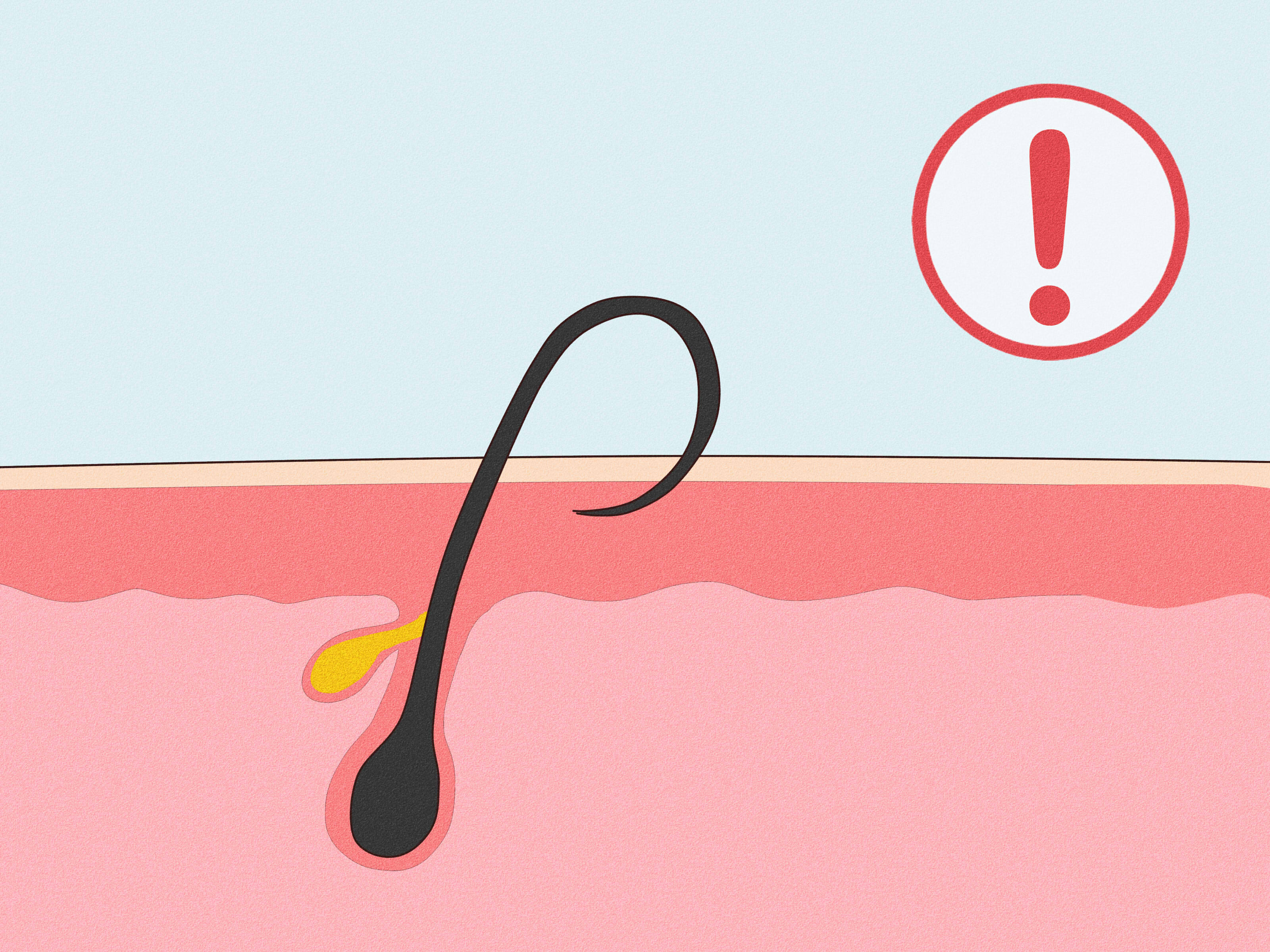
An ingrown hair develops when a cut or removed hair grows sideways or curves back into the skin. It may create an itchy or painful bump that resembles a pimple. People with thick, tightly curled hair tend to experience ingrown hairs more often, although anyone can develop them.
To reduce the risk:
- Trim instead of shaving completely smooth.
- Soften the hair before shaving.
- Use lubricating shaving gel.
- Shave with the grain.
- Use minimal pressure and fewer passes.
- Avoid stretching the skin excessively while shaving.
- Wear loose clothing after grooming.
- Give irritated skin time to heal before removing more hair.
If an ingrown hair appears, stop shaving or waxing the area temporarily. Apply a warm compress and avoid squeezing, digging, or opening the bump with a needle. Attempting bathroom surgery on a tiny hair can turn a manageable bump into an infection or scar. Mayo Clinic recommends pausing hair removal while troublesome ingrown hairs heal.
What to Do About Cuts, Razor Burn, and Folliculitis
Small cuts
Rinse a minor cut with clean water and apply gentle pressure using clean gauze or tissue until bleeding stops. Protect it from friction and avoid shaving over it. Seek medical care if a cut is deep, gaping, contaminated, extremely painful, or continues bleeding.
Razor burn
Stop shaving and cool the skin with a damp compress. Use a plain, fragrance-free moisturizer on external skin. Avoid perfume, tight clothing, hot baths, and additional exfoliation until the irritation improves.
Folliculitis
Folliculitis causes inflamed bumps around hair follicles and may result from bacteria, friction, shaving, or waxing. Mild cases sometimes improve with warm compresses, loose clothing, and a pause in grooming. ACOG advises medical evaluation when genital folliculitis bumps persist or become larger.
When Pubic Itching Is Not a Grooming Problem
Not every itchy bump is an ingrown hair. Genital irritation can also result from contact dermatitis, fungal infections, eczema, hidradenitis suppurativa, sexually transmitted infections, genital herpes, warts, molluscum contagiosum, or pubic lice.
Pubic lice may cause intense itching and visible eggs attached to coarse hair. Shaving, waxing, or sugaring does not reliably eliminate an infestation. The CDC recommends an approved lice treatment used according to its label, along with cleaning recently used clothing and bedding and evaluating sexual partners.
See a healthcare professional if you develop:
- Spreading redness, heat, or swelling
- Pus, drainage, or a foul-smelling wound
- Fever or worsening pain
- Clusters of blisters, ulcers, or unexplained sores
- Genital warts or a new persistent lump
- Pain or burning during urination
- Unusual vaginal or penile discharge
- Deep, recurring groin nodules or scarring
- A rash that does not improve after grooming is stopped
Common Pubic Hair Grooming Myths
“Shaving makes hair grow back thicker.”
Shaving does not change the follicle, growth rate, or actual thickness of the hair. Newly cut hair has a blunt edge, so early regrowth may feel coarser and look darker.
“Removing pubic hair prevents sexually transmitted infections.”
Hair removal is not an STI-prevention method. Tiny cuts and irritated skin may actually create additional opportunities for discomfort or infection. Condoms, appropriate screening, vaccination, and honest communication with partners are far more relevant.
“A strong scent means the area is cleaner.”
Perfumed sprays and heavily scented cleansers mask odor temporarily while potentially irritating sensitive skin. Healthy genitals have a natural scent. A sudden strong odor accompanied by discharge, pain, itching, or sores should be medically evaluated rather than marinated in perfume.
“Completely smooth is the most hygienic style.”
There is no medically superior pubic hairstyle. Natural, trimmed, and removed hair can all be hygienic when the skin is cleaned gently and grooming injuries are avoided.
Real-World Grooming Experiences and Practical Lessons
The following examples are composite scenarios based on common grooming problems rather than accounts from identifiable individuals. They illustrate why small changes in technique often matter more than buying an impressive collection of products.
The hurried dry shave
A common experience begins five minutes before someone needs to leave home. They notice visible bikini-line hair, grab a dry razor, and make several fast passes against the grain. The area looks smooth for the afternoon, so the mission appears successful. By the next morning, however, the skin is red, prickly, and furious about the entire arrangement.
The lesson is not that shaving is always bad. The problem is the combination of dry hair, inadequate lubrication, excessive pressure, and repeated strokes. Trimming the visible hair would probably have achieved the immediate cosmetic goal with far less irritation. When a close shave is genuinely desired, warm water, shaving gel, a sharp blade, and slower strokes make an enormous difference.
The closest-shave competition
Another familiar situation involves chasing perfect smoothness. The person shaves with the grain, feels a little stubble, then shaves sideways. Still dissatisfied, they stretch the skin tightly and shave against the grain until the area feels polished. Two days later, several hairs are trapped beneath the skin.
This experience demonstrates the trade-off between closeness and irritation. A technically imperfect shave that leaves barely detectable stubble is often kinder to the skin. For someone who repeatedly develops ingrown hairs, trimming with a short guard may provide a cleaner-looking and more comfortable result than shaving at skin level.
The first professional wax
First-time waxing experiences vary dramatically. One person may have temporary redness and enjoy several weeks with little regrowth. Another may experience significant discomfort, inflamed follicles, or itching as hair returns. Skin sensitivity, hair thickness, provider technique, aftercare, and medication use all affect the outcome.
The useful lesson is to treat waxing like a skin procedure rather than a casual beauty experiment. Research the provider, mention skin conditions and medications, arrive with healthy skin, and follow aftercare instructions. Scheduling a first wax immediately before a beach vacation, long bicycle ride, or romantic weekend leaves no room for discovering that your skin strongly objects to the plan.
The mysterious recurring “pimples”
Some people assume every groin bump is caused by shaving. They repeatedly squeeze the bumps, apply harsh acne products, and continue removing hair. When the lumps become deeper, recur in the same locations, drain, or leave scars, the issue may be more than ordinary folliculitis. Conditions such as hidradenitis suppurativa often affect friction-prone areas, including the groin, and require professional care.
The practical lesson is to notice patterns. A single superficial bump after shaving may be an ingrown hair. Repeated painful nodules, tunnels beneath the skin, persistent wounds, or significant scarring deserve a dermatologist’s evaluation.
The routine that finally works
For many people, the most successful routine is also the least dramatic: wash gently, dry thoroughly, trim every few weeks, and leave the skin alone between sessions. Someone who prefers shaving might limit it to the outer bikini line rather than removing every hair. Another person may use professional laser treatment to reduce recurring razor bumps. The “best” experience is not defined by maximum hair removal; it is defined by healthy, comfortable skin and a result that suits the individual.
Pubic grooming becomes easier when you stop treating natural hair as an enemy. Choose the least aggressive method that achieves your goal, change one part of your routine at a time, and pay attention to how your skin responds. Your bathroom does not need to become a dermatology clinic, a spa, and an extreme-sports arena all at once.
Conclusion
Healthy pubic hair care is refreshingly uncomplicated. Clean the external genital area gently, avoid harsh fragrances and internal cleansing, and remember that removing pubic hair is optional. Trimming usually creates less skin trauma than close shaving, while waxing, chemical depilatories, laser treatments, and electrolysis each require their own safety precautions.
Whatever method you choose, clean tools, good lighting, unhurried technique, and sensible aftercare can prevent many cuts, burns, and ingrown hairs. When pain, infection, unusual sores, persistent lumps, discharge, or severe irritation appears, put down the razor and contact a healthcare professional. Sometimes the smartest grooming move is knowing when not to groom.