Some lighting fixtures merely brighten a room. Others arrive with a backstory, a point of view, and enough visual charisma to make your ceiling feel underdressed. Nendo’s Basket Lamp belongs firmly in the second category.
Designed in collaboration with Kyoto wire-weaving specialist Kanaami-Tsuji, the Basket Lamp transforms the visual language of traditional Japanese cooking tools into a contemporary pendant light. It is delicate without being fussy, sculptural without shouting, and proof that a humble kitchen utensil can apparently have a very successful second career in interior design.
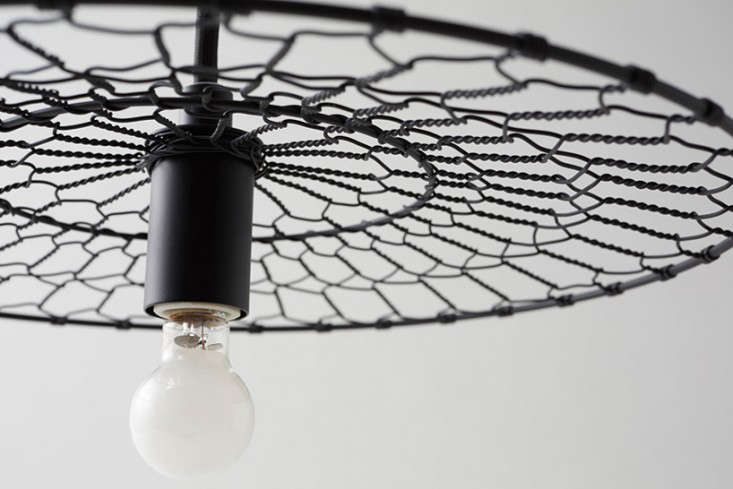
At first glance, the fixture looks almost impossibly light: a web of handwoven metal wire suspended in space. Switch it on, however, and the lamp becomes more than an object. Its mesh shade throws intricate shadows across nearby walls and ceilings, making the surrounding room part of the design. It is lighting with excellent manners; it does not demand the spotlight, but somehow ends up stealing it anyway.
More Than a Basket Turned Upside Down
The phrase “basket lamp” may bring to mind a beachy rattan pendant, a DIY project involving a thrift-store find, or a very optimistic homeowner holding a drill. Nendo’s Basket Lamp is something different. It is not a woven basket repurposed as a lampshade. It is a carefully considered reinterpretation of kana-ami, the intricate wire netting traditionally used in Japanese cooking.
That distinction matters. The Basket Lamp does not borrow tradition simply to make a room look worldly or vaguely “artisan-inspired.” Instead, it takes a familiar material technique and gives it a new function while preserving the qualities that make the original craft meaningful: precision, handwork, geometry, and usefulness.
The result is a pendant light that feels simultaneously ancient and futuristic. It would not look out of place above a restrained oak dining table, inside a minimalist apartment, or in a gallery where everyone is pretending not to stare at it. Yet its roots remain firmly tied to the handwoven tools used in Kyoto cuisine.
The Kyoto Craft Behind the Basket Lamp
The Basket Lamp draws inspiration from Japanese wire-net cooking utensils associated with Kyoto’s culinary traditions. These finely woven metal nets have long been used for tasks such as lifting delicate foods, including tofu, from hot broth without turning dinner into an unfortunate kitchen tragedy. The technique involves twisting and knotting wire into strong but flexible mesh patterns that can support food while allowing water to pass through.
Traditional wirework may sound practical rather than poetic, but that is exactly the point. Many of the most enduring design ideas begin with ordinary tools. A ladle, sieve, basket, tray, or kettle can become a source of beauty once someone pauses long enough to notice the intelligence already built into it.
Kanaami-Tsuji, the Kyoto-based craft company involved in the project, brought the specialist handwoven wire technique to the collaboration. Nendo, led by designer Oki Sato, brought a contemporary design lens that asked a deceptively simple question: what happens when this useful woven mesh is allowed to become light?
The answer is not a nostalgic replica. It is a modern pendant lamp that respects the original craft while allowing it to function in an entirely new setting. Instead of holding tofu above steaming broth, the woven form now holds light above a table, hallway, kitchen island, or quiet reading nook. Frankly, it has upgraded from dinner duty to ceiling celebrity.
How Nendo Turns Craft Into Contemporary Design
Nendo is known for taking ordinary ideas and nudging them just far enough to make people see them differently. The Tokyo-based design studio, founded in 2002, works across product design, interiors, furniture, graphics, and installations. Its projects often feel restrained at first, but the closer you look, the more likely you are to notice a clever shift in scale, material, function, or perspective.
That approach is especially visible in the Basket Lamp. The designers did not add decorative flourishes to the wire mesh. They let the existing craft pattern do the visual heavy lifting. The open woven structure becomes the shade, the ornament, the texture, and the source of shadow all at once.
The lamp’s metal mesh is finished in powder-coated black or white, helping its silhouette stand out while allowing the handwoven geometry to remain the main event. The finish gives the pendant a clean, contemporary surface, but the irregularity and complexity of the woven wire keep it from feeling sterile.
This balance is one of the Basket Lamp’s strengths. It is modern, but it is not cold. It is handmade, but it is not rustic. It is decorative, but it still earns its keep as a light fixture. In design terms, that is a rare triple threat.
Why the Shadows Are Part of the Design
Most lampshades are designed to control light. The Basket Lamp does more: it choreographs it.
Because the shade is made from an open wire mesh, light escapes through the woven pattern and projects a shifting network of lines onto nearby surfaces. The effect has been compared to a spiderweb, but it is softer and more elegant than that description suggests. Think less “abandoned attic” and more “quietly dramatic dinner party.”
During the day, the pendant reads as an airy sculptural object. At night, it develops a second personality. The lamp’s form expands visually through the shadows it creates, giving a room texture without requiring wallpaper, oversized artwork, or a single aggressively patterned throw pillow.
This is why the Basket Lamp works best where its shadows can breathe. A crowded ceiling, a wall covered in busy art, or a room packed with visual noise may compete with the fixture. In a calmer space, however, the lamp becomes a subtle source of movement and atmosphere.
Where the Basket Lamp Works Best
Above a Dining Table
A dining table is arguably the Basket Lamp’s natural habitat. It creates an intimate pool of light while giving guests something interesting to look at between bites. Its open construction keeps the fixture visually light, which is helpful in smaller dining rooms where a bulky chandelier might feel like it is preparing to negotiate a hostage situation.
For a dining table, the bottom of a pendant is often positioned roughly 30 to 36 inches above the tabletop, then adjusted for ceiling height, the scale of the fixture, and sightlines across the room. The goal is simple: the lamp should feel present without blocking anyone’s face, centerpiece, or dramatic attempt to make eye contact.
Over a Kitchen Island
The Basket Lamp also makes sense in a kitchen, especially one that combines modern cabinetry with natural wood, stone, or handmade ceramics. The design’s roots in Kyoto cooking utensils create a quiet connection to food preparation without becoming literal or themed. No one needs a light fixture shaped like a giant whisk. We have standards.
Because the open wire mesh does not diffuse light like an opaque fabric shade, it is best paired with layered kitchen lighting. Recessed ceiling lights, under-cabinet lights, or other task lights should handle chopping, measuring, and locating the garlic that rolled under the fridge. The Basket Lamp can then provide visual warmth and ambient character.
In an Entryway or Hall
In a hallway or entry, the lamp acts like a small piece of suspended art. It can create a memorable first impression without taking up floor space, which is a blessing in homes where every square foot already has a job description.
For a narrow entryway, choose a scale that allows clear movement underneath. The lamp should feel like a welcoming gesture, not an obstacle course. A high ceiling can make the Basket Lamp especially compelling because the long drop gives the woven form room to float.
In a Bedroom or Reading Corner
While the Basket Lamp has enough presence for a public room, it can also bring quiet drama to a bedroom or reading corner. Hung beside a bed instead of using a traditional table lamp, it frees up nightstand space and creates a softer, more intentional mood. Pair it with warm bulbs and a dimmer, and suddenly the room feels less like a place where laundry accumulates and more like a boutique hotel with better snacks.
Choosing Between Black and White
The Basket Lamp’s black and white finishes may sound like a small detail, but each creates a different relationship with the room.
A black Basket Lamp feels graphic and architectural. It creates a stronger silhouette against pale ceilings and walls, making the wire pattern more noticeable even when the light is off. It works especially well with dark-framed windows, black hardware, charcoal cabinetry, walnut furniture, or modern interiors that need a precise visual anchor.
A white Basket Lamp feels quieter and more cloudlike. Against a white ceiling, it can seem to hover rather than dominate. This version suits Scandinavian-inspired rooms, soft neutral palettes, pale woods, plaster walls, and spaces where texture matters more than contrast.
Neither choice is automatically better. Black is the bolder punctuation mark. White is the whisper that somehow still gets everyone’s attention.
How to Style a Nendo Basket Lamp Without Overdoing It
The Basket Lamp has enough visual complexity to stand on its own. That means the surrounding room does not need to compete with it. The best styling approach is usually one of contrast and restraint.
Pair it with materials that have their own honest texture: oak, ash, travertine, linen, matte ceramic, plaster, brushed metal, or handmade tile. These surfaces support the lamp’s craft-based story without trying to imitate it.
For a modern dining room, try a black Basket Lamp above a solid wood table with simple upholstered chairs. Add a ceramic vessel, a linen runner, and perhaps one branch that looks like it was casually placed there by someone who definitely did not spend 20 minutes arranging it.
For a softer kitchen, use the white version above a light wood island with off-white cabinetry and muted stone counters. The wirework adds detail without forcing the space toward a full-on industrial look.
Avoid pairing the fixture with too many other woven elements in the same sightline. One woven pendant is refined. Four woven pendants, two rattan stools, a wicker mirror, and a basket wall can make a room feel like it is preparing for a very stylish picnic.
Practical Lighting Considerations
As beautiful as the Basket Lamp is, it should be chosen as part of a complete lighting plan rather than as the sole source of illumination. Open pendant shades can create attractive patterns, but they may not provide the broad, even task lighting needed for cooking, working, or reading fine print on a recipe that claims it takes “just 15 minutes.”
Dimmable bulbs and a compatible dimmer switch are especially valuable with a sculptural pendant. They allow the lamp to shift from practical brightness during meals or prep work to softer ambient light later in the evening. Layered lighting, including task, accent, and ambient sources, generally gives a room more flexibility than a single overhead fixture.
Maintenance is another consideration. Fine wirework can collect dust more easily than a smooth glass shade. Turn off the fixture and allow it to cool before cleaning. Use a soft brush, microfiber cloth, or gentle vacuum attachment rather than spraying cleaner directly onto the fixture. For complicated electrical work, high ceilings, or heavy fixtures, a qualified electrician or lighting professional is the sensible choice. Ceiling acrobatics are rarely worth the story afterward.
What the Basket Lamp Says About Modern Craft
The Basket Lamp is a useful reminder that traditional craft does not need to be frozen in time to be respected. A craft can remain meaningful when it enters a new context, especially when the new design highlights the skill, material knowledge, and visual intelligence already present in the original process.
Japanese basketry and woven craft traditions have long been recognized not only for utility but also for artistic sophistication. Museums have exhibited Japanese basket forms as works that move beyond the category of everyday craft, celebrating the structural complexity and expressive potential of handwoven materials.
Nendo’s Basket Lamp does not pretend to be a historical object. It is clearly contemporary. But it makes tradition visible in a new way, allowing a material language once associated with the kitchen to become part of modern domestic life.
That is what makes the design more interesting than a trend-driven pendant light. It does not rely on a fashionable color, a novelty silhouette, or a viral-ready gimmick. It relies on a simple but powerful idea: craftsmanship deserves new uses, not just glass cases and polite admiration.
Conclusion: A Light Fixture With a Longer Memory
Nendo’s Basket Lamp is a thoughtful example of contemporary lighting design rooted in traditional craftsmanship. Its handwoven wire mesh references Kyoto cooking utensils, yet its restrained form fits naturally into modern interiors. The lamp does not simply illuminate a room; it brings depth, pattern, and a sense of quiet theater through its intricate shadows.
For homeowners and designers who want more than another generic pendant, the Basket Lamp offers something rare: a fixture with both visual impact and cultural substance. It feels handmade without becoming nostalgic, minimalist without becoming bland, and artistic without forgetting that its job is still to make the room less dark.
In other words, it is proof that great design can come from looking closely at the objects we already have around us. Sometimes the next big idea is not hiding in a futuristic laboratory. Sometimes it is sitting in a kitchen, holding tofu.
Living With the Basket Lamp: The Experience of Everyday Rituals
Imagine walking into a dining room at the end of a long day. The table may still hold a stack of mail, a laptop, and one coffee mug that has been suspiciously parked there since morning. Then the Basket Lamp comes on. The room changes before anything else does. The woven wire begins to cast its soft pattern across the ceiling, the table gains a pool of warm light, and suddenly even the unopened utility bill looks slightly more intentional.
That is the quiet pleasure of a sculptural pendant. It gives routine spaces a sense of occasion. A meal does not have to be elaborate for the setting to feel special. Pasta in a bowl, a few vegetables on a cutting board, and a glass of something cold can feel like a proper evening when the lighting creates a little ceremony around the table.
In a kitchen, the Basket Lamp offers a different kind of experience. During the daytime, it reads almost like a line drawing floating above the island. Its mesh construction keeps the room visually open, which is especially helpful in compact spaces where solid shades can feel bulky. In the evening, it becomes more theatrical. The wire pattern softens the surrounding surfaces and makes a practical room feel less like a workstation and more like the social center of the home.
It also changes with the seasons. In bright summer months, the pendant can disappear gently into a pale room, becoming texture rather than a focal point. In darker months, when sunset seems to arrive before anyone has decided what to cook, the lamp becomes more expressive. Its shadows grow more visible, and the room feels warmer without requiring more furniture, more décor, or another blanket that will eventually migrate to the sofa and never return.
Guests notice the Basket Lamp, but not always immediately. At first, they may see a beautiful pendant light. A few minutes later, they notice the wire pattern. Then they look at the shadows. Eventually, someone asks where it came from, and the conversation shifts from “Where did you buy that?” to “How was that made?” That is a small but meaningful difference. The object encourages curiosity.
For people who enjoy interiors that reveal themselves slowly, this is part of the appeal. The Basket Lamp does not announce itself with oversized scale or sparkling crystals. It rewards attention. From one angle, it appears graphic and modern. From another, the handwoven construction becomes more visible. At night, its shadow becomes a separate layer of design. It is a fixture that changes depending on where you stand, what time it is, and how much ambient light surrounds it.
There is also a deeper satisfaction in choosing an object with a visible connection to craft. Modern homes can sometimes become collections of smooth, anonymous surfaces: flat cabinetry, polished counters, streamlined furniture, and screens glowing from every direction. The Basket Lamp interrupts that smoothness with evidence of the hand. Its woven pattern reminds the eye that making something well can involve repetition, patience, material knowledge, and a person who understands when one twist of wire is not quite the same as another.
In that sense, the experience of the Basket Lamp is not only visual. It is emotional. It makes a room feel considered without making it feel precious. It suggests that everyday objects can carry history, skill, and imagination into ordinary moments. Breakfast at the island, homework at the table, late-night tea, weekend cooking, or a dinner party that runs longer than planned all become small opportunities to notice how light changes a space.
That may be the best kind of design experience: one that feels quietly useful every day, then occasionally makes you pause and think, “Well, that is much nicer than a basic ceiling light had any right to be.”