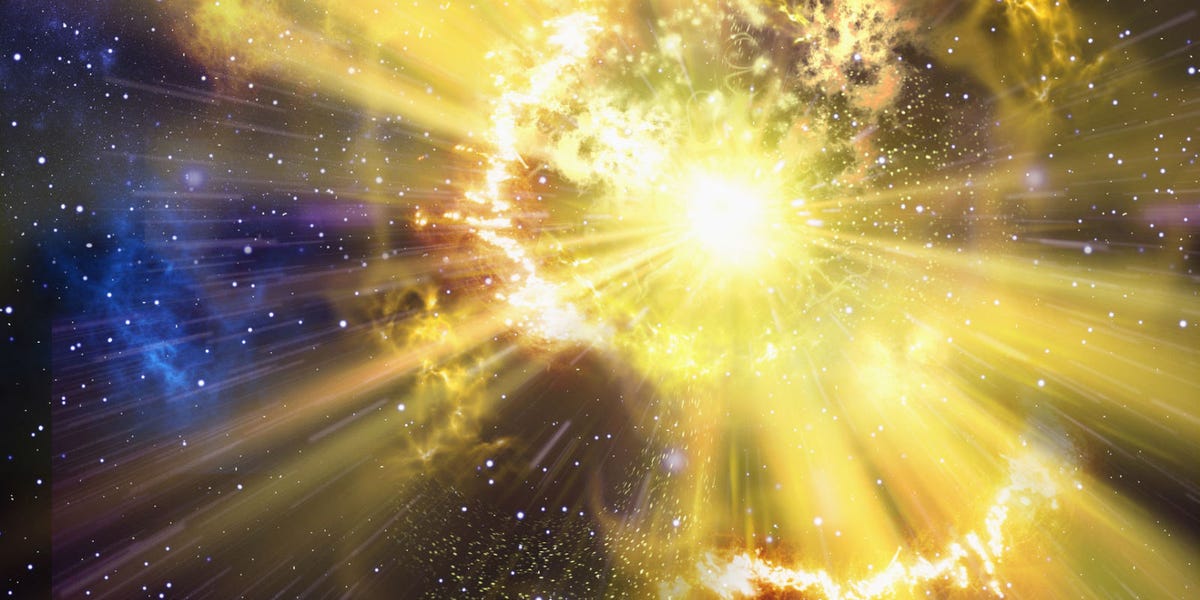
If the universe had a suggestion box, humanity might submit one tiny request: “Please keep exploding stars at a polite distance.” Supernovae are among the most powerful events in the cosmos. They forge elements, seed galaxies with the raw ingredients of planets, and create some of the most beautiful nebulae we have ever photographed. They are also, scientifically speaking, the universe’s least subtle fireworks.
So, how close would a supernova have to be to kill us all? The honest answer is not a single number carved into a cosmic warning label. It depends on the type of supernova, the energy it releases, the direction of any high-energy radiation, the surrounding gas around the dying star, and what we mean by “kill us all.” Are we talking about instant destruction, long-term ecological collapse, mass extinction, or a very bad century with terrible crop yields and sunscreen sales through the roof?
Still, scientists have useful estimates. A supernova within roughly 25 to 50 light-years could be a serious threat to Earth’s biosphere. Some newer research suggests that rare, X-ray-bright supernovae could damage an Earth-like atmosphere from as far away as 100 to 160 light-years. Fortunately, there is no known supernova candidate close enough to pose an immediate danger. In other words, the sky is not falling. It is just occasionally exploding somewhere very, very far away.
What Is a Supernova?
A supernova is the explosive death of a star. It happens when a star reaches a catastrophic breaking point and releases an enormous amount of energy. For a brief time, a single supernova can shine as brightly as an entire galaxy. That is not “turned the porch light on” bright. That is “the universe forgot to install a dimmer switch” bright.
Core-Collapse Supernovae
One major type is the core-collapse supernova. This occurs when a massive star, usually at least eight times the mass of the Sun, runs out of nuclear fuel. For most of its life, the star balances two forces: gravity pulling inward and fusion pushing outward. When fusion can no longer support the star’s core, gravity wins. The core collapses, rebounds, and sends a shock wave ripping through the star. The outer layers explode into space, while the core may become a neutron star or black hole.
Type Ia Supernovae
Another important type is the Type Ia supernova. This usually involves a white dwarf, the dense leftover core of a dead star, in a binary system. If the white dwarf gains too much mass from a companion star or merges with another white dwarf, it can ignite runaway nuclear fusion and blow itself apart. Type Ia supernovae are especially useful to astronomers because their brightness can help measure cosmic distances.
Both types are spectacular. Both can be dangerous if close enough. And both are thankfully rare in our immediate stellar neighborhood.
The Short Answer: The Supernova Danger Zone
For a typical supernova, the traditional danger zone is often placed around 25 to 50 light-years from Earth. At that distance, high-energy radiation could damage the ozone layer, allowing more harmful ultraviolet radiation from the Sun to reach the surface. That would not necessarily vaporize people in movie-trailer fashion, but it could disrupt ecosystems, agriculture, and marine food chains.
For rare supernovae that produce intense, long-lasting X-rays after the explosion, the danger zone may extend farther. Studies using observations from NASA’s Chandra X-ray Observatory and other telescopes suggest some supernovae could expose Earth-like planets to damaging radiation at distances over 100 light-years, with the outer concern zone reaching about 160 light-years in extreme cases.
So the practical answer is this: a supernova probably needs to occur within about 50 light-years to be a major direct threat under ordinary assumptions. Under more severe X-ray-rich conditions, the “serious atmospheric danger” range might stretch toward 100 to 160 light-years. To wipe out humanity quickly and completely, it would likely need to be much closer than thatperhaps within a few to a few dozen light-yearsbecause Earth’s atmosphere and magnetic field provide some protection against immediate radiation.
Why Distance Matters So Much
Space is big. Annoyingly big. Heroically big. The energy from an explosion spreads out in all directions, and intensity drops rapidly with distance. Move twice as far away, and the radiation is spread over four times the area. Move ten times farther away, and the intensity drops by a factor of one hundred.
This is why a supernova thousands of light-years away can be a dazzling astronomical event without being a biological disaster. It may become visible in the night sky, even during the day in famous historical cases, but the dangerous radiation is diluted by distance.
However, “diluted” does not mean harmless at every range. A nearby supernova could still deliver gamma rays, X-rays, charged particles, and cosmic rays. The first flash might arrive quickly. Later waves of particles could arrive over hundreds or thousands of years, depending on magnetic fields and interstellar conditions. The result would be less like one lightning strike and more like the planet being enrolled in a cosmic stress test without signing the consent form.
The Real Killer: Ozone Layer Damage
When people imagine a nearby supernova, they often picture Earth being roasted like a marshmallow held too close to a campfire. The more realistic danger is sneakier: atmospheric chemistry.
Earth’s ozone layer sits in the stratosphere and blocks much of the Sun’s harmful ultraviolet radiation. If high-energy radiation from a nearby supernova strikes the atmosphere, it can trigger chemical reactions that reduce ozone. With less ozone, more UV radiation reaches the ground and ocean surface.
That matters because UV radiation can damage DNA, harm eyesight, increase skin cancer risk, reduce crop yields, and hurt tiny marine organisms such as plankton. Plankton may not look dramatic on a movie poster, but they are foundational to ocean food webs. Damage them badly enough, and the effects can cascade upward through fish, birds, mammals, and eventually human food systems.
In this scenario, a supernova does not need to crack Earth like an egg. It only needs to weaken the systems that make Earth comfortable for complex life. Nature is tough, but it is also connected. Pull one thread hard enough, and the whole sweater starts looking nervous.
What Would Happen at Different Distances?
Within a Few Light-Years: Catastrophic
A supernova within a few light-years would be disastrous. The radiation dose could be severe, and the blast could expose Earth to extreme levels of high-energy particles. Fortunately, no star close enough to do this is expected to explode. Our nearest stellar neighbors are not massive supernova candidates.
About 10 to 25 Light-Years: Extremely Dangerous
At this range, a supernova could plausibly cause major atmospheric damage, severe ozone depletion, and widespread biological stress. It might not sterilize the planet, but it could trigger mass extinction conditions. Humans would face increased radiation exposure, food-chain disruption, crop failures, climate-related side effects, and long-term ecological instability.
About 25 to 50 Light-Years: Serious Biosphere Threat
This is the range most often discussed as the classic supernova danger zone. A supernova here could damage the ozone layer enough to increase UV radiation at the surface. The danger would depend heavily on the supernova type, energy output, and surrounding gas. The worst effects might not be immediate; they could unfold over years, decades, or longer.
About 50 to 160 Light-Years: Usually Safer, But Not Always
Beyond 50 light-years, a typical supernova becomes less likely to cause severe damage. However, newer research suggests that some X-ray-bright supernovae could still harm an Earth-like atmosphere from greater distances. These events occur when the supernova blast wave crashes into dense material around the star, producing intense X-rays that can last for years or decades.
Hundreds of Light-Years Away: Spectacular, Not Apocalyptic
At hundreds of light-years, a supernova would be a breathtaking sight but probably not a civilization-ending event. It might shine brightly in the sky, affect some satellites or scientific instruments, and excite astronomers so much they forget to sleep. But Earth’s biosphere would likely be safe from catastrophic radiation effects.
Could Betelgeuse Kill Us?
Betelgeuse is the celebrity red supergiant of supernova anxiety. It is huge, unstable, famous, and occasionally behaves oddly enough to make headlines. One day, Betelgeuse will explode as a supernova. That day could be tomorrow in cosmic terms, or tens of thousands of years from now. Stars are not known for respecting human calendars.
The good news is that Betelgeuse is far outside the danger zone. Estimates place it hundreds of light-years away, commonly around 600 to 700 light-years depending on measurement methods. If it explodes, it could become extremely bright in our sky, possibly visible during the day for a time. But it is not close enough to destroy Earth, strip our atmosphere, or ruin brunch.
For astronomers, Betelgeuse going supernova would be the scientific event of a lifetime. For the rest of us, it would be the most dramatic sky show in recorded history. Scary? Maybe emotionally. Deadly? No.
Have Nearby Supernovae Hit Earth Before?
Evidence suggests Earth has experienced relatively nearby supernova activity in the geological past. Scientists have found traces of iron-60, a radioactive isotope associated with supernovae, in deep-sea crusts and sediments. Because iron-60 decays over millions of years, its presence can point to relatively recent cosmic events.
Some research indicates Earth received iron-60 from supernova activity roughly 1.5 to 3.2 million years ago and again around 6.5 to 8.7 million years ago. These events were likely not close enough to sterilize Earth, but they may have influenced atmospheric chemistry, cosmic-ray levels, or climate conditions. Scientists continue to debate how strong those effects were.
This is one reason the topic is so fascinating. Supernovae are not just distant fireworks. They may have brushed Earth before, leaving tiny radioactive fingerprints in ocean crust. The universe, apparently, has been mailing us receipts.
Could a Supernova Trigger a Mass Extinction?
Yes, a nearby supernova could plausibly contribute to a mass extinction, especially if it damaged the ozone layer or increased radiation exposure over a long period. But proving that a specific extinction was caused by a supernova is difficult. Earth’s history is messy. Volcanoes erupt, climates shift, asteroids arrive uninvited, oceans change chemistry, and species go extinct for multiple overlapping reasons.
A supernova would leave clues, such as radioactive isotopes, unusual chemical signatures, or evidence of elevated radiation damage. But connecting those clues to biological collapse requires careful work. Scientists must compare timing, global distribution, fossil records, atmospheric models, and alternative explanations.
The best way to think about it is this: a nearby supernova is a plausible extinction trigger, but not every extinction needs a cosmic culprit. Sometimes Earth causes enough drama on its own.
What About Gamma-Ray Bursts?
Gamma-ray bursts are a different cosmic hazard. Some are linked to massive stars collapsing into black holes, and they can produce narrow jets of intense radiation. If one of those jets were aimed directly at Earth, it could affect us from much farther away than an ordinary supernova.
However, gamma-ray bursts are rare, and direction matters enormously. A jet that is not pointed at us is like a cosmic flashlight aimed somewhere else. It may be terrifying in principle, but harmless to Earth. There is no known nearby gamma-ray burst source currently aimed at us.
Are We in Danger Right Now?
No known star is close enough and ready enough to pose an immediate supernova threat to Earth. Massive stars capable of exploding are rare, and the nearby ones are generally too far away. Some systems, such as IK Pegasi, are interesting because they may eventually produce a Type Ia supernova, but not on a human timescale and not necessarily from their current distance.
The Sun will not become a supernova. It is not massive enough. Instead, billions of years from now, it will expand into a red giant and later shed its outer layers, leaving behind a white dwarf. That is still not ideal for Earth, but it is a different disaster with a much longer deadline. Humanity has many more urgent problems than the Sun’s retirement plan.
How Scientists Estimate Supernova Risk
Scientists estimate supernova risk by combining stellar catalogs, radiation physics, atmospheric chemistry, geological evidence, and observations of actual supernovae. They ask several questions: Which nearby stars could explode? How far away are they? What type of supernova would they produce? How much X-ray, gamma-ray, and cosmic-ray radiation would reach Earth? How would Earth’s atmosphere respond?
New observations can change the details. For example, research on X-ray-bright supernovae has expanded the conversation beyond the older 25-to-50-light-year danger estimate. This does not mean Earth is suddenly doomed. It means scientists are refining the model. In astronomy, “more complicated than we thought” is practically the official motto.
Experience Section: Imagining Life Under a Nearby Supernova
Imagine standing outside on a clear evening and noticing a new star in the sky. At first, it looks like a bright planet. Over days, it grows brighter. News alerts begin appearing. Astronomers confirm that a massive star has exploded. Social media immediately divides into three groups: people asking serious questions, people posting memes, and people claiming they predicted it because their cat stared at Orion last Tuesday.
If the supernova were safely far away, the experience would be magnificent. Schools would hold skywatching nights. Telescopes would sell out. Photographers would chase the best dark-sky locations. For weeks or months, the night sky might feel ancient and alive, as if someone opened a window into the machinery of the universe. People who never cared about astronomy might suddenly learn words like “nebula,” “neutrino,” and “red supergiant.”
But if the supernova were dangerously close, the experience would become less poetic. Governments would monitor radiation levels. Space agencies would track satellite effects. Atmospheric scientists would measure ozone changes. Farmers would worry about UV-sensitive crops. Marine biologists would watch plankton populations because the smallest organisms often give the earliest warnings. Public health agencies might issue guidance about outdoor exposure, protective clothing, eye safety, and food security.
The unsettling part is that the danger might not feel like a Hollywood explosion. There might be no shock wave knocking over skyscrapers, no fiery wall rolling across oceans, no dramatic countdown clock. Instead, the crisis could unfold gradually. UV levels rise. Crop yields shift. Fisheries weaken. Ecosystems respond unevenly. Some species adapt, some migrate, some decline. The sky remains beautiful, which is rude, frankly, because disasters should not be allowed to look that elegant.
For ordinary people, the emotional experience would be strange. A nearby supernova would remind us that Earth is both protected and exposed. We live under a thick atmosphere, a magnetic field, and a lucky address in a relatively calm part of the galaxy. Yet we are still part of a cosmic environment shaped by exploding stars. The iron in our blood and the calcium in our bones exist because earlier generations of stars lived and died. The same type of event that could threaten life also helped make life possible.
That contradiction is the heart of the topic. Supernovae are not simply villains. They are creators and destroyers, cosmic recyclers with terrible manners. Without them, the universe would be poorer in heavy elements. With one too close, Earth could face biological chaos. Distance makes the difference between “thank you for the atoms” and “please explode elsewhere.”
In a safe supernova event, the best human response would be wonder. In a dangerous one, the best response would be science, cooperation, and calm preparation. Either way, the experience would permanently change how people look at the night sky. Every bright point would feel less like decoration and more like a story in progress.
Conclusion: How Close Is Too Close?
A supernova would probably need to be within about 25 to 50 light-years to pose a serious classic threat to life on Earth. In rare X-ray-bright cases, damaging atmospheric effects might reach out to roughly 100 to 160 light-years. A supernova close enough to kill humans directly and quickly would need to be much closer, likely within a few to a few dozen light-years depending on the explosion.
The reassuring news is that no known supernova candidate is currently close enough to threaten Earth. Betelgeuse is too far away. Spica is too far away. The most concerning systems are either not ready to explode or will move before they become dangerous. For now, supernovae are more useful as cosmic laboratories than as doomsday appointments.
So, how close would a supernova have to be to kill us all? Close enough that astronomers would already be extremely concernedand they are not. The universe may be dramatic, but at least on this issue, it has given Earth some breathing room.