If most hotels are busy trying to impress you with scented lobbies, dramatic chandelier moments, and a breakfast buffet that suspiciously includes seven kinds of melon, Vorstadt 14 takes a different path. This address in Zug, Switzerland, has long been admired for something much harder to fake: character. Set inside a medieval building in Zug’s old town, Vorstadt 14 built its reputation as a small, highly designed lodging experience where history, restraint, and personality share the same front door.
And honestly, that is part of the magic. Vorstadt 14 is not the sort of place that screams for attention with giant resort energy. It whispers. It leans into age, texture, proportion, and atmosphere. It is the kind of property travelers daydream about when they say they want a “boutique hotel in Switzerland,” only with fewer clichés and more architectural credibility.
This guide takes a closer look at what makes Vorstadt 14 so memorable, why the building matters, what kind of stay it evokes, and how its location in Zug turns a design-forward overnight experience into a deeper Swiss travel story.
What Is Vorstadt 14, Exactly?
Vorstadt 14 is a historic property in Zug, a lakeside Swiss town known for its old-world streets, handsome towers, and postcard-grade sunsets. The building has been widely described in design and travel coverage as a centuries-old house transformed into a set of distinctive suites for travelers. Rather than following a predictable hotel template, it has been celebrated as a highly curated lodging concept where each space feels intentional, private, and visually memorable.
That is a big reason the property continues to attract attention in architecture and interiors circles. It was never about being the biggest, busiest, or blandest place in town. Quite the opposite. Vorstadt 14 became interesting because it proved that hospitality can live comfortably inside a historic shell without turning the whole thing into a costume drama with fake antiques and overenthusiastic plaid.
Over time, descriptions of the property have evolved. Early design coverage focused on its three suites and unusual interiors. Later reporting and local architectural records point to a mixed-use identity, with the building functioning as a protected heritage property that includes residential and gallery-like uses. That makes Vorstadt 14 especially intriguing from a travel-writing perspective: it sits at the crossroads of hotel, apartment, design project, and cultural address.
Why This Address Stands Out in Swiss Lodging
Switzerland has no shortage of beautiful places to stay. Alpine resorts are polished to a shine. Grand lakeside hotels know how to deliver views with a capital V. But Vorstadt 14 stands apart because its appeal is rooted in intimacy and design intelligence. This is lodging for travelers who notice materials, ceiling lines, old beams, and the way light moves across a room at 4 p.m.
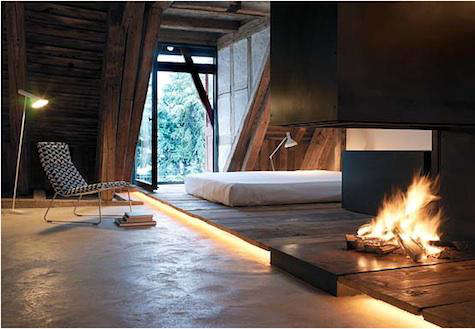
Its identity has long been tied to a contrast between old and new. The historic structure gives the property weight and authenticity, while the interiors introduce a more modern sensibility. Some areas have been described as starkly minimalist. Others feel warmer, more rustic, and more recognizably Swiss. That contrast is not a flaw. It is the plot.
In practical terms, that means Vorstadt 14 appeals to several kinds of guests at once. Design lovers appreciate the restraint. Couples like the privacy. Business travelers can imagine the address as a stylish alternative to chain accommodation. And travelers who are tired of generic hotel rooms with motivational art above the bed can breathe a sigh of relief.
The Architecture: A Historic Building With Real Presence
One of the most compelling aspects of Vorstadt 14 is the building itself. Local architectural documentation places its origins deep in Zug’s pre-modern history, identifying it as one of the older surviving structures in the area. In a destination where the old town already carries centuries of visual memory, this address still manages to stand out.
The appeal starts before you even step inside. Staying in a heritage property changes the emotional tone of a trip. It feels less like checking into a room and more like borrowing a fragment of a city’s past. The walls are not there for decoration. They have been doing this for a very long time.
That history also shapes the guest experience in subtle ways. Rooms in old buildings tend to behave differently than rooms in new ones. Corners are less predictable. Windows frame the street in more interesting ways. Floors may feel slightly uneven, which, in a heritage stay, is less “problem” and more “proof of life.” At Vorstadt 14, that sense of age becomes part of the atmosphere rather than something polished away.
Interior Style: Minimalism With a Human Pulse
The design language associated with Vorstadt 14 has been praised for being bold without becoming theatrical. The lower floors have been described as highly minimalist, while the top level introduced a more rustic-meets-modern mood. That split gives the property personality. It also helps explain why the place has enjoyed such staying power in design conversations.
Minimalist hotel rooms often go wrong in one of two ways: they either become so severe that guests feel like they are sleeping inside a very expensive storage unit, or they become “minimalist” only in the sense that the room forgot to provide useful furniture. Vorstadt 14 appears to avoid both traps. Its style is pared back, but not soulless. The design is disciplined, yet still connected to the building’s age and texture.
There is also a distinctly Swiss quality to that balance. Swiss design, at its best, is precise but not cold, functional but not dull. Vorstadt 14 seems to understand that a room can be quiet without being boring. In fact, the silence of the design is part of what makes it memorable. Nothing is yelling at you. Which, for many travelers, is the dream vacation.
Location, Location, and Then a Little More Location
Vorstadt 14 benefits enormously from being in Zug. Travelers sometimes overlook Zug in favor of bigger Swiss names, but that is part of its charm. The town offers lake views, a compact and walkable old center, medieval character, and a polished everyday elegance that feels unmistakably Swiss without becoming performative.
Zug’s old town is especially attractive for visitors who like to explore on foot. The area is known for cobbled alleys, historic towers, preserved buildings, and inviting public spaces. The lakeshore adds another layer to the experience. You are not simply staying in a historic district; you are staying in a historic district beside a beautiful lake, with mountain views and famously good sunsets just waiting to make your camera overconfident.
Accessibility is another advantage. Zug station sits in the city center, and tourism information highlights that key sights, restaurants, and accommodation are reachable within a short walk. That makes the destination especially convenient for travelers arriving by train from Zurich, Lucerne, or elsewhere in central Switzerland. You can arrive without a car, keep your luggage drama to a minimum, and settle into old-town Switzerland with surprising ease.
What a Stay Here Feels Like
Even if Vorstadt 14 is not operating today as a conventional, mass-market hotel, the lodging idea attached to it remains vivid: a stay centered on atmosphere rather than amenities overload. This is not where you come for twenty pillow options, a massive conference wing, or a breakfast room that doubles as a battleground for the last croissant. This is where you come because place matters.
A stay inspired by Vorstadt 14 is about waking up in a building with history, opening a window onto an old Swiss street, and feeling connected to the surrounding town. It is about stepping out for coffee rather than rushing to a tour bus. It is about noticing the details of daily life in Zug: the old facades, the calm lakefront, the clock tower, the clean rhythm of a place that seems to have mastered understatement.
That also makes Vorstadt 14 a useful model for what boutique lodging should be. Great small-scale hospitality does not always need more. Sometimes it needs better. Better architecture. Better editing. Better context. Better atmosphere. And maybe fewer decorative cushions trying to start a conversation.
Who Would Love Vorstadt 14 Most?
Design Travelers
If you plan trips around architecture, interiors, or clever adaptive reuse, Vorstadt 14 is exactly the sort of address that makes your heart do a little Scandinavian flicker. It is a conversation between old structure and contemporary taste, and it rewards people who care about materials, layout, and mood.
Couples Wanting a More Personal Stay
Travelers who prefer intimate, memorable lodging over anonymous chain hotels would likely find the concept deeply appealing. The setting feels better suited to slow mornings and evening walks than to package-tour chaos.
Culture-Minded Visitors
Because the property has also been associated with gallery and event uses, it carries a creative edge. That makes it especially appealing to travelers who like places with crossover energy: part lodging, part design object, part cultural backdrop.
Short-Stay Explorers in Central Switzerland
Zug is wonderfully positioned for travelers using trains to move between major Swiss destinations. A stay in or around an address like Vorstadt 14 works well for people who want something more atmospheric than a station hotel but more grounded than a mountain resort.
What To Do Near Vorstadt 14 in Zug
The beauty of staying in Zug is that the destination does not need much embellishment. You can build an excellent day around simple pleasures. Start with a walk through the old town, where historic towers, churches, and well-preserved facades make even casual wandering feel productive. Visit the Zytturm, stroll through Landsgemeindeplatz, and let yourself be distracted by boutiques, cafés, and quiet corners.
Then head toward the lake. Lake Zug is one of those places that can make you suddenly reconsider your life choices and wonder why all meetings cannot happen beside water. The promenade is ideal for a leisurely walk, and in warmer months the area becomes even more inviting. Boat rides, swimming spots, and open-air views all add to the appeal.
If you have extra time, Zug also works well as a base for broader exploration. The town sits conveniently between major Swiss hubs, making it easy to combine with Zurich, Lucerne, or nearby mountain excursions. That gives Vorstadt 14 an extra advantage in theory and in practice: it offers both a destination experience and a strategic travel position.
How Vorstadt 14 Fits Today’s Travel Trends
Travelers increasingly want places that feel specific. Not luxury for luxury’s sake. Not sameness in a fancier wrapper. They want authenticity, locality, walkability, and lodging with a story. Vorstadt 14 checks those boxes with impressive ease.
It also fits the continuing demand for adaptive reuse and heritage hospitality. Around the world, travelers are drawn to properties that preserve old buildings while giving them meaningful contemporary life. Vorstadt 14 does not just sit inside a historic structure; it uses that structure as the foundation of its identity.
That is why the address continues to resonate, even years after the earliest travel and design features appeared. It represents a type of lodging that ages well: small-scale, design-conscious, rooted in place, and unconcerned with mass-market trends. In travel terms, that is the difference between a property people book and a property people remember.
Final Thoughts: Why Vorstadt 14 Still Matters
Vorstadt 14 in Switzerland is more than a hotel mention or an attractive old address. It is a case study in how hospitality, architecture, and location can work together to create something lasting. Whether you think of it as a boutique lodging icon, a design-led heritage conversion, or a memorable old-town stay in Zug, the core appeal is the same: it offers a deeply specific sense of place.
And that is what makes it worth writing about. Travelers may forget the exact thread count of a hotel robe. They rarely forget the feeling of sleeping inside a centuries-old building in a lakeside Swiss town after an evening walk under medieval towers. Vorstadt 14 sells that feeling, quietly and effectively.
If your ideal Swiss stay involves personality, historical character, strong design, and a destination that feels elegant without trying too hard, Vorstadt 14 deserves a place on your radar. It may not be the loudest lodging story in Switzerland, but it is very likely one of the more interesting ones.
Extended Travel Experiences: What a Visit Connected to Vorstadt 14 Can Feel Like
Picture arriving in Zug by train with one bag, a charged phone, and the kind of optimism that only exists before you discover how many stairs Europe has hidden in its old towns. You leave the station and quickly realize the city center does not make you work too hard for its charms. Within minutes, modern transit energy gives way to a calmer rhythm. Streets narrow, facades grow older, and the town begins to feel like a place designed for walking rather than hurrying.
A stay associated with Vorstadt 14 starts with that transition. The building is part of a setting where history is not locked behind museum glass. It is around you. Doors look older. Stone feels more substantial. The proportions of the street remind you that this part of Zug was built long before anyone worried about valet parking or whether a lobby should smell like bergamot.
Morning is arguably the best time to enjoy the mood. In a historic lodging setting, the day often begins with a slightly cinematic quiet. Light sneaks into the room instead of barging in. Beams, plaster, timber, and textured walls react differently as the sun rises. It is the kind of place where making coffee feels more romantic than it deserves to be. Even opening a window can feel like participation in the life of the town.
Then there is the pleasure of stepping outside without a plan dramatic enough to require a spreadsheet. In Zug, wandering actually works. You can drift through the old town, pause near towers and squares, and let your route be shaped by what looks interesting. Maybe that is a bakery. Maybe it is a quiet alley. Maybe it is a shop window full of objects that are so beautifully arranged they make your own home décor feel like an apology.
By midday, the lake starts calling. One of the joys of this part of Switzerland is that water and town life are so closely linked. You do not need to commit to a grand excursion to feel rewarded. A lakeside walk is enough. Sit on a bench. Watch boats move across the water. Pretend, just briefly, that your email account no longer exists. This is the sort of destination where even “doing nothing” has excellent production values.
Evenings are where the experience becomes especially memorable. Zug is well known for its sunsets, and they have a habit of making ordinary travelers speak in suspiciously poetic sentences. The light softens. The lake reflects everything. The old town begins to glow rather than merely stand there. Returning afterward to a heritage address like Vorstadt 14 completes the arc of the day. You are not just visiting the setting; you are sleeping inside it.
That emotional continuity matters. In many destinations, travelers sightsee in one place and sleep in another, separated by convenience and bland carpeting. Vorstadt 14 represents the opposite idea. The lodging is part of the destination’s identity. Your room is not an afterthought. It is part of the story you came for.
For couples, the appeal is obvious. For solo travelers, it can feel wonderfully grounding. For creative professionals, it is the sort of environment that sparks thought without trying too hard to be “inspiring.” No neon sign is telling you to dream big. The architecture handles that on its own.
And perhaps that is the most lasting experience tied to Vorstadt 14: it encourages a slower, more observant style of travel. You notice textures. You notice sounds. You notice how old places hold memory. In a travel world crowded with bigger, louder, shinier options, that kind of experience feels refreshingly human.
SEO Tags
: