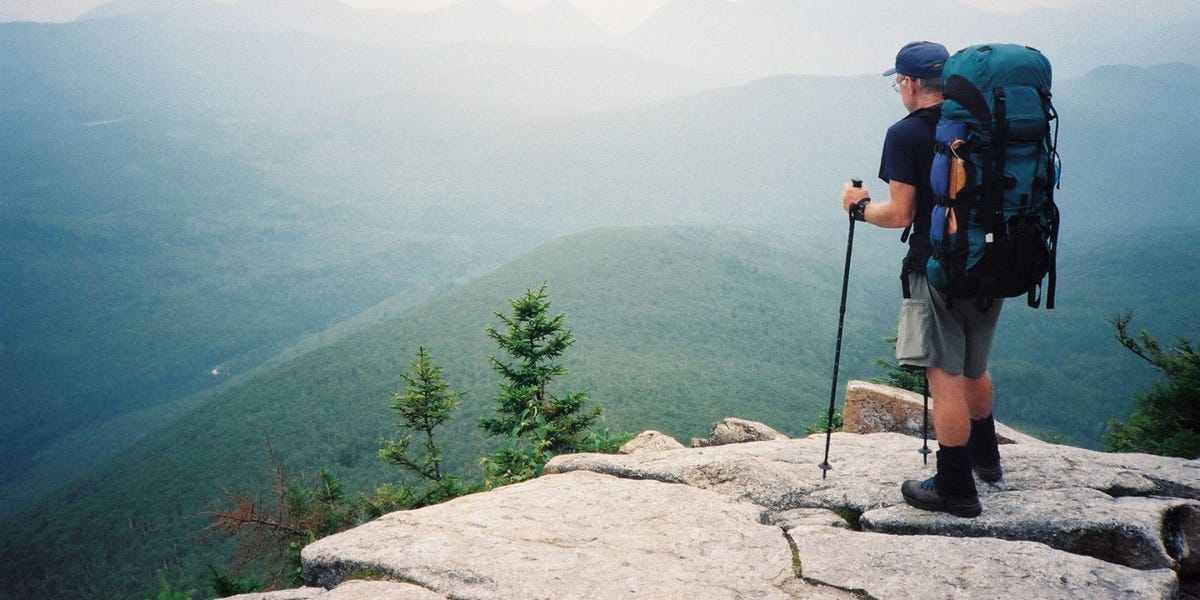
Hiking the Appalachian Trail is one of those ideas that sounds simple until you try explaining it to your knees. On paper, it is a footpath from Georgia to Maine. In real life, it is nearly 2,200 miles of mountains, mud, wildflowers, granite, small-town kindness, questionable snack choices, and moments so beautiful they make you forget you have been wearing the same shirt for three days.
The Appalachian Trail, often called the A.T., is the longest hiking-only footpath in the world. Its official mileage changes slightly from year to year because of relocations and measurement updates, but the current route is about 2,197.9 miles. It crosses 14 states, climbs and drops roughly 464,500 feet in total elevation change, and connects some of the most beloved landscapes in the eastern United States, from Springer Mountain in Georgia to Mount Katahdin in Maine.
For some people, hiking the Appalachian Trail means a six-month thru-hike. For others, it means a weekend section hike, a day hike to a viewpoint, or a slow annual tradition of nibbling away at the trail one state at a time. The good news is that the A.T. does not require you to quit your job, grow a magnificent beard, or develop strong opinions about instant mashed potatoes. It welcomes day hikers, section hikers, backpackers, families, retirees, solo adventurers, and yes, the occasional person who names their trekking poles.
What Makes the Appalachian Trail So Special?
The Appalachian Trail is more than a line on a map. Conceived in the early 20th century and completed in 1937, the trail now passes through national parks, national forests, state lands, rural communities, historic corridors, rocky ridgelines, and deep green forests. It is managed through a partnership involving the National Park Service, U.S. Forest Service, Appalachian Trail Conservancy, state agencies, trail clubs, and thousands of volunteers.
That volunteer spirit is part of the A.T.’s personality. The white blazes that guide hikers north and south do not paint themselves. Shelters do not maintain themselves. Blowdowns do not politely step aside. Behind every clear path is a network of trail maintainers, ridge runners, local clubs, and conservation groups working to protect the trail for future hikers.
The Route: 14 States, Countless Personalities
The Appalachian Trail travels through Georgia, North Carolina, Tennessee, Virginia, West Virginia, Maryland, Pennsylvania, New Jersey, New York, Connecticut, Massachusetts, Vermont, New Hampshire, and Maine. Each state has a different mood, almost like the trail is changing costumes.
Georgia to Tennessee: The Wake-Up Call
The southern A.T. begins at Springer Mountain, Georgia, where many northbound hikers take their first official steps. The mountains here are not the tallest on the trail, but they are steep enough to humble anyone who thought gym stair-climbers were realistic training. North Carolina and Tennessee bring the Great Smoky Mountains, high ridges, misty forests, and some of the trail’s most memorable early climbs.
Virginia: The Long Middle Chapter
Virginia contains the most A.T. mileage of any state. It offers rolling farmland, the Grayson Highlands, Shenandoah National Park, rhododendron tunnels, and long stretches where hikers can build rhythm. Some thru-hikers develop what is jokingly called the “Virginia blues,” a mental slump caused by realizing they have walked for weeks and are still in Virginia. But Virginia also rewards patience with views, wildlife, and gentler trail sections that help hikers recover from the southern mountain grind.
The Mid-Atlantic: Rocks, Farms, and Surprisingly Big Views
West Virginia delivers the historic trail town of Harpers Ferry, often considered the psychological halfway point. Maryland is short, scenic, and popular with section hikers. Pennsylvania is famous for rocks. Not cute little decorative garden rocks. Boot-chewing, ankle-twisting, soul-testing rocks. New Jersey and New York surprise many hikers with wetlands, ridges, lakes, wildlife, and unexpectedly rugged terrain close to major metro areas.
New England: Beauty With Teeth
Connecticut and Massachusetts ease hikers toward bigger climbs. Vermont brings the Green Mountains, mud season, and forests that feel like they were designed by a moss enthusiast. New Hampshire’s White Mountains are spectacular and demanding, with exposed ridges, fast-changing weather, and climbs that remind hikers why “almost there” is the most suspicious phrase in backpacking. Maine is remote, wild, wet, rugged, and unforgettable. The final climb up Katahdin is not just a finish line; it is a ceremony conducted by granite, wind, and exhausted joy.
Thru-Hiking, Section Hiking, and Day Hiking
A thru-hike means completing the entire Appalachian Trail within 12 months. Most thru-hikers take about five to seven months, depending on pace, weather, injuries, budget, and how often they are seduced by town food. Northbound hikers usually start in Georgia in early spring and finish in Maine by late summer or early fall. Southbound hikers typically begin in Maine after Baxter State Park opens Katahdin trails for the season. Flip-flop hikers start somewhere in the middle, often to avoid crowding, improve weather timing, or create a more flexible experience.
Section hiking is a more realistic approach for many people. You might hike a state at a time, a week each year, or a string of long weekends. Section hiking lets you experience the trail without putting your entire life in a stuff sack. Day hiking is equally valid. Some of the A.T.’s most famous viewpoints, waterfalls, and ridgelines can be reached in a single day with proper planning.
Planning Your Appalachian Trail Hike
Planning an Appalachian Trail hike starts with one honest question: what kind of hike do you actually want? A peaceful weekend in Shenandoah is different from a six-month thru-hike. A scenic day hike in Connecticut is different from a remote backpacking trip in Maine’s Hundred-Mile Wilderness. The A.T. is not one uniform experience; it is a menu, and some dishes come with extra rocks.
Choose Your Season Carefully
Spring brings flowers, flowing water, and the traditional northbound thru-hiker season, but it also brings cold nights, rain, mud, and crowded shelters in popular starter zones. Summer offers long daylight hours and easier logistics but can be hot, humid, buggy, and stormy. Fall may be the best season for many section hikes, thanks to cooler temperatures and colorful foliage. Winter hiking is possible in many areas but requires advanced skills, proper gear, and careful attention to ice, snow, daylight, and hypothermia risk.
Understand Permits and Local Rules
Most of the Appalachian Trail does not require a single master permit, but several areas have specific regulations. Great Smoky Mountains National Park requires backcountry permits for overnight stays. Shenandoah National Park requires backcountry camping permits. Baxter State Park requires long-distance hiker permits for A.T. and International Appalachian Trail hikers. Camping rules vary widely, especially in national parks, high-use areas, and protected zones. Before you go, check the current requirements for every section you plan to hike.
Build a Realistic Pace
New backpackers often overestimate mileage and underestimate elevation. A flat 15-mile road walk is not the same as 15 miles of wet roots, boulder scrambles, and climbs that appear to have been designed by a mountain goat with a grudge. Many thru-hikers start with 8 to 12 miles per day and increase gradually. Experienced hikers may later average 15 to 20 miles, but the trail decides what is reasonable. Your body gets a vote, and sometimes your feet filibuster.
Essential Gear for Hiking the Appalachian Trail
The best Appalachian Trail gear is not the most expensive gear; it is the gear that keeps you safe, dry, warm, fed, and willing to continue. A typical backpacking kit includes a comfortable pack, shelter, sleeping bag or quilt, sleeping pad, stove, water filter, rain gear, insulation layers, navigation tools, headlamp, first-aid supplies, food storage, and reliable footwear.
Lightweight gear helps, but ultralight obsession can become its own wilderness comedy. Cutting your toothbrush in half is fine if you enjoy that sort of thing, but do not cut essential warmth, rain protection, water treatment, or safety items. The A.T. is wet, humid, and variable. A good rain jacket, dry sleep clothes, and a dependable shelter are not luxuries; they are sanity preservation devices.
Footwear Matters More Than Almost Anything
Some hikers prefer trail runners because they dry quickly and feel light. Others choose boots for ankle support and durability. There is no universal answer. What matters is fit, comfort, traction, and testing your footwear before a long trip. The Appalachian Trail is not the place to discover that your new boots are secretly medieval torture devices.
Food and Water
Most backpackers carry two to five days of food between resupply points, depending on the section. Popular trail foods include oatmeal, tortillas, peanut butter, tuna packets, ramen, rice sides, dehydrated meals, bars, nuts, dried fruit, candy, and the thru-hiker classic: anything that contains calories and has not yet become powder. Water should be filtered, treated, or boiled. Streams may look clean, but microscopic trouble does not wear a warning sign.
Shelters, Campsites, and Trail Towns
The A.T. has a network of shelters, usually three-sided wooden structures spaced at varying intervals. Shelters can be helpful in bad weather and social settings, but they are not guaranteed hotel rooms. They may be full, noisy, mouse-friendly, or located farther than your tired legs prefer. Always carry your own shelter, even if you plan to use trail shelters.
Trail towns are part of the Appalachian Trail experience. Places like Damascus, Hot Springs, Harpers Ferry, Hanover, and Monson have become legendary among hikers for food, hostels, outfitters, resupply options, and local hospitality. Town days are where hikers wash socks, eat enormous meals, repair gear, call home, and briefly remember what chairs feel like.
Safety on the Appalachian Trail
The Appalachian Trail is safer than many people imagine, but it is still a backcountry environment with real risks. Weather changes quickly. Streams can rise. Hypothermia can happen outside winter. Heat exhaustion is possible in summer. Ticks can carry disease. Norovirus outbreaks have affected hikers in crowded areas. Black bears live throughout the trail corridor. The goal is not to be afraid; it is to be prepared enough that fear does not have to do all the planning.
Bears and Food Storage
Black bears are found in all 14 A.T. states. Most want nothing to do with humans, but human food changes bear behavior. Store food and scented items properly every night. Bear-resistant canisters are strongly recommended by the Appalachian Trail Conservancy for overnight hikers. In some areas, specific food storage methods are required. Never sleep with food in your tent unless you want your midnight snack to become a group activity involving claws.
Ticks, Hygiene, and Health
Tick prevention is a serious part of Appalachian Trail hiking. Wear appropriate clothing, use repellent, consider permethrin-treated gear, check your body daily, and remove ticks promptly. Hygiene matters too. Wash hands, avoid sharing food bags, treat water, and give crowded shelters extra caution during stomach-bug season. A tiny bottle of hand sanitizer may not look heroic, but it can save your hike.
Navigation and Communication
The A.T. is marked with white blazes, but hikers should still carry maps, a guide app or guidebook, and backup navigation knowledge. Phones are useful but not invincible. Batteries die, screens crack, and service disappears. Let someone know your route and expected check-ins. Carry a power bank for longer trips and consider a satellite messenger for remote sections.
Leave No Trace on the A.T.
The Appalachian Trail receives millions of visits each year. That popularity is wonderful, but it also means small careless choices become big impacts. Stay on the trail, even when it is muddy. Camp only where allowed. Pack out trash. Dispose of human waste properly. Keep fires small or skip them when conditions are poor. Do not carve shelters, feed wildlife, or leave “just one” orange peel. The forest is not asking for compost from your lunch.
Leave No Trace is not about being perfect. It is about making thoughtful decisions so the next hiker can experience the same beauty without stepping over your snack wrapper, fire scar, or abandoned sock. Especially the sock. Nobody wants the sock.
How Much Does It Cost to Hike the Appalachian Trail?
Costs vary widely. A day hike may cost little more than gas, snacks, and decent shoes. A section hike may require backpacking gear, food, permits, transportation, and lodging before or after the hike. A thru-hike can cost several thousand dollars, especially when factoring in gear, replacement shoes, town stays, restaurant meals, laundry, shuttles, postage, permits, insurance, and emergency buffers.
Budget hikers save money by limiting town nights, buying groceries carefully, repairing gear, sharing shuttles, and resisting the gravitational pull of every diner on the East Coast. Still, comfort matters. A motel room during a cold rainstorm can be the difference between quitting and continuing. Budget for morale, not just oatmeal.
Training for the Appalachian Trail
The best training for hiking is hiking. Start with day hikes, then add elevation, then add a loaded pack. Strength training helps protect knees, hips, ankles, and back. Focus on legs, core, balance, and mobility. Practice hiking on consecutive days because backpacking fatigue is cumulative. Your first day may feel heroic; your third day may feel like your thighs are negotiating a labor contract.
Test your gear before a long trip. Set up your tent in rain. Filter water from a real stream. Cook your trail meals. Walk in your loaded pack. Learn what rubs, leaks, squeaks, and annoys you. The trail will test everything eventually, so it is better to fail in your backyard than halfway up a mountain in a thunderstorm.
Best Appalachian Trail Experiences for Beginners
Beginners do not need to start with the hardest sections. Shenandoah National Park offers frequent road crossings, waysides, campgrounds, and scenic hiking. Maryland’s A.T. section is short enough for a manageable multi-day challenge. Georgia provides a classic southern start with plenty of trail culture and access points. Connecticut and Massachusetts offer beautiful section hikes with town access. For day hikers, popular A.T. destinations include Max Patch, McAfee Knob, Bear Mountain, Blood Mountain, and portions of the Presidential Range for experienced hikers.
Choose a hike that matches your current ability, not your fantasy montage. The mountains will still be there after you build skills.
The Mental Side of Hiking the Appalachian Trail
Hiking the Appalachian Trail is physical, but the mental challenge is just as important. Rain can last for days. Gear breaks. Plans change. You may get lonely, bored, hungry, homesick, or deeply irritated by the sound of someone crinkling a snack wrapper at 5 a.m. Long-distance hiking strips life down to basics: walk, eat, drink, sleep, repeat. That simplicity can be freeing, but it can also reveal how much comfort we usually hide behind.
The trail teaches patience. It teaches humility. It teaches that progress is sometimes one slow mile at a time. It also teaches that a gas-station burrito can taste like fine dining after a hard climb. You return from the A.T. with stronger legs, stranger stories, and a new appreciation for clean socks.
Extra Trail Experiences: What Hiking the Appalachian Trail Really Feels Like
The experience of hiking the Appalachian Trail is difficult to explain to someone who has never woken up in a tent to the sound of rain tapping nylon like a tiny percussion section. The day begins before you feel ready. You unzip your sleeping bag, negotiate with cold air, and reach for socks that may or may not have achieved legal personhood overnight. Breakfast is simple. Maybe oatmeal. Maybe a protein bar. Maybe instant coffee so strong it could remove paint. Then you pack up and follow the white blazes into another day of not knowing exactly what will happen.
Some mornings are gentle. Sunlight filters through hardwood trees, birds make the forest feel alive, and your legs settle into a rhythm. The trail climbs, dips, bends, and opens onto a view that makes you stop mid-breath. These moments are the reason people hike the Appalachian Trail. A ridge in Virginia at sunrise, a misty gap in North Carolina, a quiet pond in Maine, a tunnel of green in Vermonteach one feels like a secret the mountain decided to share.
Other days are less poetic. Rain turns the trail into soup. Pennsylvania rocks rearrange your definition of discomfort. Black flies audition for villain roles. Your pack feels heavier than it did yesterday, even though you ate half your food. You may question every decision that led you here, including the decision to buy trail mix with too many raisins. But then another hiker makes you laugh, a stranger offers a ride into town, or you find a perfect campsite beside a stream, and the day softens.
One of the most memorable parts of the A.T. is the community. Hikers come from different backgrounds, ages, jobs, and life stories, but the trail makes everyone equally interested in weather, water sources, and where to get pizza. Trail names become identities. A person you met three days ago may feel like an old friend because you both survived the same climb. Trail magicunexpected kindness from volunteers, locals, or former hikerscan appear as fruit, soda, a shuttle ride, or a cooler full of snacks at exactly the moment morale is collapsing.
Town stops feel surreal. After days in the woods, fluorescent grocery-store lighting seems dramatic. A shower feels like a spiritual event. Laundry becomes a public health achievement. You eat with the concentration of someone solving an ancient puzzle. Then, after resting, you begin to miss the trail. The strange thing about the Appalachian Trail is that it can make you dream about town while you are hiking and dream about hiking while you are in town.
By the end of any meaningful A.T. hike, whether it lasts two days or six months, you understand something important: the trail is not only about distance. It is about attention. You notice weather, water, hunger, kindness, pain, silence, birdsong, your own thoughts, and the exact number of snacks remaining in your hip belt pocket. Hiking the Appalachian Trail slows life down enough for you to actually feel it. That may be its greatest gift.
Conclusion
Hiking the Appalachian Trail is an adventure with many versions. You can thru-hike from Georgia to Maine, section-hike one state at a time, or enjoy a single unforgettable day on a white-blazed footpath. However you approach it, the A.T. rewards preparation, patience, humility, and a sense of humor. Pack wisely, respect local rules, protect the trail, store food properly, check for ticks, and leave room in your plan for surprise. The Appalachian Trail is not just a destination. It is a long conversation with mountains, weather, strangers, and yourself. And yes, your knees will have opinions.
Note: Trail mileage, permits, fees, closures, and local regulations can change. Always verify current information with official trail, park, and land-management sources before starting your hike.