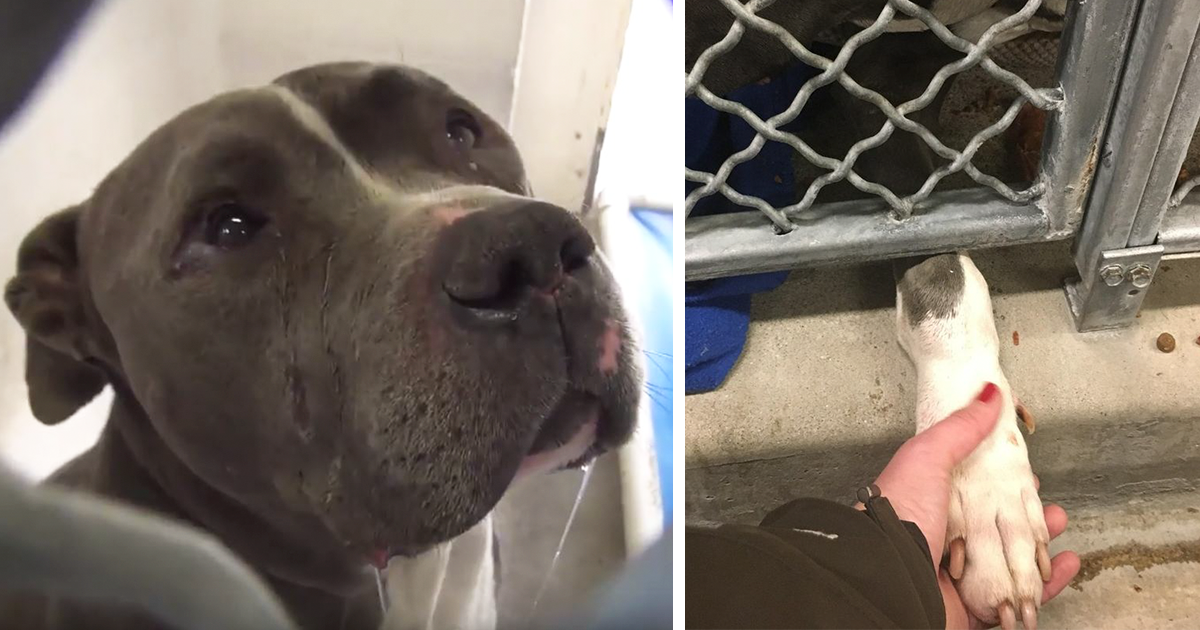
Some dogs bark for attention. Some dogs wag their tails like tiny windshield wipers. And then there was Blue King, a pit bull whose quiet crying behind a shelter door reminded millions of people that dogs do not stop loving their families just because the paperwork says “surrendered.”
Blue King, often called Blue, became known after volunteers shared his story from Carson Shelter in California. His family had reportedly moved and decided not to take him with them. Inside the kennel, Blue was offered a treat, but he only sniffed it. He did not gobble it down. He did not bounce around. He cried, stared through the bars, and looked as if he were waiting for the people he knew to come back and say, “Oops, wrong door, buddy. Let’s go home.”
The image was devastating because it was so easy to understand. Even people who have never owned a dog could recognize that kind of heartbreak. A confused pet in a loud shelter is not simply “being dramatic.” Dogs form attachments, learn routines, recognize voices, and depend on familiar people for safety. When that entire world disappears overnight, the emotional fallout can show up in ways humans immediately notice: whining, refusing food, pacing, trembling, shutting down, or staring at the door as though hope might walk in wearing sneakers.
The Story of Blue King: A Shelter Dog Who Looked Truly Broken
Blue King had lived with a family for about a year before he was surrendered. For a dog, one year is not a casual arrangement. It is a full chapter of breakfast bowls, favorite sleeping spots, car rides, smells, voices, and the sacred household tradition of pretending not to beg while absolutely begging. When he suddenly found himself in a kennel, his behavior suggested confusion and emotional stress.
Visitors and volunteers noticed that Blue did not respond like many other dogs around him. While some dogs wagged, barked, jumped, or leaned forward for attention, Blue seemed withdrawn. He would not eat the treat offered to him. A tear was visible near his eye, though watery eyes in dogs can also be caused by allergies, irritation, or other medical issues. Still, whether the tear was medical or emotional, the scene hit people right in the softest part of the heart.
Volunteers from Saving Carson Shelter Dogs helped share his video online. That one act mattered. In shelters, visibility can be lifesaving. A dog who seems invisible in a kennel can become unforgettable when a volunteer captures the right moment and tells the truth: this animal is scared, this animal is waiting, and this animal deserves a chance.
Why Dogs Cry, Whine, or Shut Down in Shelters
When people say a dog is “crying,” they may mean several things. Dogs can vocalize through whining, whimpering, barking, or howling. They can also show stress through body language: tucked tails, lowered posture, wide eyes, panting, drooling, pacing, shaking, hiding, or refusing food. A shelter can be overwhelming even for a confident dog. The smells are unfamiliar, the noise is constant, and the daily rhythm is nothing like home.
For a surrendered dog, the shock may be even sharper. Unlike a stray who may have already been surviving without a stable household, an owner-surrendered dog may arrive with a clear memory of family life. Yesterday, there was a couch. Today, there is concrete, metal, barking, disinfectant, and strangers. That is a lot for any creature to process, especially one whose emotional calendar is basically “before my person left” and “after my person left.”
Dogs with separation-related distress may whine, bark, pace, tremble, scratch, refuse food, or become unusually quiet. Some become frantic. Others freeze emotionally, which can be mistaken for calmness. A dog sitting silently at the back of a kennel may not be “easygoing.” He may be overwhelmed. Blue’s sadness felt so powerful because it looked like grief wearing a blue-gray coat.
The Bigger Shelter Reality Behind One Viral Pit Bull
Blue King’s story was personal, but it also pointed to a much larger issue. Every year, millions of dogs and cats enter U.S. shelters and rescues. Some are strays. Some are lost pets. Many are surrendered by owners facing housing restrictions, financial hardship, medical costs, behavior struggles, divorce, illness, military moves, or other life changes. Sometimes people are careless. Sometimes they are cornered by circumstances. The animal, however, feels the loss either way.
Large dogs and pit bull-type dogs often face additional barriers. Apartment rules, insurance restrictions, breed-specific laws, stigma, and public fear can make it harder for them to find homes. Many pit bull-type dogs are not a single breed but a broad category based on appearance. That means dogs can be judged by a blocky head and muscular body before anyone learns whether they love kids, hate vacuum cleaners, or believe every lap is legally required to hold a 60-pound dog.
Animal welfare organizations and veterinary groups have long warned against judging dogs only by breed labels. Behavior is shaped by genetics, socialization, training, environment, health, and individual personality. In other words, “pit bull” does not tell the whole story. It tells you a dog may have a strong body and an unfair public relations department. The rest has to be learned by meeting the actual dog.
How Breed Stigma Hurts Dogs Like Blue
Pit bulls and pit bull mixes are often loving, goofy, athletic, loyal dogs. Many are professional-grade cuddlers with the emotional subtlety of a confetti cannon. Yet they are also among the dogs most likely to be overlooked in shelters. Potential adopters may walk past them because of old stereotypes, housing rules, or fear of what friends and neighbors will say.
This stigma can create a painful cycle. The longer a dog stays in a shelter, the more stress may build. The more stressed a dog appears, the less appealing he may seem to visitors. A stressed shelter dog may bark, jump, pace, or avoid eye contact. Those behaviors can be misread as “bad temperament,” when they may simply be signs of kennel stress. In a calmer home or foster setting, the same dog might become relaxed, affectionate, and wonderfully ridiculous.
Blue’s transformation after adoption showed exactly why first impressions in a shelter can be misleading. Once he left the kennel, his personality began to return. His new owner, Jennifer McKay, described him as happy, excited, and affectionate. He enjoyed car rides, belly rubs, cuddling, couch naps, and even admiring himself in the mirror. Honestly, if surviving heartbreak and then checking yourself out in a mirror is not a comeback story, what is?
What Blue King’s Rescue Teaches About Adoption
Blue did not need a perfect person. He needed a patient one. Jennifer visited him more than once, brought him comfort items, and waited while the shelter completed its process. That patience mattered because shelter dogs often need time before they can show who they really are.
New adopters are often encouraged to think in stages. During the first few days, a dog may be overwhelmed and unsure. During the next few weeks, routines start to make sense. After a few months, many dogs begin to feel truly secure. This does not happen on a strict stopwatch, of course. Dogs are not microwave popcorn. Some settle quickly; others need time, structure, and gentle confidence-building.
Give the Dog Space Before Expecting a Movie-Montage Bond
It is tempting to bring home a rescue dog and immediately introduce him to every cousin, neighbor, and houseplant named Kevin. Resist that urge. A newly adopted dog needs a quiet place to decompress. Let him explore at his own pace. Keep the first days calm. Use predictable meals, walks, potty breaks, and bedtime routines. Trust is built through consistency, not through throwing a “Welcome Home, Please Love Me Immediately” parade.
Watch Body Language, Not Just Tail Wags
A wagging tail does not always mean pure joy. A stiff body, tucked tail, lip licking, yawning, whale eye, trembling, or avoidance can signal stress. A relaxed dog usually has loose movement, soft eyes, and the ability to disengage comfortably. Learning canine body language helps adopters avoid pushing a dog too fast.
Use Positive Reinforcement
Dogs coming from shelters do best with calm guidance and rewards for good choices. Treats, praise, toys, and gentle routines teach them what works. Punishment can increase fear and confusion, especially in a dog who has already lost his sense of safety. Blue did not need someone to “dominate” him. He needed someone to show him the world had not ended.
Why Owner Surrender Is So Emotionally Complicated
It is easy to feel angry when hearing that a family moved and left a dog behind. Many readers did. But the wider conversation is complicated. Pet-friendly housing can be limited or expensive. Some landlords ban large dogs or certain breeds. Veterinary bills can become impossible for families already stretched thin. Domestic violence, homelessness, illness, and sudden job loss can all separate people from pets they love.
That does not erase the heartbreak for the animal. It does mean solutions must go beyond blame. Communities can reduce shelter surrender by supporting pet-inclusive housing, affordable veterinary care, temporary foster programs, pet food banks, behavioral help, and emergency boarding. Keeping pets with families whenever safely possible is one of the most humane ways to reduce shelter overcrowding.
When surrender cannot be avoided, families should look for responsible options: contacting breed-specific rescues, asking shelters about managed intake appointments, providing medical and behavior history, sharing honest information, and bringing familiar items like blankets or toys. A dog may still grieve, but good information can help shelter staff and adopters understand him faster.
The Power of Volunteers, Fosters, and Social Media
Blue King’s story changed because volunteers paid attention. They noticed a dog who was not marketing himself well. Let’s be honest: shelter adoption is partly matchmaking and partly public relations. Some dogs bounce at the front of the kennel like furry campaign managers. Others sit in the back, heartbroken, and need someone to tell their story for them.
Foster homes can be especially powerful for dogs like Blue. A foster home gives a dog a break from kennel stress and lets rescuers learn valuable details: Is he house-trained? Does he enjoy car rides? Is he calm during storms? Does he think throw pillows are toys with stuffing prizes inside? These details help adopters make better matches.
Social media can also be a lifeline when used responsibly. A short video, a clear description, and honest adoption information can help the right person see the right dog at the right time. The goal is not to create pity clicks. The goal is to turn attention into action: adoption, fostering, volunteering, donating, sharing, or supporting local shelter programs.
How to Help a Heartbroken Shelter Dog
You do not have to adopt every sad dog on the internet. That would be noble, chaotic, and probably a zoning violation. But there are practical ways to help.
Adopt With Realistic Expectations
If you are ready for a dog, consider visiting shelters and rescues with an open mind. Ask staff which dogs are overlooked. Meet dogs outside the kennel if possible. A dog who barks in a kennel may be calm in a yard. A dog who seems shy may bloom once away from the noise.
Foster If You Cannot Adopt
Fostering can save lives by creating space in shelters and giving dogs a calmer place to recover. Many organizations cover supplies or medical care. Even a short-term foster stay can reveal a dog’s true personality and make adoption easier.
Support Pet Retention Programs
Donate to food banks, low-cost clinics, spay and neuter programs, and emergency foster networks. These services help prevent beloved pets from entering shelters in the first place.
Challenge Breed Stereotypes
When someone repeats a lazy myth about pit bulls, respond with facts and compassion. Encourage people to judge dogs as individuals. Responsible ownership, training, socialization, and safe management matter for every breed and mix.
Experiences and Reflections: What Blue’s Story Feels Like in Real Life
Anyone who has spent time around shelter dogs knows that heartbreak does not always look cinematic. Sometimes it looks like a dog pressed against the kennel gate, nose working overtime, searching for one familiar scent in a hallway full of strangers. Sometimes it looks like untouched kibble. Sometimes it looks like a dog who sleeps all day because hope is exhausting. Sometimes it looks like Blue King, crying softly while the world keeps walking past.
The hardest part is that dogs do not understand explanations. You cannot sit beside a surrendered dog and say, “Your family had housing problems,” or “They were overwhelmed,” or “The landlord said no.” Dogs understand patterns. They understand the sound of a car pulling into the driveway, the jingle of keys, the hand that reaches for the leash, and the voice that says their name. When those patterns vanish, they are left with confusion. That confusion can feel like betrayal, even when no human intended cruelty.
In shelters, the emotional range of dogs can be astonishing. One dog may greet every visitor like a game show host. Another may curl into the smallest possible shape, trying to disappear. A third may bark so loudly that people assume he is aggressive, when he is really shouting, “I am scared, I am bored, and nobody gave me a user manual for this place.” Pit bull-type dogs, because of their strength and expressive faces, can be especially misunderstood. A blocky head behind bars can trigger fear in one person and tenderness in another.
Blue’s story also captures the strange magic of second chances. In the shelter, he looked defeated. In a home, he became playful, affectionate, and confident enough to admire himself in a mirror. That detail is almost too perfect. A dog who once looked broken later sat there wagging at his own reflection, as if to say, “Yes, Blue, still handsome. Crisis handled.” It is funny, but it is also profound. Safety changes behavior. Love changes posture. A couch can do what a kennel cannot.
For adopters, the lesson is patience. The dog you bring home on day one may not be the dog you know on day ninety. At first, he may sleep more than expected, refuse treats, follow you from room to room, or stare at the door. He may test boundaries or have accidents. He may not know how to play yet. That does not mean adoption failed. It means a living creature is unpacking stress in real time.
The best adopters become translators. They learn that pacing may mean anxiety, not stubbornness. They learn that a dog who ducks away from touch may need consent and time, not more pressure. They learn that routine is love in a form dogs can read. Breakfast at the same time, walks on the same route, gentle praise, and a soft bed in a quiet corner all say, “You are safe here.”
Blue King’s tears mattered because they made people stop scrolling. But the real victory was not the viral moment. It was the ordinary life that came after: a bath, a walk, a couch nap, a person coming home from work, a dog running to greet her. Rescue stories are not only about dramatic saves. They are about the quiet miracle of normal days.
That is what every heartbroken shelter dog deserves: not pity forever, but a future. Not a cage where he waits for footsteps that never return, but a home where footsteps mean dinner, walks, belly rubs, and someone laughing because the dog has once again claimed the best spot on the sofa. Blue King cried in a shelter, but his story did not end there. It ended where every good dog story should begin again: with a family who came back through the door.
Conclusion: A Cry That Became a Second Chance
“Heartbroken Pit Bull Cries After His Family Leaves Him In A Shelter” is more than a sad animal story. It is a reminder that dogs feel disruption deeply, shelters need community support, and pit bull-type dogs deserve to be seen as individuals. Blue King’s life changed because volunteers shared his story and an adopter looked past his grief long enough to see the good dog underneath it.
His story asks a simple question: how many other dogs are waiting behind kennel doors, too stressed to shine? The answer is too many. But every adoption, foster home, volunteer shift, donation, and shared post can help. A heartbroken dog may arrive at a shelter crying, but with patience and compassion, he can leave with his tail up, his eyes bright, and his future finally unlocked.
Note: This article is based on publicly reported information about Blue King and widely accepted U.S. animal welfare guidance on shelter stress, adoption adjustment, separation anxiety, breed stigma, and responsible rescue practices. It is editorial content and not a substitute for veterinary or certified behavior advice.