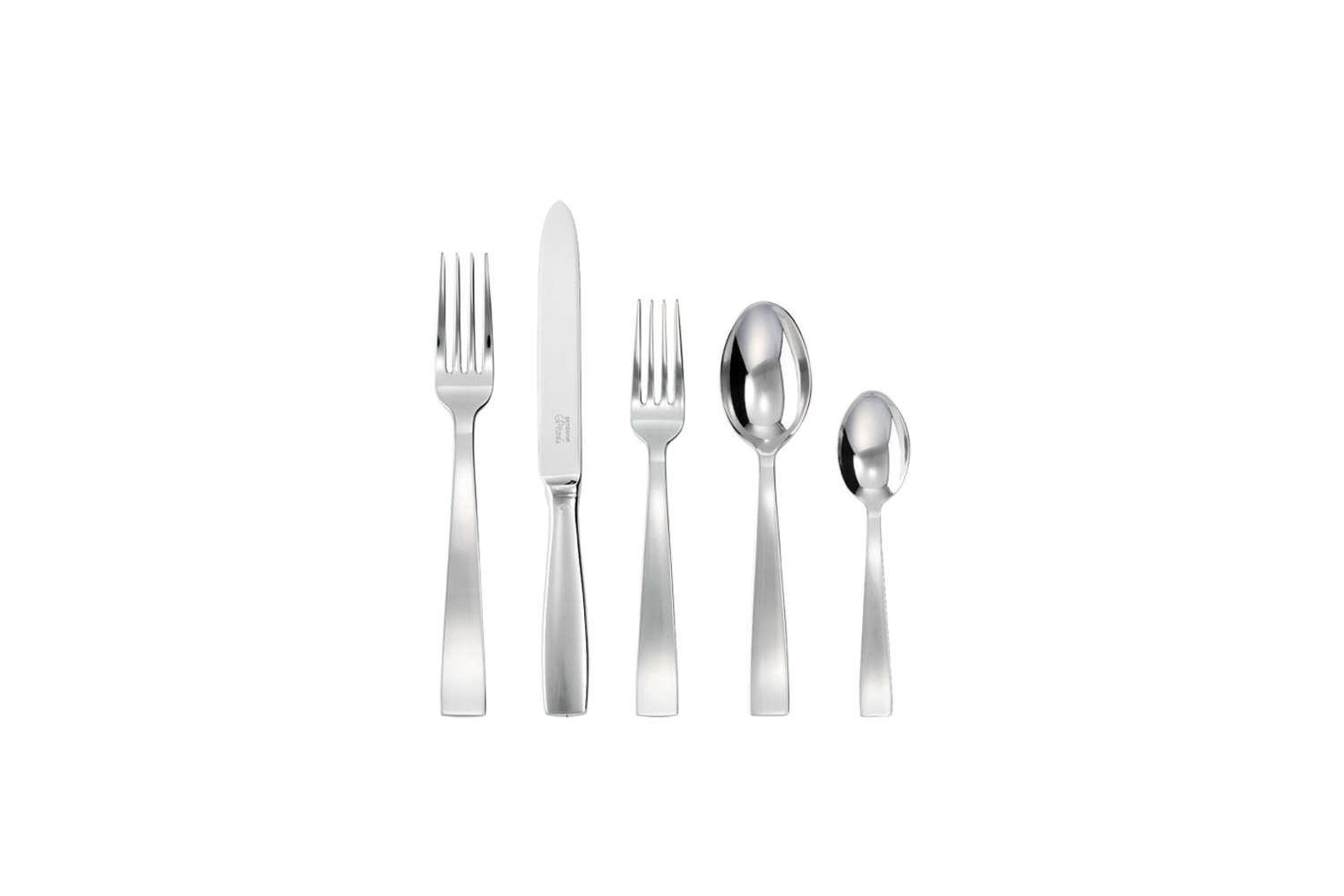
The Gio Ponti Sambonet Flatware Five-Piece Setting proves that some of the smallest objects at dinner can carry surprisingly big design ideas. A fork is still a fork, of course. It will not improve your cooking, settle a family argument, or make overcooked chicken mysteriously juicy. Yet when flatware is carefully proportioned, balanced in the hand, and shaped by one of Italy’s most influential designers, an ordinary meal can feel noticeably more considered.
This place setting sits at the intersection of practical stainless-steel tableware and collectible Italian design. The Vintage Steel version, identified by Sambonet as item 52460-93, serves one person and includes five pieces. Its intentionally aged surface gives it a softer, more lived-in character than highly polished silverware, while the clean silhouette keeps the pattern modern rather than rustic. The result is elegant without behaving as though it needs its own velvet rope.
What Is Included in the Five-Piece Setting?
According to Sambonet’s official product information, the Gio Ponti Vintage five-piece place setting contains one table fork, one table knife, one dessert fork, one dessert spoon, and one teaspoon. It is designed as a single-person setting, making it possible to purchase one set as a design sample or gradually build a complete service for a larger household.
The combination is slightly different from the familiar American five-piece arrangement, which often includes a dinner fork, salad fork, dinner knife, tablespoon, and teaspoon. Sambonet identifies the smaller utensils by dessert use, giving the set a more course-oriented European personality. It may particularly appeal to people who enjoy setting a table according to the meal rather than placing every utensil they own beside the plate and hoping guests improvise.
Core Product Details
- Brand: Sambonet
- Collection: Gio Ponti
- Material: Stainless steel
- Finish: Vintage Steel
- Number of pieces: Five
- Service: One place setting
- Knife construction: Solid-handle monobloc design
- Official item number: 52460-93
Why Gio Ponti’s Name Matters
Gio Ponti was not merely an architect who occasionally wandered into the silverware department. His career stretched across architecture, interiors, furniture, ceramics, glass, publishing, and household objects. He founded Domus magazine in 1928 and helped shape international conversations about modern design for decades. His work ranged from the Pirelli Tower in Milan to the landmark Denver Art Museum building, yet he also treated spoons, chairs, lamps, and table accessories as serious design opportunities.
That range is important because Ponti did not see the home as a collection of unrelated purchases. Architecture, furniture, lighting, textiles, and tableware could all belong to the same visual language. The scale changed, but the discipline did not. A skyscraper needed structure and proportion, and so did a teaspoonalthough the teaspoon was admittedly easier to fit in the dishwasher.
Major American museum collections preserve Ponti-designed stainless-steel spoons, forks, knives, furniture, and glassware. The Denver Art Museum also holds examples of his flatware and highlights his simplification of traditional utensil forms. This institutional recognition does not automatically make every newly manufactured place setting an investment-grade collectible, but it explains why the Gio Ponti Sambonet collection feels more culturally grounded than anonymous flatware selected by spreadsheet.
The Design: Rational, Sculptural, and Quietly Unusual
The first impression is restraint. The handles are elongated and clean, with curves that feel controlled rather than ornamental. There are no engraved vines, imitation family crests, or decorative flourishes that appear to have escaped from a Victorian sideboard. Instead, the pattern relies on line, proportion, and the relationship between each handle and the working end of the utensil.
This is where the setting reflects Ponti’s broader design language. His best-known work often combined rational structure with visual lightness, elegance, and a hint of playfulness. The flatware does not shout for attention, but it avoids becoming generic. When arranged around a plate, the pieces create a slim architectural rhythm, especially beside simple white porcelain or geometric dinnerware.
The Vintage Steel Finish
Sambonet describes its Vintage finish as an intentionally worn surface created through industrial scraping processes. Instead of attempting to imitate the flawless shine of freshly polished silver, the treatment introduces tonal variation and a slightly weathered mood. It is a clever choice for people who appreciate sophisticated objects but do not enjoy seeing every fingerprint announce itself like breaking news.
The finish also makes the setting unusually versatile. It can work with stoneware, linen napkins, wood tables, matte ceramics, clear glassware, or more formal porcelain. Mirror-finished flatware can occasionally feel too glossy for relaxed dining, while heavily antiqued utensils can drift into theatrical farmhouse territory. Gio Ponti Vintage occupies a calmer middle ground: refined, modern, and already comfortable in its own skin.
Materials and Construction
The setting is made from stainless steel, and retail records for the Vintage pattern commonly identify it as 18/10 stainless steel. In flatware terminology, 18/10 generally refers to chromium and nickel content. Chromium contributes hardness, durability, and corrosion resistance, while nickel supports luster and helps maintain a smooth, attractive surface.
The knife requires somewhat different material properties because its blade must retain a cutting edge. Sambonet states that its knife blades are made from tempered martensitic 420 stainless steel. This type of steel provides useful hardness and lasting cutting performance, although it can be less corrosion-resistant than the alloys commonly used for spoons and forks. That is why thoroughly drying the knife is particularly important.
Why the Monobloc Knife Matters
Sambonet describes the knife as monobloc, meaning it is formed as one solid piece rather than combining a separate hollow handle and blade. That eliminates seams or gaps between the two sections and gives the knife a reassuring sense of solidity.
A hollow-handled knife may feel more traditionally luxurious or carefully counterbalanced, but a monobloc knife is straightforward, durable, and well suited to regular use. It also creates visual continuity from the tip of the blade to the end of the handle, reinforcing the collection’s uncluttered design language.
How the Pieces May Feel in the Hand
Flatware comfort depends on more than total weight. Balance, handle width, edge finishing, bowl shape, fork-tine geometry, and the transition from handle to head all influence the eating experience. Independent flatware tests frequently emphasize hand feel because a beautiful utensil that twists awkwardly or digs into the palm becomes annoying by the third bite.
The Gio Ponti silhouette favors long, narrow lines, so it will probably appeal most to people who enjoy sleek European proportions. Those who prefer broad, heavy American steakhouse-style silverware may find it visually delicate. That is not necessarily a defect; it is a matter of preference. The wisest approach with premium flatware is to handle or purchase one place setting before committing to service for eight or twelve. Your hand gets a vote, even when the designer is famous.
How It Changes the Look of a Table
Flatware is often treated as background equipment, but it occupies a substantial amount of visible space around the plate. The Gio Ponti Sambonet setting brings structure to that space. Its narrow handles create strong vertical lines, while the Vintage Steel surface reduces glare and introduces subtle texture. On a minimal table, the pieces become quiet sculptural accents. On a layered table, they provide enough character to avoid disappearing beneath patterned linens and colorful dishes.
For a modern Italian-inspired table, pair the flatware with white plates, clear stemware, and linen napkins in olive, rust, navy, or natural flax. For a contemporary American setting, try matte stoneware, low tumblers, and a simple wooden centerpiece. For formal occasions, add porcelain with a thin metallic rim and crisp napkins, but keep the centerpiece restrained. These utensils already have pedigree; they do not need to dine beneath a floral arrangement the size of a parade float.
Everyday Use Versus Special Occasions
The stainless-steel construction and dishwasher-safe designation make the place setting practical enough for regular meals. At the same time, the Vintage finish and designer association give it a special-occasion presence. That combination is one of its strongest qualities. Fine tableware is more rewarding when it can survive Wednesday-night pasta, not only Thanksgiving and the annual moment when somebody remembers the formal dining room exists.
Regular use will naturally create additional marks over time. With a deliberately aged surface, minor wear may blend more gracefully than it would on a mirror finish. Owners who expect every piece to remain visually identical should remember that textured surfaces can display slight variation. The point is character, not military formation.
Care and Maintenance
Sambonet identifies the setting as dishwasher safe, but its care guidance still recommends attentive handling. Residues containing salt or acidssuch as lemon, vinegar, and tomatoshould not remain on the metal for extended periods. After washing, the pieces should be dried thoroughly before storage. When the dishwasher leaves moisture behind, hand-drying is a sensible final step.
Avoid chlorine-based detergents and strongly alkaline cleaners, which can be harsh on stainless-steel surfaces. Do not leave the utensils soaking overnight in salty water, and do not allow a damp knife to nap indefinitely at the bottom of the dishwasher. Although stainless steel is designed to resist corrosion, “resistant” is not the same thing as “invincible.”
A Simple Care Routine
- Rinse away salty, acidic, or sticky food soon after the meal.
- Wash with a neutral detergent, either by hand or in the dishwasher.
- Separate the pieces enough to let water circulate properly.
- Remove the flatware promptly after the washing cycle.
- Dry any remaining moisture with a soft cloth.
- Store the pieces in a dry drawer or divided organizer.
For occasional spots or marks, Sambonet suggests diluted vinegar followed by thorough rinsing. Test any cleaning method gently and avoid abrasive pads that could alter the intended surface. Vintage Steel is supposed to look time-softened, not like it lost a disagreement with industrial sandpaper.
Who Should Buy the Gio Ponti Sambonet Five-Piece Setting?
This place setting makes the most sense for design-conscious buyers who value authorship, history, and proportion as much as basic utility. It is especially appealing for modern interiors, Italian design collections, wedding registries, milestone gifts, or dining rooms where small details receive real attention.
It may also suit collectors who want an accessible and usable connection to Ponti’s work. Unlike a vintage chair, architectural drawing, or rare ceramic piece, one flatware setting requires little storage and can participate in daily life. It is functional design in the most literal sense: museum-related history that can still help with tiramisu.
It Is a Strong Choice For:
- Fans of Italian modernism and Gio Ponti
- People who prefer slim, architectural flatware
- Hosts seeking a distinctive but understated table
- Buyers who enjoy aged or softly textured finishes
- Gift shoppers looking for a premium single place setting
It May Not Be Ideal For:
- Anyone who wants extremely heavy, wide-handled utensils
- Buyers seeking the lowest possible cost per piece
- Households that routinely leave flatware wet or soaking
- People who expect a perfectly uniform mirror finish
- Those who need a conventional American tablespoon-based setting
Value: What Are You Really Paying For?
Premium flatware prices rarely reflect the cost of raw steel alone. Buyers are paying for design authorship, brand heritage, finishing, manufacturing standards, packaging, distribution, and the long-term availability of a coordinated collection. With Gio Ponti Sambonet flatware, the historical design connection is a meaningful part of the appeal.
That does not mean everyone needs designer utensils. A well-made, less expensive set can perform the same basic tasks. The difference is emotional and aesthetic: how the pieces feel, how they frame the plate, whether the pattern remains satisfying after years of use, and whether the object adds pleasure beyond function. Nobody strictly needs an elegant dessert fork. Then again, nobody needs throw pillows either, and civilization has bravely continued buying both.
Because prices and availability vary by finish and retailer, compare the exact item number, set composition, and knife construction before ordering. Gio Ponti flatware appears in multiple finishes and larger configurations, so product photographs alone may not be enough. Confirm whether the listing is Vintage, mirror, satin, antique, or silver-plated, and determine whether the knife has a solid or hollow handle.
Experience-Based Perspective: Living With the Setting
A realistic ownership experience begins before the first meal. When the five pieces are placed beside an ordinary white plate, the table immediately looks more deliberate. The transformation is not dramatic in the way a colorful centerpiece is dramatic. It is quieter. The long handles create cleaner lines, and the aged finish catches light without bouncing it directly into the eyes. The setting looks designed, but it does not look desperate to be admired.
During a meal, the most noticeable quality is likely to be the relationship between slimness and solidity. The utensils appear refined, yet the monobloc knife gives the hand something firm to hold. That contrast is useful: visual lightness without flimsy construction. The dessert pieces also encourage a slightly more thoughtful pace. A smaller fork with cake or fruit feels intentional, and the teaspoon turns coffee into a proper final course rather than a beverage consumed while standing over the sink.
The Vintage Steel surface changes the psychological experience of ownership. With mirror-polished flatware, the first scratch can feel like a tiny personal betrayal. With an intentionally worn finish, the object arrives looking relaxed. Minor marks become less alarming, and the table feels less formal even when the design itself is sophisticated. This makes the set easier to use with casual meals, textured ceramics, and imperfect handmade dishes.
There are practical adjustments. The five-piece composition may require American users to rethink which spoon belongs with soup or a main course. Anyone accustomed to a large tablespoon in every setting may want to add complementary pieces from the broader collection. The narrow handles can also feel different to people who grew up using broad, rounded flatware. After several meals, that difference may become elegantor remain too slender. This is why testing one setting before buying forty pieces is genuinely useful.
Cleaning becomes part of the experience as well. The set can go into the dishwasher, but premium flatware benefits from being removed and dried rather than forgotten until morning. That routine takes only a minute and helps prevent water spots or corrosion around the knife blade. Owners who already care for good cookware will consider this normal. Owners whose dishwasher doubles as long-term storage may find it mildly inconvenient.
When guests use the setting, the response may be subtle. Most people will not identify Gio Ponti by name between bites. They may simply say the utensils feel unusual, elegant, or “very European.” Design enthusiasts, however, are more likely to notice the proportions and ask about the pattern. This gives the flatware social value without turning dinner into a lecture. A brief explanation is charming; a forty-minute presentation on Italian rationalism should probably wait until dessert.
Over time, the strongest experience is consistency. Plates change, linens rotate, glassware breaks, and holiday decorations retreat to mysterious boxes in the garage. Good flatware stays. The Gio Ponti Sambonet five-piece setting can anchor many different table styles because its personality comes from shape rather than loud ornament. It is distinctive enough to remain interesting and restrained enough to avoid becoming dated.
Final Verdict
The Gio Ponti Sambonet Flatware Five-Piece Setting succeeds because it treats dining utensils as architecture in miniature. Its stainless-steel construction, solid monobloc knife, distinctive Vintage finish, and historically significant design language create a place setting that is practical, elegant, and unusually thoughtful.
It is not the universal answer for every kitchen drawer. Buyers who prefer broad, weighty handles or a standard American five-piece assortment should compare alternatives. For admirers of Italian modern design, however, this Sambonet setting offers an appealing balance of heritage and usability. It can dress up a formal table, improve a weeknight meal, and make dessert feel just important enoughwhich, frankly, is the correct amount of importance for dessert.