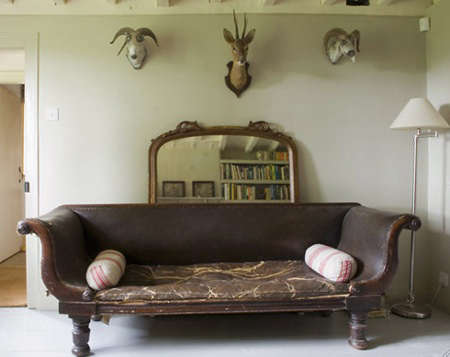
There are two kinds of people in this world: the “I just need somewhere to sit” crowd, and the “I want my living room to feel like a candlelit English library where a mysterious aunt leaves you her estate” crowd. The Anthropologie Cotswold Sofa is very much for Group Two.
With its rich, burnished leather and old-world proportions, the Cotswold has the kind of presence that doesn’t politely blend in. It enters the room like a well-dressed guest, takes one look at your throw pillows, and silently judges whether they’re “handwoven” or “came in a two-pack.”
In this guide, we’ll break down what makes the Anthropologie Cotswold Sofa special, how it’s built, what it feels like to live with, and how to style (and maintain) it so your “vintage charm” doesn’t drift into “abandoned film set.”
What the Anthropologie Cotswold Sofa Is (and Why People Still Talk About It)
The Cotswold Sofa is best described as heritage vibes in leather form. It’s known for a graceful, traditional silhouette, upholstered in Italian top-grain leather with a warm, mahogany-toned finish. Anthropologie’s description emphasizes “ample proportions,” “heirloom-quality,” and a finish described as “burnished mahogany leather,” which is basically the furniture equivalent of “aged wine and good manners.”
Beyond the looks, the Cotswold’s build leans classic: eight-way hand-tied seat construction, a kiln-dried hardwood frame, and cushioning listed as a polyfill/down blend. It’s also described as handcrafted in the USA and intended for professional cleaning rather than casual “I’ll just hit it with whatever’s under my sink” maintenance.
Signature details you’ll hear mentioned
- Italian top-grain leather with a deep, burnished tone
- Lathe-turned legs with a mahogany finish
- Eight-way hand-tied suspension (old-school craftsmanship signal)
- Kiln-dried hardwood frame for stability and longevity
- Down-blend comfort for a softer, more relaxed sit
The Look: “English Country House,” but Make It Livable
Remodelista famously framed the Cotswold as a way to get the look of a battered leather sofa spotted in an English country housewithout needing to inherit the country house (minor inconvenience). That’s still the core appeal: it reads classic, storied, and a little romantic, with just enough ruggedness to feel approachable.
The secret sauce is the leather tone. That burnished mahogany vibe is neither flat nor plasticky; it’s meant to feel warm and dimensional, like it already has a few stories to tell. And if you like patina, leather can reward you over timescuffs and subtle shifts become part of the character rather than a crisis.
Style directions that work especially well
- Traditional + collected: antique side tables, layered rugs, framed art that looks like it has opinions
- Modern contrast: crisp walls, clean-lined lighting, and the sofa as the “old soul” anchor
- Cottagecore adjacent: linen curtains, soft neutrals, and one dramatic vase of branches you “found” (sure)
- Grandmillennial: pattern mixing, brass accents, and a throw blanket that looks like it came from a charming inn
Comfort: How It Sits, Lounges, and Hosts Your “One More Episode” Nights
Comfort is where people’s preferences get very personal, very fast. Some of us want a sofa that’s supportive and upright; others want something that basically becomes a horizontal lifestyle. The Cotswold leans more “structured classic” than “marshmallow cloud,” especially compared to ultra-deep modern loungers.
One detail often associated with the Cotswold’s listing is a relatively tall seat height (noted as 21 inches in a published product description). A higher seat can feel easier to get in and out ofparticularly if you prefer a more formal sitwhile still allowing for relaxed lounging with pillows and a throw.
If you’re shopping secondhand, listings commonly place the overall footprint around 96 inches wide and roughly 38 inches tall, with a depth around 38.5 inches. In real life, that reads as generously sized without being a sectional-level takeover.
How to “test” comfort (even if you’re shopping online)
A solid rule of thumb from sofa-buying guides: think about your posture habits. If you like sitting upright with feet flat and knees near 90 degrees, you’ll want a depth and height that supports that position. If you’re a curl-up, sprawl, and nap person, you’ll care more about depth and the ability to sink in without sliding forward.
Construction Talk (Without the Boring Part)
Sofa marketing loves fancy terms, but a few details genuinely matterespecially when you’re paying for a piece intended to last. The Cotswold’s standout construction callout is eight-way hand-tied seat suspension.
What “eight-way hand-tied” actually means
In traditional upholstery, individual coil springs are secured and tied with twine in multiple directions so the seat behaves consistently and stays supportive over time. It’s labor-intensive, and when done well, it can feel balancedsupportive, with a controlled “give.” Some designers describe it as springs being attached in multiple directions to keep them locked in place.
Here’s the nuance: eight-way hand-tied isn’t a magical spell. A well-made sinuous spring system can also perform beautifully, and experts point out that what matters is overall executionmaterials, gauge, joinery, and cushion qualitynot just the buzzword.
Why kiln-dried hardwood frames are a big deal
Wood frames can warp over time if the moisture content isn’t controlled. “Kiln-dried” is a signal that the wood has been dried in a controlled environment to reduce moisturehelping stability and reducing the odds of squeaks and shifts down the line. In plain English: fewer surprises, more years of steady support.
How to Style the Cotswold So It Doesn’t Look Like a Movie Prop
A leather sofa this rich can absolutely carry a roomso the rest of the space should support it, not compete like it’s auditioning for the same role.
Pairing colors and materials
- Light textiles: cream, oatmeal, and flax tones keep the room airy against deep leather.
- Natural woods: walnut, oak, or even painted vintage pieces all play nicely with a mahogany-toned leather.
- Metals with warmth: antique brass, aged bronze, or blackened steel add contrast without getting shiny and loud.
- Texture on texture: boucle pillows, woven throws, and a good rug keep leather from feeling “too serious.”
Build a “Cotswold corner” with companion pieces
Anthropologie has also referenced complementary pieces in the Cotswold family. For example, the Cotswold Chair is described with Italian top-grain leather, a kiln-dried frame, and a removable down cushiondesigned as a partner piece to the sofa. There’s also a Cotswold bench ottoman (in linen upholstery) built with a kiln-dried hardwood frame and down fill, sized long enough to pull double duty as a footrest or extra perch.
Practical Reality Check: Fit, Placement, and “Floating” the Sofa
Before you fall in love and start naming it (don’t pretend you’ve never done it), measure. A roughly 96-inch-wide sofa needs more than wall space; it needs delivery clearance and breathing room for circulation.
Quick measuring checklist
- Door widths, hallway turns, stairwell clearances
- Elevator interior dimensions (if you live in a building)
- Room layout with walking paths (aim for comfortable flow around coffee tables)
- Distance from TV or focal point so the room doesn’t feel cramped
Also consider whether your sofa will “float” (sit away from the wall). In testing of Anthropologie sofas, Apartment Therapy noted that some leather styles include back paneling that looks finished from behinduseful if you want the sofa in the center of the room rather than shoved against a wall like it’s in time-out.
Care & Cleaning: How to Keep Leather Looking Rich (Not Rough)
Leather is forgiving in some waysspills can often be wiped quicklybut it also has strong opinions about what products you use. The goal is to keep it clean and conditioned without drying it out.
Simple maintenance schedule
- Weekly: dust/wipe down and remove debris (especially if you have pets)
- Monthly: more thorough cleaning and attention to seams and crevices
- As needed: spot-clean spills right away (blot, don’t scrub like you’re sanding a deck)
Cleaning guides often recommend gentle methods: dust regularly and use a soft microfiber cloth. One commonly suggested at-home approach is a mild wipe-down using a vinegar-and-water mix on a cloth, followed by dryingwhile avoiding harsh products that can strip oils.
Always check the upholstery tag/care label
Good Housekeeping emphasizes locating the upholstery tag (often under cushions) and decoding care label codes (like W, W/S, S, or X) so you don’t accidentally use the wrong cleaner. When in doubt, test any cleaner on an inconspicuous spot first.
Vacuuming counts (yes, even for leather)
Better Homes & Gardens notes that vacuuming your couch helps remove dust, crumbs, and debrisespecially between cushionssupporting a cleaner home environment. Even if leather doesn’t trap particles like fabric, your seat creases and cushion gaps absolutely can.
Buying Tips: New, Secondhand, and What to Watch For
Depending on availability, you may encounter the Cotswold through resale or vintage markets. That can be a winespecially for a leather sofabecause you can sometimes get a piece with early patina already started (the furniture equivalent of “broken-in sneakers,” but way more expensive).
Secondhand checklist (the “don’t get catfished by a couch” edition)
- Seat sag: sit in multiple spots; check if the support feels uneven.
- Frame stability: gently rock the sofa; listen for creaks or movement.
- Leather condition: look for excessive dryness, cracking, or peeling in high-touch zones.
- Odors: smoke and mildew are hard to reversebe picky.
- Cushion fill: down blends can compress; see whether they rebound or feel permanently flattened.
Consumer guidance on couch shopping often emphasizes avoiding common mistakes like ignoring construction basics (frame, support system, and cushion materials) and buying for looks alone. Translation: the sofa is not just a pretty face; it’s a daily relationship.
Who the Cotswold Is Perfect For (and Who Should Politely Walk Away)
This sofa is your soulmate if you…
- love classic silhouettes and rich, warm leather tones
- want a “statement sofa” that still feels timeless
- care about traditional construction details
- like a living room that feels curated, not temporary
You might want a different sofa if you…
- want a super low, ultra-deep “sink-in and disappear” lounge seat
- hate the idea of patina, scuffs, or visible life marks on leather
- need fully machine-washable slipcovers as your non-negotiable
Conclusion: A Sofa With Storybook Energy (and Real-World Backbone)
The Anthropologie Cotswold Sofa sits at that sweet spot between romance and reality: a traditional, library-ready leather look paired with construction details meant to support real lounging, real hosting, and real life. If you want a living room anchor that feels warm, grounded, and quietly dramatic, the Cotswold checks a lot of boxeswithout screaming for attention.
Just remember: the best Cotswold setup isn’t a perfect showroom. It’s a space that looks lived-in on purposegood lighting, layered textures, and a sofa that invites you to stay a while (even if you tell yourself you’ll “only sit for a minute”).
Experience Notes (Extra 500+ Words): Living With a Cotswold-Style Leather Sofa
Let’s talk about the part nobody puts in the glamorous product photos: what it’s actually like to share your life with a big, beautiful leather sofa that looks like it knows what a decanter is.
First, the arrival moment is real. A sofa in the roughly 96-inch range isn’t just “a delivery,” it’s an event. If you’re moving it into a smaller home or apartment, the best emotional preparation is to assume the sofa will fit through the door only after you remove something you didn’t think you’d need to remove. Sometimes it’s the door. Sometimes it’s your confidence. Measure everything, then measure again with the optimism removed.
Once it’s in place, the visual payoff is immediate. Dark, burnished leather has a way of making a room feel “finished,” even if you still have a pile of unsorted mail on the console. It anchors light walls, it makes wood tones look richer, and it pairs beautifully with soft textiles. The sofa’s traditional attitude also makes inexpensive accessories look more intentionalsuddenly that plain wool throw reads as “minimalist styling choice” instead of “I bought it in a panic.”
Now, comfort. If you’re used to very soft, high-bounce cushions, a heritage-style leather sofa can feel more supportive than melty. Apartment Therapy’s testing notes on some Anthropologie leather sofas mention firmer seats and less bounce-back in certain designs, which can actually be a plus if you dislike the “I stood up and my sofa kept my shape” phenomenon. In day-to-day life, that support can be great for conversation seating, reading, and hostingwhile still being cozy enough for movie nights if you add a lumbar pillow and a blanket that has no business being that soft.
The patina journey is where personality comes in. Top-grain leather tends to look more uniform at first, then gradually picks up subtle changes where you actually sit and touch the sofa. You’ll notice it most on arms and front edges. If you love character, it’s satisfying: the sofa starts to look like it belongs to your home specifically. If you prefer “pristine always,” you may find yourself policing the sofa like a museum guard. (Friendly suggestion: choose peace.)
Cleaning, surprisingly, is both easier and more important than you think. For everyday lifecrumbs, dust, pet hairbasic upkeep goes a long way. Better Homes & Gardens recommends regular vacuuming routines to keep couches clean, including getting into cushion gaps. Even leather benefits here, because the creases and seams are basically tiny snack-trap valleys. The Spruce recommends weekly dusting and monthly deeper cleaning, and many leather-care guides favor gentle wipe-downs with soft cloths rather than aggressive products.
The most useful “real-world” habit is a fast response to spills. Leather often gives you a window to blot and wipe, but it does not appreciate harsh chemistry or frantic scrubbing. Good Housekeeping’s advice to check the upholstery care label codes is especially relevant if you’re dealing with mixed materials in your room (pillows, rugs, adjacent chairs), because it keeps you from using one cleaner on everything like you’re trying to win a speedrun.
Finally, styling evolves. After a few weeks, most people stop decorating around a statement sofa and start decorating with it. You’ll move the side table slightly closer. You’ll add a lamp with warmer light. You’ll try one patterned pillow, then another, and thensuddenlyyou’ll have a “pillow strategy.” That’s the hidden joy of a piece like the Cotswold: it doesn’t just fill a space; it nudges the whole room toward a more intentional, layered look.
In other words, a Cotswold-style sofa is the kind of furniture that rewards you over time. It becomes the place you drink coffee, host friends, read, nap, and pretend you don’t nap. And if you take care of it, it will keep returning the favorquietly, stylishly, and with the faint energy of a sofa that expects you to own at least one good candle.