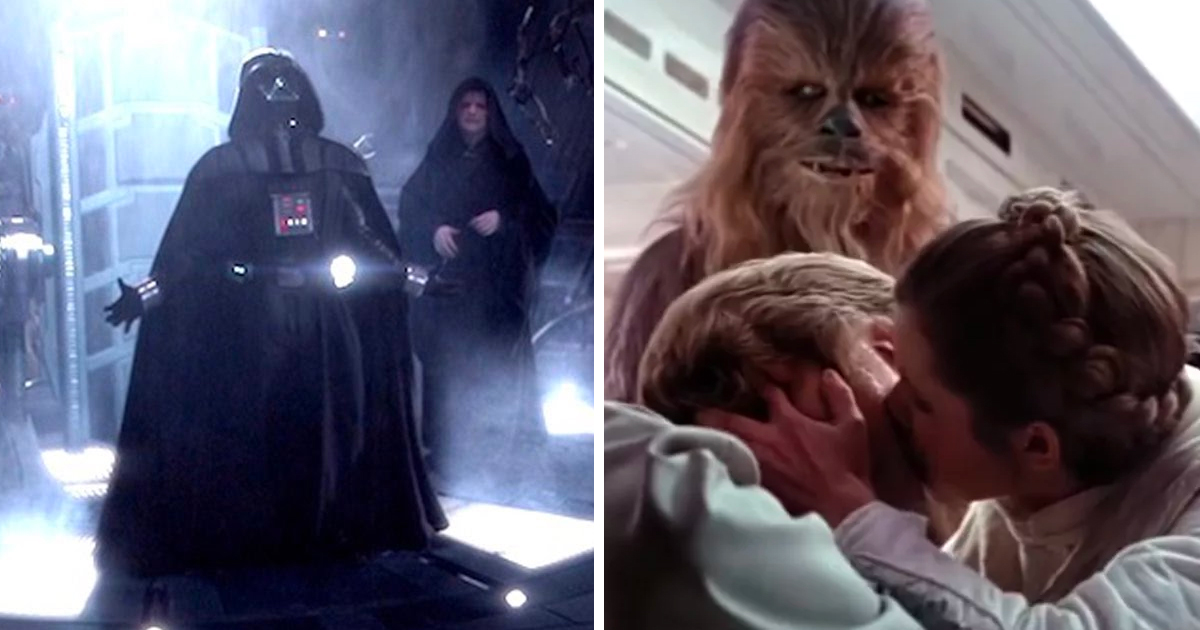
Note: This article discusses fictional characters for educational and pop-culture analysis only. It is not a real clinical diagnosis of real people, and “mental illness” should never be used as a punchline, insult, or shortcut for villainy.
The Galaxy Far, Far Away Might Need a Therapist’s Couch
Few movie universes have produced more lightsaber duels, family secrets, political meltdowns, and emotionally questionable life choices than Star Wars. One minute a character is meditating about balance; the next minute he is chopping off a hand, hiding in a swamp, joining a space dictatorship, or insisting that fear leads to anger, anger leads to hate, and hate leads to a very expensive merchandising franchise.
The headline “Every Star Wars character has a mental illness, according to scientists” sounds like something shouted by a droid after scanning the Skywalker family group chat. But there is a real academic idea behind the joke. Psychiatrists and psychologists have used Star Wars characters as teaching tools for understanding trauma, personality traits, attachment, grief, anxiety, moral injury, narcissism, impulsivity, and recovery. Researchers have not literally proven that every character has a clinical disorder. Instead, they have argued that the saga is packed with behaviors and storylines that help students discuss mental health in a memorable way.
That distinction matters. Fictional characters are not patients. They cannot sit for an interview, describe symptoms, share medical history, or argue with insurance. Still, pop culture can make mental health concepts easier to understand. And Star Wars is especially useful because its heroes and villains are not emotionally tidy. They are brave, wounded, stubborn, lonely, hopeful, terrified, and occasionally terrible at communication. In other words, they are dramatic space people with very human problems.
What Scientists Actually Said About Star Wars and Mental Illness
The strongest real-world example involves Anakin Skywalker, later known as Darth Vader. A widely discussed psychiatric analysis argued that Anakin shows traits consistent with borderline personality disorder, including intense fear of abandonment, unstable relationships, impulsive decisions, rage, identity disturbance, and black-and-white thinking. In plain English: Anakin does not merely have “bad vibes.” He has a pattern of emotional instability that makes his fall to the dark side more psychologically readable.
Other academic articles have used both light-side and dark-side characters to teach psychiatry. The point is not to laugh at mental illness. The point is to examine how trauma, personality development, power, family systems, and moral choices interact. A galaxy full of war, slavery, genocide, exile, mind control, political collapse, and dramatic capes is basically a stress laboratory with better soundtrack cues.
Modern mental health organizations define mental illness as a mental, behavioral, or emotional disorder that can vary in severity and impairment. That definition is broad enough to include anxiety disorders, mood disorders, trauma-related disorders, personality disorders, substance use disorders, and many other conditions. But a proper diagnosis requires careful clinical evaluation, not a fan theory written after three coffees and a rewatch of Revenge of the Sith.
Anakin Skywalker: Fear of Loss, Rage, and the Dark Side Spiral
Anakin is the easiest character to analyze because the films almost hand us the case notes. The official Star Wars story describes him as caring and compassionate but deeply afraid of loss. That fear begins early. He is separated from his mother, trained in a rigid institution, praised for power, criticized for emotion, manipulated by Palpatine, and haunted by visions of death. By the time he becomes Darth Vader, he is not simply “evil.” He is emotionally overwhelmed, morally compromised, and desperate to control what cannot be controlled.
Several traits make Anakin a textbook pop-culture discussion of borderline personality patterns. He fears abandonment so intensely that he makes catastrophic decisions to prevent it. He idealizes people, then turns on them. He experiences rage that moves faster than a podracer. His identity shifts from gifted child to Jedi hero to secret husband to Sith apprentice to machine-like enforcer. He also shows impulsivity, especially when fear and humiliation collide.
None of this excuses mass violence. Mental health analysis should explain behavior, not erase responsibility. That is an important ethical line. Saying “Anakin had trauma” is not the same as saying “Anakin had no choice.” The tragedy of Darth Vader is that pain, power, and manipulation meet at exactly the wrong time, and his choices destroy nearly everyone he loves. The Force may be mystical, but the emotional pattern is painfully familiar: untreated fear becomes control, control becomes obsession, and obsession becomes ruin.
Darth Vader: Trauma Armor With a Breathing Machine
Darth Vader is what happens when a person builds an entire identity around pain. His armor keeps him alive, but it also functions as a giant black metaphor. He is sealed off, regulated by machinery, and reduced to command, punishment, and obedience. If Anakin is emotional chaos, Vader is emotional shutdown.
From a trauma-informed perspective, Vader’s behavior can be read as avoidance, dissociation from his former self, and rigid control. He rejects vulnerability because vulnerability once meant loss. He serves the Emperor because domination feels safer than grief. He responds to uncertainty with intimidation because the alternative would be feeling human again. In the workplace, this would be called “bad management.” In the Empire, it comes with a cape.
His redemption through Luke matters because it suggests that even deeply damaged identities can change. That does not make Vader a mental health role model. Please do not process grief by building a Death Star. But his final choice shows that moral repair, however incomplete, remains possible. The saga’s psychological power comes from that tension: damage is real, but destiny is not fixed.
Luke Skywalker: Anxiety, Trauma, and the Burden of Being the Hope Guy
Luke Skywalker is often framed as the clean heroic opposite of Vader, but his mental landscape is not exactly a wellness retreat. He grows up isolated on Tatooine, loses parental figures, discovers his father is the galaxy’s scariest cyborg, watches friends suffer, carries the pressure of restoring the Jedi, and later retreats into exile after Ben Solo’s fall.
Luke’s arc can be discussed through anxiety, survivor guilt, trauma, and depressive withdrawal. In the original trilogy, he wrestles with fear and impulsivity. In the sequel era, he shows avoidance and shame. His self-exile is not simply “grumpy old man on island.” It looks like a person overwhelmed by failure, convinced that removing himself from the world will prevent more harm.
This is one reason Luke remains compelling. He is not brave because he never feels fear. He is brave because fear keeps returning, and he keeps having to decide what to do with it. That is a useful mental health lesson: courage is not the absence of symptoms; it is the ability to act with values even when distress is loud.
Leia Organa: Grief, Resilience, and Emotional Containment
Princess Leia, later General Leia, may be the strongest person in the galaxy, which is another way of saying she has been through enough trauma to make a therapist cancel lunch. She loses Alderaan, her adoptive family, her biological parents, her son to the dark side, her marriage to emotional distance, her brother to exile, and many comrades to war.
Leia often shows resilience through action. She does not collapse when grief arrives; she organizes, commands, jokes, and keeps moving. That can be admirable, but it also raises a real psychological question: when does resilience become emotional suppression? Leia’s strength is inspiring because she continues fighting. Yet her story also reminds us that high-functioning people can still be grieving. Not everyone who needs support looks visibly broken. Some people wear white robes, lead rebellions, and deliver perfect sarcastic one-liners.
Kylo Ren: Identity Crisis With a Lightsaber Problem
Kylo Ren may be the franchise’s clearest portrait of identity disturbance in the sequel era. Born Ben Solo, he is the child of legendary parents, the nephew of a mythic Jedi, and the grandson of Darth Vader. That is a lot of family branding for one emotionally unstable young man. Some people inherit a watch. Ben inherited intergenerational trauma, galactic expectations, and a helmet he absolutely did not need.
Kylo’s behavior invites discussion of rage, attachment injury, narcissistic traits, moral conflict, and susceptibility to manipulation. He wants to destroy the past but is obsessed with it. He rejects his family but cannot escape them. He performs power while feeling hollow. His tantrums are not subtle; somewhere in the First Order, a budget officer is filing yet another “lightsaber damage to wall panel” report.
Academic discussions of Kylo Ren have focused on risk and protective factors, including whether redemption is possible. That is a richer question than simply asking, “Is he crazy?” The better question is: what influences pushed him toward violence, and what relationships still pulled him toward repair? Mental health analysis becomes more useful when it looks at context, not just labels.
Obi-Wan Kenobi: Duty, Grief, and the Quiet Cost of Survival
Obi-Wan Kenobi is often calm, witty, and disciplined. He also loses his master, loses Satine, loses Anakin, witnesses the fall of the Jedi Order, and spends years hiding in the desert watching over Luke. That is not retirement. That is grief with sand.
Obi-Wan’s psychology can be discussed through moral injury and complicated grief. Moral injury occurs when a person experiences, witnesses, or participates in events that violate deeply held values. Obi-Wan believed in the Jedi, trained Anakin, and then had to fight him on Mustafar. His pain is not only sadness; it is the collapse of a worldview.
His later growth shows the importance of reconnection. He does not heal by pretending the past never happened. He heals by accepting responsibility without drowning in it. That balance is difficult in real life too. Many people carry regret for things they could not fully control. Obi-Wan’s story suggests that responsibility and self-forgiveness do not have to be enemies.
Yoda: Wise Mentor or Avoidant Swamp Therapist?
Yoda is a beloved teacher, but even the little green legend has psychological baggage. He senses danger in Anakin but cannot stop the Jedi Order from failing. After the rise of the Empire, he goes into exile on Dagobah. On one level, this is strategic survival. On another, it is avoidance dressed in moss.
Yoda teaches emotional regulation better than almost anyone in the saga. He warns about fear, anger, and hate. Yet the Jedi system he represents sometimes treats attachment as a threat rather than a human need. That rigidity may have made Anakin less likely to seek help. If your emotional support policy is “do not have emotions,” do not be shocked when the gifted teenager explodes like a reactor core.
Yoda’s arc is useful because it shows that wisdom does not mean perfection. Mentors can be insightful and still wrong. Institutions can teach discipline and still miss emotional reality. In mental health terms, regulation is healthy; repression is not.
Palpatine: Manipulation, Narcissism, and Predatory Control
Emperor Palpatine is not usually analyzed as “mentally ill” in a sympathetic sense. He is better understood as a fictional study in manipulation, coercive control, sadism, and narcissistic domination. He identifies vulnerabilities, isolates targets, flatters ambition, feeds fear, and offers power as medicine.
His relationship with Anakin resembles grooming. He presents himself as the only person who understands Anakin’s needs, then gradually turns him against other support systems. That pattern is psychologically important. Abuse often works by making the victim feel specially chosen, misunderstood by everyone else, and dependent on the manipulator for survival.
Palpatine is terrifying not because he has lightning fingers, although that is certainly a workplace hazard. He is terrifying because he understands emotional leverage. His greatest weapon is not the Force; it is the ability to make fear sound like wisdom.
Han Solo, Chewbacca, Rey, and the Rest of the Emotional Cantina
Han Solo’s swagger can be read as defensive humor and avoidance. He hides tenderness behind sarcasm, debt, and speed. Chewbacca demonstrates loyalty, grief, and emotional expressiveness without needing long speeches. Rey shows abandonment wounds, identity hunger, and the ache of waiting for belonging. Finn wrestles with trauma after being raised as a stormtrooper and then choosing his own moral path. Poe Dameron shows impulsivity and risk-taking, but also leadership growth. Padmé Amidala shows political strength under pressure but is caught in a relationship that becomes increasingly secretive, intense, and dangerous.
That is why the “every character has a mental illness” headline works as satire. The galaxy is full of people shaped by stress. But stress is not always illness. Grief is not automatically depression. Anger is not automatically a disorder. Fear is not automatically pathology. The useful takeaway is not that everyone in Star Wars needs a diagnosis. It is that everyone in Star Wars has a psychology.
Why Pop Culture Diagnosis Can Be Helpfuland Risky
Using fictional characters to teach mental health can reduce fear and make complex ideas easier to discuss. Students remember Anakin’s fear of abandonment more easily than a dry paragraph in a textbook. Viewers may also recognize parts of themselves in Luke’s anxiety, Leia’s grief, Finn’s recovery, or Rey’s longing for identity.
However, there is a risk. Media often links mental illness with violence, villainy, and unpredictability. That can reinforce stigma. Most people living with mental health conditions are not dangerous Sith Lords. They are classmates, coworkers, parents, artists, students, veterans, neighbors, and friends. Responsible writing should avoid turning diagnoses into insults or treating mental illness as the secret ingredient in evil.
The better approach is compassionate curiosity. Instead of asking, “What is wrong with this character?” ask, “What happened to this character, what choices did they make, what support did they lack, and what could healing look like?” That question works in fiction. It also works in real life.
Experiences Related to This Topic: Watching Star Wars Like a Mental Health Mirror
One of the most interesting experiences connected to Star Wars and mental health is how differently people respond to the same character depending on their own life history. A viewer who has struggled with anger may see Anakin not as a monster from the beginning, but as a warning about what happens when fear is never safely discussed. Someone who has carried family pressure may understand Kylo Ren’s identity crisis, even while rejecting his violent choices. A person who has experienced grief may look at Leia and recognize the strange habit of becoming “the strong one” because everyone else needs you to keep functioning.
That is the secret power of the saga. The spaceships are cool, but the emotional recognition is what keeps people returning. Many fans first meet Luke as a hopeful teenager staring at twin suns. Later in life, they may understand older Lukethe exhausted teacher who made a terrible mistake and could not forgive himself. The same character changes because the viewer changes. That experience can feel surprisingly personal. The movie did not move; you did.
For students, teachers, writers, and mental health advocates, Star Wars offers a safe distance for difficult conversations. It can be easier to talk about trauma through Obi-Wan than through one’s own family history. It can be easier to discuss emotional regulation through Yoda than through a personal panic attack. It can be easier to examine manipulation through Palpatine than through a real relationship that still hurts. Fiction gives people a bridge. You can stand on one side with popcorn and slowly walk toward insight.
There is also a valuable lesson in how the Jedi misunderstand emotion. They often teach control, but not always connection. Many real people grow up with similar messages: do not be angry, do not be sad, do not be needy, do not be afraid. The result is not peace. The result is emotional pressure with nowhere to go. Anakin’s story exaggerates that truth into opera, lava, and choking hazards, but the basic lesson is grounded. Emotions ignored do not vanish. They usually come back wearing a mask.
At the same time, fans often find hope in redemption arcs. Vader’s final act does not erase his harm, but it does challenge the idea that people are only the worst thing they have done. Finn’s escape from the First Order suggests that identity can be rebuilt. Rey’s choice to define herself beyond bloodline speaks to anyone who has feared being trapped by family history. Leia’s endurance shows that grief and leadership can coexist. Even Han’s awkward tenderness reminds us that love does not always arrive with perfect vocabulary; sometimes it says, “I know.”
The most responsible way to experience this topic is not to walk away saying, “Every Star Wars character is mentally ill.” A better takeaway is: every character carries wounds, defenses, desires, and choices. That is why they feel alive. The galaxy far, far away helps us talk about the galaxy uncomfortably close to homethe one inside our own minds, families, fears, and hopes. And if a movie about laser swords can make someone more compassionate about mental health, then the Force is doing better work than most committee meetings.
Conclusion: The Force Is Strong, but So Is Therapy
So, does every Star Wars character have a mental illness according to scientists? Not literally. The stronger and more accurate answer is that scientists, psychiatrists, and psychologists have found Star Wars useful for teaching mental health concepts because its characters show vivid patterns of trauma, fear, grief, identity conflict, attachment struggles, manipulation, and recovery.
Anakin Skywalker remains the most famous example, especially because of analyses connecting his behavior with borderline personality traits. But the wider saga offers much more than one diagnosis. Luke shows the burden of fear and failure. Leia shows resilience under grief. Kylo Ren shows identity conflict and rage. Obi-Wan shows moral injury. Yoda shows the limits of emotional repression. Palpatine shows predatory manipulation. Together, they prove that great storytelling is rarely about perfect people. It is about wounded people making choices under pressure.
The healthiest way to read Star Wars is not as a diagnostic manual with lightsabers. It is as a mythic mirror. It reminds us that fear can distort love, power can imitate safety, isolation can deepen pain, and connection can reopen the path to hope. In that sense, the most important line may not be “May the Force be with you.” It might be: may you find support before you build a moon-sized battle station.