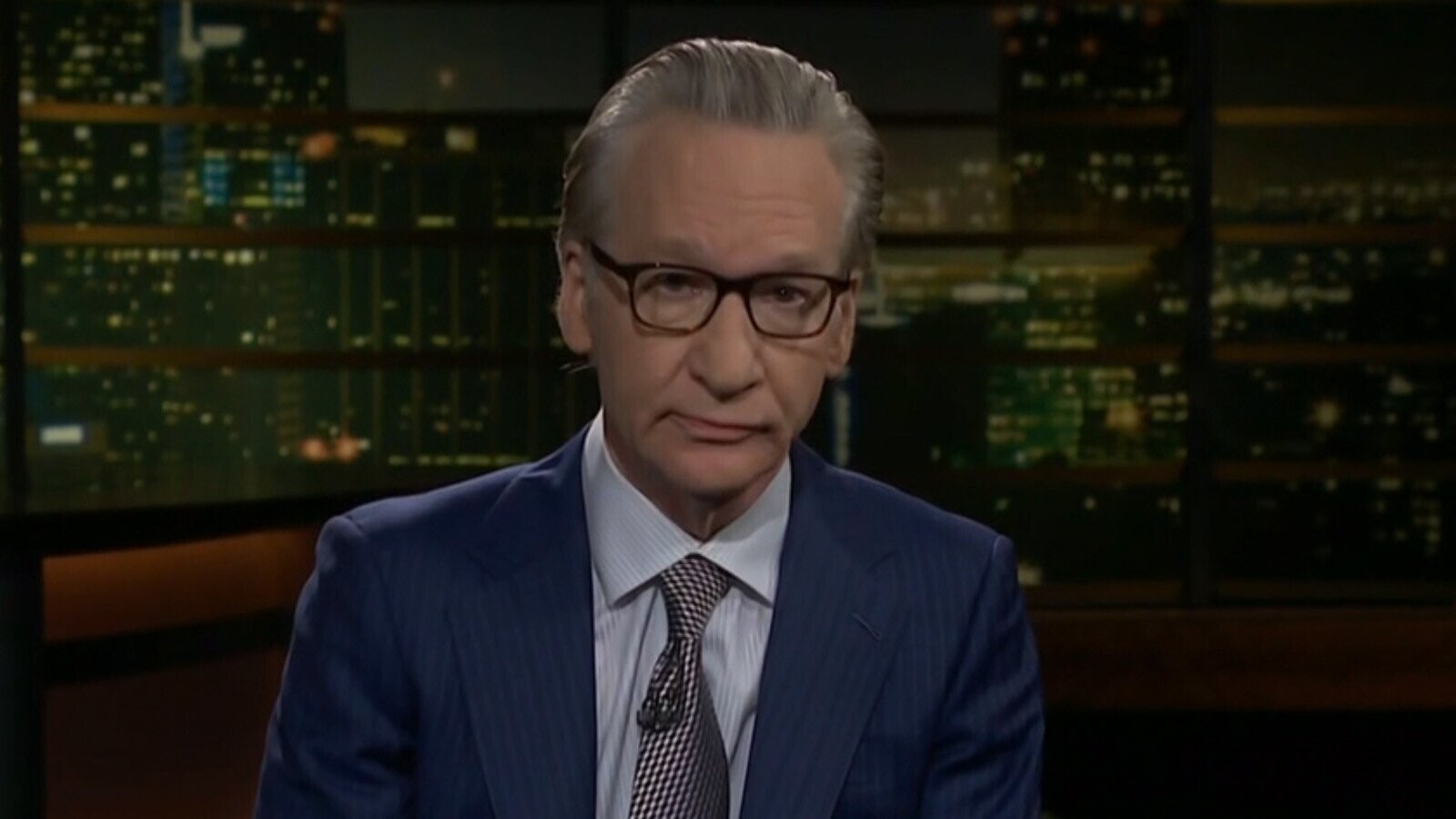
For decades, Bill Maher has occupied a strange and profitable corner of American media: too liberal for conservatives, too smug for many liberals, too allergic to soft language for polite television, and somehow still invited back every Friday night. That tension was the product. Fans did not tune in because Maher made everyone feel cozy. They tuned in because he said the thing at the dinner table that made half the guests choke on their salad and the other half admit, reluctantly, “Okay, he has a point.”
But lately, something has shifted. The eye-rolls are no longer coming only from his longtime critics. They are coming from people who once defended him. Viewers who liked his skepticism, his atheism, his anti-authoritarian streak, and his willingness to make political comedy feel dangerous again are now asking a harsher question: when did Bill Maher become the guy repeating the same complaint at every party?
The answer is not simple, and it is not just about one controversial dinner, one anti-woke monologue, or one podcast clip. The growing fatigue around Maher comes from a broader collision between his old brand and the current media moment. He still thinks he is the last honest adult in the room. Many of his fans now feel as if he has become the room’s loudest uncle, and he will not stop talking about college kids, pronouns, and why nobody laughs correctly anymore.
Bill Maher Built His Career on Irritating Everyone
To understand why the current backlash feels different, it helps to remember why Maher became famous in the first place. Long before Real Time with Bill Maher became an HBO fixture, Maher hosted Politically Incorrect, a show built around the idea that politics should be argued about, mocked, and occasionally dragged into the backyard for a bare-knuckle fight. His appeal was not warmth. It was friction.
Maher’s fans admired that he seemed allergic to party-line thinking. He mocked religion, criticized conservatives, challenged liberal pieties, defended free speech, supported marijuana legalization, and treated sacred cows like piñatas. In the 2000s and 2010s, that made him feel refreshing to viewers tired of overly cautious cable news panels. Maher was not always right, but he was rarely boring.
That is why many longtime viewers tolerated the arrogance. The smirk came with the package. So did the sweeping generalizations, the theatrical impatience, and the habit of treating disagreement as evidence that the other person had not read enough newspapers. Fans accepted the flaws because the show often delivered something valuable: a sharp, funny, unpredictable conversation about politics and culture.
The problem is that unpredictability has faded. Today, many fans can guess where a Maher segment is going before the punchline lands. If the topic involves young activists, campus politics, online language, celebrity causes, public health, or Democrats losing elections, the route often leads back to the same destination: the left has gone too far, young people are naive, and Bill is the brave truth-teller willing to say it. Sometimes he is right. Sometimes he is partly right. But comedy has a shelf life, and repetition is where sharpness goes to retire.
The Trump Dinner Became a Symbol of Something Bigger
The 2025 White House dinner with Donald Trump became a flashpoint because it touched a nerve that had been twitching for years. Maher, a longtime critic of Trump, attended a dinner arranged by Kid Rock and later described Trump’s private behavior as surprisingly cordial. He emphasized that the private Trump he encountered was more gracious and self-aware than the public figure he had spent years attacking.
Maher framed the meeting as an example of dialogue across political divides. To some viewers, that sounded reasonable. Adults should talk. Political opponents can share a meal. A comedian interviewing or meeting a president is not, by itself, a moral collapse. The backlash came from the way Maher seemed to narrate the encounter as a revelation, as if personal charm should meaningfully alter the public record.
That is where many fans felt the floor tilt. They did not necessarily object to Maher meeting Trump. They objected to the suggestion that a pleasant private dinner deserved so much weight in evaluating a public leader. For viewers who had watched Maher warn for years about Trump’s behavior, the tone felt less like bridge-building and more like being dazzled by proximity to power.
Larry David’s satirical response captured why the episode stung. The joke was not simply “Bill met Trump.” It was that Maher, of all people, seemed vulnerable to the oldest trick in politics: mistaking a charming private interaction for evidence of public moderation. The sharpest criticism was not that Maher had betrayed liberalism. It was that he had betrayed his own supposed immunity to nonsense.
Fans Are Not Just Angry; They Are Tired
Anger gets headlines, but fatigue is the more interesting story. Many former or wavering Maher fans do not sound outraged anymore. They sound bored. That is worse for a comedian. Outrage can still be monetized. Boredom quietly changes the channel.
For years, Maher’s defenders argued that his critics were too sensitive. They said he was a comedian, not a professor. They said satire should offend. They said free speech includes uncomfortable jokes. Those points still matter. But they do not answer the core complaint now. The issue is not that Maher offends people. The issue is that he increasingly offends them in predictable ways.
A great contrarian surprises the audience. A lazy contrarian simply turns left when everyone else turns right, then congratulates himself for knowing how steering works. Maher’s best moments come when he pierces hypocrisy across the spectrum. His weakest moments come when every cultural argument becomes another sermon about how modern liberals ruined everything by being annoying online.
Even fans who agree with some of Maher’s critiques can feel exhausted by the framing. Yes, progressive spaces can become performative. Yes, social media rewards outrage. Yes, Democrats sometimes struggle to speak like normal human beings instead of committee-approved pamphlets. But when every problem is filtered through the same “kids these days” lens, the analysis starts to feel less like insight and more like a screensaver.
The Anti-Woke Loop Has Become His Comfort Zone
Maher’s anti-woke commentary is not new. He has spent years arguing that political correctness, identity politics, and online outrage are damaging liberal credibility. Sometimes his criticism lands because there are real examples of overcorrection, moral grandstanding, and language policing that alienate ordinary voters. A healthy liberal movement should be able to laugh at itself. Nobody ever won an election by making voters feel as if they need a graduate seminar before ordering coffee.
But Maher’s fixation has created a new problem: the critique now feels bigger than the evidence. A few extreme examples from campus culture or social media can become, in his telling, a sweeping diagnosis of an entire generation or political movement. That leap may make for an easy monologue, but it can flatten reality. America’s young people are not a single TikTok account with student debt. Progressives are not all blue-haired scolds hiding in a human resources department. Democrats are not losing every argument because someone on the internet used the word “problematic.”
The irony is that Maher often criticizes ideological bubbles while sounding increasingly comfortable inside his own. His version of the bubble is not a campus safe space. It is a leather chair, a podcast microphone, and a rotating cast of guests who help him complain about the same cultural targets. The aesthetic is different. The repetition is familiar.
Club Random Made the Brand Biggerand Looser
Maher’s podcast, Club Random, expanded his media presence beyond HBO. The format promises relaxed, unpredictable conversations with celebrities, comedians, thinkers, and public figures. In theory, it is a perfect space for Maher. He is quick, opinionated, and often better when conversations wander instead of obeying television timing.
But the podcast era also creates overexposure. On Real Time, Maher’s persona is edited into a weekly hour with structure: monologue, interview, panel, and “New Rules.” On a podcast, the guardrails are looser. That can produce honesty, but it can also produce grievance jazz. A thought that might have been a tight joke on HBO can become a ten-minute riff about how everyone is too sensitive, nobody understands comedy, and civilization began declining when people stopped smoking in restaurants.
For fans, this can feel like getting too much of a flavor they used to enjoy. A little horseradish wakes up a sandwich. A bowl of horseradish is a dare.
Success Does Not Mean the Criticism Is Fake
It would be wrong to suggest Maher is finished. He is not. Real Time remains a major HBO program, and the network’s continued investment in the show proves that Maher still has an audience. He has also remained culturally relevant enough to receive major comedy recognition and to generate headlines whenever he speaks. In a fragmented media landscape, that is no small achievement.
But institutional success and audience goodwill are not the same thing. A show can be renewed while viewers complain. A host can remain influential while former fans drift away. A comedian can be honored for a long career while people quietly admit they no longer enjoy the current version of the act.
That distinction matters because Maher sometimes treats criticism as proof that he is doing something brave. To be fair, some criticism of him is lazy. Some people do confuse disagreement with harm. Some online reactions are absurdly theatrical, as if every bad joke is a constitutional crisis wearing a tiny hat. But not every complaint is censorship. Sometimes the audience is simply saying, “We heard this one already.”
Why Former Fans Feel Personally Annoyed
The most frustrated Maher viewers are not people who never liked him. They are people who once felt he served a useful purpose. He was the liberal who would tell liberals when they sounded ridiculous. He was the atheist who challenged religious certainty. He was the comic who called out Republican hypocrisy without pretending Democrats were saints. That role mattered.
Now, some fans feel he has confused being independent with being reflexively irritated by the left. There is a difference between criticizing your side and building a second career out of scolding it. The first can be intellectually honest. The second can become a brand strategy.
Fans also notice tone. Maher often speaks as if he alone remembers how adults used to behave. That may resonate with viewers who share his generational frustration, but it can alienate people who see the modern world as more complicated than “everyone got soft.” Younger viewers, especially, may not mind being challenged. They do mind being caricatured. Nobody enjoys being reduced to a punchline by someone who appears to have learned about their generation from viral clips and airport conversations.
The Comedy Problem: Punching in Every Direction Requires Aim
Maher has long argued that comedy should punch in every direction. That is a defensible principle. Comedy that only flatters its own audience becomes propaganda with better timing. The trouble is that punching in every direction still requires aim. If the target is too broad, the joke becomes foggy. If the target is too familiar, the joke becomes stale. If the target is always the same, the audience starts wondering whether the comedian is brave or just stuck.
Maher’s strongest comedy still comes from precision. When he identifies a specific hypocrisy, names the absurdity, and builds a joke around the contradiction, he can be excellent. His weakest material happens when he treats entire groups as if they share one brain and that brain just discovered a hashtag.
This is why the “Bill Maher backlash” is not really about whether comedy should be offensive. Of course comedy can be offensive. The better question is whether the offense reveals something. At its best, Maher’s comedy cuts through tribal nonsense. At its worst, it simply confirms the priors of viewers who already believe young people, activists, and modern liberals are the root of all inconvenience.
What Maher Still Gets Right
To be fair, Maher’s critics sometimes overcorrect. He is right that political tribes punish dissent too quickly. He is right that public debate has become performative and brittle. He is right that some progressive messaging sounds like it was assembled by people who have not spoken to a swing voter since the Obama administration. He is also right that humor cannot survive if every joke is treated like a legal deposition.
Those points are part of why fans stayed with him for so long. Maher can still identify weaknesses in liberal culture that other hosts avoid. He can still push guests into interesting exchanges. He can still deliver a closing monologue that makes people argue the next morning. In an age of algorithmic agreement, that has value.
The problem is not that Maher is always wrong. The problem is that being partly right has made him less curious. A comedian who built a career on skepticism should be skeptical of his own routines, too.
The Real Reason Fans Are Finally Sick of Bill Maher
Fans are not sick of Bill Maher because he changed completely. They are sick of him because he changed too little. The culture moved, the media ecosystem mutated, political coalitions scrambled, younger audiences developed new assumptions, and Maher kept returning to the same posture: the exasperated truth-teller surrounded by fools.
That posture once felt rebellious. Now it can feel rehearsed. The smirk that once signaled independence can now read as incuriosity. The anti-tribal stance can sound suspiciously like its own tribe. The jokes about everyone being too sensitive can become, unintentionally, a portrait of a comedian highly sensitive to the idea that audiences no longer laugh the way he wants them to.
There is still a place for Maher. American politics remains absurd enough to require every available comedian, satirist, ranter, panel host, and emotionally unstable group chat. But if Maher wants wavering fans back, he may need to do the one thing he often demands from others: update the priors. The audience is not asking him to become gentle. They are asking him to become surprising again.
Experiences Related to Watching Bill Maher Fatigue Set In
There is a specific experience many longtime viewers can recognize. You sit down to watch Real Time expecting the old spark. Maybe you have watched Maher for years. Maybe you do not agree with him on everything, but you appreciate the format: a monologue, a serious guest, a messy panel, and a final segment that might be brilliant or ridiculous. That unpredictability used to be the fun. You did not know whether you were about to nod, laugh, argue with the television, or text a friend, “You have to see this.”
Then the pattern starts to show. A topic comes up, and before Maher finishes the setup, you can feel where it is going. Young people are too fragile. The left is too woke. Democrats need to stop sounding weird. Someone on social media overreacted. A celebrity said something uninformed. A college student somewhere made a sign with too many words on it. The joke may still have a point, but the rhythm feels familiar. You are not listening for the conclusion anymore; you are waiting for the landing gear.
This is how fan fatigue usually works. It does not arrive as a dramatic breakup. Nobody stands in the rain holding a remote control and whispers, “Goodbye, Bill.” It happens slowly. You skip one episode. Then another. You watch clips instead of the full show. Then you stop clicking the clips because the headline already tells you the whole argument. Eventually, the show becomes something you used to watch, like a restaurant you once loved but now associate with a waiter who keeps explaining podcasts to you.
The Trump dinner controversy intensified that feeling because it made some fans question the judgment behind the persona. Maher has always been abrasive, but fans trusted that his abrasiveness served a purpose. He was supposed to be the guy who saw through flattery, branding, and political theater. When he seemed impressed by a cordial private encounter with a figure he had spent years warning about, some viewers felt a weird disappointment. It was not just political disagreement. It was like watching a magician get fooled by a card trick at his own birthday party.
There is also the experience of defending Maher and then realizing you no longer want the job. For years, fans could say, “Yes, he is smug, but listen to the point.” Or, “Yes, he goes too far, but comedy should go too far.” Or, “Yes, he annoys me, but he annoys everyone, and that is why he matters.” Those defenses still apply sometimes. But defending a public figure becomes exhausting when the same complaints keep resurfacing. At a certain point, even loyal viewers want hazard pay.
What makes this topic especially interesting is that Maher’s fan fatigue reflects a broader problem in political commentary. Audiences do not only judge whether a host is correct. They judge whether the host is evolving. A commentator can survive bad takes, awkward jokes, and controversial guests. What is harder to survive is the sense that the mind has stopped moving. Viewers can forgive a wrong turn. They are less patient with a traffic circle.
For many former fans, the frustration comes with nostalgia. They remember when Maher felt necessary. They remember when his skepticism cut through post-9/11 conformity, religious certainty, and cable-news theater. They remember when he seemed willing to offend the powerful rather than merely irritate the earnest. That older Maher is still visible in flashes. The trouble is that the flashes now compete with a routine that feels smaller than the moment.
And that may be the most generous way to understand why even Bill Maher fans are finally sick of Bill Maher. They are not demanding that he retire, apologize for existing, or become a soft-focus motivational speaker who says “valid” every six minutes. They are asking for the version of Maher that once made them uncomfortable in useful ways. They want the sharpness without the autopilot. They want the contrarian who challenged everyone, including himself. They want the comedian back, not just the complaint department.
Conclusion
Bill Maher remains one of the most durable political comedians in American television, but durability is not the same as freshness. The current backlash from longtime fans is less about cancellation than exhaustion. Maher’s audience has heard the anti-woke riffs, the generational complaints, the lectures about liberal messaging, and the defenses of uncomfortable comedy. Some of those arguments still contain truth. But truth repeated without curiosity starts to sound like a ringtone nobody changed.
The strange thing is that Maher does not need to become less controversial to win back skeptical fans. He may need to become more genuinely unpredictable. The audience that once loved him did not love comfort. They loved sharpness, irreverence, and the sense that nobody’s sacred cows were safe. If Maher can recover that spirit without turning every cultural debate into another complaint about the same familiar targets, he may remind people why they watched in the first place. Until then, even some of his fans will keep saying what his critics have said for years: Bill, we get it.