Preschool classrooms are often loud, sticky, wonderfully chaotic places. One child is building a block tower worthy of a city permit, another is wearing a cape over pajamas, and somebody is crying because the blue cup has apparently become a matter of international importance.
Behind all that busy learning and play is something even more important than alphabet practice or counting to 20: emotional safety. When children feel safe, understood, accepted, and protected from shame, they are more willing to explore, communicate, take healthy risks, and learn from mistakes.
Emotional safety in preschool classrooms does not mean children never feel upset, frustrated, disappointed, or angry. Those feelings are part of being human, even when humans are only three feet tall. Emotional safety means children trust that adults will help them through difficult moments without humiliating, threatening, ignoring, or labeling them.
A preschool classroom with emotional safety becomes a place where children can say, “I’m mad,” “I need help,” or “I don’t know how,” instead of hitting, hiding, screaming, or tossing a plastic dinosaur across the room like it owes them money.
What Is Emotional Safety in Early Childhood Education?
Emotional safety is a child’s sense that they are valued, respected, and emotionally protected in their environment. In a preschool setting, it develops through predictable routines, caring relationships, fair boundaries, calm adult responses, and opportunities for children to express their feelings.
Children learn best when they feel physically and emotionally secure. A child who is worried about being laughed at, yelled at, ignored, or punished for having big emotions may spend much of the day in survival mode. That leaves less mental energy for play, language development, problem-solving, and friendships.
Emotionally safe preschool classrooms communicate several powerful messages:
- “You belong here.”
- “Your feelings are allowed, even when your behavior needs guidance.”
- “Adults will help you solve problems.”
- “Mistakes are part of learning.”
- “You do not have to earn kindness by being perfect.”
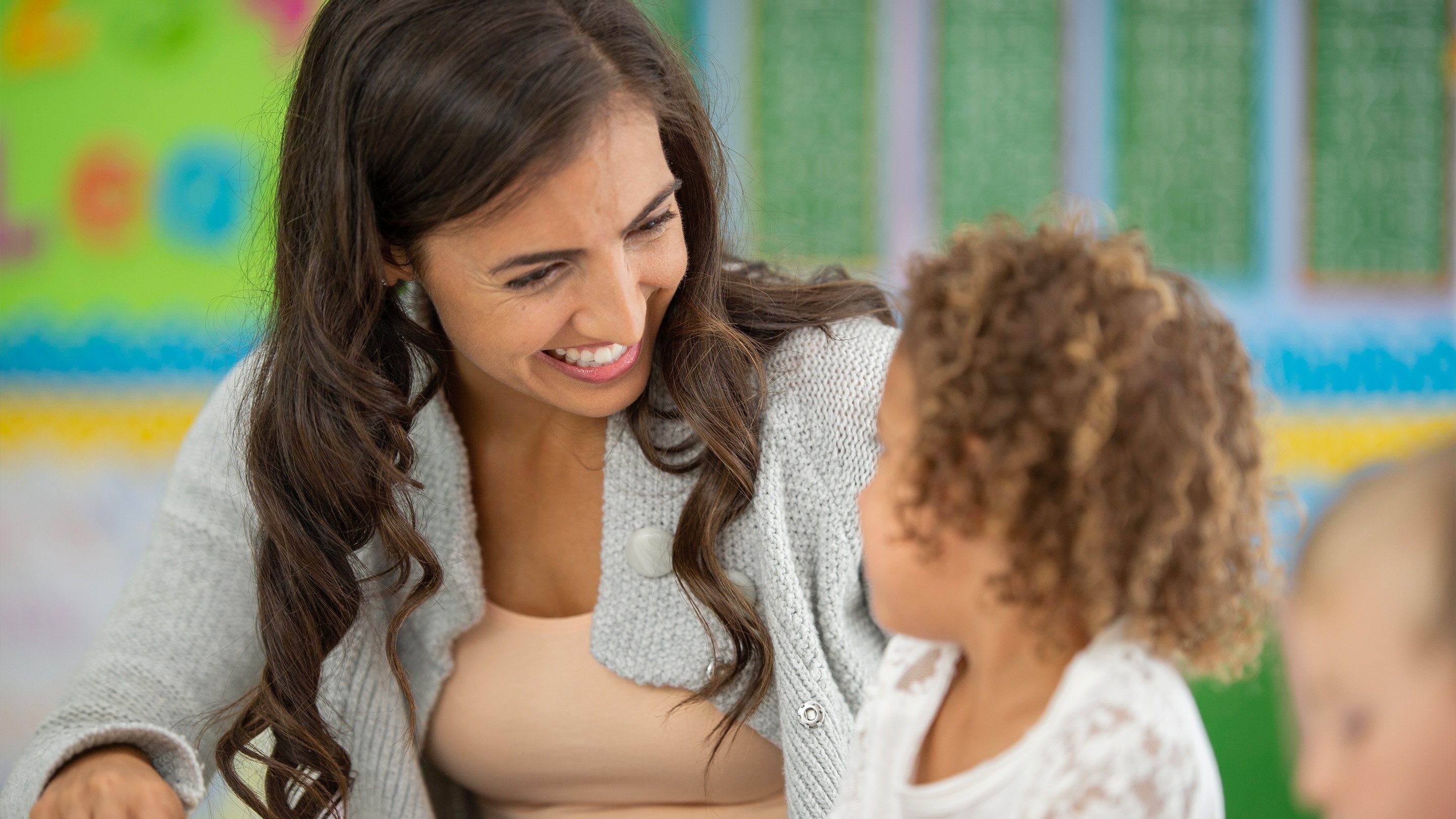
These messages are not usually delivered through a dramatic speech before circle time. They are delivered through hundreds of tiny interactions: greeting a child by name, kneeling down to make eye contact, giving warning before transitions, helping a child repair a conflict, and staying calm when a preschooler decides that cleanup time is the emotional equivalent of a natural disaster.
Why Emotional Safety Matters in Preschool Classrooms
Social and emotional development is closely connected to learning. Young children are still developing the ability to identify emotions, manage impulses, wait for turns, recover from disappointment, and communicate needs with words. These skills do not appear overnight because an adult said, “Use your self-control.”
Preschoolers learn emotional regulation through relationships. At first, they borrow calm from adults. A teacher’s steady voice, supportive presence, and simple language can help a child move from panic or anger toward problem-solving. Over time, children begin to use those same tools independently.
Emotional safety also supports:
- Language development: Children are more likely to talk when they do not fear being mocked or dismissed.
- Friendship skills: Children can practice sharing, negotiating, and repairing conflicts when adults guide them respectfully.
- Executive function: Predictable routines and emotional coaching help children build attention, memory, and flexible thinking.
- School readiness: A child who can ask for help, follow routines, and recover after frustration is better prepared for group learning.
- Resilience: Supportive relationships help children learn that difficult moments can be survived, understood, and repaired.
It is also important to remember that behavior is communication. A child who bites, throws toys, refuses to join the group, or melts down during transitions may be communicating hunger, fear, sensory overload, language frustration, tiredness, uncertainty, or a lack of coping skills. The behavior may need to stop, but the child still needs help figuring out what happened underneath it.
How Teachers Can Create Emotional Safety in Preschool
Build Trust Through Warm, Consistent Relationships
Children need to know which adults are available to them and what kind of response they can expect. A teacher does not need to become a child’s best friend or personal cruise director. They do need to be warm, reliable, and emotionally present.
Simple relationship-building practices can make a major difference:
- Greet each child by name at arrival.
- Notice something specific: “You chose your dinosaur shirt today.”
- Spend a few minutes each day following a child’s play interest.
- Use a calm voice, especially during stressful moments.
- Reconnect after conflict instead of acting distant or annoyed.
A child should not have to wonder whether the teacher likes them only on their “easy” days. The child who struggles most often needs the clearest evidence that they are still welcome.
Create Predictable Routines Without Making the Day Feel Like Boot Camp
Preschoolers thrive when they know what comes next. Predictable routines reduce anxiety and make transitions less surprising. A visual schedule with pictures can help children understand the flow of the day: arrival, centers, snack, outdoor play, lunch, rest, story time, and pickup.
Consistency does not mean rigid perfection. The schedule can bend when needed. A surprise rainstorm, a fire drill, or a classmate’s birthday may change the plan. The key is to prepare children with clear language: “Our playground time is changing today because it is raining. After snack, we will do an obstacle course inside.”
Helpful transition strategies include:
- Giving a five-minute and two-minute warning before cleanup.
- Using songs, picture cues, or simple jobs to make transitions easier.
- Letting children know what they can do after a preferred activity ends.
- Offering limited choices, such as “Would you like to walk or hop to the rug?”
- Allowing extra support for children who need more time to shift activities.
Predictability is not boring to preschoolers. It is comforting. Adults may crave spontaneity, but four-year-olds generally appreciate knowing that snack is still going to happen.
Teach Feelings as Directly as Colors and Shapes
Children need vocabulary for what is happening inside them. When a child knows the words “frustrated,” “worried,” “disappointed,” “jealous,” or “excited,” they have more options than screaming, grabbing, or falling dramatically to the floor.
Teachers can build emotional literacy throughout the day by naming feelings in real moments:
- “You look disappointed that the puzzle table is full.”
- “Your face tells me you are worried about saying goodbye.”
- “You are proud of your painting.”
- “Marcus looks sad because the tower fell down.”
- “You are angry, and it is okay to be angry. It is not okay to hit.”
Books, puppets, mirrors, feelings charts, role-play, and photo cards can also help children recognize emotions. The goal is not to turn every preschooler into a tiny therapist. The goal is to help them understand their body signals, emotions, needs, and choices.
Practice Co-Regulation Before Expecting Self-Regulation
Self-regulation is the ability to manage feelings, attention, and behavior. Preschoolers are developing this skill, but they are not finished products. Expecting a distressed four-year-old to calm down alone can be like expecting a child to assemble a bicycle after being handed a wrench and a motivational quote.
Co-regulation means an adult helps a child return to a calmer state. This may involve sitting nearby, speaking softly, breathing slowly, offering a familiar sensory tool, or using simple phrases such as:
- “You are safe. I am here.”
- “Your body is having a hard time. Let’s slow down together.”
- “First we calm our body, then we solve the problem.”
- “You wanted the truck. Let’s find words to ask for a turn.”
Co-regulation is not “giving in.” It is teaching. Once the child is calm enough to think, the teacher can set limits, guide repair, and practice a better response for next time.
Use Positive Guidance Instead of Shame
Preschool children need limits. Emotional safety is not a free-for-all where every child gets a drumstick, a marker, and unlimited access to the classroom sink. Clear boundaries help children feel secure.
The difference is how those limits are delivered. Positive guidance focuses on teaching what to do rather than shaming children for what they did wrong.
Instead of saying, “You are being bad,” try, “Blocks are for building. Throwing blocks can hurt someone. Let’s put this block down and find a safe way to use your strong arms.”
Instead of saying, “Stop crying,” try, “You are upset. Take a breath with me. When you are ready, tell me what happened.”
Instead of saying, “You should know better,” try, “You were frustrated when the game changed. Let’s practice what you can say next time.”
Children should be held accountable for harmful behavior, but accountability works best when paired with skill-building. A child who pushes another child may need help checking whether the friend is okay, apologizing in a meaningful way, and practicing how to get attention or request a turn.
Design a Calm Space That Is Not a Punishment Corner
A calming area can support emotional safety when it is welcoming, optional, and taught as a useful tool. It should not be a place where children are sent in disgrace like tiny employees being called into human resources.
A supportive calm space may include soft seating, books, stuffed animals, sensory items, breathing cards, emotion visuals, headphones, or a small basket of fidgets. Teachers can introduce the area during a calm moment: “This is a place anyone can use when their body needs quiet, comfort, or a break.”
Children should not be forced to sit alone as punishment, especially when they are overwhelmed. Some children regulate best with space, while others need an adult nearby. The important part is helping the child return to the group with dignity.
Supporting Inclusion, Culture, and Individual Differences
Emotionally safe classrooms recognize that children express feelings differently. Some children are loud when upset. Others become quiet. Some seek hugs. Others need space. Some children are learning English, navigating disability-related needs, experiencing family stress, or adjusting to unfamiliar routines.
Teachers should avoid assuming that one behavior has one meaning. A child who does not make eye contact may be shy, overwhelmed, focused, neurodivergent, or simply busy studying a ladybug on the floor. Curiosity is more useful than judgment.
Inclusive emotional safety includes using children’s names correctly, respecting family cultures, providing visual supports, adapting expectations, offering communication alternatives, and avoiding labels such as “attention seeker,” “problem child,” or “drama queen.” Preschoolers deserve better branding than that.
Partnering With Families to Support Emotional Safety
Families know their children deeply. Teachers see children in a group setting. When families and educators share observations respectfully, they can create more consistent support.
Instead of only contacting families after a difficult day, teachers can share strengths and small wins: “Ava used words to ask for a turn today,” or “Noah was nervous at drop-off, but he joined the train table after we read his favorite book.”
When concerns arise, use specific, nonjudgmental language. Focus on patterns, context, and support needs rather than blame. For example: “We have noticed that Mateo becomes very upset during cleanup. We are trying visual warnings and a helper job. Have you found anything useful during transitions at home?”
This approach invites partnership instead of making families feel as though they are receiving a daily behavior report from a very tiny courtroom.
Supporting Teacher Well-Being Matters Too
Children borrow calm from adults, which means teachers need support too. A stressed, exhausted educator may still care deeply about children, but staying patient during the ninth conflict over glitter glue is difficult for anyone.
Programs can strengthen emotional safety by supporting staff with planning time, realistic classroom ratios, coaching, mental health consultation, collaborative problem-solving, and a culture where asking for help is normal. Teacher well-being is not an extra benefit. It is part of classroom quality.
How to Know Whether a Preschool Classroom Feels Emotionally Safe
Look beyond whether the room is quiet. A silent classroom is not automatically a safe classroom. Children may be quiet because they are engaged, tired, nervous, or afraid to speak.
Instead, ask these questions:
- Do children approach adults for help and comfort?
- Are mistakes treated as learning opportunities?
- Do teachers guide behavior without insulting or shaming children?
- Are feelings named and accepted?
- Do children have chances to make choices?
- Are routines clear and transitions supported?
- Do adults reconnect with children after conflict?
- Are families treated as partners?
When the answer is mostly yes, the classroom is likely building the kind of emotional foundation that helps children thrive far beyond preschool.
Classroom Experiences: What Emotional Safety Looks Like in Real Life
The following examples are composite preschool experiences based on common classroom situations. They show how emotional safety can look in ordinary moments, not just during special social-emotional lessons.
The Child Who Could Not Let Go at Drop-Off
Every morning, Liam clung tightly to his father’s leg. He cried during arrival, refused breakfast, and watched the door for several minutes after his father left. A less supportive response might have been, “You are fine. Big kids do not cry.” That message may stop tears temporarily, but it can also teach a child that sadness is embarrassing.
Instead, Liam’s teacher followed the same arrival routine every day. She greeted him quietly, named what she saw, and offered one familiar job: placing the classroom weather card on the board. “You miss Dad. He always comes back after afternoon snack. Let’s put up today’s weather together.”
Over time, Liam began walking to the weather board on his own. He still had some hard mornings, but he learned that his feelings did not make him unwelcome. The routine gave him something predictable to hold onto while his confidence grew.
The Block Tower Disaster
During center time, Mia spent ten minutes building a tall block tower. Another child brushed past it, and the tower collapsed. Mia screamed, shoved the child, and began kicking blocks across the rug.
The teacher moved close enough to keep everyone safe and said, “I will not let you kick blocks near your friends. Your tower fell down, and you are really angry.” She helped Mia move to a quieter area beside the block center, where Mia could stomp her feet and squeeze a soft ball.
Once Mia’s body settled, the teacher helped her look at the other child. “The tower fell when Jayden walked by. You were mad and pushed him. What can we do now?” Mia checked whether Jayden was okay, offered an apology, and invited him to help rebuild. The teacher did not excuse the pushing, but she also did not turn one difficult moment into Mia’s permanent identity.
The Child Who Kept Saying “No”
During group time, Sofia often refused to sit on the rug. She hid under a table, said “No!” loudly, or tried to run toward the art area. At first glance, it looked like defiance. After closer observation, the teacher noticed that Sofia struggled most during long group activities with many verbal directions.
The classroom team adjusted the routine. Sofia received a picture card showing the group-time sequence, a seat at the edge of the rug, and a small helper role holding the book pointer. Teachers also shortened the activity and added movement breaks for the whole class.
Sofia’s participation improved. The lesson was not that she needed stricter discipline. The lesson was that adults needed to understand the demand before deciding the child was the problem.
The Friendship Conflict Over One Red Truck
Two children wanted the same red truck, which in preschool is roughly equivalent to a major diplomatic crisis. Elijah grabbed it. Kai cried and hit Elijah’s arm. The teacher did not simply take the truck away from both children and announce that nobody could play nicely.
Instead, she coached the interaction. “Kai, you wanted the truck and hit. Hands are not for hurting. Elijah, you grabbed it while Kai was playing. Let’s solve this together.” She helped the children use short scripts: “Can I have a turn when you are done?” and “You can have it after two more trips.”
The children needed adult support, repetition, and probably another reminder fifteen minutes later. That is normal. Emotional safety does not mean children master social skills after one conversation. It means adults keep teaching without acting shocked that preschoolers are still learning how to share.
The Teacher’s Repair After a Tough Moment
Emotional safety also includes adult repair. One afternoon, a teacher raised her voice during cleanup after several children ignored directions. She noticed that the class became quiet and tense. Rather than pretending nothing happened, she paused and said, “I used a loud voice because I felt frustrated. That may have felt scary. I am sorry. I am going to take a breath and try again with a calm voice.”
This kind of repair is powerful. It teaches children that adults make mistakes, feelings can be managed, and relationships can heal. A teacher does not need to be perfectly calm every second of every day. They need to be willing to reflect, reconnect, and model the skills they hope children will learn.
Conclusion
Emotional safety in preschool classrooms is not a decorative extra beside literacy centers and finger paint. It is the foundation that allows children to play, learn, communicate, build friendships, and recover from hard moments. Through predictable routines, responsive relationships, positive guidance, emotional vocabulary, and calm adult support, teachers help children feel secure enough to become confident learners.
When preschoolers know that adults will guide them rather than shame them, they are more likely to take risks, ask for help, and practice the skills that matter for school and life. The blue cup may still cause an occasional crisis. But in an emotionally safe classroom, no child has to face that crisis alone.
Note: This article is for educational purposes and does not replace individualized guidance from a qualified child development, behavioral health, or pediatric professional when a child shows persistent emotional or behavioral concerns.