Note: This article is written for web publishing in standard American English and synthesizes current U.S. parenting, pediatric, school nutrition, and education guidance into original, family-friendly content.
The first day of school is a tiny holiday with a giant backpack. It arrives with freshly sharpened pencils, mystery classroom rules, shoes that may or may not still fit, and at least one parent whispering, “Where did summer go?” Easy first day of school traditions help families turn that emotional tornado into something warm, predictable, and even fun.
The good news: you do not need a color-coded balloon arch, a breakfast shaped like the periodic table, or a scrapbook-worthy porch setup that requires a contractor. The best back-to-school family traditions are simple, repeatable, low-stress, and meaningful. They help children feel seen, give parents a gentle structure, and create memories that do not depend on perfection.
Whether your child is starting kindergarten, middle school, high school, homeschool, or a brand-new school after a move, the right tradition can make the morning feel less like a race and more like a launch. Below are practical, easy first day of school traditions for families, plus tips for making them work when mornings are messy, emotions are big, and somebody absolutely cannot find their left shoe.
Why First Day of School Traditions Matter
Children often handle transitions better when they know what to expect. A small tradition acts like a friendly signpost: “We have done this before. We know how to begin.” That predictability can reduce stress, especially for kids who feel nervous about new teachers, different classmates, harder subjects, or separating from parents after a relaxed summer schedule.
Back-to-school traditions also give families a way to slow down. The first day can feel packed with logistics: bus schedules, lunch accounts, permission slips, school supplies, pickup plans, and passwords for apps nobody remembers downloading. A tradition gives the day a heart. It says, “Yes, the folder is labeled, but you are the important part.”
How to Choose a Tradition Your Family Will Actually Keep
A tradition only works if it fits real life. If your family is not a pancake-on-a-Tuesday family, do not choose an elaborate breakfast that requires three pans and emotional bravery before 7 a.m. If your teen would rather join a marching band for raccoons than hold a chalkboard sign, choose a more private ritual.
Use the Three-S Rule
The best first day of school traditions are simple, short, and sustainable. Simple means anyone can do it. Short means it does not make you late. Sustainable means you can repeat it every year without needing a craft closet, a second income, or a nap afterward.
Let Kids Have a Vote
Ask your child what would make the first day feel special. Some kids love photos and decorations. Others prefer a quiet breakfast, a private note, or choosing dinner. When children help shape the tradition, it becomes something they own instead of something they politely endure while plotting their escape.
Easy Traditions to Start the Night Before School
The first day really begins the night before. A calm evening routine helps reduce morning chaos and gives kids a chance to settle into the idea that school is happening. Yes, even if they have spent the last week pretending the calendar is a rumor.
1. Create a Backpack Landing Zone
Choose one spot near the door for backpacks, shoes, lunchboxes, water bottles, and signed forms. Call it the “launch pad” if your kids like space themes, or the “don’t make Mom search under the couch at 6:50 a.m. station” if your family appreciates honesty.
Have each child check the backpack the night before. This is a useful tradition because it combines responsibility with peace of mind. Younger kids can pack supplies with help. Older kids can review schedules, charge devices, and make sure they know where to go first.
2. Hold a Mini Outfit Parade
Let your child choose the first-day outfit and try it on the evening before. This prevents morning surprises like scratchy tags, too-tight waistbands, or the discovery that “favorite shoes” now fit only a decorative squirrel.
For younger kids, make it playful: a quick hallway runway, a twirl, or a silly family clap. For older kids, keep it low-key. A simple “You look ready” can mean more than a whole speech.
3. Write a One-Sentence Goal
Before bed, invite everyone to write or say one goal for the school year. Keep it specific and kind. “Make one new friend,” “Ask for help in math,” “Read more books,” or “Remember my lunchbox more than twice” all count.
Parents can join too. A grown-up goal might be, “I will not panic over every school email,” which is ambitious but noble. Save the goals in a notebook or envelope and revisit them later in the year.
Easy First Morning Traditions
Morning traditions should energize the day without turning the kitchen into a live television production. Choose one or two favorites and leave room for real life. A calm parent is usually more useful than a perfect centerpiece.
4. Make a Special but Realistic Breakfast
A first-day breakfast can be memorable without being complicated. Try build-your-own yogurt bowls, freezer waffles with berries, egg sandwiches, oatmeal with toppings, banana muffins made the night before, or peanut butter toast with fruit.
The goal is to start the day with fuel and connection. If your child is too nervous to eat much, offer something small and familiar. A smoothie, cheese stick, banana, or half a bagel is better than turning breakfast into a courtroom negotiation.
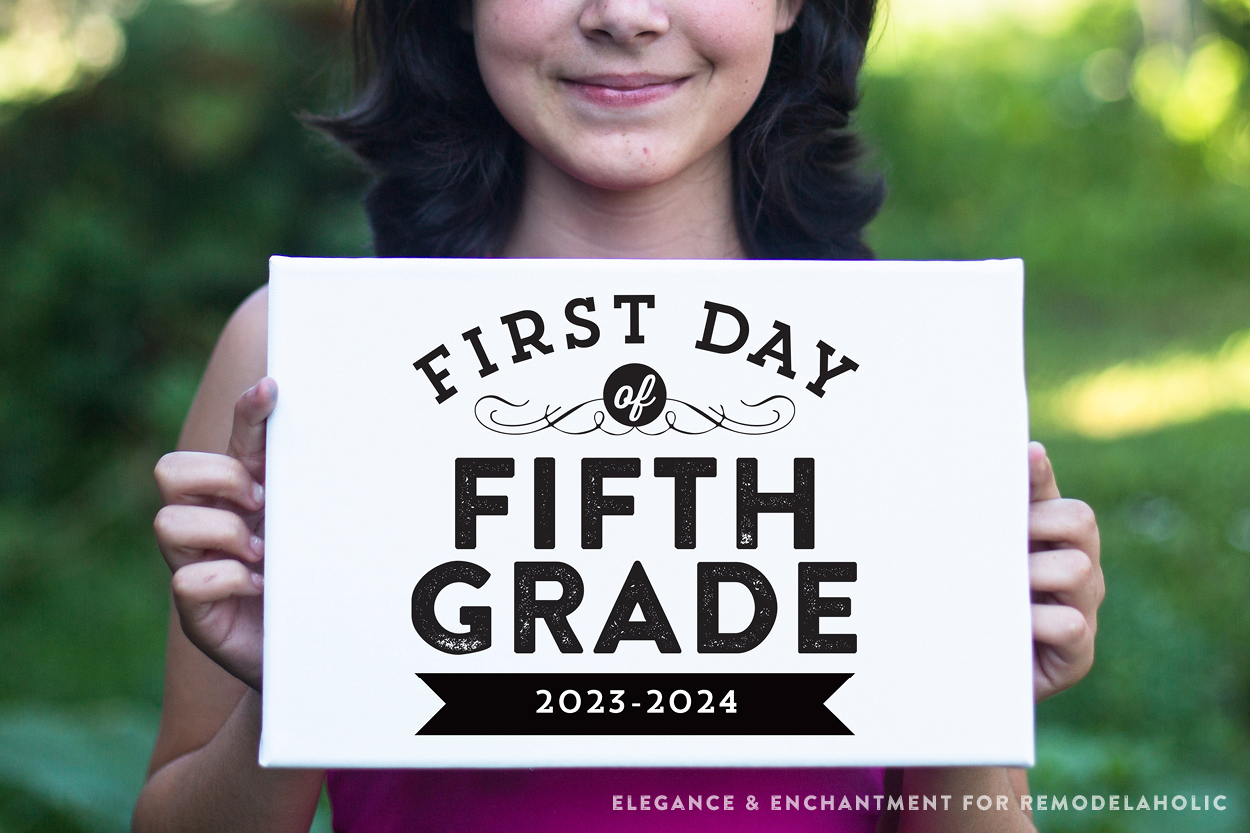
5. Take the Classic First Day Photo
The first day photo is popular for a reason: kids change quickly, and photos capture the tiny details adults forget. The oversized backpack. The missing tooth. The haircut that looked normal yesterday and somehow became dramatic overnight.
Keep it easy. Use the same porch, front door, tree, or kitchen wall every year. Add a printable sign, letter board, handwritten paper, or no sign at all. For camera-shy kids, take a backpack photo, shoe photo, or candid walking-away shot instead.
6. Use a Family Handshake or Cheer
Create a quick goodbye ritual: a secret handshake, fist bump, three squeezes, high-five pattern, or family phrase. It should take less than ten seconds and work in public without causing deep middle-school embarrassment.
For anxious kids, a predictable goodbye can be grounding. Keep it warm and confident: “Big hug, brave step, see you after school.” Then leave without stretching the goodbye into a mini-series. Long exits can make separation harder.
7. Pack a Lunchbox Note
A lunchbox note is one of the easiest first day of school traditions for families. It can say, “You’ve got this,” “I love you,” “Tell me one funny thing later,” or “Your sandwich believes in you.” Children who cannot read yet can get a heart, smiley face, sticker, or tiny drawing.
For older kids, slip the note somewhere private or send a midday text if phones are allowed. Keep it encouraging, not dramatic. Teens appreciate love; they do not always appreciate glitter declarations witnessed by the entire cafeteria.
After-School Traditions That Help Kids Open Up
The first day does not end at pickup. Many kids need time to decompress before they can talk. Some will deliver a detailed presentation before their shoes are off. Others will answer every question with “fine” while eating six crackers like a tired raccoon. Both are normal.
8. Serve a Favorite Snack and Listen
Plan a simple after-school snack: cookies, fruit, popcorn, trail mix, smoothies, or whatever feels special in your home. Then sit nearby and let your child talk when ready.
Instead of asking, “How was school?” try more specific prompts: “Who did you sit near?” “What was one thing that surprised you?” “What part felt easy?” “What part felt confusing?” “Did anything make you laugh?” Specific questions are less likely to vanish into the famous kid-answer fog.
9. Play High, Low, and Buffalo
At dinner or bedtime, ask each person to share a high point, a low point, and a “buffalo,” meaning something random or funny. This makes room for mixed feelings. A child can say, “My high was art, my low was not finding the bathroom, and my buffalo is that someone brought a pencil shaped like a hot dog.” Excellent data. Thank you, school.
10. Make a First Day Memory Page
Create a simple yearly page with your child’s grade, teacher, favorite color, favorite food, current dream job, best friend, height, and one thing they hope to learn. Keep the pages in a folder or binder.
This tradition becomes more valuable over time. By senior year, the kindergarten answers become comedy gold and emotional sabotage in equal measure.
Traditions for Different Ages
First day of school traditions should grow with your child. The toddler-style celebration that delighted a second grader may cause a seventh grader to evaporate from embarrassment. Adjust the tradition, but keep the connection.
For Preschool and Kindergarten
Young children benefit from visual routines, practice runs, and comfort objects if the school allows them. Try reading a school-themed picture book, practicing opening lunch containers, walking the route to the classroom, or creating a tiny goodbye ritual.
For Elementary School
Elementary students often enjoy photos, special breakfasts, lunch notes, school supply scavenger hunts, and after-school treats. They are old enough to help pack bags but young enough to still find a heart-shaped pancake impressive.
For Middle School
Middle schoolers may want more independence. Offer traditions that respect privacy: choosing the first-day playlist in the car, picking dinner, getting a quiet note, or taking a quick photo without props. This age group may act casual, but many still appreciate being celebrated.
For High School
High school traditions can focus on encouragement and autonomy. Try a family breakfast, coffee or smoothie stop, yearly letter, goal-setting conversation, or evening dinner where the teen chooses the menu. Keep the tone respectful, not babyish.
Low-Cost First Day of School Traditions
Meaningful traditions do not require expensive supplies. In fact, low-cost rituals often become the most beloved because they feel personal rather than performative.
Try These Budget-Friendly Ideas
Decorate the breakfast table with school supplies you already bought. Write a note on a napkin. Take a photo in the same spot every year. Make a paper countdown chain. Mark your child’s height on a doorframe or chart. Read the same back-to-school book annually. Let your child choose the family dinner from ingredients already in the kitchen.
Another easy idea is a “new year blessing” or encouragement circle. Each family member says one strength they see in the student: brave, curious, kind, funny, creative, persistent. It costs nothing and can stay with a child long after the new pencils are lost to the mysterious pencil dimension.
Traditions for Busy Working Families
If mornings are tight, move the celebration. A first day tradition does not have to happen before school. You can celebrate the night before, after school, or on the first weekend.
Try a Sunday “school year kickoff” dinner, a bedtime letter, a five-minute morning photo, or an after-school ice cream stop. If a parent works early or travels, record a short video message. The heart of the tradition is not the timing; it is the message: “Your people are cheering for you.”
Traditions for Blended, Military, or Long-Distance Families
Families come in many shapes, and school traditions can travel across households. A child might receive a morning text from one parent, a lunch note from another, and a video call with grandparents after school.
Create a shared digital album for first day photos. Have relatives send short voice notes. Let each household add one line to a yearly letter. When adults cooperate around a positive ritual, children feel supported across the whole family system.
Helping Nervous Kids on the First Day
First day jitters are common. Children may worry about finding the classroom, making friends, missing parents, understanding rules, or not knowing where to sit at lunch. Rather than brushing off fears with “Don’t worry,” try acknowledging the feeling and making a plan.
Say, “It makes sense that you feel nervous. New things can feel big. Let’s talk about what you can do if you are not sure where to go.” Then practice simple scripts: “Can you help me find my class?” “Can I sit here?” “I need help opening this.” Small rehearsed phrases can make kids feel more capable.
For children with strong anxiety, neurodivergent students, or kids starting a new school, consider visiting the building ahead of time, meeting staff when possible, reviewing the schedule visually, and creating a predictable goodbye. If anxiety interferes with school attendance or daily functioning, families should reach out to the school counselor, pediatrician, or a qualified mental health professional.
First Day Traditions to Avoid
Some traditions sound cute online but become stressful in real life. Avoid anything that makes your child feel compared, pressured, or publicly embarrassed. The goal is connection, not content.
Skip traditions that require a perfect mood, expensive materials, or a spotless house. Avoid asking too many intense questions before school. Do not turn the morning into a photo shoot if your child is overwhelmed. And please, for the love of all lunchboxes, do not introduce a complicated new routine on the first morning without testing it first.
A Simple First Day of School Tradition Plan
If you want an easy plan, use this four-part formula:
The Night Before
Pack the backpack, choose clothes, prepare lunch or lunch money, and say one goal for the year.
The Morning Of
Eat a simple breakfast, take one quick photo, and use a short goodbye ritual.
During the Day
Include a lunchbox note, small drawing, or encouraging message.
After School
Share a snack, ask specific questions, and write one memory from the day.
That is enough. Truly. A tradition does not need to be large to be lasting.
Family Experiences: What These Traditions Look Like in Real Life
In many families, the best first day of school traditions begin accidentally. One parent makes cinnamon toast because there is no time for pancakes, and suddenly cinnamon toast becomes “our thing.” A child refuses the fancy sign but agrees to stand by the front door holding the dog, and now the dog is in twelve years of school photos looking increasingly wise and mildly confused.
One family might start with a breakfast tradition. The night before school, the children choose toppings for a “new year waffle bar.” Nothing fancy: frozen waffles, berries, yogurt, peanut butter, and sprinkles that appear because someone believes sprinkles are a food group. During breakfast, each person shares one hope for the year. The youngest hopes for extra recess. The oldest hopes chemistry will be less rude than expected. The parent hopes everyone remembers that socks go on before shoes. It is ordinary, funny, and exactly the kind of memory kids keep.
Another family might focus on the after-school moment. Instead of pressing for answers at pickup, they wait until snack time. The tradition is called “cookies and questions,” though sometimes it is apple slices and questions, because life happens and cookies do not always survive the grocery trip. Each child gets to answer three prompts: one good thing, one hard thing, and one weird thing. The weird thing often wins. Children may not remember every worksheet, but they remember being listened to without being rushed.
For a military family or a family with a traveling parent, the tradition might be a video message. Every first day, the away parent records a short note: “I’m proud of you. Look for one kind person today. Tell me tonight what made you laugh.” The child watches it before school or after breakfast. It takes less than a minute, but it bridges distance and reminds the child that love can be present even when a parent is not standing at the bus stop.
For a blended family, the tradition might be a shared photo album. Each household uploads a first day picture and one sentence about the child’s morning. Grandparents add heart emojis. A bonus parent writes, “You looked so confident today.” The ritual becomes less about who did the “official” first day and more about surrounding the child with encouragement.
For a child with anxiety, the most meaningful tradition may be quiet and practical. The family drives to school the weekend before, practices the drop-off route, finds the classroom door, and rehearses the goodbye phrase. On the first day, the child already knows the steps. There may still be nerves, but there is also a plan. That plan becomes a tradition of confidence.
For teenagers, traditions often need to become cooler, or at least less visible from space. A parent might write a yearly letter and leave it on the teen’s desk. No balloons. No singing. No “Mom’s Big Freshman Feelings Breakfast Spectacular.” Just a note that says, “I see how hard you are working. I trust you. I am proud of the person you are becoming.” The teen may say nothing. The letter may disappear into a drawer. But years later, it may still be there.
The most successful traditions are not perfect. They are repeated acts of attention. They say, “This day matters because you matter.” And that message works whether it is delivered through waffles, a photo, a handshake, a note, a snack, a family dinner, or a slightly chaotic morning where everyone laughs because the backpack was in the car the whole time.
Conclusion
Easy first day of school traditions for families do not need to be complicated to be meaningful. A special breakfast, a quick photo, a lunchbox note, a goodbye ritual, or an after-school snack can help children feel prepared, loved, and brave. The best tradition is the one your family can repeat with warmth, flexibility, and a sense of humor.
As the school year begins, focus less on creating a perfect first day and more on creating a connected one. The pencils will dull, the shoes will get scuffed, and at least one folder will mysteriously vanish. But the feeling of being celebrated by family can last all year.