The Moon looks like the driest backyard in the solar system: gray dust, shattered rocks, no clouds, and absolutely no neighborhood sprinkler system. Yet scientists have discovered that water and its chemical relatives are scattered across the lunar surface. Even more surprisingly, Earth may be helping to create some of them.
Research based on data from India’s Chandrayaan-1 spacecraft suggests that high-energy electrons inside Earth’s enormous magnetic tail can trigger chemical changes in lunar soil. Those reactions may produce or replenish hydroxyl and molecular water while the Moon passes through this region of space.
Earth is not firing water bottles at its satellite. The real process is subtler, stranger, and much more interesting: energetic particles appear to turn oxygen-rich lunar minerals and available hydrogen into tiny amounts of hydration. It is cosmic chemistry performed without a laboratory coat, a sink, or even an atmosphere.
The Moon Was Once Considered Completely Dry
For much of the twentieth century, the Moon was treated as a nearly waterless world. That conclusion seemed reasonable. The lunar surface has almost no atmosphere, daytime temperatures can become extremely hot, and weak gravity makes it easier for vaporized molecules to escape into space.
The Apollo samples initially appeared dry as well. Scientists therefore imagined the Moon as a place where exposed water would disappear almost immediately. The dark features once called lunar “seas” turned out to be broad plains of ancient volcanic rock, not conveniently located vacation beaches.
That picture began changing as instruments became more sensitive. Spacecraft detected hydrogen near the poles, where permanently shadowed craters can remain cold enough to preserve ice for immense periods. In 2009, NASA’s Moon Mineralogy Mapper, or M3, aboard Chandrayaan-1 detected spectral signatures associated with hydroxyl and water across parts of the lunar surface.
NASA’s LCROSS mission later confirmed water ice in material blasted out of a permanently shadowed crater. In 2020, observations from the SOFIA airborne observatory identified molecular water on a sunlit portion of the Moon. Lunar water was no longer a speculative footnote. It had become a complicated planetary science mystery.
How Water Can Form on an Airless World
“`
The Traditional Solar-Wind Explanation
The leading explanation for some lunar surface water begins with the solar wind, a continuous stream of charged particles flowing outward from the Sun. The Moon lacks a global magnetic field and thick atmosphere, so solar-wind particles can strike its surface directly.
Many of those particles are protons, which are hydrogen nuclei. When a proton penetrates lunar regolith, it can collect an electron and become a hydrogen atom. That hydrogen may then interact with oxygen already locked inside silicate minerals.
One hydrogen atom bonded to oxygen produces hydroxyl, written as OH. Two hydrogen atoms combined with oxygen produce molecular water, H2O. Heat, radiation, microscopic impacts, and defects in mineral crystals can all influence whether those atoms remain trapped, migrate to another location, or escape.
Recent laboratory experiments have strengthened the case that solar-wind hydrogen can generate hydroxyl and water under realistic lunar conditions. However, the solar wind does not explain every observation. In planetary science, nature rarely hands over a mystery with only one suspect.
The Moon’s Monthly Visit to Earth’s Magnetotail
Earth’s magnetic field forms a protective region called the magnetosphere. On the side facing the Sun, pressure from the solar wind compresses that magnetic bubble. On the nightside, the field stretches far into space, creating a long structure known as the magnetotail.
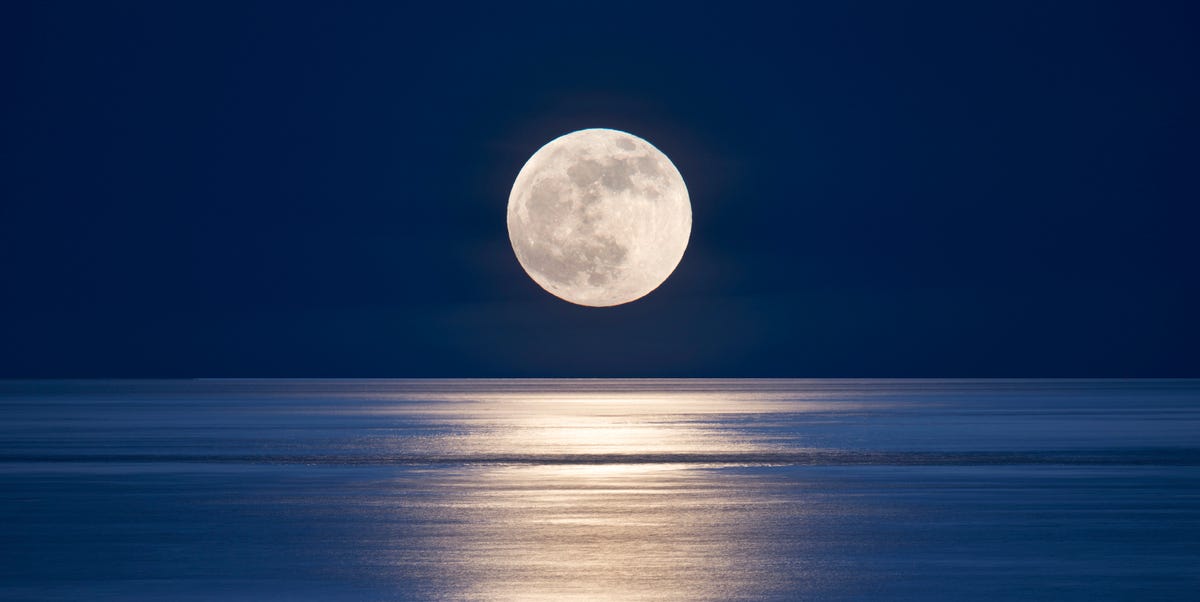
Once during each lunar orbit, around the time of the full Moon, the Moon passes through this magnetotail. For part of that journey, Earth’s magnetic environment acts like a giant cosmic umbrella, sharply reducing the number of ordinary solar-wind protons reaching the lunar surface.
The nearside of the Moon spends roughly 27 percent of its daylight period within the magnetotail, where solar-wind flux may be reduced by as much as 99 percent. If solar-wind protons were the only important source of fresh lunar hydration, scientists expected the water-related signal to fall dramatically during this interval.
It did not.
“`
The Observation That Surprised Scientists
A research team led by planetary scientist Shuai Li analyzed remote-sensing measurements collected by the M3 instrument between 2008 and 2009. The researchers compared lunar surface hydration at different stages of the Moon’s movement through Earth’s magnetic environment.
The results showed that water abundance at lunar mid-latitudes increased in the dusk and dawn magnetosheath, regions where incoming particle activity changes considerably. More surprisingly, the hydration signal remained nearly constant across the central magnetotail, even though the usual supply of solar-wind protons had nearly disappeared.
In other words, the Moon entered a region where one expected water-making ingredient had been mostly removed, but its surface did not become noticeably less hydrated. Something else appeared to be maintaining the chemistry.
The leading candidates were high-energy electrons in Earth’s plasma sheet, a central region of the magnetotail filled with charged particles. These electrons can bombard the lunar surface and produce radiation effects similar to those caused by solar-wind particles.
How Earth’s Electrons May Help Make Lunar Water
High-energy electrons are extremely effective at disturbing matter. When they strike grains of lunar regolith, they can break chemical bonds, alter crystal structures, create defects, and transfer energy to atoms trapped in the soil.
These processes may release hydrogen already stored within mineral grains or make that hydrogen more chemically active. The energized hydrogen can then react with oxygen in lunar minerals, producing hydroxyl or water molecules.
Electrons may also help separate existing molecules and allow their components to recombine in new ways. This family of radiation-driven reactions is often discussed in terms of radiolysis, irradiation chemistry, and space weathering.
The exact sequence is still being investigated. Scientists have not yet identified one neat reaction that explains every measurement. Lunar soil is chemically diverse, local temperatures change dramatically, and incoming particle populations vary with solar and magnetic activity.
Nevertheless, the data indicate that high-energy electrons can contribute to hydration processes even when the Moon is largely protected from solar-wind protons. Earth’s magnetotail may therefore be more than a shield. For several days each month, it may become an active chemical environment.
“`
Earth May Supply More Than Electrons
Particles escaping from Earth’s upper atmosphere can also travel through the magnetotail. This flow, sometimes called Earth wind, includes hydrogen and oxygen ions. Over billions of years, a small but persistent flow of terrestrial particles may have influenced the composition of the lunar surface.
Related research found evidence of hematite, a form of iron oxide commonly described as rust, at high lunar latitudes. Because hematite usually forms with help from oxygen and water, its presence on an airless world was puzzling. One proposed explanation is that oxygen ions escaping Earth reached the Moon through the magnetotail and helped oxidize iron-bearing minerals.
The rust and water findings point toward the same larger idea: Earth and the Moon are not chemically isolated neighbors. Their environments have interacted for a very long time.
“`
What Scientists Mean by “Water on the Moon”
When people hear “water on the Moon,” they may imagine underground lakes, icy caves, or astronauts opening a lunar water park. The reality is considerably less splashy.
Some remote instruments detect hydration through the way lunar minerals absorb infrared light near particular wavelengths. Depending on the instrument and conditions, the signal may represent hydroxyl, molecular water, or a mixture of both.
In sunlit regions, these molecules may exist in extremely small quantities. They can be attached to dust grains, trapped inside impact glass, enclosed in mineral structures, or temporarily moving across the surface. At the poles, larger deposits of water ice may survive inside permanently shadowed craters where temperatures remain exceptionally low.
That means lunar water exists in several forms and probably comes from several sources. Some may have been delivered by comets, asteroids, or water-rich micrometeorites. Some may have emerged from the Moon’s interior during ancient volcanic activity. Some forms continuously through interactions with solar wind, Earth’s magnetosphere, radiation, and lunar minerals.
The Moon does not appear to have one water story. It has an entire anthology.
Why This Discovery Matters for Lunar Exploration
“`
Water Is Both a Resource and a Scientific Record
Water is one of the most valuable potential resources for future lunar missions. It could support drinking supplies, hygiene, food preparation, cooling systems, and agriculture in controlled habitats. Through electrolysis, water can also be separated into oxygen and hydrogen. Oxygen can support breathing, while hydrogen and oxygen can be used as rocket propellants.
Using lunar materials could reduce the amount of cargo launched from Earth. That matters because transporting every gallon of water, oxygen tank, and kilogram of fuel through Earth’s gravity is expensive and technically demanding.
However, detecting water is not the same as having an economically useful deposit. Engineers need to know its concentration, physical form, depth, distribution, accessibility, and rate of replenishment. A spectral signal spread across millions of tons of dry soil may be scientifically fascinating but impractical to harvest.
Lunar water is also a historical record. Its isotopic composition and location may reveal whether it came from the Sun, ancient lunar volcanoes, comet impacts, asteroids, or Earth’s upper atmosphere. Studying it could improve our understanding of how volatile compounds move among planets, moons, and small bodies.
A Better Model of Space Weathering
Airless worlds are continually modified by radiation, micrometeorite impacts, and streams of charged particles. This process, known as space weathering, changes their chemistry, color, texture, and reflected light.
If energetic electrons can produce or redistribute hydroxyl and water on the Moon, similar processes may occur on asteroids, Mercury, and other airless bodies exposed to energetic plasma environments. The Moon provides a nearby natural laboratory for studying reactions that may be widespread throughout the solar system.
“`
Important Questions That Remain Unanswered
The magnetotail discovery is compelling, but it is not the final chapter. Scientists still need to determine precisely how much hydration is created by electrons, how quickly it forms, and how long it survives.
Remote sensing also has limitations. Surface temperature can affect infrared measurements, and some instruments cannot cleanly separate hydroxyl from molecular water. Researchers must carefully correct for thermal emissions and compare observations collected under similar lighting and temperature conditions.
Future investigations could combine several forms of evidence:
- Continuous measurements of lunar hydration throughout a complete orbit around Earth
- Direct monitoring of electrons, protons, oxygen ions, and hydrogen ions near the surface
- Laboratory experiments using realistic lunar samples and plasma conditions
- In-place analysis of soil from different latitudes, depths, and lighting environments
- Measurements taken before, during, and after magnetotail crossings
Such observations would help distinguish newly formed molecules from older water stored inside minerals or delivered by impacts.
Conclusion: Earth and the Moon Are More Connected Than They Look
The Moon may seem silent and geologically detached, but its surface remains exposed to an active environment. Solar particles, Earth’s magnetosphere, escaping atmospheric ions, radiation, and microscopic impacts continually reshape lunar materials.
The discovery that hydration remains steady inside Earth’s magnetotail suggests that high-energy electrons provide an additional pathway for forming or sustaining water-related molecules. Solar wind is still a major contributor, but it may not be working alone.
Earth may be sending the Moon electrons, oxygen, hydrogen, and other ingredients that slowly influence its chemistry. The amounts are tiny, yet the process has potentially operated over billions of years. On planetary timescales, even a faint stream of particles can leave a meaningful signature.
The next time the full Moon rises, remember that it is passing through Earth’s vast magnetic wake. Far above the familiar glow, invisible particles may be busy rearranging atoms in lunar dust and helping create one of the most important molecules in the solar system.
Experiencing the Discovery: Seeing the Full Moon Differently
One of the most rewarding ways to experience this topic is simply to observe a full Moon with a clearer understanding of what is happening around it. To the naked eye, the Moon appears calm and unchanged. Its bright highlands, darker basalt plains, and large craters seem frozen in time. Yet that familiar disk is moving through an invisible river of magnetic fields and charged particles extending from Earth.
Watching the Moon with that knowledge transforms an ordinary evening into a planetary science lesson. The magnetotail cannot be seen through binoculars, but its effects may be written into the chemistry of the lunar soil. The experience is a reminder that astronomy is not always about spectacular explosions or colorful nebulae. Sometimes the most important activity is microscopic: an electron strikes a grain of dust, a chemical bond breaks, and a hydrogen atom finds oxygen.
For students and amateur astronomers, tracking the lunar phases offers an accessible way to understand the geometry. Around the new Moon, the Moon lies roughly between Earth and the Sun. Around the full Moon, Earth lies between the Sun and Moon, placing the Moon in the direction of the nightside magnetotail. Drawing the positions on paper or modeling them with a lamp and two balls makes the relationship immediately understandable.
The discovery also changes how people may think about scientific instruments. Chandrayaan-1 finished its operational mission years before researchers published the magnetotail analysis. Its archived measurements remained valuable because scientists asked a new question of old data. That is a common experience in space science: a spacecraft may stop transmitting, but its observations can continue producing discoveries for decades.
Imagine working with a set of infrared measurements that initially looks like a collection of colored lines and numerical tables. Researchers must correct for temperature, compare observations from different lunar phases, estimate particle exposure, and rule out alternative explanations. The exciting moment is not necessarily a dramatic image. It may arrive when a graph refuses to behave as expected.
In this case, the expected result was a decline in lunar hydration when solar-wind protons were blocked. Instead, the signal remained stubbornly present. That mismatch between prediction and observation is one of the most authentic experiences in science. A failed expectation is not always a failure; sometimes it is the door to a better explanation.
The topic also provides a useful lesson for anyone following space headlines. “Earth makes water on the Moon” is memorable, but the actual conclusion is more careful. High-energy electrons associated with Earth’s plasma sheet may contribute to reactions that produce or preserve hydroxyl and water. The study does not claim that all lunar water comes from Earth, nor does it prove that vast reservoirs are being created every month.
Understanding that distinction makes the discovery more impressive, not less. It reveals a dynamic Earth-Moon system in which particles escape, magnetic fields stretch across hundreds of thousands of miles, and surface chemistry continues on a world once considered completely dry. The experience of learning this science is ultimately one of perspective: the space between Earth and the Moon is not empty. It is active, connected, and capable of changing both worlds in ways scientists are still beginning to recognize.