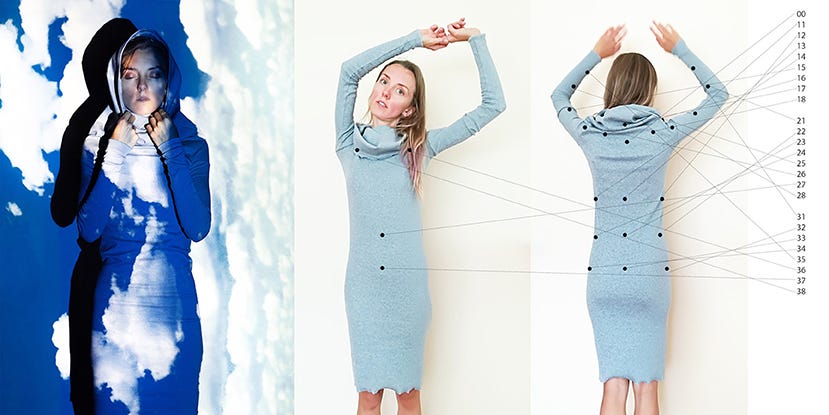
Clothing has always been a little bit magical. Put on a blazer and suddenly you’re “a person with opinions.”
Put on sweatpants and suddenly you’re “a person with snacks.” Now imagine your clothes returning the favor:
noticing how you move, nudging your posture, coaching your breathing, or even changing how heavy, strong, or
“present” your body feels. That’s the weirdly wonderful overlap between e-textiles (electronics
built into fabric) and body perception (the brain’s ongoing best guess of what your body is doing,
where it is, and how it feels).
This article digs into how smart textiles and wearable haptics can influence proprioception,
body schema, and body imagewith practical examples, design considerations, and the real-life
“okay wow my shirt just buzzed at me” experience. No sci-fi capes required (but encouraged).
What Are E-textiles (and Why Are They Different From Regular Wearables)?
E-textilesshort for electronic textilesare fabrics that integrate electronic functions like
sensing, computation, communication, and actuation. Unlike a smartwatch that sits on one wrist like a tiny
judgmental coach, e-textiles can spread across the body: sleeves, seams, panels, collars, waistbands, socks,
and shoes. That matters because the body is not a single point. It’s a whole… situation.
Common building blocks of e-textiles
- Conductive pathways: threads or embroidered traces that carry signals and power.
- Sensors: stretch/strain sensors for motion, pressure sensors for contact, electrodes for biosignals, textile antennas for wireless signals.
- Actuators: vibration motors, pressure/bladders, shape-memory stitches, heating elements, or “muscle-like” fibers that move.
- Electronics modules: small processing and power components (sometimes removable) that connect to the fabric.
The big promise is high-wear comfort plus whole-body coverage. The big headache is
also comfortplus washability, durability, power management, and making sure your hoodie doesn’t become a
brittle circuit board after three laundry cycles and one emotional support burrito.
Body Perception 101: Your Brain Is Running a “Me.exe” Simulation
“Body perception” is a broad umbrella, but three ideas show up again and again when we talk about technology
on the body:
1) Proprioception: where your body is in space
Proprioception is your internal sense of body position and movementhow you touch your nose with eyes closed
and (usually) don’t poke your own eyeball. It’s built from signals in muscles, joints, skin, and other
systems, and it feeds everything from balance to fine motor control.
2) Body schema: the “action map” used for movement
Body schema is often described as an unconscious, sensorimotor representationyour brain’s working model that
helps you coordinate movement without narrating it like a sports commentator.
3) Body image: the conscious story you tell about your body
Body image includes perceptions, beliefs, and feelings about appearance and physical self. It’s shaped by
personal experience, culture, media, health, andyesfeedback loops. If your clothes constantly “grade” you,
that can be helpful… or it can get weird fast.
Here’s the key: body perception isn’t fixed. It updates constantly based on sensory input. When you change
what the body feels (touch), senses (pressure, stretch), or hears (sonification), you can shift how the brain
interprets the body. E-textiles are basically a new way to edit the input stream.
Why Fabric Is a Big Deal for Perception
Textiles are already intimate technology. We live in them. They press on the skin, restrict or support joints,
wick sweat, add warmth, and change how we carry ourselves. Even “dumb” clothing influences body perception:
think of how compression gear can make you feel more “held together,” or how a heavy coat can change your
posture and gait.
E-textiles crank that influence from passive to interactive. Once fabric can measure movement,
respond with tactile cues, or adapt fit and pressure, it becomes a tool for
shaping proprioception and body awarenesssometimes subtly, sometimes like a tiny drumline on your ribs.
Three Ways E-textiles Can Change Body Perception
1) Sensing + biofeedback: “Your body, but with subtitles”
Many e-textiles focus on sensing: posture, breathing, joint angles, activity, muscle activation, or
physiological signals. The perception shift happens when that sensing becomes feedback you can feel or act on.
Instead of guessing “Am I slouching?” you get real-time confirmation.
Posture awareness is a classic entry point. A garment can detect spinal curvature or shoulder
position and provide a gentle cue (vibration, pressure, or a phone notification). Over time, users can build
a stronger internal sense of alignmenttraining proprioception by pairing “how it feels” with “what it is.”
Breathing coaching is another powerful use case because breathing is both automatic and
trainable. Smart fibers and textile sensors can detect stretch/compression in the chest or abdomen, then
deliver immediate tactile guidancehelping singers, athletes, or patients recovering from illness tune
breathing patterns without staring at a screen like it owes them money.
2) Haptic textiles: “Touch as an interface”
Haptics are tactile signalsvibration, squeeze, skin stretch, pressure, temperaturedesigned to communicate
information through touch. When haptic cues are wearable, they can act as sensory augmentation:
adding a new channel for the brain to interpret.
This matters for body perception because haptics can:
- Reinforce proprioception (e.g., cues that guide limb position or posture).
- Support balance and gait (e.g., directional cues or stability feedback).
- Shape embodiment (e.g., changing how “located” or “weighted” a limb feels through patterned stimulation).
Textile-based haptics can be especially effective because they’re distributed and comfortable. A sleeve can
cue the forearm. A waistband can signal direction. A shirt can guide shoulder positioning across multiple
pointsmore like a coach’s hands than a buzzer taped to one spot.
3) Identity and emotion: when feedback becomes a “body narrative”
Now for the human part. Body perception isn’t only mechanics; it’s meaning. Clothing already affects
confidence, self-consciousness, and social comfort. If e-textiles provide feedback about posture, movement
quality, or physiology, they can influence body imagefor better or worse.
Done well, e-textiles can support:
- Gentle confidence boosts: “I’m breathing steadily,” “My shoulders are relaxed,” “I’m moving smoothly.”
- Body neutrality: focusing on function and comfort rather than appearance metrics.
- Accessibility: giving alternative feedback channels for users who benefit from touch-based cues.
Done poorly, they can create:
- Compulsive checking (if feedback is constant or framed as scoring).
- Shame spirals (if “correction” feels like criticism).
- Privacy stress (if the garment collects intimate data without clear control).
Real Examples: What This Looks Like in Practice
Example A: The washable smart shirt that tracks movement (without turning you into a cyborg)
A strong trend in e-textiles is using conductive thread and seam-integrated sensing so the garment stays
comfortable and machine washable. The goal is to measure motion and posture accurately while looking and
feeling like… a normal shirt. That normalcy matters: the less “device-y” it feels, the more your brain
accepts it as part of your body routine.
Example B: Fabric-based computing and “imperceptible” sensing
Researchers are pushing toward textiles that can process data in-fabricwhere computing elements are embedded
in fibers, making the sensing less obtrusive. When the tech becomes less noticeable, users are more likely to
focus on bodily cues rather than the gadget, which can strengthen embodied learning (and reduce the urge to
constantly fiddle with a plastic module).
Example C: Haptic garments that guide posture or movement through touch
Vibrotactile and compression-based wearables can provide feedback for seated posture, rehabilitation
exercises, motor learning, or athletic training. The design challenge is matching tactile signals to
interpretable meaningsso “buzz left shoulder” translates into “open chest” rather than “I am being haunted
by a polite bee.”
Design Principles: How to Make E-textiles Feel Like Part of the Body
Start with the body map (not the circuit diagram)
Placement matters because skin sensitivity and movement patterns vary across the body. Seams, high-flex
regions, and pressure points affect both comfort and signal quality. Good designs integrate wiring into seams
and place components where bending, wrinkling, and sweat won’t destroy reliability or create false triggers.
Make feedback “quietly teach,” not “loudly shame”
If you want to influence body perception long-term, the user has to trust the feedback. That usually means:
adjustable intensity, clear patterns, positive framing (“try this”) rather than scolding (“wrong again”),
and modes that reduce alerts once learning improves.
Prioritize washability and durability as user experience
A smart garment that can’t survive real life isn’t “advanced”it’s “a demo.” Wash cycles, stretch, sweat,
abrasion, and daily wear will expose weak points fast. Durable interconnects, protective coatings, removable
modules, and textile-native fabrication methods (like embroidery) help bridge the gap between lab prototype
and laundry basket reality.
Power: keep it safe, comfortable, and boring
Power is where cool ideas go to have long, serious conversations with safety standards. Designers explore
strategies like low-power sensing, wireless power approaches, energy harvesting, and placing batteries in
less intrusive spots. For many consumer-ready designs, removable electronics remain the practical move.
Risks, Ethics, and the “Don’t Make This Weird” Checklist
Privacy and consent
E-textiles can capture intimate data: respiration patterns, movement signatures, posture habits, even
biosignals. Users should have transparent control over collection, storage, and sharingespecially in
workplaces, schools, or healthcare contexts.
Body image sensitivity
If the feedback is framed around “fixing” the body, it can worsen anxiety. A healthier approach is function:
comfort, mobility, reduced pain, skill learning, calm breathingthings that support a respectful relationship
with the body.
Inclusivity and fit
Body perception is personal, and bodies vary widely. E-textiles must be designed for diverse sizes, mobility
profiles, sensory preferences, and cultural comfort levels. A “one-pattern-fits-all” haptic language is a
quick way to turn helpful cues into confusing noise.
Where This Is Heading: Softer Tech, Smarter Bodies
The direction of travel is clear: textiles that are more durable, more integrated,
and more human-centered. Expect progress in:
- Sustainable prototyping: biodegradable or lower-impact conductive threads and fabrication methods.
- More natural interaction: haptics and sensing that feel like a subtle coaching touch rather than an alarm.
- Higher reliability: designs meant for repeated wear, sweat, and washingbecause humans insist on being human.
- Better embodied learning: tools that translate data into felt experience so the body learns without a screen.
The most exciting future isn’t “clothes that track you.” It’s clothes that help you understand yourself:
your posture, your breath, your movement patterns, your stress signalsthen gently guide you toward comfort,
skill, and agency. In other words: technology that respects the body, while still letting your hoodie do
something impressively nerdy.
FAQ: E-textiles and Body Perception
Are e-textiles the same as smart textiles?
People use the terms interchangeably, but “smart textiles” can include non-electronic functionality (like
phase-change warmth or moisture-wicking), while “e-textiles” specifically embed electronicssensing,
communication, actuation, or computing.
Can e-textile clothing be washed?
Some designs aim for washability through embroidered conductors, protected traces, and removable modules.
Washability is a major research and engineering focus because everyday adoption depends on surviving laundry
(and the user’s total refusal to hand-wash a T-shirt like it’s a museum artifact).
Can e-textiles improve proprioception or posture?
E-textiles can support proprioception by pairing sensed movement with tactile cues, helping users learn what
correct alignment feels like. This is most effective when feedback is consistent, interpretable, and designed
for gradual learning rather than constant correction.
Could e-textiles affect body image?
Yes. Any technology that reflects information about the body can shape body image. Designs that emphasize
comfort, function, and user control tend to be healthier than designs framed as “fixing” appearance or
scoring bodies.
Experiences: What It’s Like When Your Clothes Join the Conversation (≈)
The first time you wear an e-textile with feedback, you notice something surprising: it doesn’t feel like
“tech.” It feels like attention. A posture-sensing shirt doesn’t announce itself with a startup jingle.
It just waits. Then, twenty minutes into your laptop hunch, a gentle buzz lands near your lower backless
“you are failing” and more “hey friend, your spine is doing origami again.” You straighten up, and for a
second you’re hyper-aware of ribs, shoulders, and where your head floats above your torso. That’s body
perception changing in real time: the cue links an internal feeling to an external reality.
Breathing-guidance garments can feel even more personal. Imagine a light squeeze or vibration pattern that
mirrors an inhale-exhale rhythm. At first, it’s oddlike being coached by a seatbelt with manners. But after a
few minutes, the signal becomes a metronome your body understands. You start anticipating the next cue, then
matching it, then eventually not needing it as much. The best versions fade into the background as you learn,
which is exactly the point: your nervous system takes over. You walk away not thinking “my shirt did a
thing,” but “I can feel my breathing better now.”
In movement training, haptic cues can create a new “touch language.” A runner might get a subtle vibration on
the left hip when stride symmetry drifts, or a dancer might feel a cue along the shoulder blade when posture
collapses during fatigue. The learning moment isn’t the buzz itselfit’s the instant you connect it to a
sensation you didn’t realize you were ignoring. Many people describe it as discovering a blind spot in their
own body, then suddenly having a flashlight.
For rehab or chronic pain contexts, the emotional experience matters as much as the signal. A garment that
provides gentle guidance can feel supportivelike external scaffolding while the body rebuilds confidence. But
the same garment can feel intrusive if it nags too often or if the feedback is framed as “correction.” Users
tend to stick with systems that offer control: adjustable intensity, quiet modes, and clear “why” behind each
cue. If the clothing respects autonomy, people trust it. If it feels like surveillance in spandex, they’ll
abandon it faster than a group chat called “Monday Motivation.”
The most interesting shift is subtle: after a few weeks, some users report they can sense posture or breathing
changes before the garment cues them. That’s the long gametraining internal perception so the body
becomes its own best interface. In the best-case scenario, the technology becomes unnecessary… which is
arguably the highest compliment you can give a pair of pants.
Conclusion
E-textiles sit at a rare intersection: they’re physical, emotional, and computational at the same time. By
sensing movement and physiology, and by delivering tactile cues through wearable haptics, smart textiles can
reshape proprioception, reinforce body schema, and influence body imageespecially when designs prioritize
comfort, clarity, and user control. The future isn’t just smarter clothing. It’s more informed embodiment:
technology that helps people feel at home in their bodies, one stitch (and occasional polite buzz) at a time.