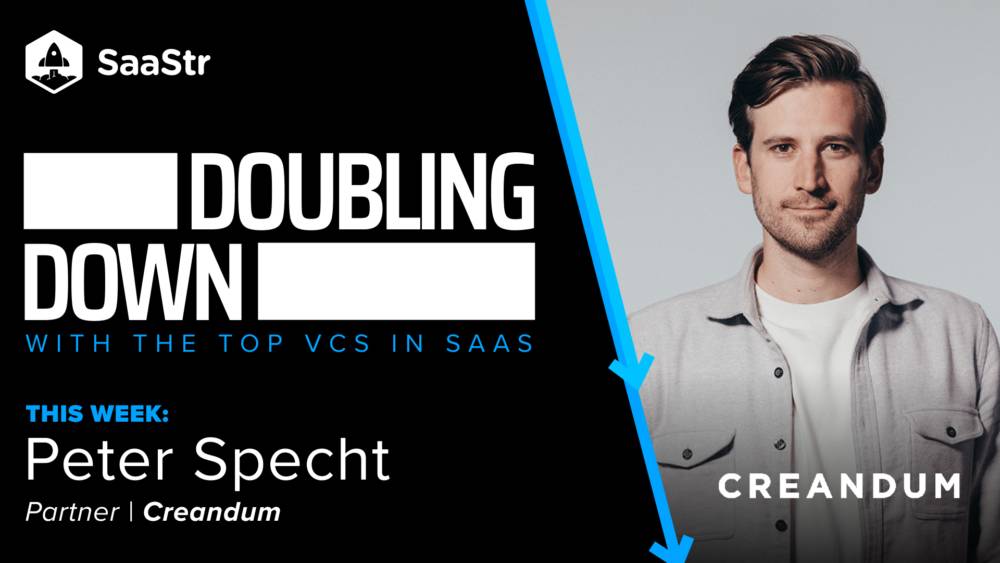
In venture capital, “doubling down” sounds glamorouslike someone in a Patagonia vest confidently pushing all the chips to the center of the table while a founder explains a market map with 97 arrows. In reality, it is much harder. It means choosing focus over noise, conviction over consensus, and long-term company building over whatever the funding market is shouting about this week.
That is why Peter Specht, Partner and General Partner at Creandum, is an interesting figure to study. Based in London and deeply involved in Creandum’s software, AI, infrastructure, fintech, and B2B marketplace investments, Specht represents a modern European venture style: global in ambition, early in timing, and allergic to lazy pattern matching. His work sits at the intersection of SaaS investing, founder psychology, market selection, and the increasingly important question of what happens when AI rewires nearly every software category.
Creandum is best known as an early backer of companies such as Spotify, Klarna, Bolt, Trade Republic, Pleo, Depop, Neo4j, Factorial, and many others. Specht’s own investment track record includes companies such as Factorial, Leapsome, TWAICE, Amie, Lokalise, Procuros, Alokai, CarOnSale, cargo.one, Abacum, Embat, Rillet, and more. That list is not just a trophy shelf. It reveals a consistent investment pattern: find founders building products that solve painful, expensive, recurring business problemsand get involved before everyone else agrees it is obvious.
Who Is Peter Specht?
Peter Specht’s route into venture capital did not begin with a spreadsheet and a corner office. It began closer to the startup trenches. After studying at the University of St. Gallen and ESADE, he joined Lazada in Southeast Asia during its early, fast-moving expansion. That experience mattered. Watching a company grow from a small team into a much larger organization at high speed gives an investor something no MBA case study can fully provide: a healthy respect for chaos.
Specht later spent time at Google in B2B marketing and at Bain & Company’s private equity taskforce, building a mix of operational exposure, analytical discipline, and commercial pattern recognition. In 2017, he joined Creandum, initially helping build out the firm’s DACH presence. Over time, his role expanded across Europe, including Spain and the United Kingdom, and he became a key figure in Creandum’s London office.
What makes his background useful is that it blends operator empathy with investor rigor. He has seen how messy scaling can be, how quickly teams can outgrow early systems, and how expensive the wrong market assumptions become. That combination appears throughout his investing: enthusiasm for ambitious founders, but also a strong preference for clear value propositions, practical go-to-market thinking, and markets large enough to reward obsession.
Creandum’s Investment Style: Early, Focused, and Patient
Creandum has built its reputation by investing early in European technology companies before they become obvious global winners. The firm focuses heavily on seed and Series A opportunities, with hubs in London, Stockholm, Berlin, and San Francisco. Its areas of interest include SaaS, infrastructure, fintech, consumer, climate, health, and increasingly AI across both infrastructure and application layers.
One of the most important parts of Creandum’s model is high conviction. Instead of spraying small checks across hundreds of startups and hoping one becomes the next Spotify, the firm emphasizes concentrated support. Specht has described Creandum’s check writers as making only a small number of new commitments per year so they can spend more time helping founders. In plain English: fewer bets, more sweat.
That matters because early-stage investing is not only about capital. A seed or Series A founder often needs help with hiring, positioning, pricing, fundraising, board construction, international expansion, and sometimes the deeply underrated art of not losing their mind. Creandum’s promise is not simply “Here is money.” It is closer to “Here is money, plus a team that has seen this movie beforeand yes, the second act gets weird.”
The Meaning of “Doubling Down” in Specht’s World
In SaaStr’s “Doubling Down” interview, Specht’s advice to SaaS founders centered on focus. Rather than simply repeating the familiar post-2021 mantra of “efficient growth,” he emphasized doubling down on what works. That advice sounds simple because good advice often does. The hard part is applying it while your inbox is full of customer requests, investor opinions, competitor announcements, AI hype threads, and one mysterious advisor who keeps saying “community-led growth” with the confidence of a weather app during a hurricane.
For early-stage founders, doubling down means identifying the right ideal customer profile, narrowing the product promise, and learning which part of the market truly hurts enough to pay. For later-stage SaaS companies, it means scaling go-to-market motions that have already shown real efficiency instead of inventing five new sales channels because the board deck looks lonely.
Specht’s philosophy fits a broader shift in venture capital. In 2020 and 2021, many startups were rewarded for speed, storytelling, and aggressive expansion. By 2023 and 2024, the market demanded stronger fundamentals: durable revenue, clearer margins, thoughtful burn, and proof that growth was not being purchased at a discount with venture dollars. In that environment, “focus” stopped sounding boring. It became survival gear.
Why SaaS Still Matters in the Age of AI
Some people talk about AI as if traditional SaaS has been quietly escorted out of the building. Specht’s investment activity suggests a more nuanced view. SaaS is not disappearing; it is being rebuilt. AI changes how products are created, priced, adopted, and defended, but companies still need software to run finance, HR, logistics, localization, treasury, compliance, infrastructure, and every other operational system that keeps the business machine from coughing smoke.
The interesting question is not whether AI replaces SaaS. The better question is which SaaS categories become dramatically more valuable when AI is embedded into workflows. Creandum’s interest in AI infrastructure and application-layer companies reflects this. Infrastructure companies may provide the compute, orchestration, monitoring, or data layer needed for AI adoption. Application companies may transform specific business processes, such as financial planning, customer support, recruiting, procurement, enterprise IT, or treasury management.
That is where Specht’s B2B focus becomes important. Businesses do not buy software because it sounds futuristic. They buy it because something is slow, expensive, risky, manual, fragmented, or embarrassing enough to deserve budget. AI makes the pitch more exciting, but the budget still follows pain.
Embat and the Treasury Software Opportunity
One of Specht’s highlighted investments is Embat, a Madrid-based treasury management software company. Embat focuses on real-time bank connectivity, treasury forecasting, payment automation, accounting automation, and reconciliation with enterprise resource planning systems. In less glamorous terms, it helps finance teams stop wrestling spreadsheets in a dark room like it is an Olympic sport.
The opportunity makes sense because treasury management has long been underserved for mid-market and lower-enterprise companies. Large incumbents can be expensive and slow to implement, while smaller businesses often rely on manual workflows that break as complexity grows. For CFOs, the pain is real: fragmented bank accounts, unpredictable cash visibility, slow reconciliation, and operational risk.
Creandum’s investment in Embat reflects a classic Specht-style thesis: find an essential business function, identify a segment where incumbents are poorly matched to customer needs, and back founders who can build a modern product with faster implementation and clearer usability. It is not flashy in the consumer-app sense, but it is exactly the kind of problem that serious companies will pay to solve.
Factorial: HR Software for the Real World
Factorial is another example of Creandum’s belief in software for operational pain points. The Barcelona-based company provides HR software for small and medium-sized businesses, helping teams manage onboarding, time tracking, payroll-related workflows, leave management, performance processes, and other people operations tasks.
HR software is a deceptively rich category. Every growing company eventually discovers that managing people through email threads, spreadsheets, and “just ask Maria, she knows” is not a scalable system. Factorial’s opportunity came from serving SMBs that needed enterprise-quality HR capabilities without enterprise-level complexity.
For Specht and Creandum, the attraction is easy to understand. Factorial sits in a large market, solves a recurring operational need, and benefits from expansion as customers grow. It also reflects a broader European strength: building vertical or function-specific software that can compete globally by being cleaner, more focused, and better suited to modern teams than legacy platforms.
cargo.one and the Digitization of Traditional Industries
cargo.one shows another side of Specht’s investment lens: the digitization of industries that still depend on offline, inefficient, or fragmented processes. The company focuses on digital booking and distribution for air freight, a massive global market that historically relied on manual communication, pricing opacity, and workflows that were not exactly begging for a design award.
Backing companies like cargo.one requires patience. Industry transformation does not happen just because a startup has a clean interface. It requires trust, network development, operational reliability, and a deep understanding of how buyers and suppliers actually behave. In categories like logistics, the product must fit into existing workflows before it can change them.
This is where “doubling down” becomes more than a slogan. Founders in traditional industries often face slower adoption curves, tougher sales cycles, and more complex stakeholder maps. Investors need conviction not only in the product, but in the market’s readiness to change. When that change happens, however, the rewards can be substantial because the problems are deep and the markets are enormous.
TWAICE and Software for the Energy Transition
TWAICE, a battery analytics company, highlights Creandum’s interest in climate and deep technology. Battery performance, lifecycle management, and predictive analytics are increasingly important as electric vehicles, renewable energy storage, and electrified industrial systems expand. Batteries are not just components; they are critical infrastructure.
Software that helps companies understand battery health, predict degradation, and optimize performance can become highly valuable as electrification scales. This is not a category where a founder can win with a catchy landing page and three emojis. It requires technical depth, customer trust, and credible data.
Specht’s involvement in companies like TWAICE reflects a wider thesis: some of the best software opportunities are tied to physical-world complexity. As industries such as energy, logistics, manufacturing, and transportation modernize, software becomes the intelligence layer that makes those systems more efficient, measurable, and resilient.
Abacum, Rillet, and the Reinvention of Finance Workflows
Finance teams are having a moment. Not the champagne-on-a-yacht kind of moment, but the “please help us close the month without summoning ancient spreadsheet demons” kind. Creandum’s investments in companies such as Abacum and Rillet point to the growing importance of modern financial operations software.
Abacum focuses on financial planning and analysis, helping finance teams with forecasting, scenario planning, reporting, and board-level visibility. Rillet operates in the accounting and finance automation space, serving companies that need cleaner systems as they grow. The shared theme is obvious: finance teams need tools that are faster, more connected, and more strategic than legacy workflows allow.
This area is especially attractive because CFOs are under pressure to do more with better data. In a tighter capital environment, boards want visibility into burn, efficiency, revenue quality, hiring plans, and cash runway. Modern finance tools are no longer back-office conveniences. They are decision-making infrastructure.
AI, Agentic Workflows, and the Next Creandum Chapter
Specht’s current interests include AI infrastructure and application-layer AI. That matters because the startup market has moved from “AI as a feature” to “AI as a workflow engine.” The most interesting companies are not merely adding a chatbot to an old interface. They are rethinking how work gets done.
Creandum-backed companies such as Conduct point toward this direction. Conduct focuses on using AI to modernize legacy enterprise resource planning systems, allowing business and IT stakeholders to interact with complex enterprise systems in more natural and efficient ways. That kind of product sits in a painful zone: legacy systems are deeply embedded, expensive to maintain, and difficult to change.
The opportunity for AI-native software is especially strong where systems are complex, data-heavy, and full of repetitive expert work. Enterprise IT, finance, recruiting, customer support, compliance, and procurement all fit that description. The winners will not simply be the companies with the best model demo. They will be the companies that understand workflows, earn customer trust, and deliver measurable business outcomes.
What Founders Can Learn from Peter Specht’s Approach
1. Focus Beats Frenzy
Specht’s core advice to founders is to focus and double down on what works. That means saying no more often than most ambitious people enjoy. Early traction can be confusing because it creates possibilities. A startup might find interest from five customer segments, three geographies, and two pricing models. The temptation is to chase all of them. The better move is usually to identify the strongest signal and go deeper.
2. Pain Is Better Than Trendiness
Many of Specht’s investments solve unglamorous but urgent business problems: treasury management, HR operations, finance planning, battery analytics, localization, air freight booking, and enterprise system modernization. These are not categories built for cocktail party sparkle. They are built around budget-holding pain. That is precisely why they can become powerful companies.
3. Founder Quality Still Comes First
Even in categories with strong market logic, venture capital remains a people business. Specht has repeatedly emphasized the importance of founders with distinctive strengths. In early-stage investing, the product will change, the market narrative will evolve, and the first go-to-market plan may need to be politely buried. The founder’s ability to learn, adapt, recruit, and persist becomes the real underwriting question.
4. Efficient Growth Is Not Optional
The venture market has become more selective. AI, climate, and efficient software companies still attract attention, but businesses with weak margins, heavy capital needs, or unclear unit economics face a tougher road. Founders need to show that growth is not just possible, but repeatable and economically sensible. “We will fix monetization later” is no longer a strategy; it is a haunted house with a pitch deck.
5. Europe Can Build Global Category Leaders
Creandum’s portfolio is a reminder that European startups can build globally important companies. Spotify changed music streaming. Klarna reshaped consumer finance. Trade Republic helped redefine retail investing in Europe. Factorial, Pleo, Bolt, Neo4j, Depop, and others show that Europe’s startup ecosystem is no longer a regional side quest. It is part of the main game.
Experience Notes: Doubling Down Like a Founder, Not Just an Investor
The most useful way to understand the phrase “doubling down” is to imagine the founder’s weekly calendar. On Monday, a major prospect asks for a custom feature. On Tuesday, a junior investor says the market is “too niche.” On Wednesday, a competitor announces a suspiciously large funding round with a suspiciously vague AI paragraph. On Thursday, a customer churns. By Friday, the team is debating whether to pivot, rebrand, hire a VP of Sales, launch in the United States, or simply lie on the floor for a tasteful amount of time.
This is where focus becomes practical. Doubling down does not mean stubbornly ignoring evidence. It means separating signal from static. If five of your best customers are using the product for the same urgent workflow, that is signal. If one loud prospect wants you to rebuild the platform for a use case outside your strategy, that may be static wearing a nice blazer. Founders who learn the difference move faster because they waste less energy.
From a founder’s perspective, Specht’s approach offers a useful mental model. First, identify the painful workflow. Not the interesting workflow. Not the fashionable workflow. The painful one. The kind that makes a CFO, HR leader, operations manager, or IT director say, “Yes, please fix this before I age another decade.” Second, prove that the problem exists across enough customers to support a large market. Third, build the product so adoption feels easier than staying with the old process.
For B2B SaaS founders, this often means starting narrow. A company may eventually become a broad platform, but platforms are usually earned, not declared. Factorial did not need to solve every human resources problem on day one. Abacum did not need to replace every finance system immediately. Embat did not need to become the entire corporate banking stack overnight. Great companies often begin with one wedge that is sharp enough to enter the market and valuable enough to expand from there.
Another experience worth noting is the emotional side of high-conviction building. Investors talk about conviction as if it is a clean decision made in a conference room. Founders experience conviction as a daily test. Can you keep going when the market says “not now”? Can you listen to customers without becoming a feature factory? Can you hire people who raise the bar instead of simply filling seats? Can you accept that focus may make the company look smaller before it becomes much bigger?
That is why the best investor-founder relationships are built on more than valuation and term sheets. Founders need investors who understand the difference between pressure and panic. They need partners who can challenge assumptions without hijacking the company. They need someone who will help them prepare for the next round, sharpen the narrative, recruit senior talent, and think through the uncomfortable trade-offs that never fit neatly into a metrics dashboard.
Specht’s career also offers a lesson about geography. He has worked across Europe, Asia, and the United States, and Creandum’s footprint reflects that global mindset. For founders, this matters because ambitious companies are rarely local for long. A Spanish fintech may need to think about the U.K. market. A German infrastructure company may need U.S. customers. A European AI startup may compete with Silicon Valley from day one. The earlier a founder understands global customer expectations, the better prepared the company becomes.
The final experience lesson is simple: doubling down is not a single dramatic moment. It is a habit. It happens when a founder chooses the right customer segment again. It happens when the product roadmap stays disciplined again. It happens when the company resists vanity growth again. It happens when the team improves the same motion until it becomes repeatable, defensible, and eventually boring in the best possible way. In startups, boring repeatability is often where the magic cash register lives.
Conclusion: Why Peter Specht’s Playbook Matters Now
Peter Specht’s work at Creandum captures a timely lesson for founders and investors: the best opportunities are rarely obvious at the beginning, but they usually become clearer when you study pain, people, and timing with discipline. His portfolio points toward a belief in focused founders, software that solves serious business problems, AI that improves real workflows, and European companies with global ambition.
In a market that has become more selective, the “doubling down” mindset feels especially relevant. Founders do not need to chase every trend. They need to understand what is working, why it is working, and how to compound that advantage. Investors do not need to win every deal. They need the judgment to recognize rare teams early and the patience to support them through the messy middle.
That may be the real story behind Doubling Down: Peter Specht, Partner at Creandum. It is not about blind risk-taking. It is about informed conviction. It is about backing founders before the market applauds. And it is about remembering that in venture capital, as in startups, the biggest outcomes often begin as deeply unfashionable problems that someone finally decides to solve properly.
Note: This article is based on publicly available information about Peter Specht, Creandum, and related portfolio companies, rewritten into original editorial content for web publishing.