Some bouquets whisper, “I came from a florist’s cooler.” A Louesa Roebuck-inspired wild bouquet says, “I was gathered from a garden path, a farmers market, and possibly a very opinionated oregano plant.” That is the charm of this approach: it feels alive, seasonal, imperfect, and generous. Instead of building a stiff arrangement that looks like it has been yelled into obedience, this DIY style lets branches bend, fruit dangle, herbs spill, and edible flowers do what they do bestmake everyone lean in and ask, “Wait, can I eat that?”
Louesa Roebuck, the California floral artist behind Foraged Flora and Punk Ikebana, is known for arrangements made from foraged, gleaned, local, and seasonal materials. Her work is not about forcing roses into a vase in February and pretending nature has no calendar. It is about seeing beauty in what is nearby: grape leaves, quince branches, pear stems, fennel fronds, oregano, nasturtiums, herbs gone to flower, and the wild architecture of plants at their most expressive.
This guide translates that mood into a practical DIY project: how to create a wild edible bouquet inspired by Roebuck’s famous edible arrangement style. It covers safe sourcing, plant choices, structure, styling, maintenance, and real-world lessons from making bouquets that are part centerpiece, part garden poem, and part snack-adjacent conversation starter.
What Makes a Louesa Roebuck-Inspired Bouquet Different?
A traditional bouquet often begins with a shopping list: roses, ranunculus, eucalyptus, filler flowers, ribbon. A Roebuck-inspired bouquet begins with observation. What is growing right now? What is abundant? What has fragrance, movement, texture, or edible value? What looks a little unruly in the best possible way?
Her style embraces local materials and seasonality. That means the arrangement should look different in July than it does in October. In summer, it may include flowering herbs, grape vines, squash blossoms, nasturtiums, and berry canes. In fall, it might lean toward quince, figs, pears, persimmons, seed heads, rosemary, and bronze leaves. The point is not to copy a bouquet stem for stem. The point is to adopt the mindset.
The Key Design Principles
First, think in layers. Wild bouquets need a structural base, a middle layer, and a few bright focal moments. Branches and vines create the bones. Herbs, leaves, and edible flowers soften the shape. Fruit, seed pods, or blossoms become the “look at me” moments.
Second, let plants behave naturally. A grape vine wants to curl. A pear branch may lean. A fennel stem may look like botanical fireworks. Do not fight that energy. Use it. Wild arrangements look best when they appear to have grown into place rather than been assembled by a person with a ruler and unresolved perfectionism.
Third, respect the edible part of “edible bouquet.” Only use plants you can identify with certainty, and only use flowers, herbs, fruits, and foliage that have not been sprayed with unsafe chemicals. Beautiful is nice. Safe is better. Safe and beautiful is the goal. Safe, beautiful, and slightly dramatic? Now we are arranging.
Safe Sourcing: The Most Important Step
Before you grab shears and sprint into the nearest vacant lot like a floral raccoon, pause. Safe sourcing is the foundation of an edible bouquet. Foraged materials can be wonderful, but they must be gathered legally, ethically, and carefully.
The best sources are your own unsprayed garden, a trusted friend’s garden, a local organic farm, a farmers market, or edible-flower growers who clearly label their products for culinary use. Avoid flowers from standard florist bouquets, garden centers, nurseries, or grocery displays unless they are specifically labeled as edible. Many ornamental flowers are grown for appearance, not consumption, and may have been treated with pesticides or preservatives that do not belong anywhere near a salad plate.
Also avoid roadsides, dog parks, heavily trafficked trails, industrial areas, sprayed lawns, and public spaces where harvesting is not allowed. If you are foraging from private property, ask permission. If you are in a park, check the rules. “The bouquet made me do it” is not a strong legal defense.
Best Edible Materials for a Wild Bouquet
A wild edible bouquet works best when it combines edible flowers, herbs, fruiting branches, vines, and interesting leaves. Not every part of every edible plant is edible, so always research the exact plant and the exact part you plan to use.
Edible Flowers
Good beginner-friendly edible flowers include nasturtiums, calendula, violas, pansies, borage, squash blossoms, roses, chamomile, lavender, and herb flowers such as chive blossoms, basil flowers, dill flowers, cilantro flowers, and oregano flowers. Nasturtiums bring a peppery bite and bold color. Calendula petals look sunny and slightly wild. Borage adds blue star-shaped flowers with a cucumber-like freshness. Violas and pansies are delicate, cheerful, and excellent for finishing dishes.
When using edible flowers for food, it is usually safest to use the petals and remove stamens, pistils, and bitter bases unless a reliable edible-flower guide says otherwise. People with pollen allergies should be cautious. Edible does not mean “eat a cereal bowl full of petals.” Start small, especially with flowers you have never eaten before.
Herbs and Aromatic Greens
Herbs are the secret weapon of wild edible bouquets. They bring fragrance, texture, and movement. Oregano, rosemary, thyme, mint, basil, fennel, dill, parsley, cilantro, sage, and lemon balm can all play beautifully in arrangements. Flowering herbs are especially useful because they look airy and natural while still being food-friendly.
Oregano stems, for example, create a meadow-like looseness. Fennel gives height and a feathery silhouette. Rosemary adds structure and a clean, piney scent. Mint is lush and casual, though it wilts faster than some woody herbs. Basil can be gorgeous, but it bruises easily, so handle it gently and keep it hydrated.
Fruit, Vines, and Branches
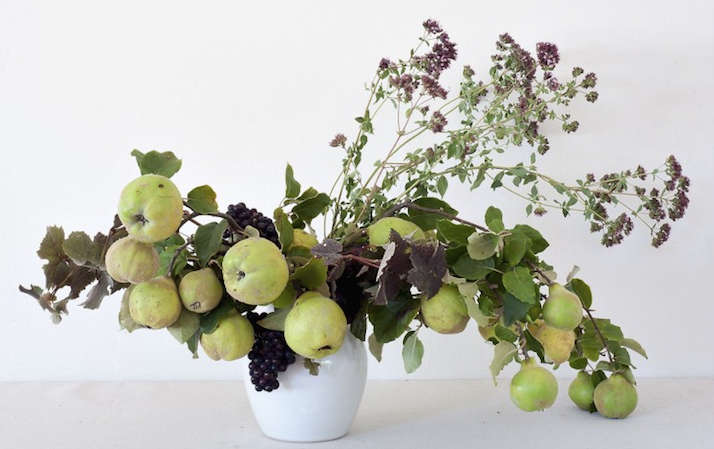
Roebuck’s edible bouquet concept famously used branches with fruit, including quince, grapes, and pears, along with oregano and grape leaves. This is a brilliant lesson: edible bouquets do not have to be only flowers. Fruiting branches create instant drama, and they make an arrangement feel like it came from an orchard instead of a catalog.
Consider grape vines, fig branches, apple branches, pear branches, citrus leaves, blueberry stems, blackberry canes, raspberry canes, crabapple branches, olive branches, and persimmon stems. Use common sense with weight. A pear branch can be heavy. If your vase is too light, your centerpiece may attempt a dramatic stage dive.
Tools and Supplies You Will Need
You do not need a professional floral studio. You need clean tools, a stable vessel, and a little patience. Gather sharp pruning shears, a clean vase or wide-mouth jar, fresh water, a floral frog or clean chicken wire, food-safe twine if needed, and a clean towel. Avoid floral foam for this project. It is not necessary, it can shed microplastics, and it is not ideal for anything that might be used around edible materials.
Choose a vessel with weight. Ceramic bowls, pitchers, low compotes, and sturdy glass vases work well. A wild bouquet often has asymmetry and long-reaching stems, so the container must balance the design. If the vase is narrow and light, keep the arrangement smaller and less branch-heavy.
How to Make a Wild Edible Bouquet Step by Step
Step 1: Gather With a Seasonal Eye
Start by looking for structure, texture, color, and scent. Pick three to five categories of material: one branch or vine, one herb, one edible flower, one fruiting element, and one soft filler. For example, you might use grape vine, oregano, nasturtiums, small pear branches, and flowering dill. Another combination could be rosemary, calendula, fig leaves, basil flowers, and pansies.
Cut in the cool part of the day if possible. Morning is ideal because stems are hydrated. Bring a bucket of clean water and place stems in it quickly. Remove leaves that would sit below the waterline, because submerged foliage can foul the water and shorten vase life.
Step 2: Clean and Condition the Stems
Rinse edible flowers and herbs gently if they will be consumed later, then let them dry on a clean towel. Do not blast delicate flowers under the faucet like you are pressure-washing a driveway. Trim stems at an angle before arranging. Woody branches may benefit from a fresh cut or a small split at the end to help them drink.
If you plan to eat any part of the bouquet, keep it clean from the beginning. Use washed hands, clean tools, and a clean work surface. Do not place edible flowers on a surface that just held raw chicken, potting soil, or the mysterious contents of a garage shelf. Romance has limits.
Step 3: Build the Structure First
Place your floral frog or shaped chicken wire inside the vessel. Add water. Begin with the largest branches or vines. Let them lean, arc, or trail. This first layer determines the shape of the bouquet. Do not aim for a perfect dome. Aim for movement.
Think of the bouquet like a landscape. One branch can reach upward like a tree. A vine can spill over the edge like a path. A fruiting stem can sit low and heavy, giving the arrangement visual weight. Leave empty space. In wild floral design, the air between stems matters as much as the stems themselves.
Step 4: Add Herbs and Foliage
Next, add herbs. Use them to soften the branch structure and fill gaps without making the bouquet dense. Oregano, thyme, and flowering basil can weave through the composition. Fennel or dill can add height. Mint can create lushness near the base. Rosemary can act like a small evergreen branch.
Rotate the vase as you work. A centerpiece should have something interesting from every angle, but it does not need to be symmetrical. A little imbalance is part of the charm. Too much imbalance is called “cleaning water off the table.” The difference is vase stability.
Step 5: Place Edible Flowers Last
Edible flowers are often delicate, so add them near the end. Cluster a few small blooms together rather than scattering them like confetti. Use nasturtiums where you want bold color, calendula petals for warmth, borage for blue accents, and violas for small jewel-like faces.
Let some flowers face outward and others tilt naturally. This keeps the bouquet from looking staged. If a flower has a short stem, tuck it into the foliage or float it in a small water-filled cup hidden inside the arrangement.
How to Style the Bouquet for a Table
A wild edible bouquet shines when the rest of the table is simple. Use linen napkins, ceramic plates, wooden boards, glass pitchers, and seasonal food. Let the arrangement connect to the meal. If the bouquet includes oregano and grapes, serve roasted vegetables, flatbread, olives, or cheese. If it includes nasturtiums and mint, serve a salad with citrus. If it includes fennel flowers, serve fish, beans, or a lemony grain dish.
Keep the bouquet low enough for conversation unless it is on a sideboard. Nobody wants to discuss appetizers through a pear branch. For a dinner table, choose a wide, low vessel and let the arrangement spread horizontally. For an entry table or buffet, go taller and more sculptural.
Care Tips: Keeping Wild Bouquets Fresh
Change the water daily if possible. Remove wilted flowers and herbs as they fade. Mist leaves lightly, especially fruiting branches that may drop foliage indoors. Keep the bouquet away from direct sun, heaters, and ripening fruit bowls, which can speed aging. Some materials will last several days; others may look best for one glorious evening. That is not failure. That is seasonality doing its honest little dance.
If you want to use edible flowers in food, harvest extra blooms and store them separately in a clean container in the refrigerator. A bouquet is beautiful, but a dining table is not a sterile environment. For serving, use fresh, clean petals reserved for the plate.
Common Mistakes to Avoid
Using Unknown Wild Plants
Never guess with edible plants. If you cannot identify it, do not eat it. Some toxic plants are beautiful enough to tempt even experienced gardeners. Beauty is not a safety label.
Mixing Edible and Non-Edible Materials Carelessly
You can create a decorative wild bouquet with non-edible plants, but if the theme is edible, keep the design food-safe. Avoid poisonous flowers, treated stems, and materials that shed irritating sap or berries near food.
Overpacking the Vase
Wild does not mean stuffed. Let branches breathe. Let herbs trail. Let the eye travel. When in doubt, remove one stem. Then remove one more. Then stop before you remove the whole bouquet and start questioning your life choices.
of Practical Experience: What Making These Bouquets Teaches You
The first experience most people have with a Louesa Roebuck-inspired edible bouquet is surprise. You walk into the garden thinking you have “nothing blooming,” and ten minutes later you are holding rosemary, bolted cilantro, fennel fronds, nasturtium leaves, a grape tendril, and one heroic calendula flower acting like it has been waiting all season for its solo. This kind of DIY arrangement trains the eye. It teaches you that flowers are not the only stars. Leaves, fruit, stems, seed heads, and scent can carry the whole performance.
Another lesson is flexibility. A recipe-style bouquet can make you feel defeated if one ingredient is missing. Wild arranging does the opposite. No quince branch? Use crabapple. No grapes? Try fig leaves or blackberry canes. No nasturtiums? Use violas, calendula, or flowering herbs. The bouquet becomes a conversation with the season rather than a shopping errand with prettier scissors.
There is also a useful humility in working with edible materials. They wilt, bruise, bend, and occasionally behave like tiny divas. Mint may droop if cut in the heat. Basil can blacken if chilled too aggressively. Nasturtiums look fabulous and then suddenly decide they have social plans elsewhere. You learn to cut early, hydrate quickly, and accept that some beauty is brief. That is part of the appeal. A wild edible bouquet is not trying to look frozen in time. It is alive, and living things have opinions.
In practice, the best results often come from building the arrangement slowly. Start with one strong branch. Add a second stem that answers it. Place herbs where they naturally want to fall. Step back. Turn the vase. Drink water. Remind yourself that professional-looking wildness is still design, not a botanical traffic jam. The arrangement should feel spontaneous, but the strongest ones usually have a clear line, a stable base, and a few open spaces where the eye can rest.
The most rewarding part is how people respond. Guests notice edible bouquets differently. They ask what is in them. They smell the herbs. They recognize a pear branch or a basil flower. The centerpiece becomes less like decoration and more like a story about place, season, and care. Even a small bouquet on a kitchen table can make dinner feel intentional.
The biggest takeaway is that this project changes how you see abundance. Instead of thinking beauty must be bought in plastic sleeves, you begin noticing what is already around you. The bolted herb is not a failure. The curling grape vine is not a mess. The slightly crooked pear branch is not imperfect; it is character with leaves. That shift is the real DIY magic.
Conclusion
DIY wild edible bouquets inspired by Louesa Roebuck are more than pretty centerpieces. They are a seasonal practice, a safety-conscious craft, and a playful reminder that the garden can feed both the table and the imagination. By combining edible flowers, herbs, fruiting branches, and foraged-looking structure, you can create arrangements that feel personal, sustainable, and alive.
The secret is not perfection. It is attention. Look closely at what is growing near you. Choose clean, safe, edible materials. Let stems move naturally. Build with branches, soften with herbs, finish with flowers, and leave enough breathing room for the bouquet to feel wild rather than crowded. Do that, and your arrangement will not just decorate the room. It will tell a story.
Note: This article is for floral design and general educational purposes. Only eat flowers and plants that are positively identified as edible, grown without unsafe chemicals, and prepared according to reliable food-safety guidance.