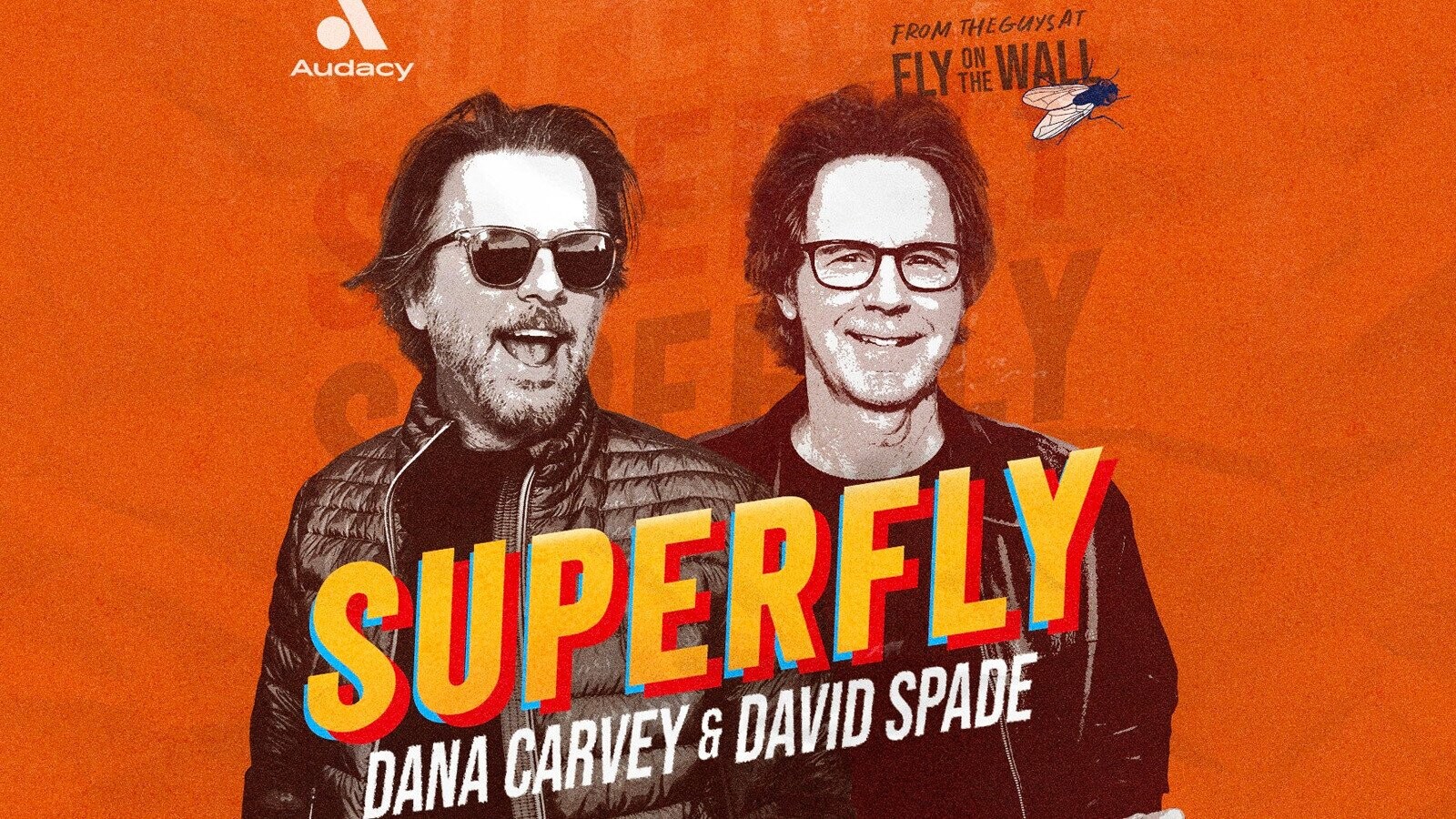
Dana Carvey and David Spade are two of the funniest people to ever walk through the revolving door at Saturday Night Live. Carvey can turn a syllable into a sketch. Spade can make one dry aside feel like a tiny courtroom verdict. Together, they have the ingredients for a comedy podcast that should be irresistible: nostalgia, timing, show-business stories, impressions, and enough SNL history to keep comedy nerds happily trapped in traffic for years.
That is why the ongoing debate around Fly on the Wall and its companion show Superfly feels less like a takedown and more like a plea from people who actually want the project to be great. The issue is not whether Carvey and Spade are funny. They are. The issue is whether the podcast machine around them is giving their talent the structure, editing, sound, and focus it deserves.
Before launching another podcast, expanding the feed, or turning every riff into a new brand extension, the smartest move would be simple: get the first podcast right. Not perfect. Not polished into corporate oatmeal. Just tighter, clearer, more professionally produced, and more respectful of what makes their comedy partnership special.
Why Fly on the Wall Had Such a Strong Starting Point
Fly on the Wall with Dana Carvey and David Spade launched in January 2022 with a premise that practically sold itself. Two former SNL cast members would sit down with castmates, writers, hosts, musicians, and comedy legends to revisit the stories behind the sketches, characters, chaos, and late-night pressure cooker that shaped American comedy.
That concept is gold. SNL is not just a TV show; it is a national comedy attic. Every old costume has a story. Every famous sketch has a weird rehearsal memory. Every cast era has its own mythology, grudges, breakthroughs, bombing-at-dress-rehearsal nightmares, and “Lorne said what?” moments. A podcast hosted by Carvey and Spade should feel like sneaking into the after-party without having to pretend you know where Studio 8H keeps the good snacks.
The show also had real credibility. Carvey was a defining SNL performer from 1986 to 1993, famous for characters such as the Church Lady, Garth Algar, Hans, and a full museum wing of presidential impressions. Spade became one of the sharpest voices of the 1990s cast, moving from writer to performer and carving out his own lane with sarcasm, “Hollywood Minute” zingers, and the kind of delivery that says, “I saw this disaster coming, but I brought popcorn.”
The Podcast Works Best When It Remembers Its Own Strength
At its best, Fly on the Wall is not just a celebrity chat show. It is an oral history with jokes. The strongest episodes often happen when the guest brings a specific memory and the hosts know exactly how to unlock it. When someone like a former cast member, host, writer, or comedy peer starts talking about a sketch that almost died, a backstage panic, or the strange emotional life of live television, the show becomes more than casual banter. It becomes a record of comedy craft.
That is the lane the podcast should own. There are already thousands of shows where famous people “hang.” Some are excellent. Some sound like a group text accidentally uploaded to Spotify. Carvey and Spade do not need to compete with every loose celebrity podcast. They have access to a specific treasure: decades of SNL and comedy history told by people who lived it.
The problem is that a great premise still needs a great format. Chemistry is not the same thing as architecture. A house can have beautiful furniture and still collapse if nobody bothered with the beams. In podcast terms, those beams are preparation, pacing, editing, audio quality, guest management, and a clear idea of what each episode is supposed to accomplish.
Where the Flagship Podcast Can Feel Sloppy
The most common criticism of Fly on the Wall is not that it lacks charm. It often has charm spilling out of the drawer. The problem is that charm without editing can become clutter. Listeners may forgive a tangent, a repeated story, or a host talking over another host once or twice. But when those habits become part of the listening experience, even loyal fans start reaching for the skip button like it owes them money.
1. Interviews Need More Shape
Comedy podcasts should not sound like tax seminars. Nobody wants Carvey and Spade reading from laminated cue cards. But a strong interview still needs a spine. The best conversations usually have a beginning, middle, and satisfying landing. That means the hosts should know which stories they want, which topics are fresh, and when a tangent is worth chasing versus when it is just eating the guest’s best material.
A little research would go a long way. If the guest is an SNL veteran, map out three specific sketches, one career pivot, one story the audience may not know, and one question that only Carvey or Spade could ask because they were part of that world. That is not overproducing. That is respecting the guest and the listener.
2. The Best Bits Need Room to Breathe
Dana Carvey’s mind works like a comedy jukebox hit by lightning. He can slide from an impression to a character to an absurd premise before most people have finished clearing their throat. That is part of his genius. It is also why the show needs stronger hosting guardrails. When a brilliant riff arrives, let it breathe. When the guest is telling a rare story, do not smother it with another voice before it finds the punchline.
Spade, meanwhile, is at his best when he can puncture the room at exactly the right moment. His humor needs space. If the conversation becomes too crowded, his deadpan style loses oxygen. A sharper production hand could help balance those rhythms so Carvey’s fireworks and Spade’s knives both land.
3. Editing Is Not the Enemy of Authenticity
Some podcasters act as if editing removes honesty. It does not. Bad editing removes honesty. Good editing removes the parts where someone coughs into the microphone, repeats a story for the third time, loses the thread, or says, “We should cut that,” and then the audience hears it anyway. A podcast can feel loose and still be carefully shaped. In fact, the best “casual” shows often require more invisible craft than formal ones.
For a high-profile comedy podcast, basic post-production should be non-negotiable. Smooth levels. Cleaner remote audio. Fewer dead patches. Less repetition. Better transitions. A producer who can say, “Great riff, but the audience heard this story last month.” That is not censorship. That is housekeeping.
Why Superfly Makes the Issue Louder
Superfly launched as a weekly extension where Carvey and Spade riff on current events, pop culture, viral clips, audience submissions, and occasional guests. On paper, that sounds fun. The two hosts are quick, experienced, and naturally funny. A looser show could be the perfect place for impressions, topical jokes, and “two comics hanging out” energy.
But a looser format only works when the foundation is stronger, not weaker. If Fly on the Wall sometimes suffers from uneven preparation and messy pacing, Superfly risks magnifying those same flaws. Without a guest interview to provide structure, the show depends even more on planning, segment design, visual presentation, and editing. Otherwise, “riffing” can quickly become “we turned on the microphones and hoped a podcast would happen.”
The irony is that Superfly could be useful if it had a clearer job. It could function as the comedy lab: shorter, sharper, more visual, more topical, and more produced. It could have recurring segments, fan-submitted prompts, a weekly SNL/comedy news check-in, and a tight runtime that leaves listeners wanting more. Instead of feeling like another plate spinning in the air, it could feel like a smart companion piece.
What “Getting the First Podcast Right” Actually Means
Getting the first podcast right does not mean sanding off everything spontaneous. Nobody wants Carvey and Spade to sound like two men trapped in a LinkedIn webinar. It means building a professional container around their natural chemistry.
Start With a Real Run of Show
Each episode should have a simple internal map: warm open, guest setup, three prepared story zones, one unexpected detour, audience question or recurring segment, and a clean close. The listener should feel the conversation move, even if it still sounds relaxed.
Use Pre-Interviews
A producer should talk to guests before recording and gather the best stories. Not to spoil spontaneity, but to prevent the hosts from missing gold. If a guest once bombed in front of Lorne Michaels, got a sketch cut at 12:45 a.m., or watched a future movie star panic backstage, that story should not be left to chance.
Improve Remote Audio
High-quality remote audio is no longer a luxury. It is the minimum price of admission for major podcasts. Send guests a simple kit or at least a clear recording guide. Use better microphones, local recording when possible, and proper audio processing. Listeners do not need perfection, but they can hear when nobody cared.
Edit for Momentum
Comedy is rhythm. Podcasts are rhythm. Editing is rhythm management. Cut the repeated story. Tighten the ramble. Keep the weird aside if it is funny. Remove the weird aside if it is just furniture falling down in another room. The goal is not to make the hosts less themselves. The goal is to give listeners the best version of themselves.
Give Superfly Its Own Identity
If Superfly is going to exist, it needs more than “the other thing in the feed.” Give it a visual look, recurring bits, a shorter format, and a reason to watch rather than only listen. Topical comedy gets stale fast, so it needs speed, confidence, and sharp packaging. Yesterday’s viral clip is already a historical artifact wearing cargo shorts.
The Bigger Podcast Lesson
The Carvey-Spade situation reflects a larger truth about celebrity podcasting. Big names can open the door, but they cannot keep listeners forever without craft. The podcast audience has matured. People now have endless choices: comedy interviews, video podcasts, recap shows, news explainers, sports hangouts, true-crime series, and niche shows about everything from Roman roads to air fryers that emotionally support busy parents.
In that environment, listeners are generous but not trapped. They will sample a show because they love the hosts. They will stay because the show respects their time. For Carvey and Spade, respect does not mean becoming serious. It means giving the audience clean sound, better questions, fewer repeated beats, and a format that turns their talent into a reliable habit.
Why Fans Are Right to Expect More
Some defenders might say, “Relax, it’s just two comedians talking.” Fair enough. But that argument undersells the show. Fly on the Wall is not two unknown comics testing jokes in a basement. It is a major podcast built around two SNL legends, produced under a significant media umbrella, featuring elite guests, and drawing a large audience. Expectations should be higher because the opportunity is bigger.
Also, criticism does not cancel affection. Fans can love Carvey’s impressions, Spade’s dryness, and the whole SNL memory palace while still wanting the show to be better. In fact, that is usually why the criticism exists. Nobody writes passionately about a podcast they do not care about. They just unsubscribe and go listen to a murder mystery hosted by someone whispering in a closet.
Experiences Related to the Topic: What Listeners Learn From Shows That Almost Work
Anyone who listens to comedy podcasts regularly knows the strange frustration of a show that is almost great. You hear the ingredients. You laugh at the throwaway lines. You enjoy the chemistry. Then, five minutes later, you are wondering why the guest has not been asked a follow-up question or why the same story has circled back wearing a fake mustache.
The experience is similar to going to a fantastic restaurant where the chef is talented but the service is chaos. The steak is excellent, but the waiter brings the appetizer after dessert, the lights flicker, and someone keeps testing the fire alarm. You still recommend the place with a warning: “The food is amazing, but prepare emotionally.”
That is how many listeners experience celebrity podcasts with weak production. The hosts may be funny enough to carry individual moments, but the show does not always carry the listener from start to finish. Audio fatigue sets in. Rambling becomes work. The listener begins editing in real time: skipping ads, skipping repeated stories, skipping the part where everyone talks about whether they can talk about something.
With Carvey and Spade, the emotional stakes are higher because the nostalgia is real. Many listeners grew up on their SNL eras, their movies, their late-night appearances, and their comic voices. Hearing them together can feel like sitting near the cool table at a comedy reunion. But nostalgia is powerful only when it is handled carefully. Too much unfocused reminiscing can turn a backstage pass into a hallway conversation that never finds the room.
The best experience would be a show where listeners feel they are getting access they cannot get anywhere else. Not just “famous people chatting,” but two insiders guiding us through comedy history with wit, curiosity, and enough discipline to let the best stories land. When a guest reveals what a sketch felt like at dress rehearsal, how a character was built, or why a famous moment almost failed, the podcast becomes valuable beyond entertainment. It becomes cultural memory with jokes.
From a listener’s perspective, the fix does not seem impossible. Nobody is asking for a twelve-part investigative structure with mood music and a narrator named “Chapter One: The Laugh That Broke America.” The show only needs the kind of care that top podcasts routinely apply: better prep, better sound, better editing, and a clearer identity for each episode. That is the difference between “I like these guys” and “I never miss this show.”
In the end, the most relatable experience is wanting a project to live up to its promise. Carvey and Spade have the talent. They have the history. They have the guests. They have the audience. Now they need the podcast equivalent of a good sketch rewrite: trim the loose parts, sharpen the premise, trust the performers, and make sure the ending hits before everyone wanders off looking for coffee.
Conclusion: Fix the Flagship, Then Let the Spinoff Fly
Dana Carvey and David Spade do not need fewer ideas. They need stronger execution around the ideas they already have. Fly on the Wall should be one of the definitive comedy-history podcasts: funny, insightful, nostalgic, and professionally produced. Superfly can work too, but only if it becomes a distinct, well-shaped companion instead of a looser version of the same problems.
The good news is that none of this requires changing who Carvey and Spade are. The fix is not to make them less silly, less spontaneous, or less weird. The fix is to build a better stage beneath them. Great comedians still need lighting. Great stories still need editing. Great podcasts still need someone who knows when to say, “That was funny, but let’s cut the throat-clearing.”
If they get the first podcast right, the second one becomes a bonus. If they do not, another show just gives listeners more places to notice the same cracks. And honestly, these two are too funny for that. The fly is already on the wall. Now give it a better microphone.