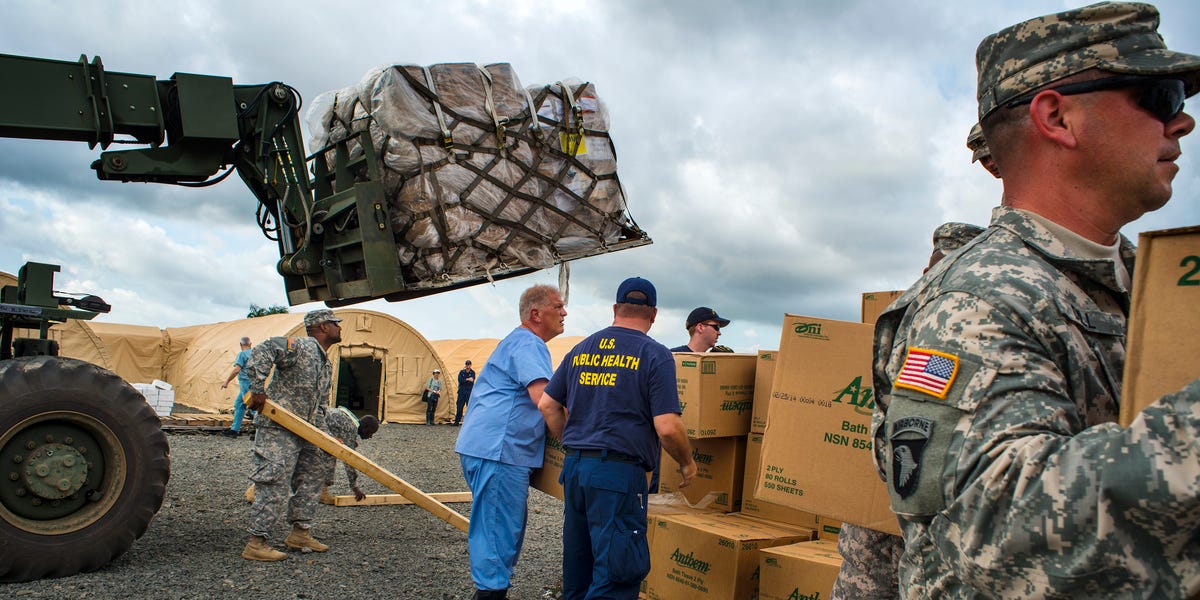
The United States military is built to handle danger. It trains for chaos, plans for surprise, and spends an impressive amount of time making sure bad days do not turn into catastrophic ones. But climate change is not a single bad day. It is a force that quietly stacks the deck: hotter training ranges, wetter runways, flood-prone shipyards, storm-damaged housing, stressed supply lines, and more missions competing for the same people and equipment. In plain English, climate change is not just an environmental problem. It is a readiness problem.
That matters because military strength is not measured only by fighter jets, ships, and missiles. It also depends on whether troops can train safely, whether bases can stay online during disasters, whether equipment can function in harsher conditions, and whether commanders can respond to crises without constantly robbing Peter to pay Paul. Mother Nature, inconveniently, does not care about the chain of command. If a runway is flooded, a dock is underwater, or a training field is under a black flag heat warning, the mission does not magically continue because the briefing slide said it should.
So yes, climate change could seriously weaken the U.S. military. Not because it will make the armed forces suddenly helpless, but because it can steadily chip away at the margin of advantage. And in national defense, margins matter a lot.
Why climate change matters to national defense
For years, climate change was often discussed as a long-range policy issue, something to argue about in conferences and campaign speeches while the military focused on more immediate threats. That framing no longer works. The U.S. military already operates through stronger storms, extreme heat, drought, wildfire, coastal flooding, and aging infrastructure stressed by all of the above. Climate change is not waiting politely outside the gate. It is already on base.
The simplest way to understand the problem is this: the military depends on fixed assets in a changing environment. Bases, ports, depots, shipyards, fuel systems, housing, test ranges, and communications nodes are all physical places. Many are coastal. Many are old. Many were built for a climate that no longer exists. Rising seas increase the odds of coastal flooding and storm damage. Hotter conditions can shrink safe training windows and increase health risks. Heavy rainfall can wash out roads, damage buildings, and interrupt operations. Wildfires can close training areas or force evacuations. Thawing ground in Alaska can make already difficult terrain more difficult still.
This is why climate change and military readiness are now linked. The issue is not abstract polar-bear politics. It is whether a force can train, move, repair, deploy, and sustain itself when the environment becomes more punishing and less predictable.
Bases are strategic assets, not just mailing addresses
Military bases are often discussed like fixed background scenery. In reality, they are operational engines. If a base goes down, the military loses time, money, efficiency, and often mission capacity. A flooded road can keep personnel from reaching a facility. A damaged power system can interrupt mission-critical operations. A storm-battered pier can delay ship maintenance. A wrecked family housing area can create quality-of-life problems that ripple into morale and retention.
That is why climate threats to installations are so serious. A base does not need to disappear under the ocean to become a liability. Repeated nuisance flooding, failing drainage, heat-stressed utilities, and chronic recovery work can slowly turn a strategic asset into a recurring headache with a budget line attached.
Climate risks hit every rung of military readiness
Training and testing take the first punch
Readiness starts with training, and climate change hits training fast. Extreme heat shortens safe outdoor training periods and raises the risk of heat illness. Smoke from nearby wildfires can ruin air quality. Heavy rains can turn ranges into mud pits. Flooding can close roads, damage target systems, or wash out access points. Coastal erosion can reduce usable training areas. Even when operations do not stop completely, they often become slower, more expensive, and less realistic.
That might sound minor until you remember what military training is supposed to do. It is designed to make soldiers, sailors, airmen, Marines, Guardians, and Coast Guardsmen competent under pressure. When training days are lost, compressed, or modified around dangerous conditions, that can reduce repetition, realism, and confidence. A unit that trains less effectively does not magically become more lethal later. It becomes less ready.
The Pentagon itself has previously acknowledged that installations in the Southeast and Southwest lose significant training and testing time because of extreme heat. That is not a future maybe. That is a present-tense constraint. If climate change keeps pushing temperatures upward, those limits will become more common, not less.
Heat is not just uncomfortable. It is operational.
Extreme heat has a nasty habit of sounding less serious than it is. People hear “hot weather” and think about sweating through a T-shirt. The military has to think about heat illness, degraded performance, more medical surveillance, hydration demands, altered work-rest cycles, and increased risk during intense physical activity. Heat can reduce the effectiveness of personnel and place added stress on equipment, facilities, and logistics systems.
This is especially important because the force does not fight from air-conditioned conference rooms. It trains on asphalt, tarmac, steel decks, dusty ranges, and open terrain. When heat rises, so do cooling needs, water requirements, medical risks, and operational friction. The result is not dramatic movie-trailer weakness. It is something more dangerous: chronic drag on day-to-day readiness.
Equipment and logistics do not love chaos either
Military power depends on hardware showing up on time and working as expected. Climate change complicates both. Flooding and storms damage infrastructure and shorten equipment life. Heat increases strain on cooling systems and can accelerate wear on sensitive gear. Wildfires threaten facilities and create smoke-related operational limits. Drought and dust can affect maintenance burdens and operating conditions. More frequent extreme weather can also disrupt transportation routes, supply chains, and installation support systems.
That means climate stress is not limited to the front gate of a base. It can spread through procurement, maintenance, repair cycles, transportation, and sustainment. In other words, the military may still own the equipment on paper while finding it harder and more expensive to keep that equipment ready in the real world.
People are part of the weapons system too
Military personnel are not spare parts, and climate stress lands on them directly. Heat-related illness, disrupted housing, storm recovery, damaged childcare facilities, long commutes around flooded roads, repeated evacuations, and uncertainty around future disasters all affect the people who keep missions moving. When home life gets more fragile, readiness usually follows.
This is where climate change becomes more than a facilities issue. It becomes a force-management issue. A military can buy another generator. It cannot instantly replace experience, morale, cohesion, and trust. If climate stress keeps making military life harder for service members and their families, recruiting and retention pressures may get worse in a force that already values stability, predictability, and quality of life.
Real-world examples show this is already happening
The most powerful argument is not theoretical. It is the bill. Over the last several years, the Pentagon has been forced to absorb enormous recovery costs tied to extreme weather. Rebuilding Tyndall Air Force Base after Hurricane Michael has run into the billions. Offutt Air Force Base in Nebraska required major rebuilding after historic flooding. Camp Lejeune took severe damage from Hurricane Florence. Norfolk-area naval infrastructure has faced increasing flood pressure as sea levels rise. These are not obscure outposts. They are important pieces of the U.S. military machine.
Tyndall is especially revealing. When a storm can hammer a major installation so badly that the military must pour years and billions of dollars into rebuilding, that is not simply bad luck. It is a flashing red light about the vulnerability of defense infrastructure in a warming, more volatile climate. Every dollar spent rebuilding what already existed is a dollar not spent elsewhere. Recovery costs become opportunity costs.
Norfolk tells a different but equally serious story. It illustrates how climate change can damage readiness slowly instead of spectacularly. Recurrent flooding does not always produce dramatic before-and-after photos that dominate the evening news. Often it produces something more bureaucratic and relentless: delayed access, degraded facilities, more maintenance, more planning, more disruption. That kind of friction adds up. A naval hub cannot afford to be regularly annoyed by the ocean like it is an uninvited neighbor with poor boundaries.
The Pentagon’s earlier climate reporting also identified recurrent flooding, drought, and wildfires as leading concerns across selected installations. That matters because it shows the problem is not confined to one coast or one service. This is not just a Navy issue, not just a Florida issue, and not just a hurricane issue. Climate risk follows different uniforms into different regions. On one base it may be floodwater. On another it may be wildfire smoke. Somewhere else it may be drought, dust, or thawing permafrost. Different hazard, same readiness tax.
The strategic problem goes beyond damaged bases
More climate disasters can mean more military missions
Climate change does not only threaten the military as an institution. It can also increase demand for military response. More powerful storms, more floods, more wildfire emergencies, and more humanitarian crises can pull forces into disaster response at home and abroad. That can be necessary and honorable work, but it still uses time, aircraft, ships, logistics capacity, and personnel bandwidth.
When the military is repeatedly asked to respond to climate-fueled disasters, that can create a squeeze. The same force must deter rivals, support allies, train for war, maintain equipment, and respond to emergencies. If those emergency demands rise, commanders have less slack. Less slack means less flexibility. Less flexibility means more risk.
Climate stress abroad can raise instability
There is also the international angle. Climate change can worsen food insecurity, water stress, migration pressure, and fragile governance in vulnerable regions. The U.S. military does not control those forces, but it often gets involved when instability spills into conflict, humanitarian operations, or strategic competition. That means climate change can affect the military both directly and indirectly: directly through damaged infrastructure and disrupted training, and indirectly through a world that becomes harder to stabilize.
Put bluntly, climate change can increase the number of fires the United States might need to monitor, even while making the fire station itself more vulnerable. That is not ideal planning.
How the Pentagon can fight back
Harden infrastructure and protect power
The good news is that this problem is serious, but not hopeless. The military can reduce risk by strengthening base infrastructure, improving flood protection, modernizing drainage, relocating vulnerable assets when necessary, and investing in energy resilience. Microgrids, backup power, hardened utilities, water resilience, and smarter building systems are not glamorous compared with bombers and submarines, but they are essential if installations are supposed to function during disruption.
In many ways, resilience is simply good military logic. A base that can keep operating during a grid failure, storm, or heat emergency is a more useful base. A command that understands its climate exposure is a smarter command. Infrastructure may sound boring until the lights go out at the worst possible moment.
Build climate into readiness planning
The military also needs to keep integrating climate risk into planning, budgeting, exercises, logistics, and readiness assessments. Climate should not sit in a separate environmental binder nobody opens until Earth Day. It belongs in the same conversation as force posture, maintenance cycles, infrastructure planning, and mission assurance. The question is not whether climate change exists. The question is whether the force is planning for the conditions it is actually going to face.
Protect people as aggressively as equipment
Finally, personnel protection has to stay front and center. Heat guidance, smarter training schedules, better data on heat injuries, improved housing resilience, family support, and safer work-rest practices are not soft add-ons. They are readiness measures. A military that protects its people from preventable climate-related harm preserves the very thing it depends on most: human performance under pressure.
What this looks like in real life: the experience behind the strategy
Climate change becomes real for the U.S. military long before it becomes a headline. It is real when a base commander starts the day with a weather briefing that sounds more like a municipal emergency management report than a routine operations update. It is real when the road to a facility floods again, when a maintenance crew spends precious hours fixing storm damage instead of improving mission capacity, or when a training schedule has to be rewritten because the heat index is too dangerous for sustained exertion.
It is real for the young recruit on a blazing training field who is told to hydrate, slow down, and rotate through work-rest cycles because the conditions are no longer just “summer hot” but medically risky. It is real for the medic watching for early signs of heat exhaustion. It is real for drill staff who now must balance intensity with survival, knowing that toughness is useful but heat stroke is not a leadership principle.
It is real for aircrews and ground crews working on an exposed flight line where hot metal, reflected sunlight, and engine heat combine into a kind of industrial oven. Even when the mission continues, everything gets harder. Concentration slips faster. Fatigue arrives sooner. Small mistakes become easier to make and harder to catch. In military operations, that is not a minor inconvenience. That is a risk multiplier.
It is real for families living on or near installations that are recovering from floods, hurricanes, or wildfire threats. They do not experience climate change as a policy memo. They experience it as damaged homes, school disruptions, longer commutes, insurance headaches, power outages, and the unsettling feeling that the next “rare” event does not seem very rare anymore. A service member cannot fully separate home stress from mission stress, no matter how disciplined that person may be.
It is real in places like Norfolk, where recurrent flooding is not necessarily cinematic but deeply disruptive. The experience there is often not one giant disaster, but repeated interference: access problems, water where it should not be, extra planning, extra cost, extra time. The military is good at handling emergencies. What wears organizations down is chronic friction. Climate change specializes in chronic friction.
It is real in the long recovery arcs after major storms. Rebuilding a base is not like replacing a broken office printer. It can take years. During that time, missions may be redistributed, training may be moved, housing may be strained, and costs keep stacking up. The force learns to adapt, because that is what the force does. But adaptation under constant pressure is not free. It consumes attention, money, and institutional energy.
And it is real for planners at the Pentagon who now have to think in layers. They are not only asking whether a base can support today’s mission. They are asking whether it can still support that mission after repeated heat waves, stronger storms, higher seas, utility failures, and a growing demand for disaster response. That is a different level of planning burden, one that turns climate change from a side issue into a core national security variable.
The experience of climate change in the military, then, is not one story. It is thousands of small and large adjustments happening across bases, ships, ranges, depots, clinics, housing areas, and command centers. Some are visible. Many are not. But together they tell a clear story: climate change is already shaping the lived reality of readiness. The United States military can adapt, and it is adapting, but adaptation takes resources and discipline. If the country underestimates the threat, the bill will keep rising. Worse, the operational margin will keep shrinking.
That is the heart of the issue. Climate change does not need to defeat the U.S. military in one dramatic blow to weaken it. It only needs to keep making everything a little more fragile, a little more expensive, a little less predictable, and a little harder to sustain. For the world’s most powerful military, that should be reason enough to take the threat very seriously.
Conclusion
Climate change could seriously weaken the U.S. military because it attacks the foundations of readiness: safe training, reliable infrastructure, healthy personnel, dependable logistics, and strategic flexibility. It turns weather into a persistent operational variable and transforms military installations into exposed assets in a harsher environment. The good news is that the United States still has time to reduce risk through smarter planning, stronger infrastructure, energy resilience, and better protection for service members and their families. But pretending climate change is somebody else’s problem would be a costly mistake. In national defense, denial is not a strategy. Preparation is.