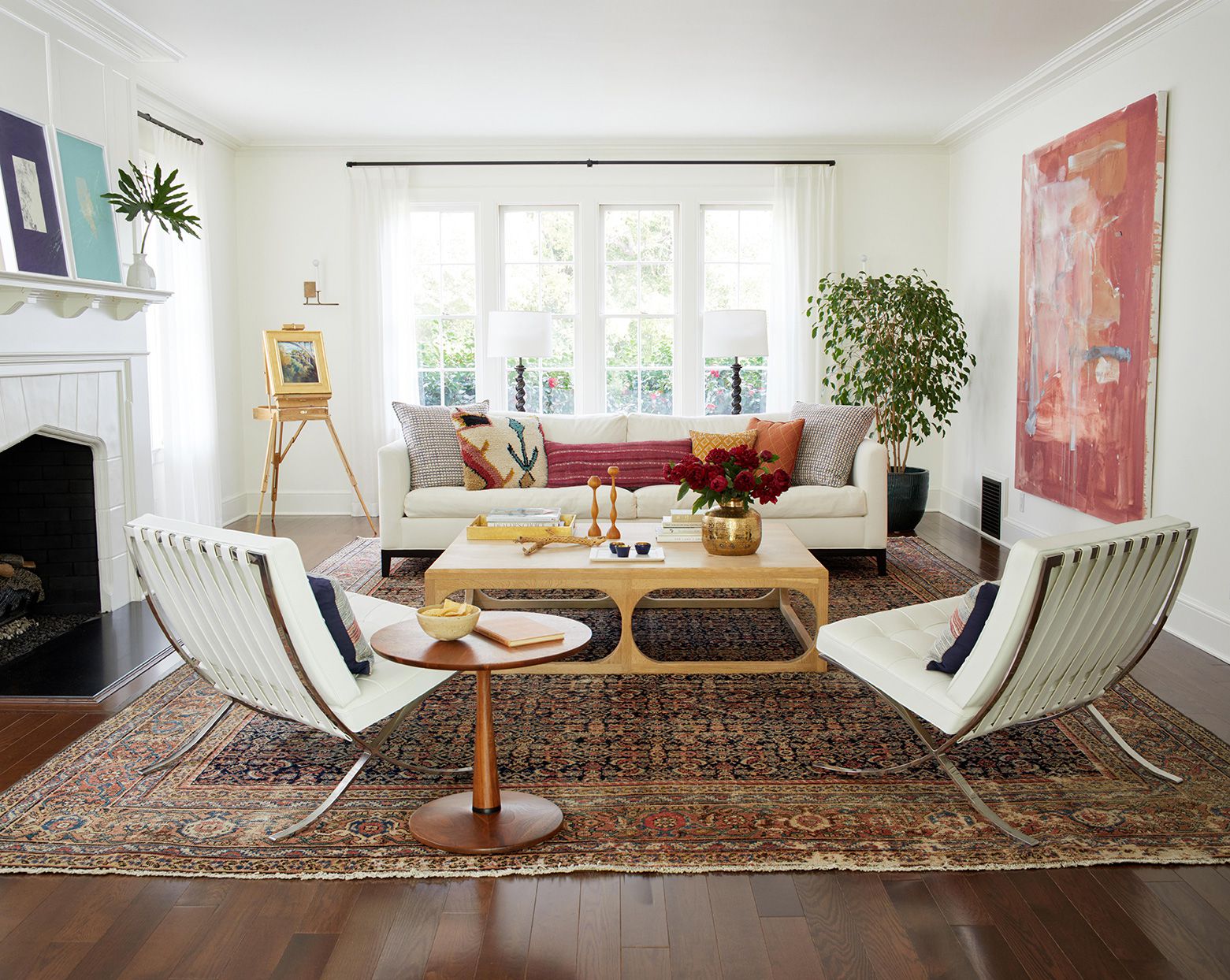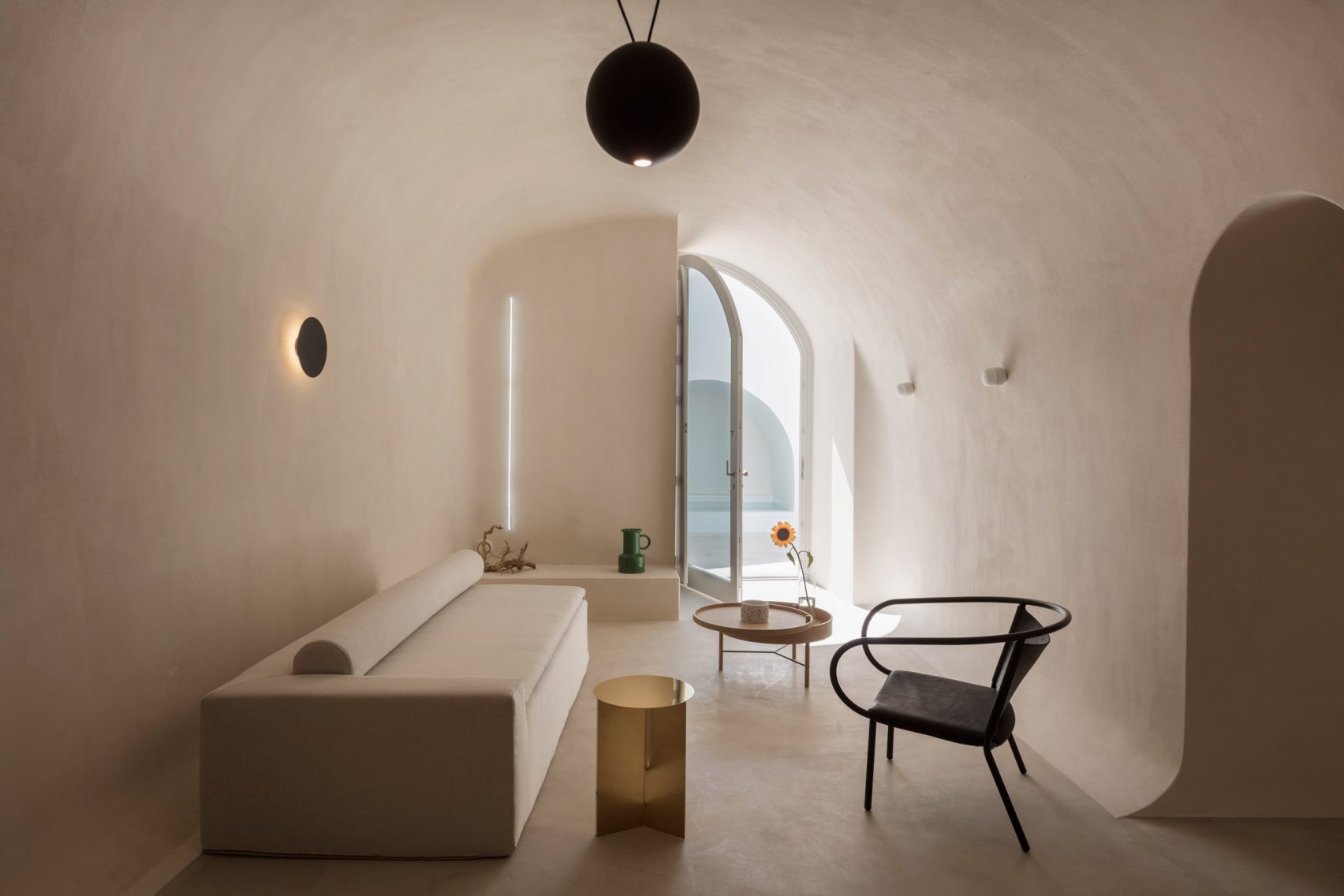
After years of razor-sharp countertops, boxy sofas, and rooms that looked suspiciously like luxury phone stores, interior design is loosening up. Walls are bending, doorways are arching, and furniture has apparently decided that corners are optional. Welcome to the cave house trend, an earthy design movement inspired by natural shelters, ancient dwellings, and the irregular beauty of landscapes shaped without a ruler.
A modern cave-style home does not need to be carved into a mountain. The look can be created through curved interiors, rounded furniture, textured plaster, recessed niches, warm neutral colors, and materials that appear to have come directly from the ground. The result is sculptural yet comfortablea home that feels less constructed and more gently formed.
Behind the Instagram-friendly arches is a deeper idea: people increasingly want rooms that feel protective, tactile, and emotionally restorative. Curves help deliver that feeling while adding movement to spaces dominated by straight walls and rectangular windows.
What Is the Cave House Trend?
The cave house trend is a contemporary interpretation of ancient, earth-connected architecture. Its defining features include flowing walls, vaulted openings, built-in seating, rounded corners, organic shapes, natural finishes, and a limited palette of mineral-inspired colors.
Some examples are literal cave houses renovated inside rock formations. Others are conventional buildings designed to suggest excavation rather than assembly. Smooth plaster may run continuously from wall to ceiling, a fireplace may emerge from a rounded partition, or a staircase may curl upward like a ribbon of stone.
The aesthetic overlaps with organic modern design, biophilic interiors, Mediterranean architecture, wabi-sabi, and soft minimalism. However, it has a more enveloping personality. Organic modern rooms often bring nature indoors; cave-inspired rooms try to make the interior feel as though it is part of nature itself.
The Difference Between Cave-Inspired and Caveman-Themed
Despite playful labels such as “caveman core,” this style is not about scattering imitation fossils beside a bearskin rug. A successful cave-inspired interior translates natural forms rather than decorating around a prehistoric theme.
The distinction matters. One approach creates a quiet, timeless environment. The other risks making the living room look ready for a low-budget dinosaur movie. Aim for sculptural restraint, not archaeological cosplay.
Why Curves Feel So Appealing
Most residential architecture begins with a grid. Walls, doors, cabinets, tile, and windows rely on straight lines because they are efficient to design and build. Curves interrupt that visual order. Even one rounded object can soften an entire room because it contrasts with nearly everything surrounding it.
Research into architectural perception suggests that curved and angular environments can produce different aesthetic and approach responses. In one study, design experts rated curvilinear interiors as more beautiful than rectilinear ones, while nonexperts were more likely to choose to enter curved spaces. Individual taste still matters, but the findings help explain why rounded rooms often appear inviting rather than severe.
Curves Create a Sense of Shelter
A rounded wall seems to wrap around the occupant. An arched opening frames the next room without cutting it into a hard rectangle. A curved sofa gathers people inward instead of arranging them along a rigid line.
These forms can make a space feel protected without making it claustrophobic. That balance is central to the cave house trend. The room acts like a retreat, but thoughtful lighting and open circulation keep the retreat from becoming an actual hole in the ground.
Organic Shapes Add Movement
Straight lines direct the eye toward endpoints. Curves encourage it to keep traveling. A rounded kitchen island leads people around its perimeter, while a curved partition guides movement between zones. This continuous visual rhythm can make an interior feel calmer and more cohesive.
Curves are especially useful in open floor plans. A crescent sofa can define a conversation area without erecting another wall. An oval dining table establishes a gathering point while preserving easier circulation around its edges.
Rounded Edges Feel Friendlier
Soft edges also offer practical advantages in busy households. Rounded coffee tables and softened cabinet corners reduce the number of sharp points waiting to attack hips, toddlers, or anyone carrying laundry while half awake.
That does not mean every curved object is automatically ergonomic. A dramatic sofa may look like a cloud and provide the lumbar support of a pancake. Comfort, seat depth, and usable surface area should still be evaluated before buying.
Ancient Roots and Modern Influences
Humans have adapted natural alcoves, rock formations, and underground spaces for shelter across cultures and centuries. In the American Southwest, Ancestral Pueblo communities built sophisticated masonry dwellings within sandstone alcoves. Around the Mediterranean, excavated and rock-integrated homes developed in response to local geology, climate, available materials, and cultural practices.
Contemporary designers are borrowing the visual language of these environmentsnot duplicating their histories. That means using thick-looking walls, recessed openings, filtered light, and natural surfaces to create a sense of permanence.
The trend also belongs to the longer story of organic architecture. Designers such as Frank Lloyd Wright argued for buildings that related meaningfully to their sites. Later furniture designers introduced sweeping sofas, kidney-shaped tables, and sculptural chairs that challenged the dominance of the rectangle. Today’s curved interiors combine those influences with advanced fabrication, flexible drywall systems, molded materials, and renewed appreciation for hand-applied finishes.
Essential Elements of a Cave-Inspired Interior
1. Arched Doorways and Openings
An arch is one of the clearest ways to introduce cave house design. It changes the transition between rooms and gives an ordinary opening architectural presence. A full semicircle feels classical, while a broader, flatter arch looks relaxed and contemporary.
Existing square openings can sometimes be modified with framed arch kits or custom construction. Before altering a wall, confirm whether it is load-bearing and whether electrical lines, plumbing, or ductwork pass through it. Curves are charming; accidentally discovering a drainpipe is less so.
2. Textured Plaster Walls
Limewash, mineral paint, clay plaster, and other matte finishes create the depth associated with rock and earth. Their tonal variation reacts beautifully to daylight, making a neutral wall feel alive without requiring a busy pattern.
Color is important, but texture does more of the work. Chalky white, sand, mushroom, limestone gray, ocher, and muted terracotta all fit the palette. Rather than using five competing beige shades, choose one main mineral tone and let changing light produce the variation.
Material selection should match the room. Some traditional or specialty plaster systems require trained application, suitable substrates, and specific maintenance. In wet areas, use finishes approved for moisture exposure instead of assuming that anything labeled “natural” can survive a daily steam bath.
3. Built-In Niches
Recessed niches give walls a carved quality and provide places for books, pottery, lighting, or everyday objects. They are particularly effective beside fireplaces, over tubs, in hallways, and behind beds.
Restraint keeps them sophisticated. One carefully proportioned niche can resemble custom architecture. Twelve tiny niches may resemble a wall designed by someone who owns too many souvenir spoons.
4. Rounded Furniture
A curved sofa is the obvious statement piece, but it is not the only option. Barrel chairs, oval tables, circular ottomans, arched cabinets, and rounded headboards can introduce the trend without changing the building itself.
Use curves where they improve the composition. A rounded sofa can soften a rectangular room, while an oval table can fit a narrow dining area more gracefully than a circle. In a small space, measure the deepest part of every curved piece. Organic furniture sometimes occupies more floor area than its airy silhouette suggests.
5. Natural and Tactile Materials
Stone, wood, linen, wool, leather, rattan, and handmade ceramics prevent cave-style rooms from feeling synthetic. Irregular grain, visible tool marks, and subtle imperfections reinforce the connection to natural environments.
A balanced room mixes surfaces. Pair coarse plaster with smooth wood, nubby upholstery with cool stone, or matte walls with a small amount of aged metal. If every object is beige, fuzzy, and shaped like a potato, the space may be soothingbut it may also look like a very expensive bowl of oatmeal.
6. Soft, Layered Lighting
Lighting determines whether a cave-inspired room feels atmospheric or merely dark. Concealed LEDs can wash curved walls and emphasize their shape. Wall sconces, low pendants, and lamps create localized pools of light, while recessed fixtures provide practical illumination.
Warm light generally complements earth tones, but color quality and brightness matter as much as color temperature. Include dimmers and multiple light sources so the room can shift from functional during the day to cocooning at night.
How to Try the Cave House Trend Without Remodeling
Renters and renovation-resistant homeowners can adopt the style through movable pieces. Begin with one dominant curve, then repeat its shape two or three times at different scales.
- Place an oval coffee table in front of a straight sofa.
- Add a rounded mirror above a rectangular console.
- Choose a dome-shaped pendant or globe lamp.
- Introduce a barrel chair, circular rug, or arched floor lamp.
- Display asymmetrical ceramics with matte, mineral-like surfaces.
- Use full, relaxed curtains to soften square windows.
- Paint a broad arch behind a desk or bed for a reversible focal point.
The goal is repetition, not saturation. An oval table, rounded lamp, and gently curved chair will look intentional. Twenty circular accessories may make guests wonder whether the house has declared war on squares.
Balancing Curves With Straight Lines
The strongest curved interiors retain some geometry. Straight lines provide structure and make the rounded elements more noticeable. Without contrast, a room filled entirely with bulbous forms can feel visually slippery, as if everything might roll away when nobody is watching.
Keep existing rectangular windows, wood floorboards, or simple shelving as a framework. Add curves through focal pieces and transitional details. A blocky fireplace can be softened by a rounded hearth; linear cabinets can meet a curved island; a square room can hold a crescent-shaped seating group.
Scale is equally important. A substantial arch requires visual support from other architectural features. Smaller curves are better suited to lighting, mirrors, side tables, and accessories. Repeating the same curve at multiple scales creates harmony without making the design overly literal.
Practical Challenges to Consider
Higher Construction Costs
Curved framing, custom millwork, shaped stone, and seamless plaster typically require more labor than standard rectilinear construction. Templates may be needed, and installation errors are harder to disguise. A modest curved detail executed well is often more effective than an ambitious room filled with uneven joins.
Furniture Placement
Conventional furniture is designed to sit against straight walls. In rooms with pronounced curves, gaps can appear behind bookcases, beds, or consoles. Custom built-ins solve the problem but increase cost. Freestanding arrangements are often the simpler answer, especially in living and dining spaces.
Storage and Usable Space
A sculptural wall can reduce storage capacity if beauty is prioritized without planning. Integrating hidden cabinets, deep drawers, or built-in benches allows curves to remain functional. Even the most poetic home still needs somewhere to put the vacuum cleaner.
Acoustics and Ventilation
Curved surfaces can affect how sound travels, sometimes focusing or reflecting it in unexpected ways. Hard plaster and stone also create echoes. Rugs, curtains, upholstered seating, and acoustic materials help control reverberation.
Literal underground or earth-sheltered homes require specialized attention to waterproofing, drainage, ventilation, radon risk, insulation, structural engineering, and local codes. Thermal mass may help moderate indoor temperature, but energy performance is never guaranteed by appearance alone. A cave aesthetic painted onto drywall is a design choice; building into the earth is an engineering project.
Experiencing a Home Designed Around Curves
The appeal of the cave house trend becomes clearest through daily use. Photographs capture the silhouette of an arch, but living in the space reveals how curves influence movement, conversation, light, and mood.
The First Impression
Imagine entering through a broad arched opening rather than a standard rectangular doorway. The transition feels gradual. There is no abrupt visual frame announcing that one box has ended and another has begun. A curved wall draws the eye toward the living area, where a rounded sofa faces two chairs instead of lining everyone up toward a television.
The arrangement subtly changes behavior. Guests can see one another more easily, so conversation feels natural. People tend to occupy the whole seating group rather than fighting for the “best” end of the couch. The room remains informal even when the materialsstone, plaster, linen, and dark woodfeel refined.
Living With Textured Walls
During the morning, angled sunlight reveals small variations in a limewashed or plastered surface. Around noon, the same wall appears flatter and brighter. By evening, sconces exaggerate its texture and give shallow niches greater depth. The room seems to change color without anyone opening a paint can, which is always a welcome form of home improvement.
Textured finishes also make minor irregularities feel intentional. A small mark may blend into the surface better than it would on glossy paint. However, repairs require care. Patching one section with the wrong product or technique can create a conspicuous island, so keeping application notes and a small amount of leftover material is worthwhile.
Learning Which Curves Are Functional
Not every curved choice earns its floor space. An oval coffee table improves circulation because there are no corners projecting into the path. A round dining table encourages conversation but may be inefficient for a large group. A deep crescent sofa looks glamorous, yet its outer arc can consume precious inches in a compact room.
Homeowners often discover that the most satisfying solution is a mixture: architectural curves where they guide movement, rounded furniture where it supports comfort, and straight storage where every inch matters. Function becomes the editor that keeps the style from turning into a showroom stunt.
A Calmer Evening Atmosphere
At night, cave-inspired interiors are at their best. Warm light grazes plaster instead of bouncing harshly from glossy white walls. An illuminated niche becomes a quiet focal point. Upholstery and rugs soften sound, while low furniture keeps the room visually grounded.
The experience is cocooning, but it should not be gloomy. Successful spaces maintain layers of adjustable light and leave breathing room around furniture. The feeling should resemble a beautifully sheltered retreat, not the moment before someone asks where the emergency flashlight is stored.
What the Experience Ultimately Teaches
Living with curves demonstrates that this trend is less about a particular object than a relationship between body and space. Rounded forms guide people smoothly, reduce visual severity, and encourage more social seating patterns. Natural materials add sensory richness, while niches and built-ins make the architecture feel personal.
The most memorable cave-style rooms are not perfect reproductions of anything ancient. They combine contemporary comfort with forms that seem familiar at an instinctive level. Their strength comes from contrast: primitive and polished, enclosed and open, sculptural and practical.
Conclusion: A Trend With Staying Power
The cave house trend reflects a broader desire for homes that feel warm, individual, and connected to nature. Its curves provide relief from rigid modern interiors, while textured finishes and earth-derived materials create depth without relying on excessive decoration.
Adopting the look does not require excavating the backyard or commissioning a sofa shaped like a geological event. Start with one arch, one rounded furniture piece, or one softly finished wall. Balance organic forms with clean lines, plan carefully for function, and allow materials to show some character.
Trends eventually move on, but curves have been part of architecture and furniture for centuries. Their current popularity may fade and return under another clever name, yet their ability to soften rooms, guide movement, and create shelter is unlikely to disappear.
Note: This article provides design inspiration rather than structural guidance. Consult qualified architects, engineers, contractors, and local building authorities before modifying walls or constructing curved, underground, or earth-sheltered spaces.