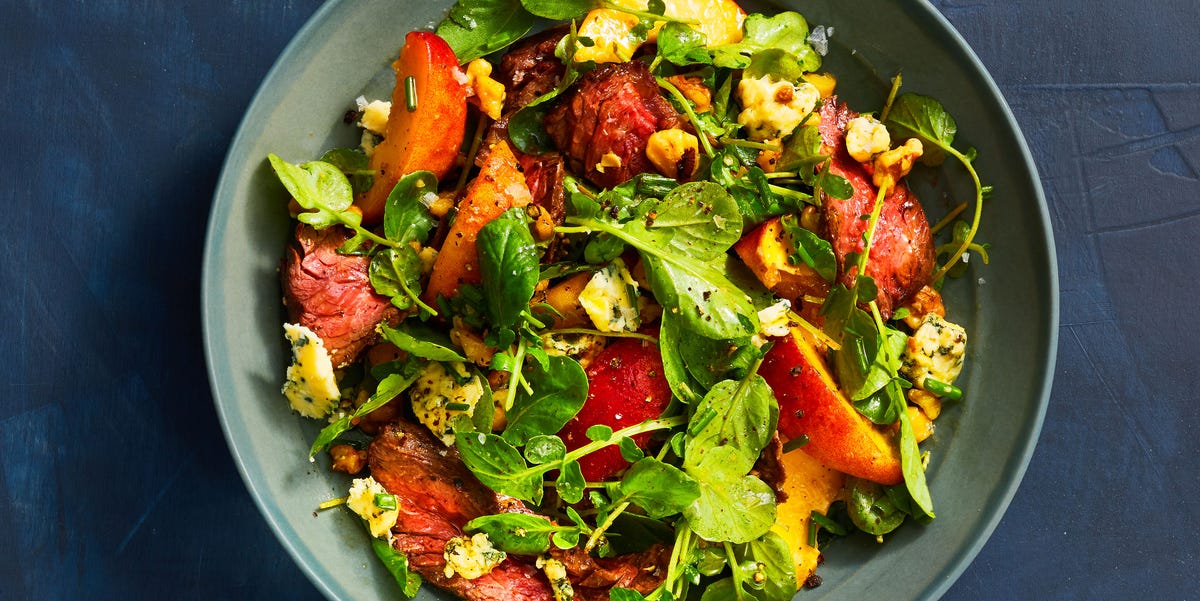
Some salads politely wait beside the main course. This steak, peach, and watercress salad walks into the dining room, claims the best chair, and becomes dinner. It combines juicy beef, ripe summer peaches, peppery greens, tangy cheese, toasted pecans, and a bright balsamic-Dijon vinaigrette. Every forkful delivers something savory, sweet, crisp, creamy, and pleasantly sharp.
The recipe feels special enough for a summer dinner party but remains practical for a weeknight meal. Most of the work involves chopping, whisking, and resisting the temptation to slice the steak before it has rested. You can cook the beef outdoors on a grill or indoors in a cast-iron skillet, so unpredictable weather cannot cancel dinner.
Best of all, this is a flexible main-course salad. Flank steak provides bold beef flavor without requiring a luxury-steak budget, while peaches add natural sweetness that balances the bite of fresh watercress. Add toasted pecans for crunch and goat cheese or feta for a salty finish, and suddenly “salad for dinner” sounds much less like a punishment.
Why This Steak and Peach Salad Works
A satisfying salad needs contrast. If every ingredient is cold, soft, and mild, the result can feel like lawn clippings with paperwork. This recipe avoids that fate by combining contrasting temperatures, flavors, and textures.
Sweet Peaches Balance Savory Steak
Ripe peaches bring floral sweetness and juicy acidity to rich, well-seared beef. The fruit does not make the salad taste like dessert. Instead, it performs the same balancing job that a fruit chutney or sweet glaze might provide alongside roasted meat.
Use peaches that smell fragrant and yield slightly when gently pressed near the stem. Rock-hard fruit may be left at room temperature for a few days because peaches continue ripening after harvest. Avoid fruit that is bruised, leaking, or so soft that cutting it requires an emergency response team.
Watercress Adds Peppery Freshness
Watercress has a clean, peppery character that stands up to steak better than delicate lettuce. Its tender leaves remain lively beneath warm slices of beef, while its thin stems add a subtle snap. Trim only the thick or woody ends; the smaller stems are edible and contribute texture.
If watercress is unavailable, use baby arugula or a blend of arugula and baby spinach. Arugula supplies a similar peppery edge, while spinach softens the flavor for anyone who prefers greens with fewer opinions.
The Vinaigrette Connects Every Ingredient
Balsamic vinegar echoes the sweetness of the peaches, Dijon mustard adds savory complexity, and lemon juice keeps the dressing bright. Honey rounds out the acidity, while extra-virgin olive oil gives the vinaigrette enough body to coat the watercress without drowning it.
A small amount of minced shallot is especially useful. As it rests in the vinegar, its raw bite becomes gentler, leaving behind a crisp, onion-like flavor that complements both steak and fruit.
Steak, Peach, and Watercress Salad Recipe
Yield: 4 main-course servings
Prep time: 25 minutes
Cook time: 10 to 14 minutes
Resting time: 10 minutes
Total time: About 45 minutes
Ingredients for the Steak
- 1 1/4 pounds flank steak, skirt steak, or sirloin steak
- 1 tablespoon olive oil
- 1 teaspoon kosher salt
- 3/4 teaspoon freshly ground black pepper
- 1/2 teaspoon smoked paprika
- 1/2 teaspoon ground coriander
- 1 small garlic clove, finely grated
Ingredients for the Balsamic-Dijon Vinaigrette
- 2 tablespoons balsamic vinegar
- 1 tablespoon fresh lemon juice
- 1 teaspoon Dijon mustard
- 1 teaspoon honey
- 1 small shallot, finely minced
- 1/4 teaspoon kosher salt
- 1/4 teaspoon freshly ground black pepper
- 1/4 cup extra-virgin olive oil
Ingredients for the Salad
- 5 ounces fresh watercress, washed and thoroughly dried
- 3 ripe but firm peaches, pitted and cut into wedges
- 1/3 cup thinly sliced red onion
- 1/2 cup toasted pecans, roughly chopped
- 1/2 cup crumbled goat cheese or feta cheese
- 1/4 cup fresh basil leaves, torn if large
- Flaky sea salt and freshly ground black pepper, for serving
How to Make Steak, Peach, and Watercress Salad
Step 1: Season the Steak
Pat the steak dry with paper towels. A dry surface browns more efficiently than a damp one, and proper browning creates the deeply savory crust this salad needs.
Rub the steak with olive oil, salt, black pepper, smoked paprika, coriander, and garlic. Let it stand while you prepare the dressing and salad ingredients. If seasoning several hours ahead, cover and refrigerate the steak, then remove it from the refrigerator shortly before cooking.
Step 2: Prepare the Vinaigrette
In a small bowl, whisk together the balsamic vinegar, lemon juice, Dijon mustard, honey, shallot, salt, and pepper. Let the mixture sit for five minutes so the vinegar can mellow the shallot.
Slowly pour in the extra-virgin olive oil while whisking continuously. The dressing should become glossy and slightly thickened. Taste it with a piece of peach or a watercress leaf rather than from a spoon alone. A dressing that seems assertive by itself may be perfectly balanced once it meets the full salad.
Step 3: Cook the Steak
For grilling, heat a clean grill to high and lightly oil the grates. Cook the steak until it develops a dark crust and reaches your preferred doneness, generally four to six minutes per side depending on its thickness.
For indoor cooking, heat a cast-iron skillet over medium-high to high heat. Add a thin film of neutral cooking oil, followed by the steak. Sear without moving it unnecessarily, then flip and cook the second side.
Use an instant-read thermometer rather than judging doneness by color alone. For food safety, the USDA recommends cooking whole beef steaks to a minimum internal temperature of 145°F followed by at least a three-minute rest. Remember that the temperature may continue rising slightly after the steak leaves the heat.
Step 4: Rest and Slice the Steak
Transfer the steak to a cutting board and let it rest for 10 minutes. Resting gives the meat’s juices time to redistribute. Cutting immediately may create an impressive puddle on the board, but unfortunately that puddle was supposed to remain in dinner.
Examine the direction of the muscle fibers, then slice the steak thinly across the grain. Cutting across those long fibers shortens them, making flank or skirt steak noticeably easier to chew. Hold the knife at a slight angle to create wider, attractive slices.
Step 5: Assemble the Salad
Place the dry watercress in a large bowl. Add the peaches, red onion, pecans, basil, and approximately half of the vinaigrette. Toss gently, adding more dressing only as needed. The leaves should glisten, not require flotation devices.
Arrange the dressed salad on a large platter or divide it among four plates. Lay the warm steak slices over the greens and spoon a little additional vinaigrette over the beef. Finish with crumbled goat cheese, flaky salt, and freshly ground pepper. Serve immediately.
Expert Tips for the Best Steak Salad
Choose the Right Cut of Beef
Flank steak is lean, flavorful, and easy to portion for a salad. Skirt steak has an even beefier taste and cooks quickly, although it can become chewy when overcooked or sliced incorrectly. Sirloin is thicker and tender, making it a forgiving alternative for cooks who prefer a more traditional steak.
Ribeye also works, but its generous fat can feel heavy against delicate watercress. If using ribeye, trim obvious exterior fat after cooking and serve slightly smaller portions.
Keep the Greens Dry
Wash watercress in cold water, lift it out rather than pouring out the bowl, and dry it in a salad spinner or between clean kitchen towels. Water left on the leaves dilutes the vinaigrette and prevents the oil-based dressing from clinging properly.
Dress the Salad at the Last Moment
Watercress is sturdy for a tender green, but acidity and salt eventually pull moisture from its leaves. Prepare every component in advance if necessary, then toss the salad shortly before serving. This keeps the greens crisp and the pecans crunchy.
Use Warm Steak, Not Blazing-Hot Steak
Warm beef creates an appealing temperature contrast without immediately wilting the greens. Resting the steak solves two problems at once: it protects the juices and allows the exterior to cool enough for salad duty.
Optional Grilled Peaches
Grilling the peaches intensifies their sweetness and introduces a smoky flavor that mirrors the steak. This optional step is particularly worthwhile when the grill is already hot.
Cut firm-ripe peaches into halves or thick wedges and brush them lightly with a neutral high-heat oil. Place the cut sides on clean grill grates for one to two minutes, just until grill marks appear. Turn only once and avoid cooking them until soft. The goal is caramelized edges, not peach jam escaping through the grates.
Let the fruit cool for several minutes before adding it to the watercress. Raw and grilled peaches can also be combined in the same salad for an appealing mixture of fresh and smoky flavors.
Easy Variations and Substitutions
- Change the fruit: Use nectarines, plums, pears, or fresh figs when peaches are unavailable.
- Swap the greens: Substitute baby arugula, spinach, mixed spring greens, or chopped romaine.
- Try another cheese: Blue cheese creates a bolder steakhouse flavor, while shaved Parmesan offers a nutty, salty finish.
- Make it nut-free: Replace pecans with toasted sunflower seeds or crisp homemade croutons.
- Add vegetables: Cherry tomatoes, grilled corn, cucumber, radishes, or avocado fit naturally into this summer steak salad.
- Change the protein: Grilled chicken, pork tenderloin, salmon, or portobello mushrooms can replace the beef.
- Increase the heat: Add crushed red pepper, minced jalapeño, or a spoonful of hot honey to the vinaigrette.
What to Serve With Steak, Peach, and Watercress Salad
This recipe is substantial enough to stand alone, but crusty bread is useful for capturing vinaigrette and steak juices. Grilled sourdough, garlic bread, or a warm baguette keeps the meal casual.
For a larger summer dinner, serve the salad with grilled corn, roasted baby potatoes, chilled tomato soup, or a simple farro pilaf. Sparkling water with lemon, iced tea, dry rosé, and fruit-forward red wines all complement the salty-sweet flavors.
If dessert is part of the plan, choose something light, such as lemon sorbet, fresh berries, or shortcake. There are already peaches in the main course, although nobody from the Peach Enforcement Department will object if cobbler appears later.
Make-Ahead and Storage Instructions
The vinaigrette may be prepared up to three days ahead and refrigerated in a sealed jar. Let it approach room temperature and shake vigorously before using because the oil may thicken or separate when chilled.
The pecans can be toasted several days ahead and stored in an airtight container. Wash and dry the watercress one day in advance, then refrigerate it wrapped loosely in paper towels. Slice the peaches near serving time for the freshest color and texture.
For meal preparation, store the cooked steak, dressing, fruit, cheese, and greens in separate containers. Assemble individual portions shortly before eating. A fully dressed leftover salad will soften, although it remains flavorful.
Refrigerate cooked steak promptly in an airtight container and use it within three to four days. Cold leftover steak is excellent here because it can be sliced especially thin. Do not leave the assembled salad or cooked beef at room temperature for more than two hours, or more than one hour in temperatures above 90°F.
Common Questions About Steak and Peach Salad
Can I Make This Salad Without a Grill?
Yes. A heavy stainless-steel or cast-iron skillet produces excellent browning. Heat the pan thoroughly, add a small amount of high-heat oil, and cook the steak in a well-ventilated kitchen. A splatter screen is helpful if your stovetop has ambitions of becoming an abstract painting.
Should I Peel the Peaches?
Peeling is unnecessary. Peach skin contributes color, flavor, and structure, especially when the fruit is sliced into wedges. If the texture bothers you, briefly blanch the peaches in boiling water, cool them in ice water, and slip off the skins.
Why Is My Steak Tough?
The most common causes are overcooking and slicing with the grain. Cook the steak with a thermometer, let it rest, identify the direction of the fibers, and cut thinly across them. This technique is particularly important for flank and skirt steak.
Can I Use Canned or Frozen Peaches?
Fresh peaches provide the best texture. Thawed frozen peaches tend to be soft but can work if carefully drained. Canned peaches are sweeter and softer; choose fruit packed in juice, drain it thoroughly, and reduce or omit the honey in the dressing.
Practical Kitchen Experience: Lessons That Improve This Salad
The first lesson many home cooks learn is that ingredient temperature matters. Serving refrigerator-cold steak over refrigerator-cold fruit may be convenient, but the beef flavor becomes muted and its fat feels firmer. Warm, rested steak is more aromatic and creates a pleasant contrast with cool watercress and juicy peaches. If using leftovers, letting the sliced steak stand outside the refrigerator briefly while preparing the salad can improve the result.
Another useful discovery concerns peach ripeness. Extremely soft peaches may taste wonderful over the sink, where dripping juice is part of the entertainment, but they collapse when tossed with sturdy greens. Slightly firm ripe peaches are easier to pit, slice, grill, and arrange. If only very soft fruit is available, cut it into larger wedges and place it on the platter after tossing the watercress instead of mixing it vigorously in the bowl.
The amount of dressing also changes the character of the meal. Pouring in the entire batch at once can overwhelm the peppery greens and turn the pecans soft. Starting with half allows the cook to assess the salad after tossing. Extra vinaigrette can be spooned directly over the steak, where its acidity is especially valuable. This two-stage approach gives the leaves a light coating while ensuring the beef is well seasoned.
Platter assembly tends to produce better texture than aggressive bowl mixing. Toss the watercress, onion, basil, and part of the peaches first. Transfer them to a platter, then arrange the remaining fruit, sliced steak, cheese, and nuts on top. Besides looking more polished, this method prevents the tender peach wedges and goat cheese from disappearing into a mysterious pink paste at the bottom of the bowl.
Salt requires similar restraint. Steak, cheese, dressing, and salted nuts can each contribute seasoning. Taste the components together before adding the final flaky salt. Feta and blue cheese usually need less help than mild goat cheese. Unsalted pecans offer the most control, particularly when the steak has been generously seasoned.
Finally, this recipe rewards organized preparation. Make the vinaigrette, toast the pecans, wash the greens, and slice the onion before cooking the steak. Once the beef comes off the heat, the only jobs left are resting, slicing, and assembly. That calm 10-minute rest prevents frantic chopping and protects the steak’s juices. It also gives the cook time to clear the counter, set out plates, and pretend the kitchen was effortlessly tidy all along.
These small adjustments turn a good steak and peach salad into a dependable signature dish. The winning formula is straightforward: dry greens, properly cooked beef, ripe but structured fruit, restrained dressing, and plenty of texture. Once that balance is understood, the recipe becomes easy to adapt throughout the year.
Conclusion
The best steak, peach, and watercress salad succeeds because it refuses to behave like an afterthought. Juicy sliced steak provides substance, peaches contribute summery sweetness, and peppery watercress keeps every bite fresh. Pecans, cheese, basil, red onion, and balsamic-Dijon vinaigrette complete a main-course salad that is colorful, balanced, and genuinely satisfying.
Serve it for a relaxed cookout, a quick seasonal dinner, or an occasion when you want steak without committing to a plate dominated by meat and potatoes. Follow the essential techniquesdry the beef, cook it with a thermometer, let it rest, slice against the grain, and dress the greens lightlyand the recipe will deliver restaurant-worthy results without restaurant-level commotion.
Note: Cooking times vary with steak thickness and cooking equipment. Use a food thermometer and follow current USDA food-safety guidance when preparing and storing beef.