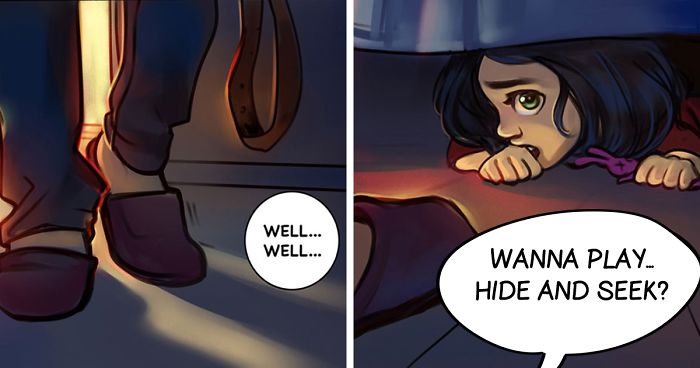
Some internet stories vanish faster than a cookie left unattended near a toddler. Others stick around because they crawl into the heart, tap politely on a rib, and say, “Hello, I live here now.” The emotional monster story illustrated by artist Natalya Sorokina, known online as jwitless, belongs firmly in the second category.
The story centers on Charlotte Dower, a little girl who is no longer frightened by the monsters beneath her bed. That sounds like the beginning of a cozy children’s adventure, perhaps with fuzzy slippers and a monster who secretly enjoys pancakes. Instead, the tale takes a darker, more meaningful turn. The monster under the bed is not the true danger. The real horror is found where safety should have been: in the human world above the mattress.
Originally created by the writer Kitten Wiskers, also known as Mindy, the story became widely shared online for years before Sorokina transformed it into a colored comic. Her illustrated version gives the viral text a new emotional charge, turning a memorable writing prompt into a visual narrative about fear, protection, trauma, and unexpected kindness. It is fantasy, yes, but fantasy with its sleeves rolled up.
Why This Emotional Monster Story Hit So Hard
At first glance, “Artist Beautifully Illustrates An Emotional Monster Story” sounds like a simple art feature. A talented illustrator finds a touching story, draws it beautifully, and the internet collectively reaches for tissues. But the reason the comic resonates is more complicated. It uses the familiar childhood fear of monsters under the bed, then flips the idea like a pancake with dramatic timing.
Most people understand the symbolic power of a bedroom monster. It represents the unknown, the dark, the creak in the hallway, the coat on the chair that suddenly looks like a goblin applying for management. In this story, however, the monster is not merely a scare device. It becomes a witness, a guardian, and a strange kind of moral mirror. The creature looks frightening, but its behavior is protective. The human threat looks normal, but its behavior is monstrous.
That reversal is the engine of the story. It asks readers to reconsider appearances. What makes something a monster? Teeth? Claws? A shadowy body under a bed? Or cruelty, neglect, and violence hidden behind an ordinary face? The comic does not need a long lecture to make that point. It simply shows it, panel by panel, until the truth lands with the weight of a locked door.
The Artist Behind the Comic: Natalya Sorokina, Also Known as Jwitless
Natalya Sorokina is a digital artist and illustrator whose online portfolio shows a flexible range of styles, from fantasy creatures to expressive character art. In the Bored Panda feature that introduced many readers to this comic, Sorokina was described as a Moscow-based illustrator who worked with design agencies and created commissions for personal projects. She also shared that she enjoys switching styles and making meaningful stories that touch emotional strings.
That flexibility matters here. A monster story can collapse if the art leans too far in one direction. Make it too cute, and the danger loses power. Make it too gruesome, and the tenderness disappears behind the fangs. Sorokina finds the narrow bridge between fairy tale and nightmare. Her monster can look huge, strange, and intimidating, yet also capable of patience. Her child character feels small without becoming decorative. The emotional contrast does the heavy lifting.
Her use of color is especially important because the comic was described as her first colored comic. Color does not merely decorate the story; it guides the reader’s nervous system. Darker tones suggest fear and secrecy. Warmer highlights offer moments of connection. The monster’s scale creates tension, while Charlotte’s body language creates vulnerability. It is the kind of visual storytelling that quietly says, “Pay attention,” then rewards the reader for doing exactly that.
How Visual Storytelling Makes the Monster More Human
Comics are powerful because they do not force every detail into words. They invite readers to participate. Between one panel and the next, we fill in movement, silence, hesitation, and dread. That little blank space between panels is not empty. It is where the reader’s imagination clocks in for work, usually without benefits.
In Sorokina’s monster comic, visual pacing helps the emotional story breathe. A close-up can make a glance feel enormous. A wide shot can make a child feel isolated. A looming monster can create fear in one panel and comfort in the next, depending on posture, framing, and expression. This is why illustrated storytelling can sometimes communicate trauma and tenderness more directly than prose alone.
The comic format also allows the artist to manage intensity. A story involving a child in danger can easily become overwhelming. Sequential art gives the creator tools to suggest, imply, pause, and redirect. Instead of lingering on harm, the illustrations can emphasize Charlotte’s fear, the monster’s attention, and the moral shift at the heart of the tale. The result is haunting, but not hollow.
The Monster Under the Bed: A Classic Fear With a New Purpose
Monsters have lived under beds, inside closets, beneath bridges, and in suspiciously quiet basements for generations. They are convenient containers for fear. Children can point to them. Adults can write stories about them. Toy companies can make plush versions and charge $24.99, because capitalism also has claws.
But monsters in stories are rarely just monsters. They often represent anxiety, loneliness, danger, difference, or the parts of life that feel too big to name. For young readers especially, a monster can turn an invisible fear into something visible. Once fear has a shape, it can be talked to, challenged, befriended, or defeated.
This emotional monster story goes one step further. It suggests that the creature we expect to fear may understand fear better than the adults who should protect the child. That twist is what makes the comic memorable. The monster is not redeemed because it becomes less strange. It is redeemed because it acts with compassion. The story does not say, “Do not be afraid of monsters.” It says, “Learn to recognize what real danger looks like.”
Why the Story Feels Like a Fairy Tale for the Internet Age
Traditional fairy tales were rarely as soft as their modern pillow-fort reputations suggest. Many were warnings dressed in magic. Do not wander alone. Do not trust the wolf. Do not eat random architecture, even if the cottage is made of gingerbread and your stomach is writing protest songs.
This illustrated monster story belongs to that tradition. It uses fantasy to tell the truth sideways. The monster beneath the bed becomes a symbolic protector, much like the unexpected helpers in old folktales. Charlotte becomes the child whose innocence is threatened by a world that has failed her. The horror is not there for shock value; it is there to sharpen the moral contrast.
The internet helped the story travel because it is short, clear, and emotionally explosive. It does not require a franchise, a 12-book lore guide, or a map with seventeen kingdoms and at least one apostrophe. It begins with a universal fear and ends with a universal wish: that someone, somewhere, will protect a child who cannot protect herself.
The Emotional Core: Fear, Empathy, and Protection
Emotion is not just “feeling a lot,” although anyone who has watched a dog reunion video at 1 a.m. may disagree. Psychologically, emotions involve experience, physical response, and behavior. Great storytelling uses all three. We feel Charlotte’s fear. We sense the tension in the room. We watch the monster choose action.
That choice is crucial. The monster does not become meaningful simply by existing. It becomes meaningful by responding. The creature recognizes suffering and acts against it. In emotional storytelling, that is the moment when a character turns from image into soul. The monster stops being a prop and becomes a presence.
Readers respond because the story activates empathy. We are not merely curious about what happens next; we care about what happens to Charlotte. We understand her vulnerability even if we have never shared her exact circumstances. That is the strange magic of narrative art. It can take a fictional child, a fictional monster, and a fictional room, then create a very real emotional response.
The Art of Making a Monster Beautiful
“Beautiful monster” sounds contradictory, like “pleasant tax audit” or “quick trip to the DMV.” Yet in illustration, beauty does not always mean prettiness. It can mean emotional clarity. It can mean design that serves the story. It can mean a creature whose frightening shape carries unexpected grace.
Sorokina’s monster works because it is not reduced to a mascot. It remains otherworldly. Its size and shadow matter. Its strangeness matters. If the monster looked like a plush toy with a marketing department, the story would lose its force. Instead, the creature remains eerie enough to belong to the dark, while its actions reveal a moral brightness.
This contrast is a classic visual technique: make the outside unsettling and the inside gentle. The reader is asked to revise the first impression. That revision is not just about the monster. It is about how people judge safety, goodness, and danger in real life. The comic quietly reminds us that appearances can lie, and behavior tells the truth.
Specific Examples of Strong Storytelling Choices
1. The Familiar Setup
The story begins with a childhood image almost everyone recognizes: a monster beneath the bed. This familiar setup lowers the reader’s guard. We think we know the rules. We think the monster is the problem. The comic then uses that expectation against us, politely but firmly, like a librarian with a sword.
2. The Reversal of Fear
The most powerful moment is the realization that Charlotte is not afraid of the monster anymore because something worse exists in her life. This reversal changes the genre. What begins as supernatural horror becomes emotional drama. The scariest thing is not imaginary; it is painfully human.
3. The Protective Creature
The monster’s role as protector gives the story its cathartic quality. Readers are not left only with fear. They are given justice, or at least the fantasy of justice. In a world where real harm is often complicated and slow to resolve, stories can offer symbolic rescue. That does not fix reality, but it can give readers language for what should happen.
4. The Smallness of the Child
Illustration can communicate vulnerability faster than exposition. A small figure in a large room, a lowered gaze, a curled posture, a hand gripping fabricthese details can say what paragraphs might overexplain. Charlotte’s smallness is not weakness; it is the emotional scale of the danger around her.
5. The Silence Between Panels
Some of the strongest storytelling happens in what is not shown. The comic format allows silence to become part of the script. A pause can feel like a held breath. A shadow can suggest dread. A final look can carry relief, grief, and wonder at the same time.
Why People Keep Sharing Emotional Monster Comics
People share emotional comics because they are easy to enter and hard to leave. A comic can be read quickly, but its images linger. Unlike a long essay, it does not ask for much time at the door. It simply opens, takes your hand, and leads you into the basement of your feelings. Very rude. Very effective.
The monster story also has the ingredients of viral emotional storytelling: a strong hook, a surprising twist, moral clarity, visual beauty, and a protective ending. It gives readers a reason to feel sadness, anger, relief, and admiration in a short space. That emotional compression is ideal for online sharing.
Another reason it spreads is that it respects the reader. It does not overexplain its message. It trusts people to understand that “monster” is not a fixed category. It trusts them to see that fear can be misplaced and compassion can arrive from unexpected places. That trust makes the story feel less like a lesson and more like a discovery.
What Artists Can Learn From This Illustrated Monster Story
For artists, Sorokina’s comic is a reminder that technical skill and emotional intention should hold hands. Anatomy, lighting, color, panel layout, and character design all matter, but they matter most when they serve a clear emotional purpose. A beautifully rendered monster is impressive. A beautifully rendered monster who makes readers cry is a career move.
The comic also shows the value of choosing the right story to illustrate. Not every viral text needs pictures. Some stories are already complete in prose. But this one had strong visual potential: a child, a bedroom, darkness, a hidden creature, a moral reversal, and a dramatic emotional arc. Sorokina recognized that the story could become more powerful through images, not merely prettier.
Artists can also learn from her restraint. Emotional art does not need to shout in every panel. Sometimes the most painful image is the quietest one. Sometimes the best monster design is not the one with the most spikes, but the one with the most expressive posture. Spikes are fun, of course. Spikes say, “I am not available for hugs.” But posture says, “I understand.”
What Writers Can Learn From the Story
For writers, the lesson is structure. The original story works because it builds from a simple premise to a meaningful reversal. It begins with a question: why is the girl not afraid of the monster? It answers with a deeper truth: because fear has moved somewhere else. That is clean storytelling.
The title-like case framing, the child’s name, and the monster concept all give the tale a memorable shape. It feels like a report, a fairy tale, and a horror story at once. That blend makes it easy to remember and retell. Writers often chase originality by adding more. This story proves that originality can come from turning one familiar idea in a sharper direction.
Most importantly, it uses fantasy to reveal reality. The monster is impossible, but the emotions are recognizable. That is why the story works. Readers do not need to believe in literal creatures beneath beds. They only need to understand the feeling of needing protection from something bigger than themselves.
The Serious Theme Beneath the Fantasy
Although the comic is built from fantasy elements, its emotional weight comes from a serious real-world theme: children need safety, protection, and responsive adults. Research on adverse childhood experiences has repeatedly shown that abuse, neglect, and household danger can affect long-term health and well-being. Stories like this do not replace real support systems, but they can help people talk about harm in a language that feels accessible.
That accessibility matters. Direct conversations about childhood trauma can be difficult. Symbolic stories create distance, and distance can make discussion possible. A monster under the bed becomes a metaphor. A child’s fear becomes visible. A protective creature becomes a wish for intervention, justice, and care.
For adult readers, the comic may feel painful because it reminds them that children often notice more than adults assume. For younger readers, it can validate the idea that fear deserves to be taken seriously. For artists and writers, it demonstrates that sensitive subjects can be handled with care when the focus remains on empathy rather than spectacle.
Experience Section: Reflections Related to “Artist Beautifully Illustrates An Emotional Monster Story”
One of the most relatable experiences connected to this story is the memory of being afraid of something imaginary as a child. Many people remember checking closets, racing from the light switch to the bed, or making a heroic leap under the blanket because everyone knows blankets are legally binding monster shields. Those childhood rituals seem funny later, but at the time the fear felt real. That is why the story’s opening works so well. It begins in a place we understand.
Another experience the comic brings up is the moment we learn that the world is more complicated than “scary-looking equals bad” and “ordinary-looking equals safe.” Children often learn this slowly. Adults, unfortunately, sometimes need reminders too. The illustrated monster story turns that lesson into an emotional punch. The creature who should be the nightmare becomes the one figure paying attention. The person who should be safe becomes the source of dread. It is a painful inversion, but it reflects a truth many readers recognize: kindness is proven through action, not appearance.
For anyone who creates art, this comic also captures the experience of finding a story that refuses to leave you alone. Artists often stumble across an idea, a sentence, or a scene and feel an immediate spark. It is not always logical. Sometimes the creative brain simply points at a concept and says, “That one. We are adopting it. Clear some space.” Sorokina’s decision to illustrate the viral monster story feels like that kind of artistic response. The original text already had emotional power, but the illustrations gave it a body, a rhythm, and a visual memory.
Readers may also connect the story to moments when they wished someone had noticed their fear. Not every fear is dramatic. Sometimes it is loneliness, bullying, family tension, anxiety, or the feeling of being too small in a room full of adults who are not listening. The fantasy of a monster protector speaks to that emotional need. It imagines a guardian who sees what others miss and acts without demanding that the child explain everything perfectly first.
As an experience of reading, the comic is also a reminder of how quickly art can change the mood of a day. You might open it casually during a coffee break, expecting a spooky little story, and then suddenly you are staring at your screen with suspiciously shiny eyes. That is the danger of emotional comics: they wear comfortable shoes and sneak up on you. But that is also their gift. They can make empathy immediate. They can turn a few illustrated panels into a small moral event. They can remind us that the best stories do not only entertain; they help us practice caring.
Conclusion
“Artist Beautifully Illustrates An Emotional Monster Story” is more than a viral comic about a creature under a bed. It is a layered example of emotional storytelling, fantasy illustration, and narrative art working together. Natalya Sorokina’s adaptation gives visual life to Kitten Wiskers’ unforgettable tale, transforming a short internet story into a comic that feels intimate, haunting, and strangely hopeful.
The reason it endures is simple: it understands that monsters are not always what they seem. Some have claws and compassion. Others have ordinary faces and leave invisible wounds. By reversing the familiar childhood fear, the story becomes a moving reflection on protection, empathy, and the power of being seen. It is beautiful not because it is easy to look at, but because it looks directly at something painful and still finds room for care.