Note: This article is written for web publication in standard American English. It is based on real archaeological reporting and historical research, with no source links included in the body by request.
Every now and then, archaeology gives us a headline that sounds like it escaped from an adventure movie: Archaeologists uncover the secret hideaway of an Egyptian pharaoh. Cue the desert wind, the dramatic music, and someone brushing sand off a 3,400-year-old wall while trying not to look too thrilled on camera.
But this discovery is not fantasy. In North Sinai, at the ancient site of Tel Habwa, also known as Tharu or Tjaru, Egyptian archaeologists uncovered the remains of a fortified mud-brick royal rest house linked to King Thutmose III, one of ancient Egypt’s most powerful rulers. The structure appears to date to Egypt’s 18th Dynasty, during the New Kingdom period, when Egypt was not just building temples and polishing statues but also expanding into a full-scale empire.
The phrase “secret hideaway” makes the place sound like Pharaoh had a private spa, perhaps with a papyrus robe and a gold-plated cucumber water station. In reality, the find is even more interesting. This was likely a strategic royal retreat, a rest stop or administrative residence connected to military movement along Egypt’s eastern frontier. It may have served the pharaoh, his officers, or troops during campaigns toward the Levant. In other words, less “luxury resort,” more “imperial command lounge with mud-brick walls.”
What Did Archaeologists Find at Tel Habwa?
The discovery centers on the remains of a building made primarily of mud brick, a practical and common construction material in ancient Egypt. Mud brick may not sound glamorous, but in a desert environment it was the ancient equivalent of smart architecture: available, workable, insulating, and repairable. Stone was reserved for temples, tombs, and statements of eternal importance. Mud brick handled the busy parts of life, including homes, forts, storehouses, barracks, and, apparently, royal rest houses.
The excavated building includes two rectangular halls connected to a series of adjoining rooms. Archaeologists identified limestone column bases, stone thresholds, and architectural features that suggest the structure was planned with care rather than thrown together as a temporary shelter. The larger hall reportedly had three limestone column bases, while another hall included entrances to the east and west. Nearby, smaller rooms extended from the main complex.
One of the most intriguing clues is what archaeologists did not find in abundance: pottery fragments inside the building. In archaeology, absence can be as talkative as presence. A typical domestic building, military kitchen, or busy storage area might produce a generous mess of pottery shards. Here, the relative scarcity of pottery suggests the structure may not have been a normal household or rough military camp. Its layout and cleanliness point toward a more formal use, possibly a royal rest house or high-status retreat.
Who Was Thutmose III?
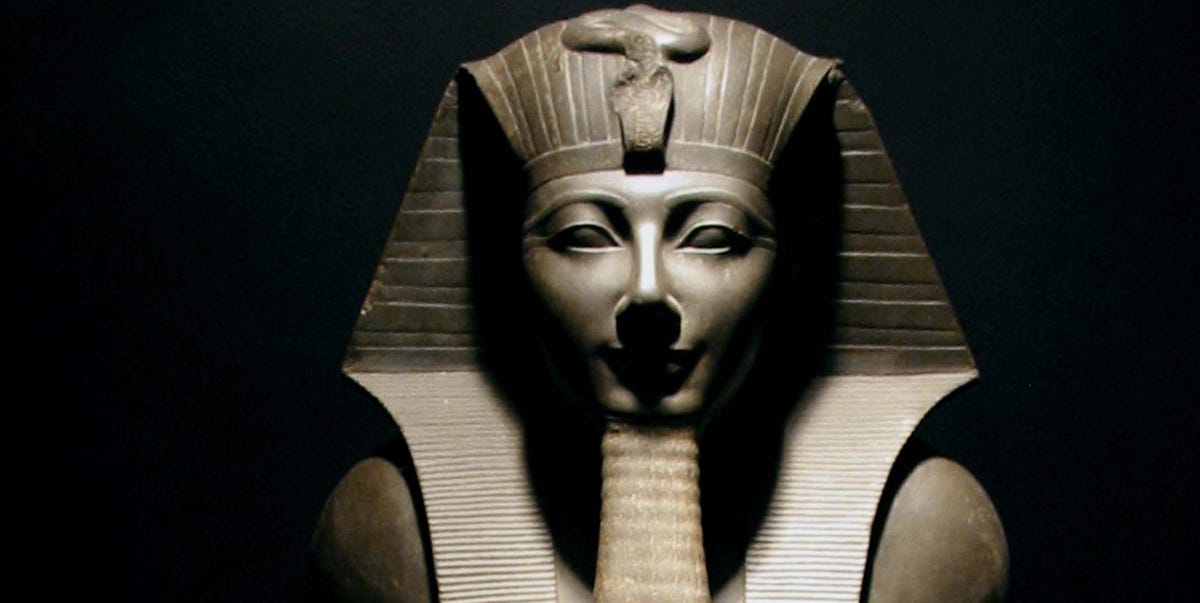
To understand why this discovery matters, we need to meet the likely VIP associated with it: Thutmose III. He ruled during Egypt’s 18th Dynasty, roughly from 1479 to 1425 BCE, and is often remembered as one of Egypt’s greatest warrior pharaohs. While many pharaohs liked to be carved on walls smiting enemies, Thutmose III actually had the military resume to back up the pose.
He inherited a complicated political situation. For much of his early reign, power was shared with Hatshepsut, one of Egypt’s most famous female pharaohs. After Hatshepsut’s death, Thutmose III became sole ruler and launched a series of military campaigns that extended Egyptian influence deep into the Near East and south into Nubia. His victory at Megiddo is one of the best-known military events of the ancient world, partly because Egyptian scribes recorded it in impressive detail. Ancient public relations departments were apparently alive and well.
Thutmose III helped transform Egypt from a powerful kingdom into a sprawling empire. That empire required more than brave soldiers and shiny chariots. It required roads, supply stations, administrative posts, defensive forts, water access, storage areas, and places where leaders could stop, plan, rest, and probably complain about the heat. The Tel Habwa rest house fits beautifully into that bigger picture.
Why North Sinai Was So Important
Tel Habwa sits in a region that functioned as Egypt’s eastern gateway. In ancient times, the northeastern Delta and North Sinai were not empty backdrops. They were corridors of trade, migration, diplomacy, invasion, and military movement. Control this route, and Egypt could project power toward Canaan, Syria, and the wider eastern Mediterranean. Lose control of it, and trouble could come knocking at the Delta’s door.
The site is associated with the ancient route often called the Way of Horus, a military and trade road running across northern Sinai toward the Levant. This route was lined with fortresses, wells, and administrative stations. Think of it as the ancient Egyptian version of a heavily monitored highway system, except instead of rest areas with vending machines, you had fortified stations, scribes, soldiers, and probably a lot of donkeys with strong opinions.
For a campaigning pharaoh like Thutmose III, the Way of Horus was essential. Armies cannot operate on courage alone. They need water, food, equipment, animals, shelter, intelligence, and secure passage. The rest house at Tel Habwa may have helped support those needs, whether by hosting royal officials, serving as a command post, or providing a secure stopping point during eastern campaigns.
Was It Really a Pharaoh’s Hideaway?
The word “hideaway” is useful for grabbing attention, but it should be understood carefully. Archaeologists are not saying Thutmose III had a secret vacation bungalow where he escaped palace meetings and ignored messages from priests. The evidence points to a fortified royal rest house or retreat connected to state activity, military movement, and frontier control.
That said, the phrase is not completely wrong. The site was not a grand temple or famous tomb. It was a functional, semi-private royal structure located far from the ceremonial heartlands of Thebes and Memphis. It was a place where power paused between campaigns. It was hidden not because someone deliberately buried a secret, but because time, sand, reuse, and abandonment folded it into the landscape.
Archaeology often works this way. The most revealing discoveries are not always golden masks or giant statues. Sometimes they are floor plans, column bases, thresholds, bits of pottery, and the ghost of a doorway. These humble clues tell us how ancient power actually moved through space. A pharaoh’s empire was not just built in temples. It was built in waystations, roads, forts, supply chains, and rooms where decisions were made before the next march.
The Architecture Tells a Story
The building’s design is one of the strongest reasons archaeologists interpret it as a special structure. Two halls, limestone column bases, stone thresholds, and adjoining rooms suggest an organized layout. This was not a random cluster of huts. It had a plan, and plans reveal purpose.
The presence of limestone column bases is especially interesting. Limestone was not used casually in every mud-brick building. Columned halls suggest status, formality, and perhaps ceremonial or administrative functions. A royal rest house needed to be practical, but it also needed to communicate authority. Even in a remote frontier zone, Egypt’s government knew how to say, “The pharaoh was here,” without needing neon signage.
Outside the building, artifacts bearing the name of Thutmose III helped archaeologists connect the site to his reign. Pottery and inscribed objects are among archaeology’s favorite time stamps. They may not look dramatic to the casual observer, but to specialists they can be as exciting as finding a labeled file folder in a very dusty office.
A Rest House with a Military Shadow
The Tel Habwa discovery is important because it adds physical evidence to what historians already know about Egypt’s New Kingdom military system. Thutmose III’s eastern campaigns required repeated movement through Sinai. A fortified rest house along the route suggests that Egypt’s empire depended on infrastructure as much as battlefield success.
Ancient armies were complicated machines. Soldiers had to eat. Chariots needed maintenance. Horses needed water. Officials needed records. Scouts needed routes. Messengers needed stations. Commanders needed secure places to coordinate movement. A building like the Tel Habwa rest house could have supported several of these functions at once.
This is why the discovery is more than a charming royal footnote. It helps reveal the logistics behind empire. Ancient Egypt did not expand simply because a pharaoh woke up one morning feeling ambitious. Expansion required planning, engineering, administration, and relentless attention to geography. The rest house is a small window into that enormous system.
The Site Did Not Stop Changing
Another fascinating part of the discovery is that Tel Habwa continued to have a life after the time of Thutmose III. Archaeologists found evidence that the area later served as a cemetery during the Third Intermediate Period, with locally made amphorae used in child burials from the 21st to 25th Dynasties. That reuse tells us something profound about ancient landscapes: places rarely had just one chapter.
A building associated with royal movement could later become part of a burial landscape. A military road could become a memory. A frontier station could become an archaeological puzzle. Human beings are excellent at reusing places, especially places that already feel important. Ancient people did not walk around saying, “Please preserve this site for future academic conferences.” They adapted spaces to new needs.
Archaeologists also reported later material connected to Amasis, a 26th Dynasty pharaoh. This suggests the broader area remained significant long after the 18th Dynasty. Tel Habwa was not a one-hit wonder. It was part of a strategic region that mattered across many centuries of Egyptian history.
Why This Discovery Matters Today
Modern readers often imagine ancient Egypt through pyramids, mummies, and treasure. Those are important, of course, but they can make Egypt seem frozen in ceremonial grandeur. The Tel Habwa rest house does something different. It shows Egypt in motion.
Here we see roads, soldiers, officials, royal travel, military planning, and frontier management. We see the less glamorous but more operational side of kingship. Thutmose III was not only a temple builder or carved figure on a wall. He was a ruler whose power depended on movement across difficult terrain. His empire had edges, and those edges had to be managed.
The discovery also reminds us that archaeology is still rewriting history in real time. Egypt has been studied for centuries, yet the sand continues to produce surprises. Every new site has the potential to confirm old theories, challenge assumptions, or add human texture to names we thought we already knew.
What It Reveals About Ancient Egyptian Power
The secret of this pharaoh’s hideaway is not that Thutmose III liked a quiet room after a long march, though honestly, who wouldn’t? The deeper secret is how carefully Egypt organized power beyond its famous cities. The rest house represents a network: roads, forts, administrative centers, supply points, and symbolic royal presence.
Ancient Egyptian kingship was theatrical, but it was also practical. Pharaohs presented themselves as divine rulers chosen by the gods, yet their authority still needed bricks, gates, columns, grain, water, soldiers, and scribes. The Tel Habwa building shows both sides. It was practical enough to support movement and formal enough to reflect royal status.
That combination is what makes the find so valuable. It bridges the world of military history and the world of daily administration. It gives us a place where the grand story of empire meets the everyday reality of logistics. Even a ruler called “the Great” needed a place to stop.
How Archaeologists Read a Place Like This
Archaeology is sometimes portrayed as a treasure hunt, but the real work is closer to detective science with smaller brushes and worse sunburns. At a site like Tel Habwa, researchers examine soil layers, wall alignments, building materials, pottery distribution, inscriptions, and later reuse. Each clue has to be interpreted carefully.
A cartouche or inscription bearing a royal name can help date a site, but it does not automatically prove the king personally slept there. A fancy building may suggest elite use, but archaeologists still compare it with other known structures. A lack of pottery may imply special function, but that conclusion must be weighed against preservation conditions and later disturbance.
This careful method is why the best interpretation is both exciting and cautious: the building likely served as a royal rest house or retreat connected to Thutmose III’s reign and Egypt’s eastern military activity. It may have hosted the king, his officers, or his troops. The evidence is strong enough to make the discovery important, but responsible archaeology leaves room for refinement as excavation continues.
A Human Glimpse Behind the Pharaoh
One reason this discovery captures the imagination is that it makes a legendary pharaoh feel more human. Thutmose III can seem distant when we meet him only through battle records and statues. A rest house changes the angle. Suddenly we can imagine movement, fatigue, planning, waiting, eating, reporting, and preparing.
Maybe officials gathered in one hall to discuss the next stage of a campaign. Maybe supplies were checked in nearby rooms. Maybe messengers arrived with news from the frontier. Maybe soldiers rested outside while elite commanders stepped inside. The walls do not speak directly, but they invite careful imagination.
That is the charm of archaeology at its best. It does not simply tell us that ancient people existed. It restores situations. It gives us settings where history happened. Tel Habwa is not just a place where bricks survived. It is a place where Egypt’s imperial machine briefly slowed down, took a breath, and then moved east again.
Experience: Standing Where Empire Once Paused
To appreciate the Tel Habwa discovery, imagine approaching the site not as a tourist looking for a postcard-perfect temple, but as someone trying to understand the ancient world through landscape. North Sinai is not the Egypt of glossy travel brochures, where colossal statues glow at sunset and cruise boats drift lazily along the Nile. It is a frontier environment, and that matters. The terrain itself explains why a rest house here was valuable.
When you think about ancient Egyptian power from the ground level, the romance quickly meets reality. Heat presses down. Distances stretch. Water becomes strategy. A road is not just a road; it is a lifeline. A fortified building is not just a building; it is a promise that someone planned ahead. In that sense, the Tel Habwa rest house feels like a practical answer to a hard question: how does an empire keep moving when the desert does not care about royal titles?
Anyone who has visited archaeological sites knows that the most powerful moments are not always the most obvious ones. A giant statue impresses immediately. A mud-brick wall asks for patience. At first, it may look plain. Then the guide explains the floor plan, the column bases, the thresholds, the road nearby, and the royal name found in the surrounding material. Suddenly the low walls rearrange themselves in your mind. You stop seeing ruins and start seeing movement.
That experience is similar to reading a good excavation report. The thrill is not only in the object but in the connection. One clue links to another. A hall connects to a route. A route connects to military campaigns. A campaign connects to a pharaoh who changed Egypt’s position in the ancient Near East. Before long, a quiet structure in North Sinai becomes part of a much larger story about ambition, organization, and survival.
The discovery also offers a useful reminder for modern readers: history is not built only by famous decisions. It is built by support systems. The ancient equivalent of logistics departments, road maintenance crews, supply managers, scribes, guards, builders, and cooks made royal campaigns possible. Thutmose III may have received the inscriptions and statues, but many unnamed people kept the machine running. The rest house is a monument to that hidden labor as much as to royal power.
There is also something strangely relatable about the idea of a pharaoh needing a rest stop. Strip away the crowns, incense, and formal titles, and the basic human need remains: even the most powerful ruler in the region needed shelter between demanding journeys. The difference, of course, is that most of us stop for coffee. Thutmose III’s world required fortified halls and limestone columns. Ancient travel reviews were probably very strict.
For writers, students, and history lovers, this is what makes the story so rich. It is specific enough to be grounded in real archaeology, but broad enough to open a door into ancient military life, imperial infrastructure, and the human side of kingship. The “secret hideaway” is not just a catchy headline. It is an invitation to look beyond gold and tombs and notice the places where history paused, organized itself, and prepared for the next chapter.
Conclusion
The discovery of the royal rest house at Tel Habwa gives us a rare and valuable glimpse into the world of Thutmose III and the machinery of Egypt’s New Kingdom empire. Far from being merely a mysterious hideaway, the site appears to have been a strategic structure tied to movement, military planning, and royal authority along the Way of Horus. Its halls, column bases, thresholds, and surrounding artifacts show how carefully Egypt managed its eastern frontier.
In the end, the most exciting part of the discovery may be its balance of grandeur and practicality. It connects a legendary pharaoh to a real place with real walls. It shows that empire was not only declared in temples; it was maintained on roads, in forts, at rest houses, and across difficult landscapes. Archaeologists have not simply uncovered an old building. They have uncovered a pause in the journey of one of ancient Egypt’s most ambitious rulers.