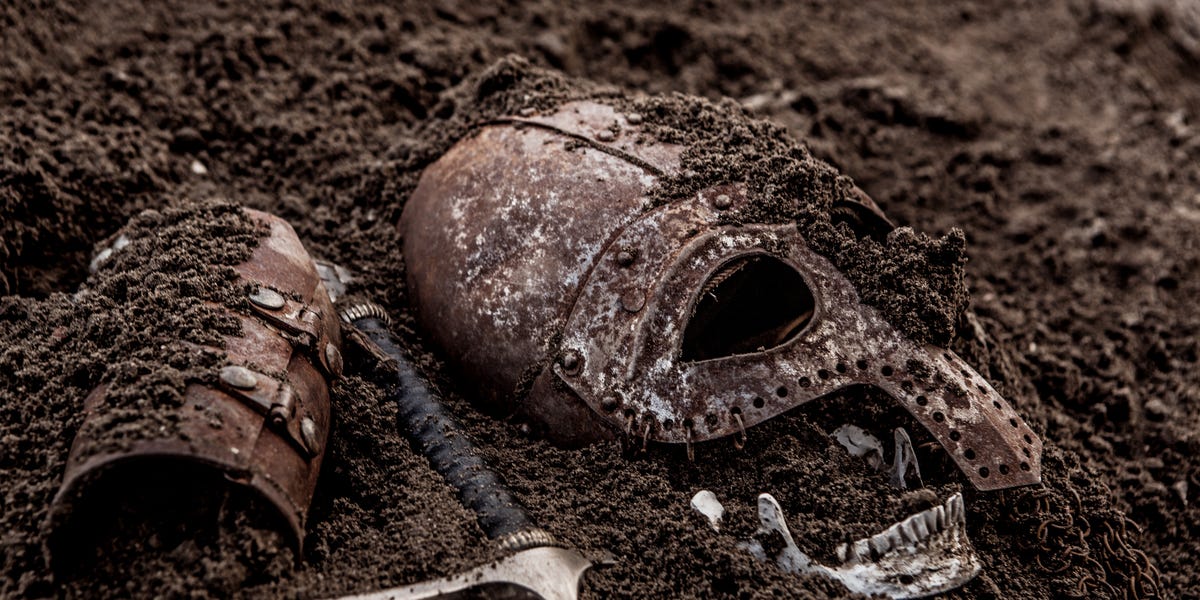
A farmer wanted a practical tractor road. Archaeologists found Viking treasure. That is the kind of plot twist history loves: one moment, the land is being checked before ordinary farm work; the next, a glint in the soil turns into silver arm rings that had been hidden for more than 1,000 years. On a farm at Svadberg in Årdal, Hjelmeland municipality, southwestern Norway, archaeologists from the Archaeological Museum at the University of Stavanger uncovered a rare Viking-era silver hoard buried beneath the floor area of an old farm building.
The discovery is exciting not only because silver is shinythough, let’s be honest, shiny helpsbut because the bracelets were found in their original archaeological context. Many Viking Age treasures are discovered in plowed fields or by metal detectorists after being disturbed, moved, or separated from the buildings and landscapes that once gave them meaning. This hoard, however, remained almost exactly where it was hidden. For archaeologists, that is the difference between finding a loose puzzle piece and opening the box with the picture still on the lid.
Early coverage of the find described four silver bracelets, because that was what the team initially believed they had uncovered in the field. Later laboratory work revealed something even better: six silver arm rings. Three were smooth wire rings, while three were made from multiple silver wires twisted together in skilled Viking Age style. The result is not just a treasure story; it is a window into wealth, fear, trade, craftsmanship, and daily life on a powerful farm more than a millennium ago.
A Road Project That Uncovered a Viking Time Capsule
The story began when farmer Tårn Sigve Schmidt planned to build a new tractor road along the mountainside on his property. Before the road work could proceed, archaeologists were called in to examine whether anything historically important lay in the path. This routine precaution became anything but routine.
As the excavation team removed soil carefully, field archaeologist Ola Tengesdal Lygre noticed something metallic in the ground. At first, it looked like twisted wire, the sort of modern agricultural scrap that can appear in farm soil and ruin an archaeologist’s coffee break. But the objects were not rusty copper or random farm debris. They were silver, lying close together about 20 centimetersroughly eight inchesbelow the surface.
That small flash of metal changed the entire excavation. The team stopped the heavier work, switched to finer tools, and treated the find as a delicate archaeological deposit. The arm rings and the surrounding earth were eventually removed together as a soil block and transported to the Archaeological Museum at the University of Stavanger for X-rays, conservation, and laboratory excavation.
What Exactly Did Archaeologists Find?
The silver objects are best described as Viking Age arm rings or bracelets. They were not identical, which makes them especially interesting. Some were simple and smooth, while others were twisted from multiple silver strands, showing careful craftsmanship and a taste for decorative metalwork. Even before full conservation, the silver reportedly gleamed through the soil, suggesting a high degree of purity and excellent preservation.
The biggest surprise came after the hoard was studied more closely in the lab. X-rays had shown that the objects lay tightly together, but they did not reveal the final count with certainty. Archaeologists first estimated four rings. Once the block was excavated under controlled conditions, they realized there were six.
Even more intriguing, two silver coins were found bent around one of the thinner smooth arm rings. This detail may become one of the most important clues in the entire discovery. The coins resemble Arabic silver coins, known as dirhams, which were a major source of silver in the Nordic world during the Viking Age. If future analysis confirms that identification, the bracelets could help researchers understand where the metal came from and how Viking-era people in Norway were connected to wider trade networks reaching far beyond Scandinavia.
Why Silver Was So Important in the Viking Age
To modern eyes, a bracelet is jewelry. To people of the Viking Age, silver arm rings could be jewelry, wealth, status symbol, gift, portable savings account, and emergency fund all at once. Vikings lived in a world where silver had practical value. It could be weighed, exchanged, gifted, cut, bent, stored, and displayed. In other words, a silver arm ring was not just something pretty to wear to the medieval equivalent of brunch.
Silver was especially important because Norway did not have working silver mines at the time. That means Viking Age silver in Norway usually came from abroad. It could arrive through trade, political gift exchange, tribute, raiding, or long-distance movement of coins and bullion. Finds of Arabic coins in Scandinavia, along with silver objects from the British Isles and continental Europe, show that Viking Age economies were surprisingly connected.
The Årdal bracelets therefore raise a big question: where did this silver begin its journey? Was it traded along eastern routes through river systems linking Scandinavia to the Islamic world? Did some of it come through raids or payments in the British Isles? Did it pass from hand to hand many times before ending up beneath a floor on a Norwegian farm? Researchers may be able to answer some of these questions through conservation, metal analysis, and closer study of the coins.
A Powerful Farm With a Strategic View
The bracelets were not found in isolation. Excavation revealed the remains of a Viking Age farm with several buildings for people and animals. The site stood near Årdalsfjord, in a position where the inhabitants could monitor movement into the area by water. In Viking Age Norway, geography mattered. A farm with a good view of a fjord was not just scenic real estate; it was a place with control, access, and influence.
Archaeologists found traces of a substantial settlement, including postholes, hearths, and household artifacts. Among the finds were fragments of soapstone cooking pots, rivets, knife blades, whetstones for sharpening tools, a spindle whorl, and a loom weight. These objects may not sparkle like silver, but they are just as valuable for understanding daily life. They point to cooking, tool use, textile work, animal keeping, and ordinary household labor.
The house associated with the hoard measured roughly 5.5 by 15 meters, according to later excavation notes. Evidence suggests the silver was hidden beneath a bed bench or floor area along the wall. That placement feels deeply human. Whoever buried the treasure did not toss it casually into the ground. They chose an interior location, a private place within a living space, where the valuables could be concealed andperhapsretrieved later.
Was the Treasure Hidden During a Crisis?
One of the most compelling theories is that the hoard was buried in a moment of danger. Excavation evidence indicates burning at the site, and archaeologists have suggested that the farm may have been destroyed during a period of unrest. If the people living there faced attack or sudden violence, hiding silver before fleeing would make sense.
Imagine the scene: smoke, shouting, animals unsettled, people gathering what they could carry. Someone knows the silver is too valuable to leave in plain sight but too risky to carry if escape is uncertain. So the arm rings are hidden under the floor or bed area, with the expectation that the owner will return. But no one comes back. The silver stays there for more than 1,000 years, quietly waiting under Norwegian soil while farms change, roads are planned, and modern tractors enter the story.
This is the emotional power of hoards. They are not only collections of objects; they are interrupted plans. A buried treasure often marks a decision made under pressure. The person who hid the Årdal silver likely intended to recover it. The fact that it remained untouched suggests something prevented that return.
Why the Original Context Makes This Find Rare
Archaeologists often emphasize context because context is what turns an object into evidence. A silver bracelet by itself can tell researchers about metalwork and design. A silver bracelet found under the floor of a Viking Age house can tell a richer story about domestic space, wealth storage, social status, fear, and behavior.
The Årdal hoard is unusual because it was discovered during a controlled archaeological investigation. The team could document where the bracelets were located, how they were positioned, what structures surrounded them, and what other artifacts were nearby. They could take soil samples to look for traces of organic material, such as textile remains that might show whether the rings were wrapped in cloth or stored in a pouch.
This kind of evidence can answer questions that a loose object cannot. Were the rings placed together deliberately? Were they hidden in a bag? Were the coins attached to one bracelet as decoration, savings, or symbolic display? Were the objects part of a household’s wealth, a woman’s personal valuables, a high-status family’s silver reserve, or something else entirely? The answers may not arrive quickly, but the site gives researchers a strong foundation.
The Human Side of a Viking Farm
Popular culture often imagines Vikings as helmeted raiders sailing dramatically through fog, preferably with intense music playing in the background. The Årdal discovery reminds us that Viking Age life was also built around farms, houses, kitchens, textile work, storage buildings, tools, animals, and family economies.
The evidence from Svadberg includes burnt bones near a hearth, soapstone pot fragments, tools, and objects linked to textile production. These details reveal a working household. People cooked meals, repaired tools, sharpened blades, spun fibers, wove textiles, stored valuables, and watched the fjord. They were part of a world where local farming and long-distance exchange existed side by side.
The presence of silver suggests wealth, but the ordinary artifacts suggest labor. That combination is important. A Viking Age farm could be both practical and powerful. Its residents may have managed resources, controlled movement, traded goods, and held enough surplus wealth to hide silver. Yet daily life still depended on fire, food, cloth, tools, animals, and the rhythm of seasonal work.
What the Bracelets Reveal About Viking Craftsmanship
The arm rings themselves show technical skill. Twisted silver work required control, patience, and a good understanding of metal behavior. Viking Age craftspeople did not simply twist metal at random and hope for the best. They created balanced patterns that were strong, wearable, and visually striking.
Three of the Årdal rings were made from multiple silver wires twisted together. This style connects them to broader Viking Age traditions of arm rings and neck rings, where twisted forms were both decorative and practical. Smooth rings, meanwhile, may have been valued for their weight and simplicity. Together, the six rings show variety within a single hoard, suggesting that the owner or owners possessed different types of silver wealth.
The bent coins are especially fascinating because they blur the line between money and ornament. A coin could be currency, raw silver, jewelry, or keepsake depending on how it was used. One coin reportedly had a small hole near the edge, suggesting it may once have been worn as a pendant. In a Viking Age context, value was flexible. Silver could travel through life in many forms before being buried in the ground.
Why This Discovery Matters Beyond Norway
The silver bracelets are Norwegian finds, but their story is international. Viking Age silver moved through huge networks. It crossed seas, rivers, markets, political borders, and cultural boundaries. The possible connection to Arabic coins points toward eastern trade routes, while the broader pattern of Viking silver links Scandinavia with the British Isles, continental Europe, and the Islamic world.
This matters because it challenges the cartoon version of Vikings as nothing more than raiders. Raiding was part of the Viking Age, but so were farming, trading, crafting, sailing, diplomacy, gift exchange, settlement, and adaptation. A silver arm ring on a Norwegian farm may contain evidence of all those activities at once.
The find also shows why archaeology remains essential. Written sources from the Viking Age are limited, and many were recorded centuries later, often focusing on kings, warriors, and famous men. Archaeological evidence can speak for people who rarely appear in texts: farmers, craft workers, women, enslaved people, children, and local households. A buried hoard can bring those lives closer, not by naming them, but by showing what they made, owned, feared, and protected.
What Happens Next?
The silver arm rings were taken to the Archaeological Museum at the University of Stavanger for conservation and analysis. Researchers have already used X-rays and careful lab excavation to understand the hoard more clearly. Further scientific study may reveal the source of the silver, the age of the coins, and whether any organic material survived around the objects.
The museum has also moved the discovery from fieldwork into public history. The silver rings have been prepared for display, allowing visitors to see a rare Viking Age treasure that spent more than a thousand years hidden beneath a farm building. That public display matters. Archaeology is not only about specialists studying soil samples in quiet labs, although that part is important and delightfully nerdy. It is also about reconnecting communities with the deep past beneath familiar landscapes.
For readers, the lesson is simple: history is not always buried in royal tombs or dramatic battlefields. Sometimes it waits under a planned tractor road. Sometimes the most extraordinary finds appear because someone followed the rules, called in archaeologists, and gave the past a chance to speak before modern work began.
Experience Notes: What This Viking Silver Discovery Feels Like Up Close
Standing near a discovery like the Årdal silver hoard would not feel like stepping into a movie treasure chamber. There would be no golden spotlight, no orchestra, and probably no dramatic wind machine. There would be damp soil, careful measuring, quiet concentration, and archaeologists trying very hard not to say anything too excited until they knew what they were looking at. That is part of what makes the story so powerful. Real archaeology is slow, cautious, and full of suspense.
Imagine visiting the farm landscape after learning what was found there. The first thing you might notice is not the treasure, but the terrain. The mountainside, the fjord, the changing light, and the practical demands of farm life all shape the way the site feels. A Viking Age family living there would have understood the land in practical terms: where animals grazed, where buildings stood, where ships could be seen, where danger might come from, and where valuables could be hidden if the world suddenly turned upside down.
In a museum, the experience changes. The bracelets are no longer buried, but they still carry the atmosphere of the place where they were found. Looking at them, a visitor might first admire the craftsmanshipthe twisted silver, the smooth rings, the surprising survival of the metal. But after a moment, the emotional question appears: who buried these, and why did they never come back?
That question is what makes Viking archaeology so gripping. A bracelet is intimate. It belongs near the body. It touches skin. It can be worn, gifted, admired, weighed, traded, or hidden. Unlike a wall foundation or a cooking pot, a silver arm ring feels personal. It suggests status, identity, and memory. When six of them are found together beneath a floor, the imagination immediately begins working. Were they family wealth? A woman’s valuables? A household reserve? A payment saved for future use? A treasure hidden in panic?
The experience also changes how we think about farms. Modern readers may hear “farm” and picture simplicity, but Viking Age farms could be centers of power. They were places of food production, storage, textile work, social hierarchy, and regional control. The Årdal farm was not just a quiet rural home; it stood in a landscape connected to the fjord and, through silver, to an international world.
For anyone interested in history, this discovery is a reminder to look differently at ordinary ground. A field is not always just a field. A slope is not only a slope. A planned road may cross layers of human decisions, accidents, emergencies, and hopes. Beneath the surface can be a household that burned, a treasure that waited, and a story that refused to disappear. That is the magic of archaeology: it turns dirt into evidence and evidence into human connection.
Conclusion
The discovery of Viking-era silver bracelets on a Norwegian farm is more than a glittering headline. It is a rare, carefully documented find that connects a local farm in Årdal with the wider Viking world of trade, wealth, craftsmanship, and uncertainty. The silver arm rings were hidden beneath a building floor, preserved in their original context, and later revealed through careful archaeological and laboratory work. Their designs, possible coin connections, and placement within a Viking Age farmstead offer researchers a valuable opportunity to study how people stored wealth, responded to danger, and lived in a landscape shaped by both farming and far-reaching exchange.
Most importantly, the bracelets remind us that the Viking Age was not only about ships and raids. It was also about homes, tools, textiles, food, status, fear, and the deeply human instinct to protect what matters. More than 1,000 years later, a flash of silver in Norwegian soil has given that hidden story a second life.