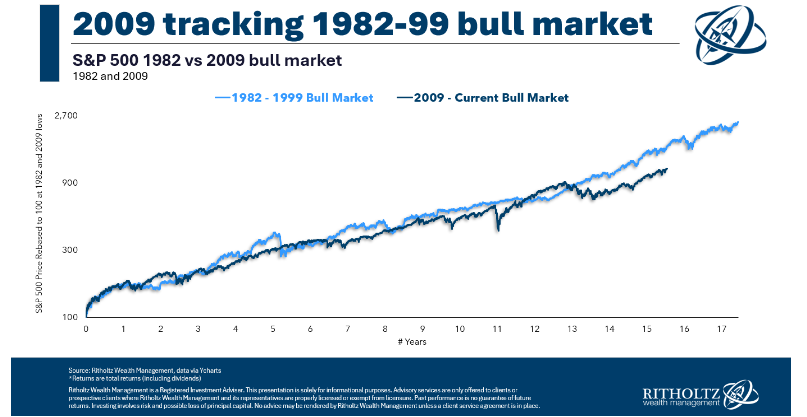
Markets do not rise on spreadsheets alone. They rise when earnings, economic growth, liquidity, and human confidence begin pulling in the same directionand investors suddenly decide that tomorrow looks considerably less terrifying than yesterday.
The phrase animal spirits sounds like something involving a bull, a bear, and an overcaffeinated squirrel. In economics, however, it describes the powerful role that confidence, fear, stories, and instinct play in financial decisions. People invest, hire, borrow, and build partly because the numbers make sense and partly because they believe the future will cooperate.
That belief can become especially influential when the economic backdrop appears unusually supportive. In late 2024, the United States presented investors with a rare combination: solid economic growth, cooling inflation, a Federal Reserve beginning to reduce interest rates, healthy corporate profits, and financial markets trading near record levels. It was not a perfect economy, but perfection is not required for a bull market. Markets usually ask only whether conditions are improving faster than investors expected.
Research context:
What Are Animal Spirits in Financial Markets?
John Maynard Keynes used the term “animal spirits” to explain why people make major financial decisions even when the future cannot be calculated with precision. Buying a factory, starting a company, purchasing a home, or investing in stocks requires a leap of faith. There is no spreadsheet cell labeled “Everything will probably be fine.” Yet that assumption is quietly embedded in countless decisions.
Economists George Akerlof and Robert Shiller later expanded the idea, emphasizing confidence, fairness, money illusion, corruption, and the stories people tell about the economy. Their work helps explain why financial markets can move much further than fundamentals alone appear to justify. A convincing narrative attracts capital; rising prices validate the narrative; and that validation attracts even more capital. The process can produce innovation and economic expansion, but it can also create bubbles wearing expensive sunglasses.
Animal spirits are therefore neither automatically good nor bad. Confidence can encourage productive investment, while excessive confidence can persuade investors that valuation no longer matters. Fear can prevent reckless speculation, but too much fear can freeze lending and destroy otherwise healthy businesses. Markets continually swing between these emotional extremes.
Behavioral finance research:
Why the Backdrop Looked So Bullish
Economic Growth Refused to Collapse
For much of 2022 and 2023, recession predictions were practically a subscription service. Rapid Federal Reserve rate increases were expected to crush consumer spending, corporate investment, and employment. Instead, the economy remained stubbornly resilient.
The Bureau of Economic Analysis reported that real gross domestic product expanded at a 3.0% annualized rate during the second quarter of 2024. Revised national accounts also showed that the post-pandemic expansion had been stronger than previously estimated. Rather than falling into the widely anticipated recession, the economy continued growing at a pace that would normally be considered healthy even without the additional burden of restrictive monetary policy.
This mattered because stock prices are influenced not simply by whether growth is fast or slow, but by how actual growth compares with expectations. When investors prepare for a hurricane and receive a windy afternoon instead, risk assets often celebrate.
GDP data:
Inflation Cooled Without Breaking the Economy
The most bullish development was not merely slower inflation. It was slower inflation arriving without a severe collapse in employment or output.
By August 2024, the annual Consumer Price Index had fallen substantially from its 2022 peak. Goods inflation had already cooled, supply chains had normalized, and housing-related inflation was gradually losing momentum. Inflation remained above the Federal Reserve’s long-term target, but the direction of travel was encouraging enough for monetary policymakers to begin shifting their attention from fighting prices to protecting the labor market.
This created the possibility of a soft landing: inflation returning toward target while the economy continued expanding. Soft landings are frequently predicted and rarely achieved cleanly, which is why investors become so enthusiastic when one appears possible. It is the economic equivalent of landing an airplane while serving drinks and avoiding turbulence.
Inflation and soft-landing backdrop:
The Federal Reserve Started Cutting Rates
On September 18, 2024, the Federal Reserve reduced its target interest-rate range by half a percentage point, bringing it to 4.75%–5.00%. It was the first reduction since 2020 and signaled that the most aggressive phase of monetary tightening had ended.
Lower policy rates do not instantly make every mortgage, auto loan, or business loan cheap. They do, however, change the direction of financial conditions. Investors begin anticipating lower borrowing costs, improving housing activity, stronger capital spending, and more attractive valuations for long-duration assets.
The critical detail was that the Fed was easing while economic growth remained positive. Rate cuts during a financial crisis can be bearish because they confirm that something has broken. Rate cuts during an expansion can be bullish because they remove pressure before the machinery seizes. Same medicine, very different patient.
Federal Reserve decision:
Corporate America Kept Producing Profits
A bull market becomes more durable when earnings participate. Rising prices supported only by higher valuation multiples can continue for a surprisingly long time, but eventually profits must arrive and help carry the furniture.
Large technology companies remained major contributors to market performance, particularly businesses connected to artificial intelligence, cloud computing, semiconductors, and digital advertising. At the same time, investors increasingly looked for earnings growth to broaden into financials, industrial companies, healthcare, and consumer businesses.
This potential broadening was important. A market led by a small group of highly profitable companies is not automatically unhealthy, but broader participation reduces dependence on a handful of corporate giants. When more sectors contribute to earnings and price gains, investor confidence can spread beyond the usual celebrity stocks.
Strong balance sheets also helped. Many large corporations had refinanced debt when rates were low, leaving them less exposed to immediate increases in borrowing costs. Higher interest rates hurt new borrowers, but they did not instantly overwhelm every existing company.
Equity valuations and corporate conditions:
The Global Economy Added Support
The International Monetary Fund’s October 2024 outlook upgraded expectations for the United States even as forecasts for several other advanced economies were reduced. Demand for semiconductors and electronics was also being supported by investment in artificial intelligence and public spending across parts of Asia.
Global growth was hardly spectacular, but markets do not require every country to boom simultaneously. They benefit when major economies avoid recession, inflation cools, and central banks gain room to become less restrictive. A stable global expansion can support trade, commodity demand, business confidence, and multinational earnings.
Global economic outlook:
The Strange Gap Between Economic Data and Public Mood
One of the most interesting features of the bullish backdrop was the disconnect between measurable economic activity and how people felt about it.
The University of Michigan’s Consumer Sentiment Index rose to 70.1 in September 2024, its highest reading since May of that year. Yet the Conference Board’s Consumer Confidence Index fell sharply to 98.7, reflecting anxiety about employment, income, and business conditions. The surveys did not tell identical stories because they ask different questions and emphasize different parts of household experience.
Consumers could recognize that inflation was slowing while remaining frustrated that grocery bills, rents, insurance premiums, and restaurant prices were permanently higher than before the pandemic. Slower inflation means prices are rising less quickly; it does not mean someone sneaks into the supermarket at night and resets everything to 2019.
This gap can actually support markets for a time. When consumers remain cautious while spending continues, there may be less obvious euphoria to unwind. Bull markets sometimes last longer when the public is annoyed, skeptical, and underinvested. A wall of worry is useful building material.
Consumer surveys:
Housing Offered Both Hope and Warning
Housing was the economy’s most obvious pressure point. High mortgage rates, expensive homes, limited inventory, property taxes, and rising insurance costs kept affordability near painful levels. Lower interest rates offered some relief, but the housing market was not suddenly handing out bargains with a complimentary fruit basket.
There were nevertheless signs of improvement. Zillow reported that declining mortgage rates and rising inventory created a better opportunity for buyers in August 2024. Redfin found that asking rents for newly built apartments fell 6.2% from a year earlier during the second quarter, reaching the lowest level since 2022 as apartment completions surged.
More rental supply could gradually reduce shelter inflation and improve household budgets. Lower mortgage rates could also encourage existing owners to list homes, easing the lock-in effect created when millions of households secured extremely low mortgage rates during the pandemic.
However, climate and insurance risks complicated the bullish narrative. Zillow found that large shares of newly listed homes faced major exposure to extreme heat, wind, wildfire, flooding, or poor air quality. Insurance costs were becoming an increasingly important part of affordability, particularly in vulnerable areas. A lower mortgage payment is less exciting when the insurance bill arrives dressed as a second mortgage.
Housing and rental data:
Why a Bullish Backdrop Is Not a Guaranteed Bull Market
The phrase “bullish backdrop” describes favorable conditions, not a promise. Financial markets discount the future, meaning good news can already be reflected in prices. The more optimistic investors become, the less room remains for disappointment.
Valuations Were Already Elevated
Federal Reserve financial-stability research noted that equity valuations were high and corporate-debt valuations appeared stretched. Expensive markets can remain expensive for years, particularly when earnings grow, but high starting valuations generally reduce the margin for error.
A company reporting strong growth may still fall if investors expected extraordinary growth. A healthy economy may still produce weak market returns if share prices already assume perfection. The stock market is not grading the economy; it is grading the economy against a very demanding answer key.
The Labor Market Was Cooling
Payroll growth slowed during 2024, and the unemployment rate moved higher from its cycle low. In August, nonfarm payroll employment increased by 142,000, while earlier months were revised downward. These were not recessionary numbers by themselves, but they showed that the labor market was losing momentum.
A gradual slowdown would support the soft-landing story. A rapid deterioration would threaten consumer spending, loan performance, and corporate profits. The difference between normalization and recession often becomes obvious only after investors have already changed their minds.
Labor-market data:
Some Households Were Under Real Pressure
Total household finances looked manageable in aggregate, but averages concealed stress among lower-income and heavily indebted consumers. The New York Federal Reserve reported elevated transitions into delinquency for credit-card and auto-loan balances during the second quarter of 2024.
This was a reminder that one economy can contain several different experiences. Homeowners with fixed-rate mortgages and appreciating assets often felt secure. Renters, younger consumers, and revolving credit-card borrowers faced a much more expensive financial environment. Bullish markets can coexist with household hardship, although that divergence cannot widen forever without economic or political consequences.
Household debt data:
How Investors Can Approach Powerful Animal Spirits
Participate Without Worshiping the Narrative
Investors do not need to reject a bull market merely because prices have risen. Momentum, improving earnings, and easier financial conditions can persist. Remaining completely in cash while waiting for an obviously cheap market may feel responsible, but it can quietly become an expensive form of procrastination.
At the same time, participation does not require believing every optimistic forecast. A diversified portfolio allows investors to benefit from economic growth without betting their future on one stock, sector, or technological theme.
Separate Portfolio Decisions From Economic Predictions
Economic forecasting is difficult because the economy is adaptive. Consumers respond to rates, businesses alter investment, governments change policy, and markets influence confidence. Even accurate economic forecasts may not produce accurate market forecasts because prices already reflect widely known expectations.
A better approach is to connect investment decisions to time horizon, liquidity needs, and risk tolerance. Someone investing for retirement decades away should react differently from someone preparing to purchase a home next year. The same bullish backdrop can justify different portfolios for different people.
Watch Confirmation, Not Headlines
A sustainable bullish environment usually receives confirmation from several areas:
- Corporate earnings continue growing beyond a small group of dominant companies.
- Credit spreads remain contained, suggesting lenders are not panicking.
- Employment cools gradually rather than collapsing.
- Inflation continues moving toward target without a renewed surge.
- Market participation broadens across sectors and company sizes.
- Consumer delinquencies stabilize rather than accelerating.
No indicator provides certainty. Together, however, they reveal whether optimism is being supported by economic reality or merely fueled by enthusiastic storytelling.
Experience-Based Lessons From Bullish Market Backdrops
Every strong market feels obvious in hindsight and suspicious in real time. Investors looking back at previous bull runs often imagine that the opportunity was clearly labeled. It was not. The beginning of a durable advance usually arrives while headlines remain unpleasant, forecasts conflict, and many participants are still recovering emotionally from the previous decline.
A common experience is waiting for complete certainty before investing. After a bear market, cautious investors may demand lower inflation, confirmed rate cuts, stronger earnings, political clarity, and several months of rising prices. By the time all those boxes are checked, markets may already have moved substantially higher. Certainty is expensive because other investors are also willing to pay for it.
Another recurring lesson is that investors often underestimate how long optimism can persist. Once economic data begins improving, analysts revise forecasts upward, businesses increase spending, and consumers become more comfortable. Rising markets improve household wealth and corporate confidence, creating a feedback loop. People who sell simply because prices appear “too high” may discover that expensive assets can become even more expensive when profits continue growing.
The opposite error is abandoning discipline once gains become easy. During powerful rallies, a diversified portfolio can begin to feel boring compared with whichever asset is producing the loudest returns. Investors concentrate positions, increase leverage, or buy companies they barely understand. Risk appears to have disappeared precisely because recent performance has hidden it.
Experienced investors learn to distinguish discomfort from danger. A normal correction of 5% or 10% can occur even in an excellent economic environment. Headlines will search for an explanation, television guests will announce that “everything has changed,” and social media will conduct a respectful funeral for the bull market. In many cases, nothing fundamental has changed. Volatility is simply the admission fee for owning assets with attractive long-term returns.
Rebalancing is especially useful during such periods. When stocks rise faster than bonds or cash, selling a modest portion of the winners can restore the intended allocation without requiring an all-or-nothing market call. This approach acknowledges the bullish trend while preventing confidence from quietly transforming a balanced portfolio into a concentrated bet.
Investors also learn that personal circumstances matter more than market excitement. A bullish forecast cannot rescue money needed for next year’s tuition, emergency expenses, or a home down payment from a sudden correction. Long-term capital can tolerate volatility; short-term obligations cannot. Matching assets to financial goals remains important even when every chart appears to be pointing toward the moon.
Finally, the most durable lesson is humility. Bullish backdrops can produce disappointing returns, while frightening environments can create outstanding opportunities. Markets respond to expectations, surprises, positioning, liquidity, and psychologynot merely to whether the latest economic report was good. The goal is therefore not to predict every turn. It is to build a plan capable of surviving incorrect predictions.
Animal spirits are most useful when they encourage productive risk-taking rather than reckless confidence. Investors should allow optimism to keep them participating, skepticism to keep them diversified, and humility to keep them from treating a favorable backdrop as a personal guarantee from the financial universe.
Conclusion: Bullish, but Never Bulletproof
The most bullish backdrop emerges when several forces align: economic growth remains positive, inflation cools, monetary policy becomes less restrictive, corporate earnings expand, and investors regain confidence. Late 2024 offered much of that combination, explaining why animal spirits strengthened even as consumers continued expressing concern about prices and affordability.
Yet favorable conditions do not eliminate risk. High valuations, concentrated market leadership, household debt stress, climate-related housing costs, and a cooling labor market all deserved attention. The strongest investors are neither permanently bullish nor permanently bearish. They recognize supportive conditions, participate according to a disciplined plan, and remember that confidence can change much faster than economic data.
The backdrop may be bullish. The future remains gloriously, inconveniently uncertainand that is exactly why long-term investing continues to reward patience rather than perfect prediction.